




Safety on the Trail Satellite Phones
SAFETY ON THE TRAIL
The safety and comfort of both guests and the Alpaca Expeditions team is our priority on the trail.
We pride ourselves on the level of precautions we take on treks through Andes. Our team receives annual safety and first aid training, and we are always mindful of weather and trail conditions.
Explore our safety practices and standards to better understand the proactive role we take in your experience on the trail with us!
Alpaca Expeditions Guests: We are committed to the safety of our staff, guests and the communities where we travel.
Guides have the job of making sure their entire team of trekkers is safe at all times, as well as our Alpaca “Green Machine” team. We equip our guides with knowledge and tools that are refreshed every year. Our guides go through extensive training in first aid every February, where they learn how to rescue and evacuate people in case of emergency, as well as how to treat major and minor problems.
Three years ago, we created a partnership with Clinic 02 and Medical Cusco to give us direct access to medical professionals at all times. A doctor on the team leads the training in February and they are our partners throughout the year to make sure our guides are up to date with the most recent protocols.
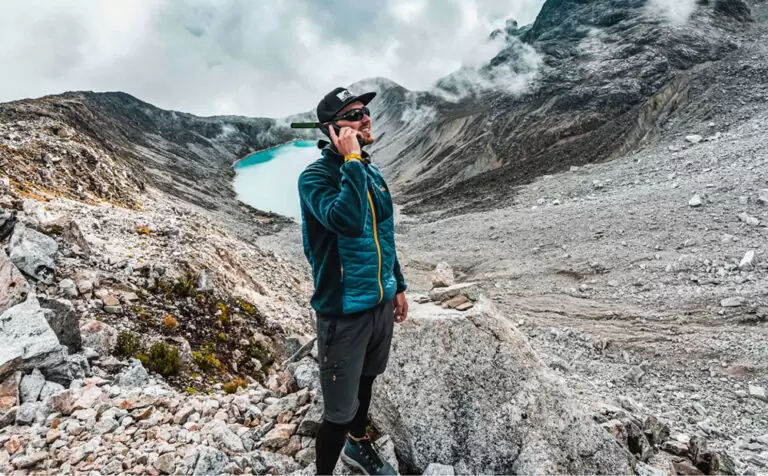
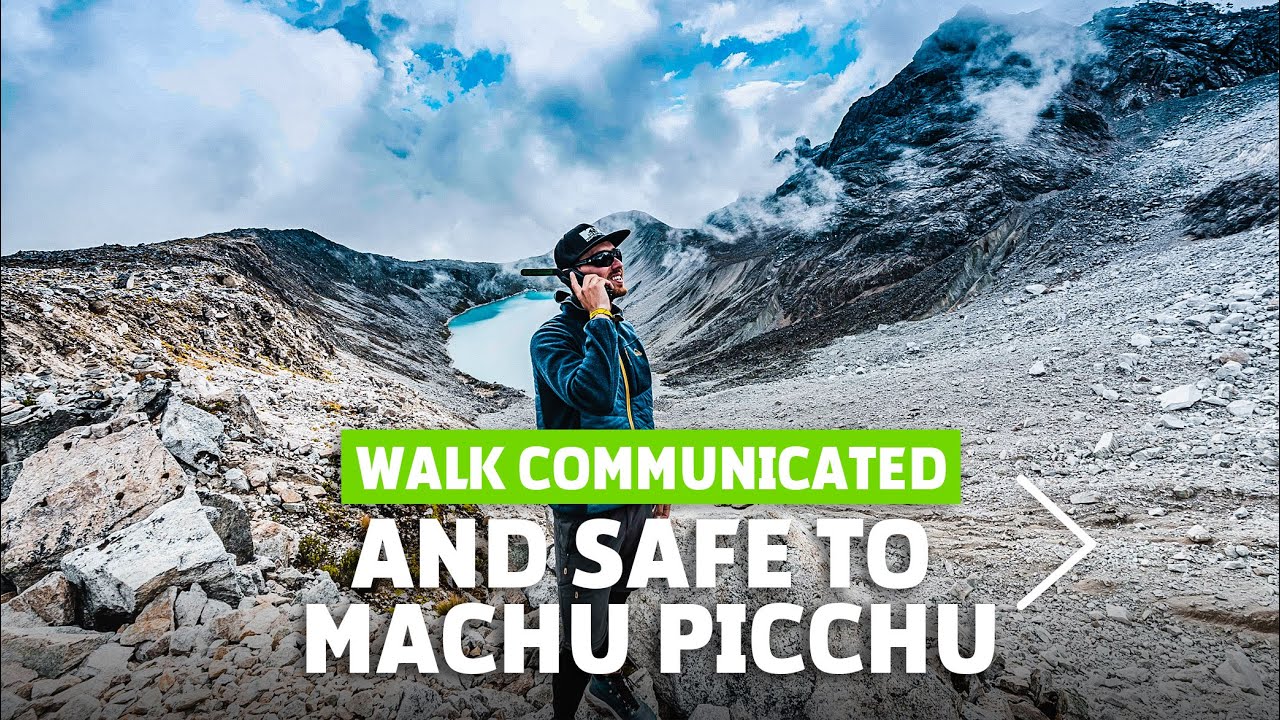
Part of the allure of hiking to Machu Picchu is disconnecting from the world and immersing yourself in nature. But it’s important to have a lifeline in case anything happens. Alpaca Expeditions was the first company to introduce satellite phones and we are the only company to include them on every trek we go on. This allows us to get in touch with our team back in Cusco for extra help or connect a client to their family back in their home country. It also connects us directly to a medical professional on staff or at our partner clinics, where the guide can talk directly to a doctor if needed.
While we need to be prepared for the most serious difficulties, these are extremely uncommon. Most people suffer more from complications due to the altitude or minor scrapes, blisters or belly aches. All our guides carry a full kit of first aid with supplies to deal with pain, swelling, cuts, scrapes and blisters. It also includes some medication like ibprofen and cipro. They always have full canisters of oxygen and larger groups with a second guide will have a second tank. They also carry thermometers, oximeters, blood pressure cuffs (tensiometers).
Explore our safety practices and standards to better understand the proactive role we take in your experience on the trail with us!
SATELLITE PHONES
One of the best parts of hiking through the Andes is the remoteness. Being on top of the mountain with just your fellow trekkers and team can help connect you to the world in a way you have never experienced before. It’s amazing to be disconnected from work and the daily grind you left back home.
With this remoteness, however, comes limited access to emergency resources. This is why Alpaca Expeditions has invested in satellite phones to have on all treks.
While our team is trained in many things, having direct access to a doctor at all times greatly increases our rapid medical response rate to help get you off the mountain and to safety in the event of an emergency.
Your safety is our priority, and our company has invested in reliable satellite phones as they are one of the most important tools to have for any operator running treks through the Andes. This means that every guide going out on one of our treks will be equipped with a fully charged satellite phone, as well as radios. And while these are really for emergencies, we allow our clients to use them at any time.
We ask that you only cover what we are charged, which is $5.00 per minute. This can be paid in cash in our office or through PayPal when you are done with the hike.
Annual Training for Trek Teams
To be a guide with Alpaca Expeditions, you must have graduated from University with a degree in Tourism.
Course study includes history, archeology, language, sociology and other courses relevant to being able to showcase our history. But the most important course for all guides is safety.
Knowing how to rescue and evacuate people in case of emergency, as well as how to treat major and minor problems, is a practice that is revisited every single year during our annual training event every February: we hire a medical doctor to retrain and re-evaluate all guides.
{Medical First Aid} & Procedures on the Trail
Oximeter
Every Alpaca Expeditions guide has an oximeter and will monitor your condition as you get higher and higher in elevation: this tool lets us know your oxygen percentage level. Everyone has a different reaction the altitude, and our guides will keep you informed and let you know if you need to take a bit of oxygen from the portable oxygen tank our guides carry with them, too.
Tensiometer
We will make sure your heartbeat and blood pressure is in healthy ranges while in the mountains.
First Aid & O2 Kit
Our guides will carry the oxygen tank and a first aid kit full of medicine and other equipment needed for health care and safety on the trail. We also strongly encourage our guests to prepare their own medical kit that includes personal medication, or preferences for your own care—for example, vegan supplements.
Emergency Horse for alternative treks
Our alternative treks (like the Salkantay Trek or Lares Trek) will always have one emergency horse to use in case you are out of breath or tired; we also provide helmets when you are riding. Please ask your guide.
Drinking water for our tourist and porters
It is always important to know what type of water one drinks on the treks; it’s glacier water which is collected from the river or stream. It’s filtered and boiled and cooled down, and then it’s provided as drinking water for everyone. Purification pills are not needed to take for these hikes.
AE has a partnership with Clinic 02 and Medical Cusco. This partnership allows us to have direct access to medical professionals at all times, including via satellite phones while on the trail.
Among the topics we cover in training is how to handle the following issues:
- How to recognize and what to do in case you get altitude sickness
- Mountain accurate sickness
- Cardiopulmonary resuscitation CPR
- Pulmonary edema and brain edema
- Heart attack
- Asthma
- Animal Bites could be mosquitoes, spider, snakes or whatever bites you can get along the way
- Broken bone or toe, How to evacuate in case this would be the situation
- Burns
- Cuts and wounds
- Diarrhea, sometimes people’s stomach react to the food and water of Peru.
- Dizziness
- Fever in Adult and child, this may be the case when one gets infection
- Food poisoning
- Heart palpitations
- Hypothermia
- Insect bites and stings
- Vertigo
- Sunburn
- Allergy
- Whatever pain you may experience
We carry equipment to help us tend to all injuries and illnesses.
You should feel comfortable knowing that you are choosing a company that takes your safety as well as our own teams very seriously!




















More than expected – great guided trek
From the beginning to the end, the organization provided exceptional customer service and coordination. The food on the trail was over the top with plenty to eat morning noon and night. The porters had everything set up and ready for Tea time by time we arrived from the day’s trail. Our guides, Sam and Willie were knowledgeable about the Inca history and the trail. Sam knew the path very well and was a personal inspiration and guide when going got tough. The sleeping arrangements were ok, and could have had wider and thicker air mattresses for us heavy European and American trekkers. Over all an exceptional experience punctuated by Machu Pichu at the end of 7 days. The scenery was more beautiful than the bronchures depicted and our international trekking team became fast friends over our time together.
A great day.
A very interesting day with lots of information. David was helpful and enthusiastic. We would recommend the tour.
AMAZING
Just completed the 5 day Inca Trail, began with 4 friends & ended with 4 amazing new friends too! It’s the experience of a lifetime & Alpaca travel take care of every detail, from the pre trek briefing to escorting you to the train at the end. The porters are absolute hero’s who work incredibly hard with such good natured dedication. The campsites become home because they make them so. The chef Julian produced meals I’d have been proud of creating in a full kitchen! Different at every meal time but unfailingly delicious & fresh throughout – even a birthday cake for one of our group. Last, but very much not least was Ismael our guide who brought the whole group together as a family. His knowledge of the mountains, the wildlife, the Incas was endless & his pride in his culture really shone through, he’s a superstar! Oh ….& the walking – that’s tough at times but 100% worth it!! Thank you Alpaca for the experience of a lifetime.
An amazing experience!
An amazing experience made all the more enjoyable by our guide Ismael, Chef Julian and an awesome inspiring team of porters. We did the 4night/5 day Inka Trail. Ismael made the logistics easy for us. We had regular briefings to ensure that we knew what we were expected to do. Ismael was friendly, fun, caring and incredibly knowledgeable about the Inka era. He shared this knowledge with passion. Julian produced an amazing range of food at every meal, whilst the porters carried everything that was needed to keep us comfortable for camping. They greeted us with big smiles and congratulations when we arrived at lunchtime and overnight campsites. It felt like we were a real team. ¡Muchas gracias otra vez!
Best experience.
We had the most incredible experience on the Salkantay Trek, and so much of that was thanks to our amazing guides, Adolfo and Emerson. They were both incredibly kind, knowledgeable, patient, and encouraging throughout the entire trek. They made us feel safe and supported every step of the way, while also keeping the experience fun and memorable. Their knowledge of the mountains, local culture, and history added so much to the trip, and you could tell how passionate they are about what they do. Salkantay is definitely challenging, but Adolfo and Emerson made the hard moments feel manageable and were always checking in to make sure everyone was doing okay. By the end of the trek, it truly felt like we had been travelling with friends rather than just guides. The food was also absolutely amazing throughout the trek. Alejandro and his staff did such an incredible job preparing delicious meals every day, and we were constantly impressed by the quality and variety of the food, especially considering we were out in the mountains. This was one of the highlights of our trip to Peru and an experience we will never forget. We feel so lucky to have had Adolfo and Emerson leading us, and Alejandro and his team taking such great care of us along the way. We would recommend them without hesitation to anyone doing the Salkantay Trek. Thank you all for such an unforgettable adventure!