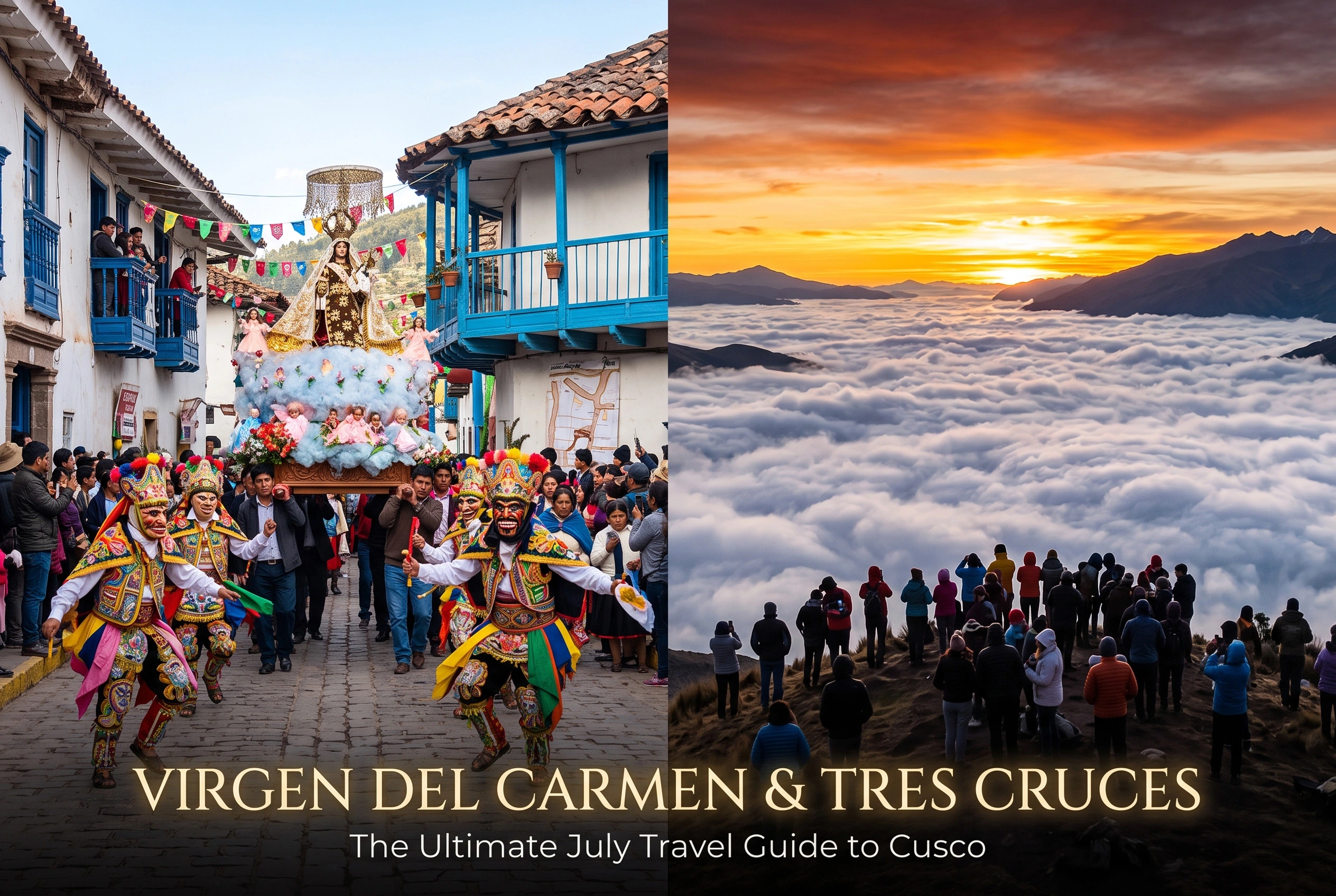
Every July, the historic town of Paucartambo hosts one of the Cusco region’s most important cultural celebrations: the Festival of the Virgen del Carmen, affectionately known as Mamacha Carmen. The main festivities generally take place from July 15 to 18, although related ceremonies may continue beyond those dates. In this blog we will know all about Virgen del Carmen Festival and Tres Cruces Sunrise in Cusco.
Many visitors combine the festival with an overnight journey to the Tres Cruces viewpoint, where they watch the sun rise over the transition between the Andes and the Amazon Basin. The destination is sometimes mistakenly called “Cruz del Sur,” but its correct name is Tres Cruces, also known as Tres Cruces de Oro.
This is not simply another sunrise excursion. It is a journey through masked dances, religious devotion, living Andean traditions, high-altitude landscapes, colonial streets, and one of Peru’s most unusual natural viewpoints. Careful planning is essential, however, because the road is long, the nights are cold, accommodations fill quickly, and the viewpoint stands at approximately 3,700 to 4,000 meters above sea level.
What Is the Special July Festival Near Cusco?
The event is the Festividad de la Virgen del Carmen de Paucartambo, a religious and cultural celebration held in the town of Paucartambo in the Cusco region.
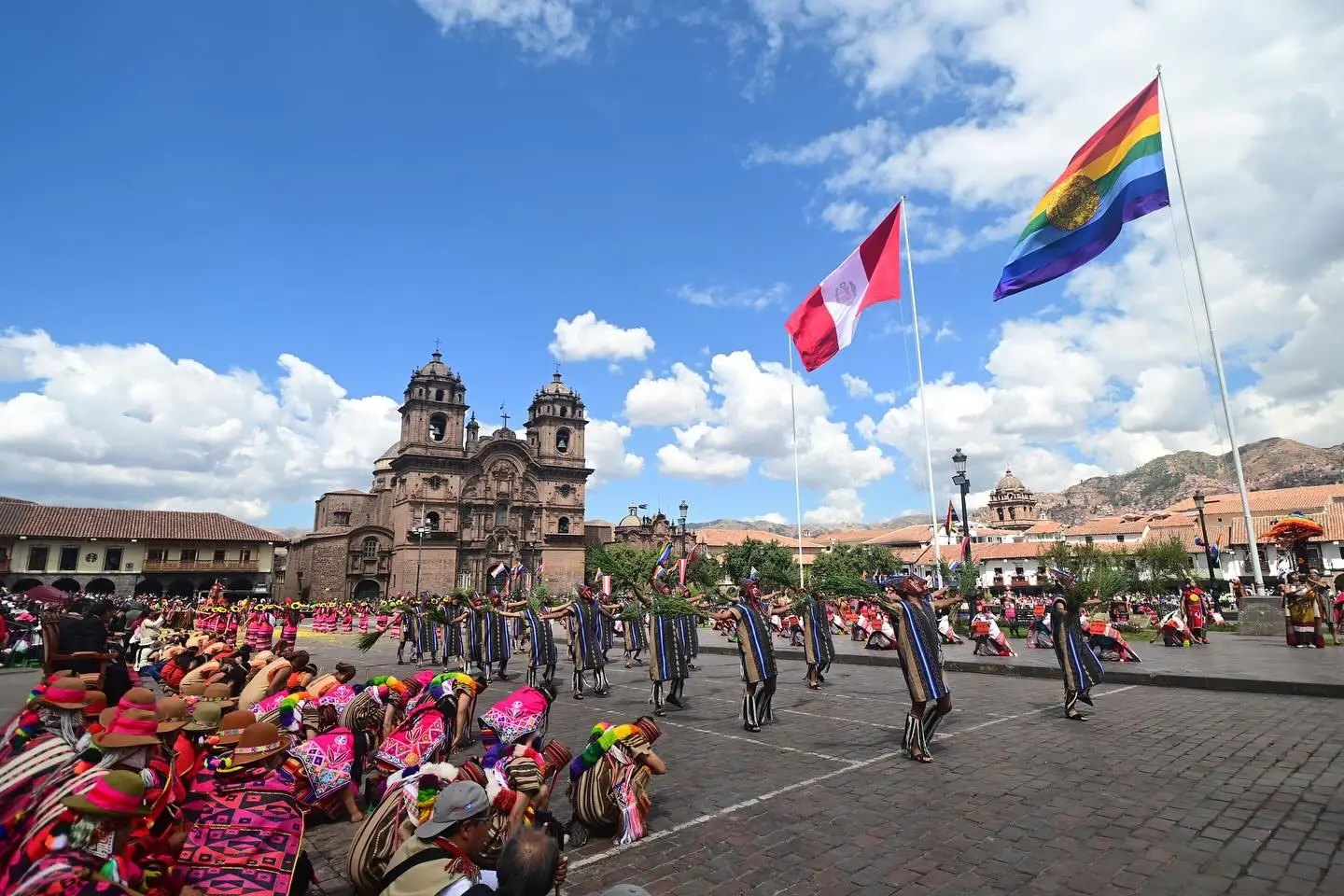
The Virgin is commonly called Mamacha Carmen. “Mamacha” is an affectionate Andean expression of respect that can be understood as “beloved mother” or “dear mother.”
The festival brings together:
- Catholic religious ceremonies
- Andean beliefs and symbolism
- Elaborate masks and traditional costumes
- Brass bands and regional music
- Processions through colonial streets
- Organized dance groups known as comparsas
- Ceremonial battles and theatrical performances
- Community reunions and shared meals
- A sunrise journey to Tres Cruces
The celebration has been recognized as part of Peru’s cultural heritage. It is especially significant because its dances preserve stories about trade, agriculture, colonial society, the Amazonian lowlands, the Andean highlands, spiritual forces, and the historical relationships between different communities.
Is It Called Cruz del Sur or Tres Cruces?
The sunrise destination is called Tres Cruces, not Cruz del Sur.
The names are easy to confuse:
| Term | Meaning |
| Tres Cruces | “Three Crosses,” the famous sunrise viewpoint near Manu National Park |
| Tres Cruces de Oro | “Three Golden Crosses,” another name used for the viewpoint |
| Cruz del Sur | “Southern Cross,” the Spanish name of a constellation and also the name of a Peruvian bus company |
| Virgen del Carmen | The religious figure honored during the Paucartambo festival |
| Mamacha Carmen | The affectionate local name for the Virgen del Carmen |
Tres Cruces lies in the high Andean sector near the entrance to Manu National Park. It faces east toward the Amazonian lowlands, giving visitors an unusually broad view of the horizon.
The official Peruvian protected-areas service, SERNANP, identifies Tres Cruces as a high-altitude viewpoint reached through the Paucartambo–Acjanaco route. June and July are among the principal months for observing sunrise there.
When Is the Virgen del Carmen Festival in Paucartambo?
The central celebration takes place in mid-July.
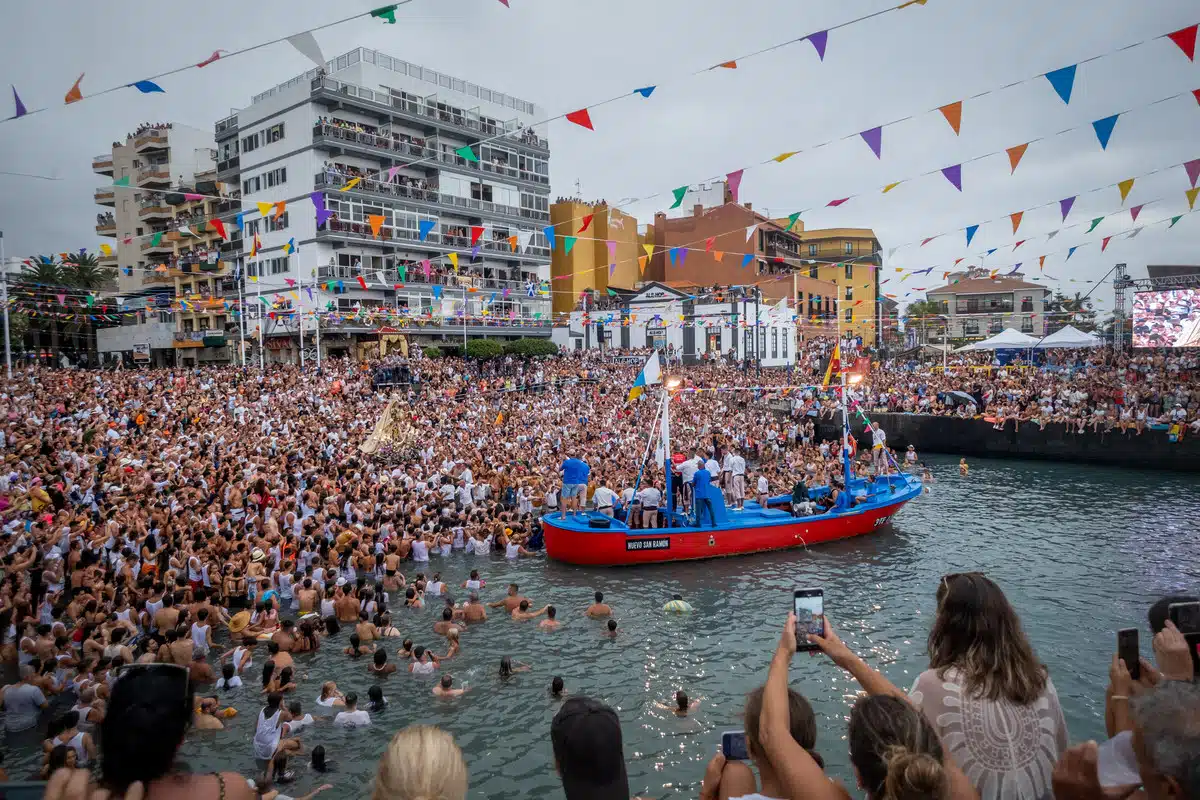
The most important dates are generally:
| Date | Typical Activity |
| July 15 | Arrival of dance groups, opening ceremonies, music and processions |
| July 16 | Central feast day, Mass, major procession and dancing |
| July 17 | Cemetery tributes, blessings, theatrical “guerrilla” and community celebration |
| July 18 | Closing religious ceremonies and final blessings |
| July 19 | Additional closing observances may take place locally |
Programs can change from year to year. Government and cultural sources commonly describe the principal festival period as July 15–18, while some local observances continue through July 19.
Travelers should confirm the current year’s program before leaving Cusco. Procession times, road controls, performances, transportation arrangements, and access rules may be adjusted by local authorities.
Where Is Paucartambo?
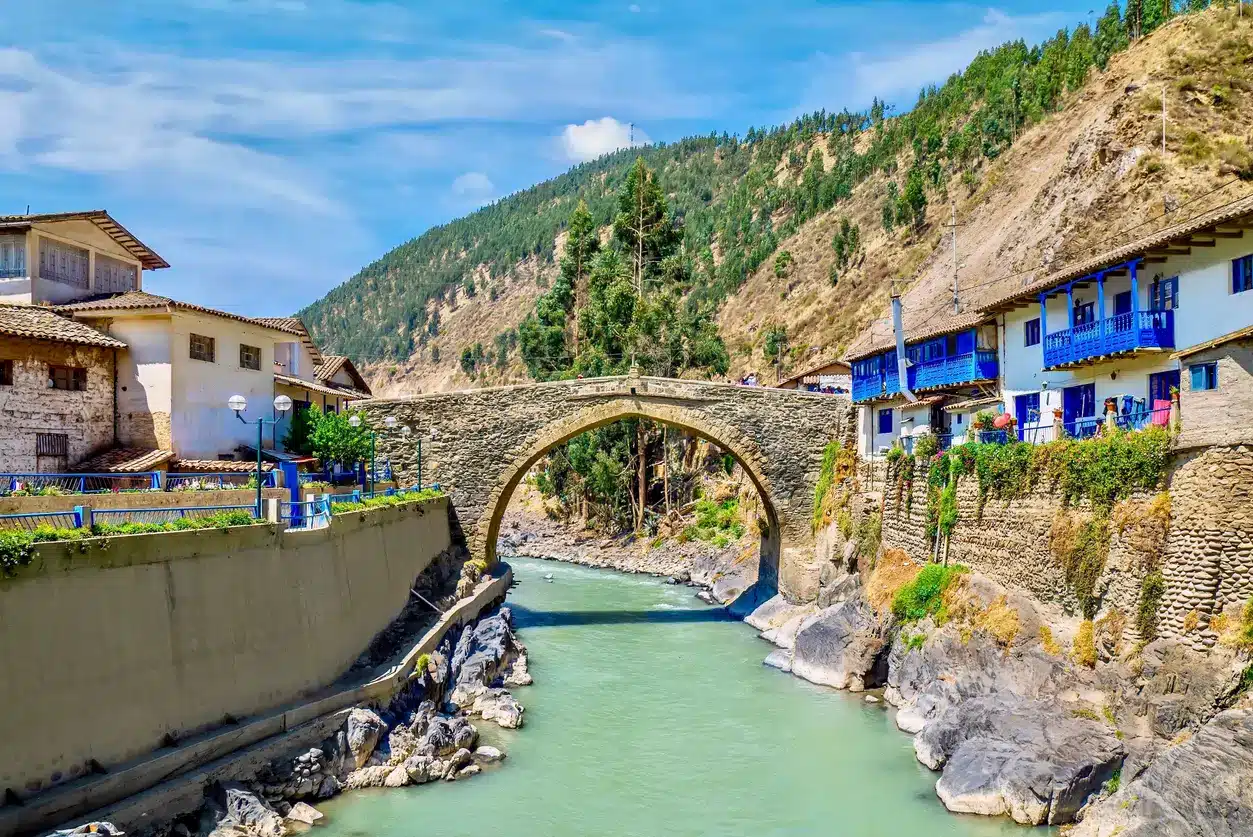
Paucartambo is a colonial town in the Cusco region of southern Peru. It is approximately 110 kilometers from the city of Cusco, although road distance, mountain conditions, traffic, and festival congestion make the journey much longer than the mileage suggests.
The town is known for:
- Whitewashed colonial buildings
- Blue balconies and doors
- Narrow streets
- The Carlos III colonial bridge
- A strong Quechua cultural identity
- Its celebrated masked dances
- Its position on a historic route between the Andes and Amazonia
- Access toward Manu National Park and Tres Cruces
Paucartambo historically connected highland communities with the eastern valleys and tropical forests. That geographic relationship appears throughout the festival’s dances, characters, costumes, and stories.
The town becomes extremely busy during the Virgen del Carmen festivities. Streets that feel quiet at other times of year fill with musicians, dancers, residents returning home, religious pilgrims, photographers, food vendors, domestic travelers, and international visitors.
Why Is the Virgen del Carmen Festival So Important?
The celebration is important because it is not staged solely for tourists. It is a living community tradition supported by families, religious groups, musicians, dancers, costume makers, mask makers, and residents with longstanding responsibilities.
Many participants prepare for months. Membership in a comparsa can involve rehearsals, religious commitments, financial contributions, costume maintenance, and obligations to fellow dancers.
The festival’s importance comes from several overlapping elements.
Religious devotion
At its center is devotion to the Virgen del Carmen. Masses, processions, blessings, candles, prayers, and the movement of the sacred image through town are fundamental parts of the celebration.
Travelers should therefore avoid treating processions as ordinary street entertainment. Even when the atmosphere is joyful, the event has deep spiritual meaning for participants.
Andean cultural continuity
The festival incorporates Catholic imagery, but its performances also reflect Andean ideas about reciprocity, geography, community, the natural world, and the relationship between the highlands and the Amazon.
The result is often described as religious syncretism: different spiritual and cultural traditions interacting over centuries to create a distinctive local form of worship and celebration.
Dance as historical storytelling
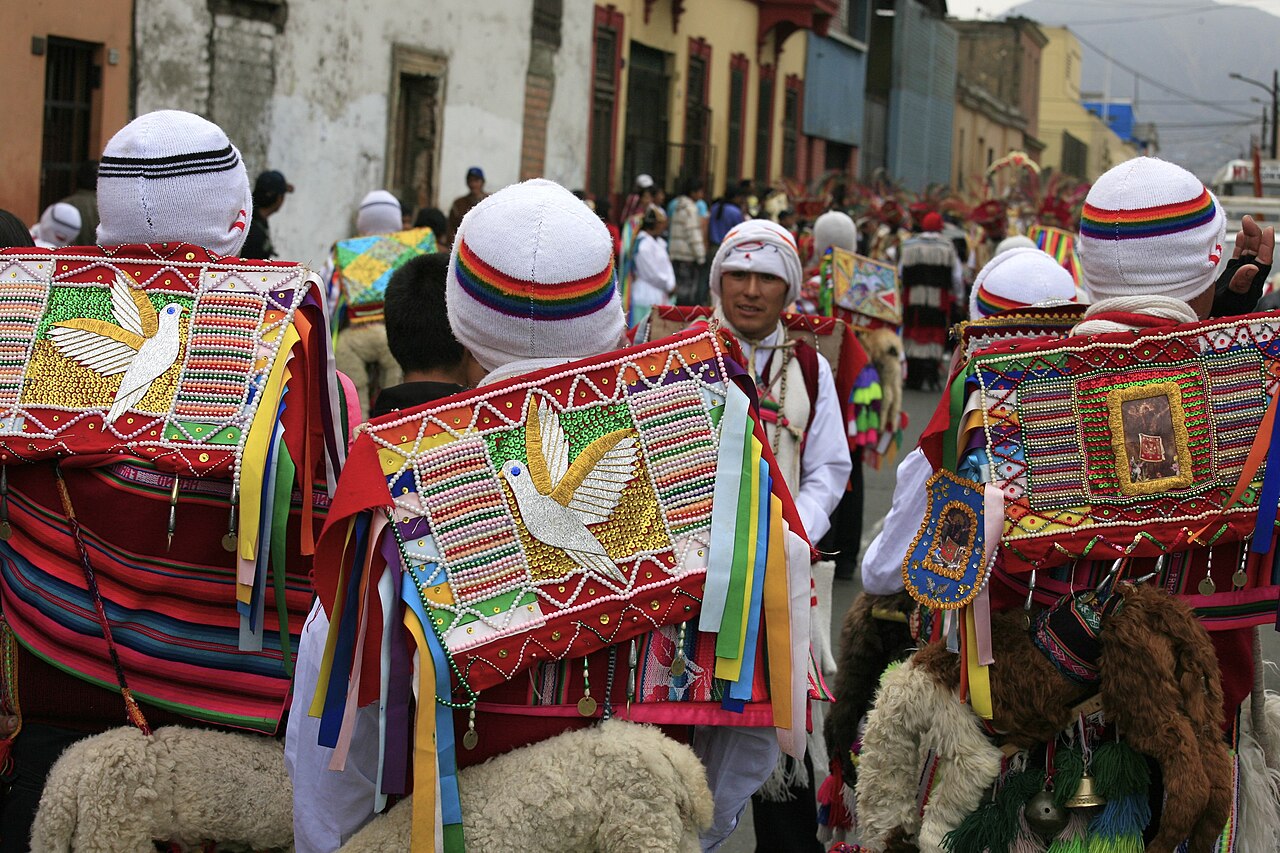
The masked dances are more than colorful performances. They represent recognizable figures, social groups, historical relationships, occupations, outsiders, merchants, landowners, jungle peoples, enslaved populations, animals, demons, and spiritual beings.
The Regional Directorate of Culture in Cusco describes the festival’s principal dances as expressions of myths, rituals, solidarity, reciprocity, faith, and relationships among communities historically associated with Antisuyo and Qollasuyo.
Community identity
Many people born in Paucartambo return for the festival even if they live elsewhere in Peru or abroad. The celebration becomes a major reunion that renews family relationships and community responsibilities.
What Happens During the Festival?
The exact sequence can vary, but visitors can expect several major components.
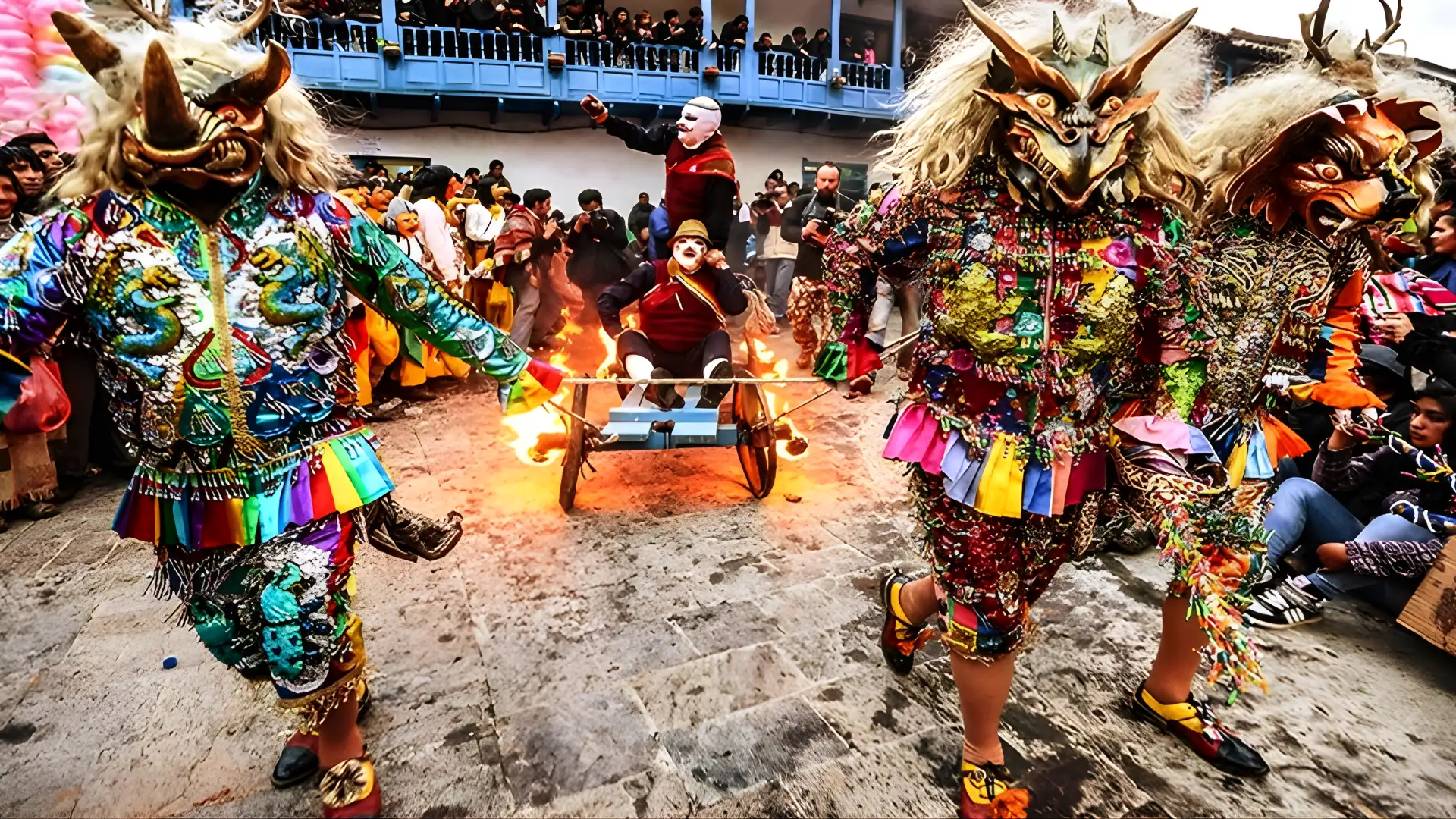
The entrance of the comparsas
Dance groups arrive in their distinctive costumes, often accompanied by musicians. The streets become crowded and energetic as each group establishes its presence.
The costumes may include:
- Handcrafted masks
- Embroidered jackets
- Bright skirts
- Decorative hats
- Bells
- Whips or staffs
- Animal skins or representations
- Symbolic tools and accessories
Some masks are humorous or exaggerated. Others appear fierce, sorrowful, mischievous, elegant, or otherworldly.
Religious Mass and procession
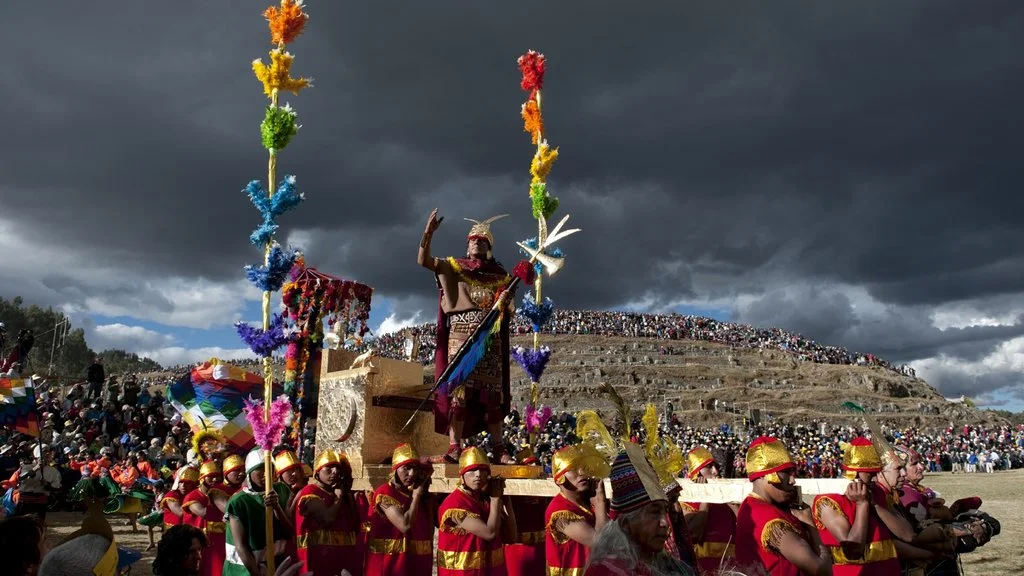
July 16 is the central day of devotion. A Mass is held, and the image of the Virgen del Carmen is carried through Paucartambo.
Dancers accompany the procession, while residents and visitors gather along the route. Balconies, rooftops, plazas, streets, and the colonial bridge can become crowded.
The event should be observed quietly when prayers or solemn rituals are taking place. Visitors should not block the route or push in front of worshippers for photographs.
The Saqras
The Saqras are among the festival’s most memorable characters. They are often represented as mischievous or demonic beings wearing elaborate masks and colorful clothing.
During the procession, Saqras may appear on rooftops and balconies. Their theatrical role is commonly understood as temptation or disorder existing near—but unable to overcome—the sacred presence of the Virgin.
They are visually dramatic, but travelers should remember that their role is part of a structured religious and cultural narrative.
Cemetery visit
Festival participants traditionally visit the cemetery to honor dancers, musicians, and community members who have died.
This is a meaningful and emotional part of the festival. Photography should be especially restrained. Visitors should stay out of family groups and avoid photographing mourners without clear permission.
The guerrilla
The “guerrilla” is a theatrical battle involving festival characters and dance groups. It dramatizes conflict, identity, competition, and symbolic relationships among characters associated with different regions and traditions.
It is festive rather than an uncontrolled fight, but the plaza can become crowded and chaotic. Visitors should remain at the edges, protect cameras and phones, and follow local instructions.
What Are the Main Dances of Paucartambo?
Paucartambo’s dance traditions are complex, and interpretations may vary among local organizations and scholars. Some of the best-known groups include the following.
Qhapaq Qolla
The Qhapaq Qolla dance represents traders associated with the high plateau, or Altiplano. Costumes may include knitted masks, decorated hats, woven clothing, and symbolic goods.
The dancers often combine humor, ritual, commercial imagery, and devotion. Their role also reflects historic exchange between regions.
Qhapaq Negro
This dance preserves memories associated with Afro-Peruvian history, forced labor, devotion, and colonial society.
Visitors should interpret it within its local historical and religious context rather than through a modern costume-only perspective. It carries cultural meaning related to memory, suffering, faith, and community identity.
Qhapaq Ch’unchu
This group is associated with the Antisuyo, the eastern Amazon-facing region of the Inca world.
The dance symbolizes the longstanding relationship between highland Cusco and the forested eastern territories.
Saqra
Saqras are theatrical figures commonly associated with temptation, mischief, danger, and forces outside sacred order.
Their masks are among the festival’s most visually recognizable artistic creations.
Contradanza
Contradanza often reflects colonial and European influence through stylized clothing and choreographed movement.
Its performance can be understood as a local reinterpretation of imported social forms.
Majeños
The Majeños are associated with merchants and muleteers linked to the Majes region. Their dance may include humor, commercial references, and exaggerated social behavior.
Waka Waka
Waka Waka includes imagery connected to cattle, bullfighting, colonial influence, and theatrical representations of animals and people.
The festival contains many additional dances, each with its own hierarchy, costumes, music, history, and obligations.
Why Do People Watch the Sunrise at Tres Cruces?
The sunrise at Tres Cruces is famous because of the viewpoint’s geography.
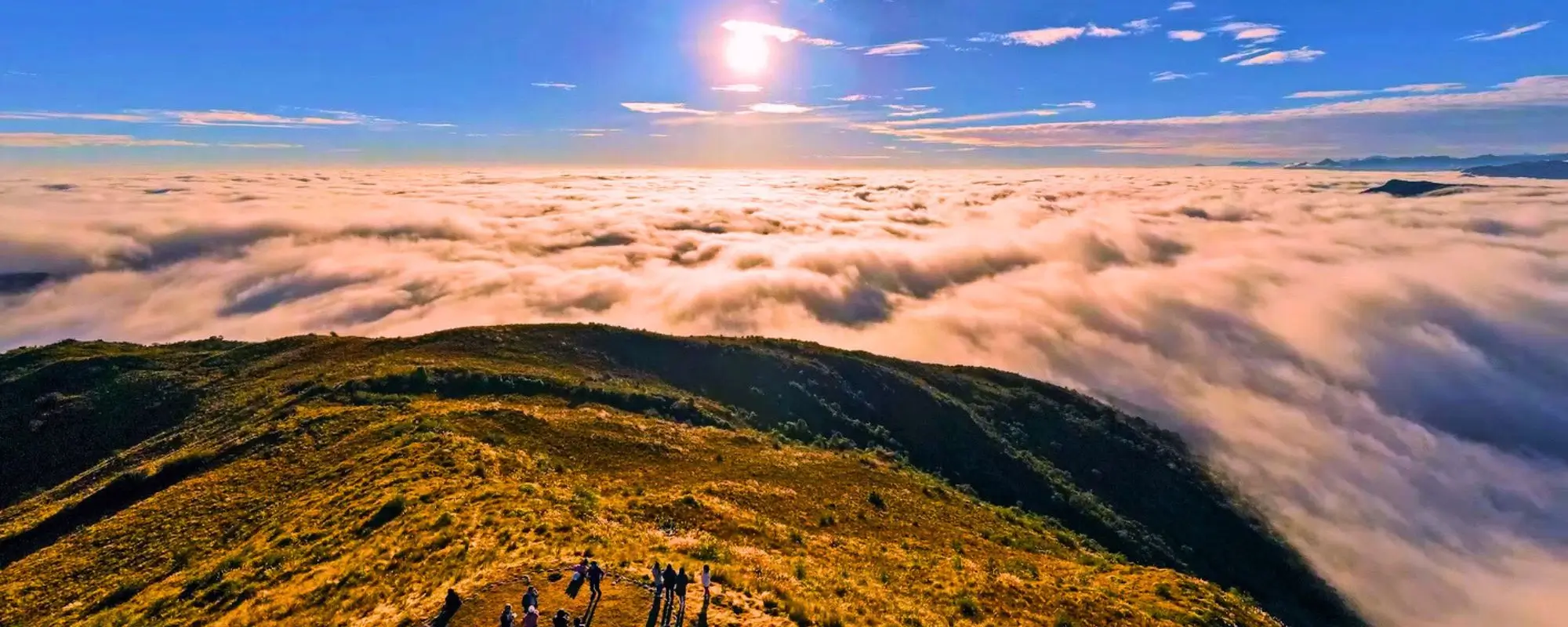
Visitors stand high in the Andes and look east across cloud forest toward the Amazon Basin. Instead of seeing the sun rise behind a nearby mountain, they may see light emerging across an enormous layered horizon.
Under favorable atmospheric conditions, viewers can witness:
- Bands of orange, pink, purple, red, and gold
- Clouds filling the valleys below
- Light spreading across the Amazonian lowlands
- Mountain silhouettes
- Refraction or distortion near the horizon
- Apparent multiple images of the sun
- A visual effect popularly described as “three suns”
SERNANP explains that the viewpoint’s natural lighting conditions can make the sun appear multiplied while illuminating the surrounding high peaks. The experience depends on weather, cloud layers, moisture, visibility, and atmospheric conditions, so no specific visual effect is guaranteed.
Is the Tres Cruces Sunrise Guaranteed?
No.
Travelers sometimes see extraordinary color and a clear sun. On other mornings, fog, low clouds, rain, haze, or changing mountain weather may block all or part of the view.
That uncertainty is part of high-altitude nature travel.
You may experience:
- A completely clear sunrise
- A partly obscured sunrise
- Light above a cloud inversion
- Brief visibility followed by fog
- No visible sun at all
- Strong wind and rapidly changing conditions
Do not plan the trip around the assumption that you will definitely see the famous “three suns” effect. Consider the landscape, festival, journey, cultural setting, and transition between ecosystems part of the experience.
When Is the Best Time to See the Tres Cruces Sunrise?
The most popular period is the Andean dry season, particularly from May through July, with some official material describing good sunrise viewing through August.
Mid-July is especially popular because travelers connect it with the Virgen del Carmen Festival.
The sun usually rises around 6:00 a.m. in this part of Peru during July, but visitors normally reach the viewpoint much earlier to secure a position and observe the sky changing before dawn.
A typical schedule may involve:
- Leaving Paucartambo late at night or very early in the morning
- Driving toward Acjanaco
- Registering or passing through the appropriate park-control area
- Continuing to the viewpoint
- Arriving between approximately 4:00 and 5:00 a.m.
- Waiting in darkness and cold
- Watching first light and sunrise
- Returning after the main viewing period
Exact departure times depend on road conditions, vehicle type, crowd levels, current park procedures, and the organizer.
How High Is Tres Cruces?
Published elevations vary depending on the exact reference point, but Tres Cruces is generally described as being approximately 3,700 to 4,000 meters, or roughly 12,100 to 13,100 feet, above sea level.
SERNANP describes the broader high Andean route as reaching about 4,000 meters.
At this elevation:
- The air contains less available oxygen than at sea level.
- Physical exertion may feel harder.
- Temperatures can drop sharply before sunrise.
- Some travelers may develop altitude-related symptoms.
- Wind exposure may increase heat loss.
- Dehydration can worsen how you feel.
Tres Cruces is higher than central Cusco, which lies at approximately 3,400 meters or 11,150 feet. UNESCO similarly identifies Cusco as a high-altitude city situated at around 3,400 meters.
Should You Acclimatize Before Visiting Tres Cruces?
Yes. Travelers arriving from the United States at or near sea level should normally spend time adjusting to altitude before undertaking an overnight visit to Tres Cruces.
A sensible itinerary includes at least a couple of nights in Cusco or, for a more gradual adjustment, time in the lower Sacred Valley before sleeping or spending several hours near 4,000 meters.
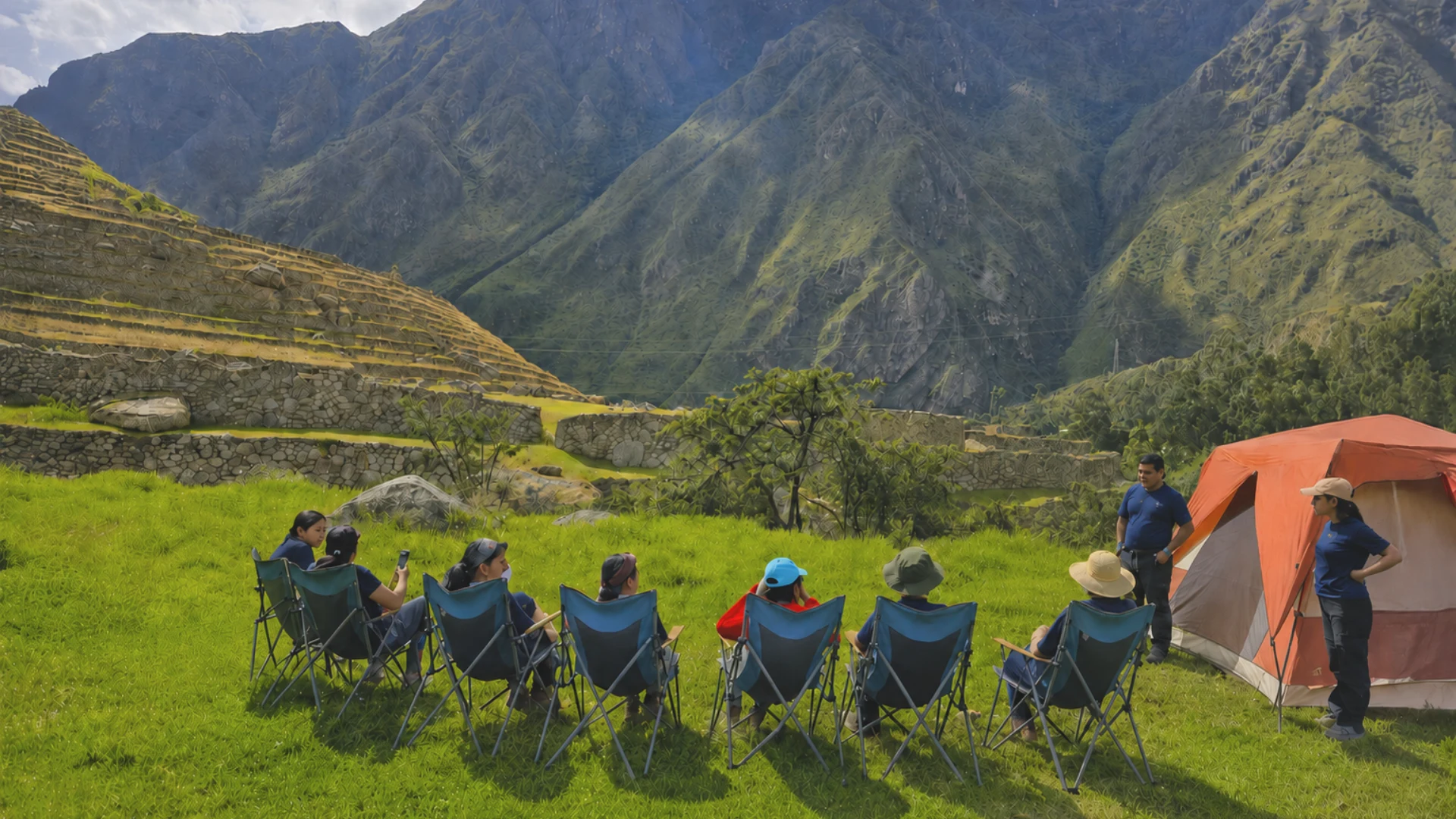
Acclimatization does not guarantee that you will avoid symptoms, but gradual ascent gives the body time to respond to lower oxygen levels.
During your first days at altitude:
- Keep activity light.
- Drink fluids regularly.
- Eat normal, easy-to-digest meals.
- Avoid excessive alcohol.
- Do not plan your hardest hike immediately after arrival.
- Tell your guide if symptoms develop.
- Do not hide worsening symptoms to avoid changing the itinerary.
Alpaca Expeditions generally encourages travelers to arrive before high-altitude treks so they have time to adjust and prepare. This is particularly important when a traveler wants to combine the festival with the Inca Trail, Rainbow Mountain, or another demanding route.
What Does Mild Altitude Illness Feel Like?
Common symptoms of acute mountain sickness can include:
- Headache
- Nausea
- Reduced appetite
- Dizziness
- Unusual fatigue
- Poor sleep
- General weakness
- Feeling lightheaded
These symptoms can resemble dehydration, lack of sleep, motion sickness, alcohol effects, or an ordinary illness. The setting and pattern therefore matter.
A traveler who develops symptoms after ascending should avoid going higher until symptoms have improved. A person whose condition worsens should seek help and descend when advised by a qualified guide or medical professional.
This article provides general travel information, not personal medical advice. Travelers with heart, lung, blood, sleep-related, or other significant medical conditions should discuss high-altitude travel with an appropriate healthcare professional before departure.
Which Altitude Warning Signs Require Urgent Action?
Serious altitude illness is uncommon among well-prepared travelers, but it can become life-threatening.
Seek urgent assistance and descend when possible if someone develops warning signs such as:
- Confusion
- Inability to walk normally
- Severe loss of coordination
- Breathlessness while resting
- Chest tightness
- Persistent coughing
- Blue or gray lips
- Extreme weakness
- Unusual drowsiness
- Rapidly worsening symptoms
- Severe headache accompanied by neurological changes
Do not leave a seriously unwell person alone.
Do not assume that determination, fitness, caffeine, or a brief rest will solve a dangerous altitude problem. Fitness does not provide immunity from altitude illness.
How Cold Is Tres Cruces Before Sunrise?
July is part of the Andean dry season, but “dry” does not mean warm.
Before sunrise, temperatures near the viewpoint may approach or fall below freezing, particularly with wind exposure. Conditions can feel much colder while standing still than they do during an active daytime walk.
Central Cusco can also experience cold nights during June and July, with temperatures sometimes near freezing.
The coldest period is often the hour or two spent waiting before the sun appears. Travelers who dress only for the warmer return journey frequently become uncomfortable.
Use a layered clothing system:
- Moisture-wicking base layer
- Warm fleece or insulating midlayer
- Insulated jacket
- Wind-resistant outer shell
- Warm hat
- Gloves
- Thick socks
- Closed footwear
Bring an extra dry layer in a waterproof bag.
What Should You Pack for Paucartambo and Tres Cruces?
Essential clothing
- Moisture-wicking base layer
- Fleece or warm midlayer
- Insulated jacket
- Windproof or waterproof shell
- Warm hat
- Gloves
- Comfortable long pants
- Warm socks
- Closed walking shoes or hiking boots
Sunrise equipment
- Headlamp with spare batteries
- Power bank
- Camera or phone
- Waterproof camera protection
- Small seat pad or insulating mat
- Reusable water bottle
- High-energy snacks
- Sunglasses
- Sunscreen
- Lip balm with sun protection
Festival essentials
- Secure cross-body bag or money belt
- Small-denomination Peruvian soles
- Refillable water bottle
- Hand sanitizer
- Tissues or toilet paper
- Earplugs
- Rain cover or compact poncho
- Copies of important documents
- Offline map
- Hotel and driver contact details
Health and comfort
- Personal prescription medicines
- Basic first-aid supplies
- Blister care
- Any medication approved for you by your healthcare provider
- Travel insurance details
- Motion-sickness supplies if mountain roads affect you
Alpaca Expeditions’ broader trekking packing guidance also emphasizes layered clothing, sun protection, a headlamp, gloves, waterproof gear, hydration equipment, and secure storage for essential documents.
How Do You Get From Cusco to Paucartambo?
Paucartambo is reached by road from Cusco.
Travel time is commonly around four hours, but it can increase significantly during the festival because of:
- Heavy traffic
- Road controls
- Buses and vans arriving together
- Narrow mountain sections
- Weather
- Construction
- Mechanical problems
- Crowds entering town
- Limited parking
Travel options may include:
- Organized private transportation
- A guided cultural excursion
- Shared tourist transport
- Regional public transportation
- A prearranged driver
First-time visitors should be cautious about piecing together late-night transportation without reliable local support. The route toward Tres Cruces continues beyond Paucartambo through high mountain terrain, and much of the journey may take place in darkness.
How Far Is Tres Cruces From Paucartambo?
From Paucartambo, travelers continue approximately 45 kilometers toward the Acjanaco area and the Tres Cruces viewpoint.
SERNANP describes the broader Cusco–Paucartambo–Acjanaco–Tres Cruces route as approximately 143 kilometers, with an estimated driving time of around 3.5 to 4 hours under suitable conditions. Festival congestion can make it considerably longer.
The road is not comparable to a U.S. interstate highway. Travelers should expect mountain curves, limited lighting, changing surfaces, and potentially slow progress.
Is It Safe to Travel at Night?
Night travel adds risk because of darkness, fatigue, cold, limited services, and mountain-road conditions.
Use a reputable, properly equipped vehicle with a driver who knows the route. Avoid accepting an informal ride simply because it is cheaper or available at the last minute.
Before departure, confirm:
- Driver’s name and phone number
- Vehicle registration
- Pickup point
- Return arrangements
- Whether the driver will wait
- Whether park entrance or registration is included
- Emergency communication method
- Number of passengers
- Availability of seat belts
- Estimated return time
The U.S. Department of State currently advises American travelers to exercise increased caution in Peru due to crime and civil unrest, while noting that Cusco city, the Sacred Valley, the Inca Trail, and Machu Picchu are outside the specifically restricted Cusco-area zone described in its advisory. Travelers should review the latest official guidance before departure.
Where Should You Stay?
Accommodation in Paucartambo is limited compared with Cusco.
During the festival, options may sell out months ahead. Available rooms can be basic, and travelers should not expect the same standards, soundproofing, heating, or hot-water reliability they might find in a full-service Cusco hotel.
Possible arrangements include:
- A simple guesthouse
- A family-run hospedaje
- A room reserved through a local contact
- Organized camping
- Sleeping briefly in arranged transportation
- Returning to Cusco after the festival
- Combining Paucartambo with a longer Manu itinerary
Camping near Tres Cruces should be undertaken only where permitted and with appropriate cold-weather equipment. SERNANP lists camping among the activities associated with the high Andean Tres Cruces sector, but current access rules must be confirmed.
How Crowded Does Paucartambo Become?
Very crowded.
The town’s normal infrastructure is placed under substantial pressure during the festival.
Travelers may encounter:
- Packed streets
- Limited hotel rooms
- Long restroom lines
- Reduced mobile signal
- Slow food service
- Loud music through the night
- Limited vehicle access
- Crowded balconies and rooftops
- Higher temporary prices
- Few quiet places to rest
Anyone who dislikes crowds, loud music, or uncertain schedules should plan carefully. A guided day visit or a trip just before or after the main feast may be more comfortable, although it will not provide the complete festival experience.
How Should Visitors Behave During the Festival?
Respectful behavior protects both the celebration and your experience.
Ask before taking close portraits
A festival participant is not a prop. Ask permission before photographing an identifiable dancer at close range, particularly during preparation, prayer, rest, or emotional moments.
Do not interrupt processions
Stay clear of the sacred image, musicians, dancers, officials, and local families.
Avoid touching masks or costumes
Many pieces are handmade, expensive, sacred, inherited, or connected with group identity.
Dress respectfully
You do not need formal clothing, but avoid outfits that are excessively revealing or disruptive during religious ceremonies.
Keep drones at home unless officially authorized
Drone use near crowds, religious events, protected areas, and Manu National Park may be restricted or unsafe. Never launch a drone without confirming all current permissions.
Do not imitate sacred characters carelessly
Festival masks and roles have specific meanings. Wearing an imitation costume or behaving mockingly can be disrespectful.
Buy locally
Support local food vendors, artisans, family accommodations, and legitimate transportation providers.
What Are the Most Common Planning Mistakes?
Mistake 1: Calling the destination Cruz del Sur
Use the correct name: Tres Cruces or Tres Cruces de Oro.
Mistake 2: Treating it as a quick day trip
The combination of festival traffic, overnight travel, altitude, cold, and early sunrise makes this a demanding excursion.
Mistake 3: Arriving in Cusco and leaving immediately
Travelers flying from Lima or the United States should not assume they will feel comfortable going directly to nearly 4,000 meters.
Mistake 4: Packing for a warm July vacation
July can be sunny during the day but extremely cold before dawn.
Mistake 5: Depending only on a phone flashlight
Cold temperatures drain batteries. Carry a real headlamp and backup power.
Mistake 6: Assuming accommodation will be available
Festival lodging may fill far in advance.
Mistake 7: Expecting punctuality like a scheduled theater show
Community festivals follow ceremonial, religious, and logistical realities. Delays and changes are normal.
Mistake 8: Scheduling the Inca Trail immediately afterward
An all-night festival and sunrise trip can leave you exhausted. Build in a recovery day before beginning a major trek.
Mistake 9: Ignoring food and hydration
Long road journeys, cold weather, crowds, and altitude can make it easy to forget to eat or drink.
Mistake 10: Photographing without cultural awareness
The most dramatic photograph is not worth interrupting a prayer, funeral tribute, or family ritual.
Can You Combine the Festival With Machu Picchu or the Inca Trail?
Yes, but the order matters.
A traveler should not finish an all-night Tres Cruces excursion and immediately begin a demanding multi-day trek.
A more comfortable plan is:
| Day | Suggested Plan |
| Day 1 | Arrive in Cusco or stay in the Sacred Valley |
| Day 2 | Light acclimatization and cultural sightseeing |
| Day 3 | Continue acclimatizing; prepare for Paucartambo |
| Day 4 | Travel to Paucartambo and attend festival activities |
| Day 5 | Tres Cruces sunrise and return |
| Day 6 | Recovery day in Cusco |
| Day 7 onward | Begin the Inca Trail, Sacred Valley tour or Machu Picchu journey |
Travelers with more time can place the Paucartambo festival after Machu Picchu, provided they remain acclimatized and allow time for rest.
Alpaca Expeditions can help its trekking guests understand how cultural activities fit around briefings, permit-controlled departures, train schedules, and necessary acclimatization days. Any additional excursion should be disclosed during itinerary planning so it does not conflict with an Inca Trail departure.
Is July a Good Month to Visit Cusco?
July is one of the most popular months to visit Cusco because it usually falls within the dry season.
Advantages include:
- Lower average rainfall
- Clearer daytime skies
- Favorable trekking conditions
- Major cultural events
- Good sunrise-viewing season at Tres Cruces
- Strong demand for Machu Picchu and Inca Trail travel
Challenges include:
- Peak-season crowds
- Cold nights
- Higher accommodation demand
- Limited last-minute availability
- Heavy domestic travel near Peru’s Independence Day on July 28
- Early booking requirements
- Busy trains and popular attractions
Visitors should reserve major services early, particularly Inca Trail permits, Machu Picchu tickets, train seats, hotels, and festival transportation.
What Is a Good Three-Day Paucartambo Itinerary?
Day 1: Cusco to Paucartambo
Leave Cusco early enough to account for festival traffic.
After arrival:
- Check into your accommodation.
- Confirm your sunrise transportation.
- Walk through town before the largest crowds arrive.
- Identify restrooms, meeting points, and food options.
- Attend opening festivities or evening performances.
- Keep alcohol intake low because of altitude and the overnight schedule.
Day 2: Main festival experience
Depending on the date:
- Observe the Mass or procession respectfully.
- Watch dances from a safe position.
- Visit the colonial bridge.
- Eat at an established local restaurant or vendor.
- Keep valuables secure.
- Rest during the afternoon when possible.
- Reconfirm the Tres Cruces departure time.
- Prepare warm layers and a small sunrise bag.
Day 3: Tres Cruces sunrise and return
Depart during the night.
At the viewpoint:
- Move slowly.
- Stay on designated routes.
- Keep warm while waiting.
- Drink small amounts regularly.
- Avoid standing near exposed edges.
- Watch for altitude symptoms.
- Carry out all trash.
Return to Paucartambo or Cusco after sunrise. Do not schedule a strenuous hike or important flight immediately afterward.
What If You Have Only One Day?
A one-day visit is possible but demanding.
You may need to choose between:
- Experiencing the festival properly
- Watching the Tres Cruces sunrise
- Spending meaningful time in Paucartambo
- Returning to Cusco at a reasonable hour
Trying to do everything in a rushed period can involve extensive night driving and little sleep.
For most American travelers, one or two nights provide a safer and more rewarding experience.
Is the Trip Suitable for Children?
It depends on the child, itinerary, altitude exposure, road journey, weather, sleep schedule, and access to appropriate medical support.
Potential difficulties include:
- Four or more hours of driving
- Motion sickness
- Crowds
- Loud music
- Limited bathrooms
- Nighttime temperatures
- Waiting outdoors before dawn
- Altitude approaching 4,000 meters
- Disrupted sleep
Parents should discuss altitude concerns with a pediatric healthcare professional and avoid assuming that children will experience altitude in the same way adults do.
Is the Trip Suitable for Older Travelers?
Age alone does not determine suitability.
However, older travelers should consider:
- Heart and lung health
- Balance
- Cold tolerance
- Ability to enter and exit a vehicle repeatedly
- Access to bathrooms
- Sleep disruption
- Medication storage
- Road comfort
- Altitude history
A private vehicle, warm accommodation, shorter festival attendance, and a carefully paced itinerary can improve comfort.
How Can You Photograph Tres Cruces?
Sunrise photography requires preparation because the scene changes quickly and the cold affects both hands and batteries.
Bring:
- Fully charged batteries
- At least one spare battery
- Lens cloth
- Small tripod where permitted
- Wide-angle lens
- Telephoto option for distant ridges
- Waterproof bag
- Gloves that allow camera control
- Headlamp with a low setting
Photography tips:
- Arrive before first light.
- Include landscape layers, not only the sun.
- Protect highlights from overexposure.
- Photograph changing clouds.
- Keep batteries inside your jacket until needed.
- Avoid blocking another visitor’s view.
- Never step beyond barriers for a better angle.
How Can Travelers Reduce Their Impact?
Tres Cruces lies within an ecologically important transition between Andean and Amazonian environments.
Visitors should:
- Carry out all trash.
- Avoid single-use plastics where possible.
- Stay on designated roads and trails.
- Do not feed wildlife.
- Keep noise low outside festival areas.
- Avoid picking plants.
- Use established restroom facilities.
- Follow SERNANP instructions.
- Travel with authorized providers where required.
- Respect local residents’ property.
- Do not build fires unless specifically permitted.
Manu National Park protects an exceptional range of elevations and ecosystems, from high Andean landscapes to cloud forest and Amazonian lowlands. Responsible behavior is especially important in such a sensitive environment.
Final Travel Checklist
Before leaving Cusco, confirm that you have:
- Correct festival dates
- Reserved accommodation
- Confirmed transportation
- Driver’s contact details
- Tres Cruces access information
- Warm layered clothing
- Headlamp
- Water and snacks
- Cash in small denominations
- Travel insurance information
- Personal medicines
- Emergency contact plan
- Offline map
- Recovery time before your trek
- A flexible attitude toward weather and scheduling
Why This July Experience Is Worth the Journey
Paucartambo and Tres Cruces offer something very different from a standard Cusco sightseeing tour.
The festival allows travelers to witness a living tradition in which religion, dance, family, history, art, humor, memory, and community responsibility remain closely connected. The sunrise journey then carries visitors beyond the colonial town into a high-altitude landscape overlooking the meeting point between the Andes and the Amazon.
It is a powerful combination, but it rewards preparation.
Arrive acclimatized. Reserve transportation and lodging early. Bring serious cold-weather layers. Treat ceremonies respectfully. Do not expect perfect weather. Leave enough time to recover before hiking the Inca Trail or continuing to Machu Picchu.
With thoughtful planning, the Virgen del Carmen Festival and Tres Cruces sunrise can become one of the most meaningful cultural experiences of a July trip to Peru.
7. Frequently Asked Questions
1. What is the July sunrise festival near Cusco?
It is the Virgen del Carmen Festival in Paucartambo, commonly celebrated from July 15 to 18. Many visitors combine it with a predawn trip to the Tres Cruces viewpoint.
2. Is the sunrise viewpoint called Cruz del Sur?
No. The correct name is Tres Cruces or Tres Cruces de Oro. Cruz del Sur means Southern Cross and is not the name of the viewpoint.
3. When is the Virgen del Carmen Festival in Paucartambo?
The principal festivities generally take place from July 15 through July 18, with some closing observances continuing into July 19.
4. Where is the Tres Cruces viewpoint?
Tres Cruces is in the high Andean sector near Manu National Park, beyond Paucartambo and the Acjanaco area in the Cusco region.
5. How far is Paucartambo from Cusco?
Paucartambo is approximately 110 kilometers from Cusco. The road journey generally takes around four hours and may take longer during the festival.
6. What time should I arrive at Tres Cruces?
Most visitors arrive well before sunrise, commonly between 4:00 and 5:00 a.m. Exact departure and arrival times depend on road conditions and current access procedures.
7. Is the “three suns” effect guaranteed?
No. The appearance depends on atmospheric refraction, clouds, moisture, visibility, and other conditions. Some visitors see a dramatic effect, while others see an ordinary or obscured sunrise.
8. How high is Tres Cruces?
The viewpoint is commonly described as approximately 3,700 to 4,000 meters, or about 12,100 to 13,100 feet, above sea level.
9. Do I need to acclimatize before visiting?
Yes. Travelers arriving from low elevations should spend time acclimatizing in Cusco or the Sacred Valley before traveling to Tres Cruces.
10. How cold is Tres Cruces in July?
Predawn conditions can approach or fall below freezing, especially with wind. Warm base layers, fleece, an insulated jacket, gloves, and a hat are recommended.
11. Can I visit Paucartambo and Tres Cruces without a guide?
Independent travel may be possible, but reliable transportation and current access information are essential. First-time visitors are generally more comfortable using an organized service or experienced local driver.
12. Can I attend the festival before hiking the Inca Trail?
Yes, but leave at least one recovery day after the overnight sunrise excursion. Lack of sleep and prolonged cold exposure are poor preparation for a multi-day trek.
13. Is Paucartambo suitable for families?
Families can attend, but parents should consider crowds, noise, limited facilities, mountain roads, cold temperatures, altitude, and overnight travel.
14. Can I use a drone at the festival or Tres Cruces?
Do not assume drone use is permitted. Crowded religious events and protected areas may have strict restrictions. Obtain all required authorization before bringing or operating a drone.
15. Is July a busy month in Cusco?
Yes. July is peak season for Cusco, Machu Picchu, the Inca Trail, domestic tourism, and major cultural events. Important reservations should be made well in advance.