



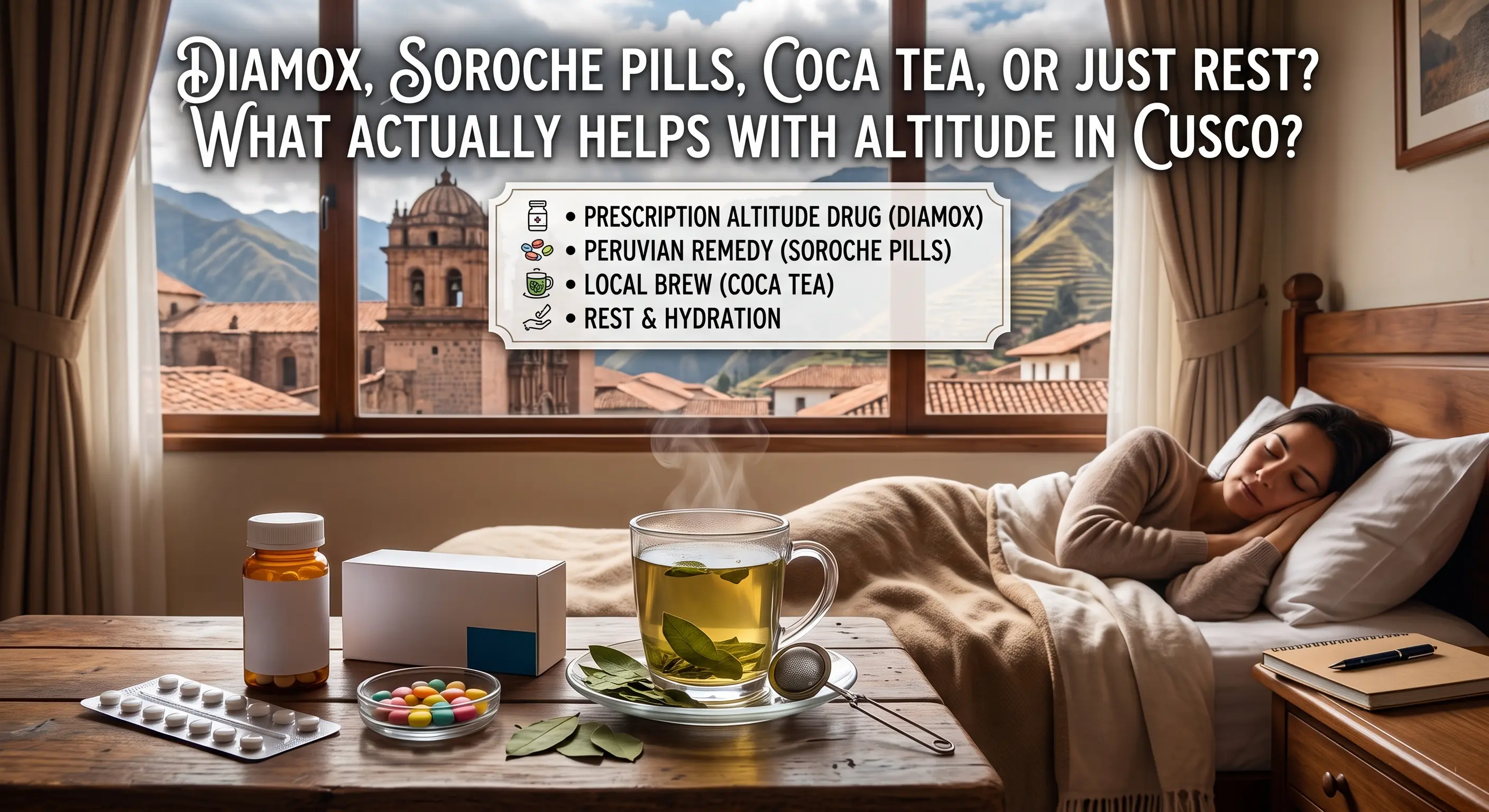
Cusco sits at approximately 11,000 feet above sea level, so travelers arriving from the United States may feel the effects of altitude sickness in Cusco within their first several hours. What actually helps?
Gradual acclimatization, avoiding further ascent while symptomatic, resting, and descending when symptoms worsen are the most important measures. Acetazolamide, commonly known by the brand name Diamox, has the strongest medical evidence for helping prevent acute mountain sickness in appropriate travelers, but it requires professional guidance.
Soroche pills may reduce headache or discomfort but do not replace acclimatization. Coca tea is culturally important and soothing, yet strong evidence that it prevents altitude sickness is lacking.
Most mild cases improve with time, reduced activity, and no further ascent. Severe headache, confusion, difficulty walking, breathlessness at rest, or a worsening cough require urgent medical attention and usually descent.
Medical note: This article provides general travel-health information, not personalized medical advice. Discuss medications, existing health conditions, allergies, pregnancy, and travel plans with a qualified healthcare professional before your trip.
Why Does Cusco Cause Altitude Sickness?
Cusco is located at roughly 11,000 feet, or about 3,340 meters, above sea level. That is well above the elevation where altitude illness can occur.
The CDC identifies travelers visiting destinations above 8,200 feet, including Cusco, as being at risk for altitude-related illness. The risk increases when someone moves quickly from a low-elevation city to a high-altitude destination without giving the body time to adjust.
Many American travelers follow an itinerary like this:
- Fly from the United States to Lima.
- Spend one night—or only a few hours—near sea level.
- Fly directly to Cusco.
- Begin sightseeing or hiking almost immediately.
That rapid change gives the body very little time to adapt.
At altitude, the percentage of oxygen in the air is still about the same as at sea level. The difference is that lower atmospheric pressure means fewer oxygen molecules are available with each breath.
Your body begins compensating by:
- Breathing faster
- Increasing your heart rate
- Producing more urine
- Changing how oxygen is transported and used
- Gradually increasing red blood cell production over a longer period
These adjustments take time. Medication may support the process in some people, but no tea, tablet, supplement, or oxygen session can instantly create complete acclimatization.
What Is Acute Mountain Sickness?
Acute mountain sickness, usually shortened to AMS, is the most common form of altitude illness.
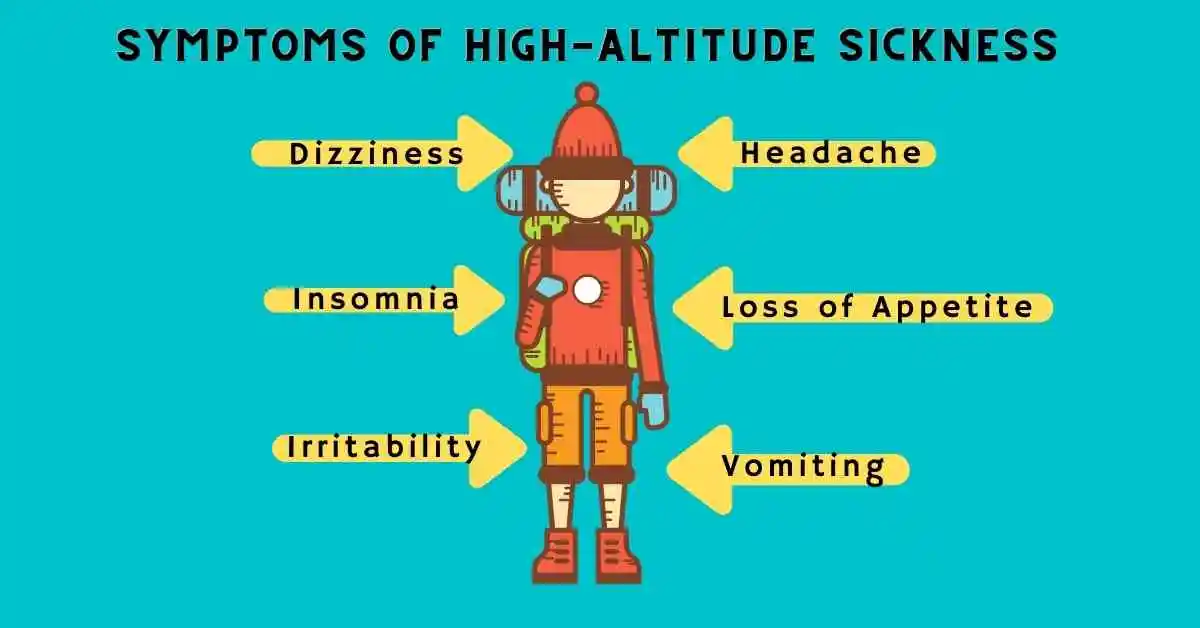
It often feels like a combination of a hangover, jet lag, dehydration, and a mild viral illness. According to the CDC, headache is the classic symptom and is commonly accompanied by nausea, dizziness, fatigue, reduced appetite, or vomiting. Symptoms usually begin within 2 to 12 hours after arriving at altitude or reaching a higher sleeping elevation.
Common mild symptoms
- Headache
- Unusual tiredness
- Lightheadedness or dizziness
- Reduced appetite
- Mild nausea
- Difficulty sleeping
- Shortness of breath during exertion
- General weakness
- Feeling unusually “off”
Mild breathlessness while climbing stairs in Cusco is not automatically an emergency. Almost everyone notices that physical effort feels harder at 11,000 feet.
The more important question is whether symptoms are improving, staying the same, or getting worse.
Altitude illness is not a fitness test
A marathon runner can develop altitude sickness. A less athletic traveler may feel fine.
Your fitness level does not reliably predict whether you will experience AMS. Prior experience at altitude is more useful, but it is still not a guarantee. A person who felt fine during one trip can become ill during a later visit.
Altitude sickness is primarily related to:
- How high you travel
- How quickly you ascend
- How high you sleep
- Your individual susceptibility
- Whether you continue ascending while symptomatic
Quick Comparison: Diamox, Soroche Pills, Coca Tea, or Rest
| Option | What it may do | What it cannot do | Main caution |
| Gradual acclimatization | Gives the body time to adapt | Cannot guarantee zero symptoms | Requires sufficient time in the itinerary |
| Rest at the same altitude | May help mild symptoms settle | Does not treat serious deterioration | Do not continue ascending while symptoms persist |
| Descent | Usually improves altitude illness by increasing available oxygen | Does not replace medical evaluation in severe cases | Serious symptoms require urgent action |
| Diamox/acetazolamide | Speeds acclimatization and reduces AMS risk for appropriate travelers | Does not make rapid ascent completely safe | Prescription medicine with side effects and contraindications |
| Soroche pills | May reduce headache or discomfort, depending on ingredients | Do not produce true acclimatization | Formulas may contain aspirin, caffeine, or other active ingredients |
| Coca tea | Warm, comforting, culturally significant drink | Strong evidence for AMS prevention is lacking | May affect drug testing and cannot be brought into the United States |
| Supplemental oxygen | Can temporarily improve symptoms and oxygen levels | Does not create lasting acclimatization | Improvement may fade after oxygen is stopped |
| Water and fluids | Prevent dehydration from worsening how you feel | Excess water does not prevent AMS | Drink sensibly rather than forcing fluids |
Does Diamox Actually Help with Altitude in Cusco?
Acetazolamide, often known by the brand name Diamox, is the most evidence-supported medication used to help prevent acute mountain sickness.
It works differently from a painkiller. Instead of simply masking a headache, acetazolamide changes the body’s acid-base balance in a way that encourages deeper and more regular breathing. This helps the body acclimatize faster.
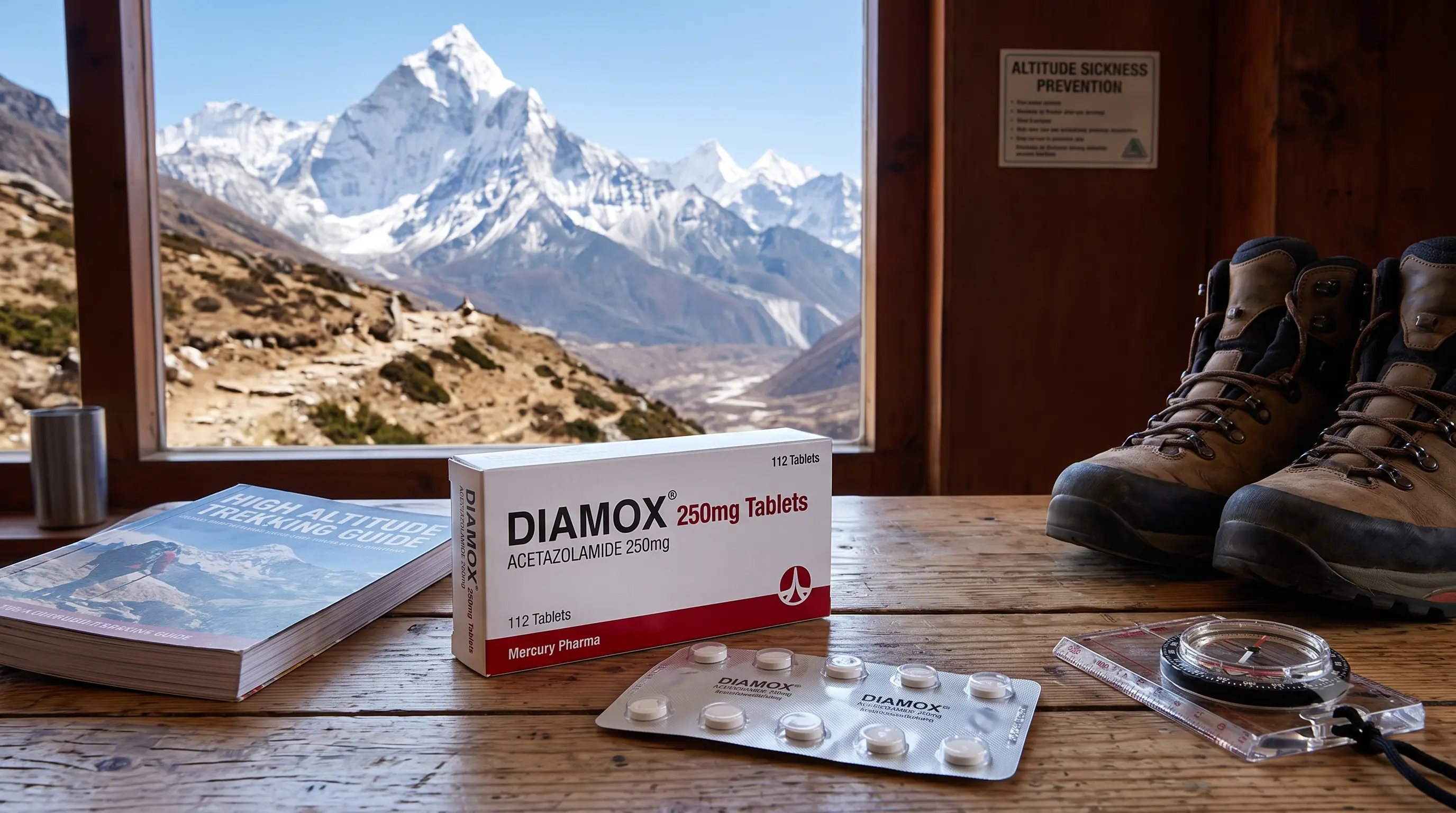
The CDC and Wilderness Medical Society recognize acetazolamide as an important option for preventing AMS in travelers whose rate of ascent or previous history places them at meaningful risk.
Who might discuss Diamox with a healthcare professional?
A pre-travel consultation may be especially worthwhile when a traveler:
- Will fly directly from near sea level to Cusco
- Has previously developed altitude sickness
- Has a tight itinerary with limited acclimatization time
- Plans to begin the Inca Trail soon after arrival
- Will continue to a substantially higher sleeping altitude
- Has experienced difficulty sleeping or functioning at altitude before
- Is unsure whether an existing medical condition affects high-altitude travel
This does not mean every traveler to Cusco needs medication. Many visitors acclimatize successfully without it.
The decision depends on the individual, the ascent profile, the planned sleeping elevations, medical history, allergies, current medications, pregnancy status, and prior altitude experience.
When is Diamox usually started?
Medical guidelines often describe starting acetazolamide before ascent and continuing during the early acclimatization period. However, the exact dose, timing, and duration should come from the traveler’s prescribing clinician.
Do not copy another traveler’s dosage or use medication supplied by a friend.
A travel-medicine professional can evaluate whether acetazolamide is appropriate and explain:
- When to start
- How long to continue
- Expected effects
- Side effects
- Relevant medication interactions
- What to do if symptoms appear despite taking it
Common acetazolamide side effects
Travelers may experience:
- Tingling in the fingers, toes, or face
- Increased urination
- Changes in the taste of carbonated drinks
- Fatigue
- Nausea
- Lightheadedness
Tingling is common and can feel strange, but travelers should still report severe, unexpected, or concerning reactions to a medical professional.
Is Diamox a cure for altitude sickness?
No.
Acetazolamide supports acclimatization, but it does not make reckless ascent safe. A traveler taking Diamox should not ignore worsening symptoms, climb higher while seriously unwell, or assume medication eliminates the possibility of HACE or HAPE.
Medication is a tool – not permission to override the body’s warning signs.
What Are Soroche Pills?
“Soroche” is a common Andean term for altitude sickness. Soroche pills are widely sold in parts of Peru and are often marketed to travelers for altitude-related discomfort.
Unlike acetazolamide, traditional Soroche pill formulations generally work more like combination symptom-relief medication.
Published Peruvian product information lists active ingredients that may include aspirin, caffeine, and salophen, although travelers should always read the current packaging because formulations and strengths can differ.
What might Soroche pills help with?
Depending on the formula, they may temporarily reduce:
- Headache
- General discomfort
- Fatigue
- Sleepiness
Caffeine may make a traveler feel more alert. Aspirin or aspirin-related ingredients may reduce headache.
Feeling better, however, does not necessarily mean the body has acclimatized.
Do Soroche pills prevent altitude sickness?
They should not be considered a substitute for gradual ascent or evidence-based altitude prevention.
A combination headache product may reduce symptoms while the underlying problem continues. This creates a risk that someone feels well enough to keep climbing even though their body is not adapting adequately.
That distinction is important:
- Symptom relief: You notice less discomfort.
- Acclimatization: Your body is adjusting to reduced oxygen availability.
They are not the same process.
Who should be cautious with Soroche pills?
Because some formulations contain aspirin, caffeine, or related substances, Soroche pills may be unsuitable for people with certain medical conditions or medication combinations.
Extra caution is needed for travelers with concerns such as:
- Aspirin allergy
- A history of stomach ulcers or gastrointestinal bleeding
- Bleeding disorders
- Blood-thinning medication
- Kidney disease
- Sensitivity to caffeine
- Certain heart rhythm problems
- Pregnancy
- Asthma that is triggered by aspirin or similar drugs
- Use in children or teenagers
Travelers should ask a qualified pharmacist or healthcare professional to review the exact ingredient label rather than relying on a hotel employee, fellow tourist, or social media post.
Never combine medications without checking the ingredients
A traveler might unknowingly take:
- Soroche pills containing aspirin
- A separate aspirin tablet
- Ibuprofen
- A cold or flu product
- Another caffeine-containing medicine
Combining products can increase the risk of side effects, bleeding, stomach irritation, excessive caffeine intake, or accidental duplication.
Before taking any over-the-counter medicine in Peru, ask:
- What are the active ingredients?
- What is the strength of each ingredient?
- Does it duplicate anything I already took?
- Does it interact with my prescription medication?
- Is it intended only for symptom relief?
- Could it hide worsening altitude illness?
Does Coca Tea Really Help Altitude Sickness?
Coca tea, or mate de coca, is deeply connected to Andean culture and is commonly offered in Cusco hotels, restaurants, trekking lodges, and local homes.
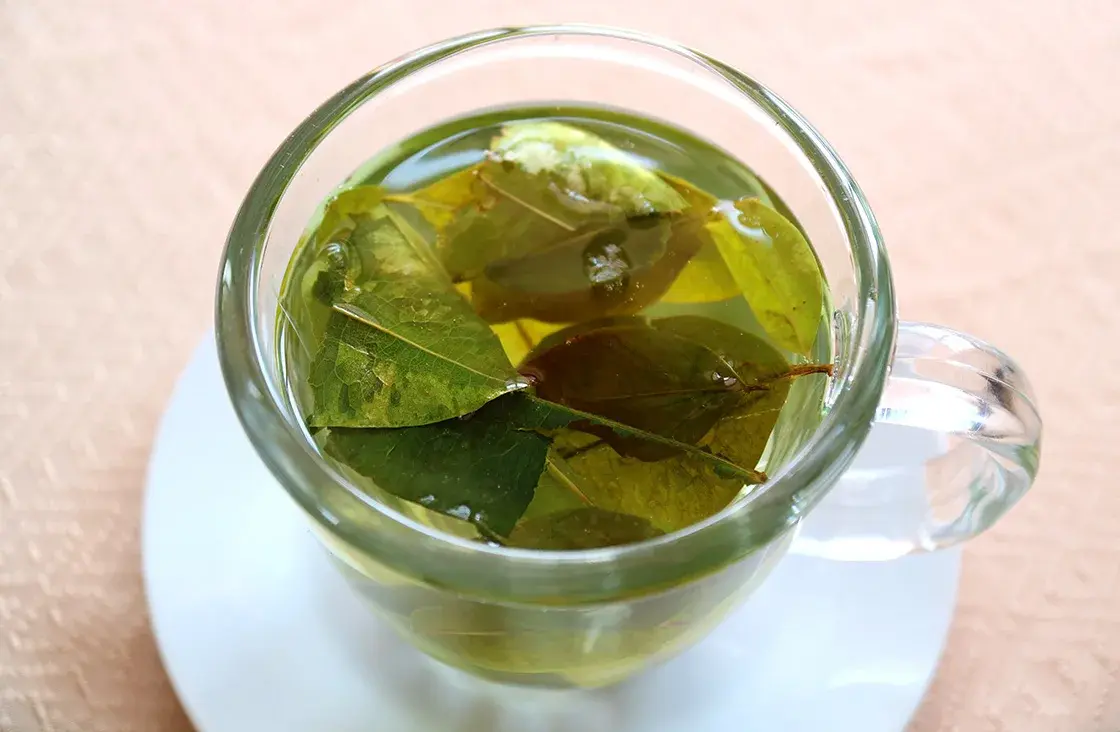
Many travelers find it:
- Warm and comforting
- Helpful for settling the stomach
- Mildly stimulating
- Useful as part of a calming arrival routine
- Culturally meaningful
However, there is not strong scientific evidence showing that coca tea reliably prevents or treats acute mountain sickness. The U.S. National Center for Complementary and Integrative Health notes that coca leaf has long been used for altitude illness, but strong evidence of effectiveness is lacking.
Why do many travelers say coca tea works?
There are several possible explanations.
A traveler who drinks coca tea may also be:
- Sitting down and resting
- Drinking warm fluid
- Eating a light snack
- Taking a break from activity
- Gradually acclimatizing over time
- Experiencing mild stimulant effects
- Expecting the traditional remedy to help
The person may genuinely feel better, but that does not prove the tea prevented or reversed altitude illness.
Can you drink coca tea in Peru?
Coca tea is widely available and culturally accepted in Peru. Nevertheless, American travelers should know two practical points.
First, coca products may be relevant to workplace, military, athletic, probation, medical, or professional drug-testing programs. Travelers subject to drug testing should obtain appropriate guidance before consuming coca products.
Second, U.S. Customs and Border Protection states that coca leaves and coca tea cannot be brought into the United States, even though they are legal and commonly available in Peru and Bolivia.
Enjoying a tea in Cusco and packing coca tea bags into your luggage for the flight home are legally different situations.
Should coca tea replace medical care?
No.
Coca tea should never be used to delay descent or emergency evaluation when someone has:
- Confusion
- Loss of coordination
- Breathlessness at rest
- Chest tightness
- Blue or gray lips
- A wet or worsening cough
- Inability to walk normally
- Severe weakness
- Repeated vomiting
- Rapidly worsening symptoms
A warm drink may be comforting. It is not emergency treatment for swelling in the lungs or brain.
Is Rest the Best Treatment for Mild Altitude Sickness?
For mild symptoms, resting at the same elevation and avoiding further ascent are often the most important immediate steps.

A traveler with a mild headache, fatigue, reduced appetite, or light nausea should not automatically panic. But they should change their plans.
That may mean:
- Canceling a strenuous afternoon tour
- Postponing a higher-altitude day trip
- Taking a taxi instead of walking uphill
- Eating a light meal
- Resting in the hotel
- Monitoring symptoms
- Telling a travel companion or guide how they feel
People with altitude symptoms should not ascend to sleep at a higher elevation until the symptoms have resolved. The Wilderness Medical Society emphasizes stopping ascent when AMS is present and considering descent if symptoms worsen or fail to improve.
What does “rest” actually mean?
Rest does not necessarily require lying completely still all day.
For mild symptoms, it can mean:
- No strenuous exercise
- No steep uphill sightseeing
- No running
- No intense gym session
- No alcohol
- No unnecessary trip to a higher viewpoint
- No “pushing through” to stay on schedule
A short, easy walk around the hotel may be reasonable when symptoms are minor and stable. The key is avoiding exertion that significantly worsens headache, nausea, dizziness, or breathlessness.
How long do mild symptoms last?
Mild AMS often begins during the first night and may improve over one to three days if the traveler remains at the same elevation and does not overexert.
Symptoms that continue getting worse are not part of a normal “just tough it out” process.
Is Descending Better Than Medication?
When altitude illness becomes severe or continues worsening, descent is the most dependable intervention because it directly reduces altitude exposure.
Going to a lower elevation increases available oxygen pressure. That is why descent can produce dramatic improvement.
A traveler does not necessarily need to return all the way to Lima. Even a meaningful reduction in elevation may help, depending on the situation.
The Sacred Valley is lower than central Cusco, and Machu Picchu is also lower than Cusco. However, transportation decisions during illness should be made with qualified local medical and operational support. A sick traveler should not simply book a complicated transfer alone and hope for the best.
For suspected HACE or HAPE, descent and urgent medical care are essential. Oxygen and certain medications may support evacuation, but they should not create a delay.
Does Supplemental Oxygen Help?
Supplemental oxygen can improve oxygen levels and relieve symptoms, especially when administered appropriately.
Hotels, clinics, vehicles, and trekking teams may have access to oxygen. On organized hikes, trained guides may carry emergency oxygen as part of their safety equipment.
However, oxygen has an important limitation:
Temporary oxygen use does not permanently acclimatize the body.
A traveler may feel significantly better while breathing oxygen, then feel unwell again after it is stopped if they remain at the same altitude.
Oxygen should therefore be considered:
- A supportive measure
- A bridge to medical care
- A tool during evacuation
- Part of the response to serious altitude illness
It should not be used to justify continuing upward while symptoms are worsening.
When traveling with Alpaca Expeditions, guests should tell their guide immediately about headache, nausea, unusual fatigue, dizziness, breathing difficulty, or problems walking. Early reporting gives the team more options than waiting until symptoms become severe.
Does Drinking More Water Prevent Altitude Sickness?
Dehydration can worsen headache, fatigue, dizziness, and general discomfort. Travelers should therefore drink fluids regularly.
But drinking excessive amounts of water does not prevent acute mountain sickness.

Forced hydration can create other problems, including dangerously low blood sodium in extreme cases. High-altitude medical guidance generally favors drinking according to thirst and activity rather than forcing large quantities.
A practical hydration approach
- Begin the trip normally hydrated.
- Carry water during flights and transfers.
- Drink steadily throughout the day.
- Increase intake appropriately during hiking.
- Include electrolytes when sweating heavily or experiencing gastrointestinal illness.
- Check urine color as one rough clue, while recognizing it is not a perfect medical test.
- Avoid forcing water after you are no longer thirsty.
Do coffee and caffeine cause altitude sickness?
Moderate caffeine use does not automatically cause altitude sickness.
Regular coffee drinkers may develop a withdrawal headache if they suddenly stop consuming caffeine during travel. That can make it harder to distinguish caffeine withdrawal from AMS.
However, excessive caffeine may contribute to:
- Jitteriness
- Poor sleep
- Rapid heartbeat
- Stomach upset
- Anxiety
- Increased urination
Keep your usual habits moderate rather than dramatically increasing caffeine to fight altitude fatigue.
Should You Avoid Alcohol in Cusco?
Yes, especially during the first day or two.
Alcohol can worsen:
- Dehydration
- Sleep quality
- Headache
- Nausea
- Balance
- Judgment
It can also make it difficult to tell whether symptoms are caused by altitude or a hangover.
Medical references advise avoiding heavy alcohol use, opioids, benzodiazepines, and sedating sleep medication at altitude, particularly before sleep, because these substances can interfere with breathing or mask deterioration.
That first-night pisco tasting may sound appealing, but your body will benefit more from a light dinner, water, and sleep.
What Actually Works Best? A Practical Ranking
For most travelers, altitude management should be viewed as a hierarchy.
1. Gradual ascent and acclimatization
This is the foundation.
Whenever possible:
- Spend time at an intermediate elevation.
- Arrive in the Cusco region two or three days before a demanding trek.
- Avoid planning the hardest activity on arrival day.
- Sleep at a lower elevation before sleeping higher.
- Increase sleeping altitude gradually during longer expeditions.
Alpaca Expeditions generally recommends arriving in Cusco at least two to three days before beginning the Inca Trail so travelers can acclimatize before the hike.
2. Stop ascending when symptoms appear
Do not continue to a higher sleeping altitude while experiencing active altitude sickness.
A schedule can be changed. A serious medical emergency is much harder to reverse.
3. Rest and monitor mild symptoms
Reduce exertion, remain at the same altitude, eat lightly, drink sensibly, and reassess frequently.
4. Use prescription prevention when medically appropriate
Acetazolamide can be highly useful for selected travelers, particularly when rapid ascent cannot be avoided.
5. Descend when symptoms worsen
Descent is more important than preserving an itinerary.
6. Use oxygen and emergency medication appropriately
These measures should support stabilization and evacuation, not replace them.
7. Treat traditional remedies as supportive, not definitive
Coca tea may be comforting. Soroche pills may relieve a headache. Neither should override warning signs.
Should You Stay in the Sacred Valley Before Cusco?
For some travelers, beginning in the Sacred Valley can create a gentler altitude transition because several popular Sacred Valley locations are lower than Cusco.
A possible itinerary is:
- Fly from Lima to Cusco.
- Transfer directly to the Sacred Valley.
- Spend one or two nights there.
- Continue to Cusco after initial acclimatization.
- Begin the Inca Trail or another high-altitude activity later.
This strategy does not eliminate altitude risk. The flight still lands in Cusco, and parts of the Sacred Valley itinerary may involve higher passes or archaeological sites.
However, sleeping lower for the first nights may be more comfortable than sleeping immediately in central Cusco.
Alpaca Expeditions can help travelers understand the elevations involved in a chosen itinerary, but medical risk decisions should still be discussed with a healthcare professional.
How Many Days Should You Acclimate Before the Inca Trail?
Most travelers should plan at least two full days in the Cusco region before beginning a strenuous trek, with additional time being beneficial for those who have a history of altitude problems or a demanding itinerary.
The correct number is not identical for everyone.
Consider:
- Your starting elevation
- Prior experience above 10,000 feet
- Trek difficulty
- Highest sleeping point
- Highest pass
- Personal medical history
- How quickly the itinerary ascends
- Whether you can spend early nights lower in the Sacred Valley
The Classic Inca Trail reaches elevations significantly higher than Cusco, including the famous Dead Woman’s Pass. Feeling comfortable in a Cusco hotel does not prove that you are fully prepared for a steep climb at a higher elevation.
Use acclimatization days actively but gently.
Good options may include:
- A relaxed walking tour
- Museums
- Markets
- A slow lunch
- Lower-intensity archaeological visits
- Plenty of sleep
- Gear organization
- Trek briefing
Avoid turning “acclimatization day” into a maximum-effort hike.
What Should You Do During Your First 24 Hours in Cusco?
Arrival-day checklist
- Tell your hotel or travel companion if you have a headache, nausea, or dizziness.
- Walk slowly, especially on stairs and steep streets.
- Eat a light, familiar meal.
- Drink water according to thirst.
- Skip alcohol.
- Avoid a hard workout.
- Avoid sedating sleep aids unless medically approved.
- Do not plan Rainbow Mountain or another extreme-elevation excursion immediately.
- Get a full night of rest.
- Reassess symptoms the following morning.
A sensible first-day schedule
Morning or arrival period: Transfer to the hotel, check in, drink fluids, and rest.
Afternoon: Take a short, easy walk only if you feel stable.
Evening: Eat an early meal and avoid alcohol.
Night: Sleep and expect that sleep may feel lighter or more interrupted than usual.
What Should You Pack for Altitude in Peru?
Health and safety checklist
- Copies of prescriptions
- Medications in original labeled containers
- Travel insurance information
- Emergency contact details
- Any prescribed altitude medication
- Basic pain medication approved by your clinician
- Oral rehydration salts
- Water bottle
- Sunscreen
- Sunglasses
- Hat
- Lip balm
- Layers for rapid temperature changes
- Personal medical summary
- Allergy information
- List of current medications
- Small snacks that are easy to digest
U.S. travelers should review current rules for traveling with prescription medication and keep essential medicine in carry-on luggage rather than checked baggage.
Common Altitude Mistakes in Cusco
Mistake 1: Scheduling Rainbow Mountain the day after arrival
Rainbow Mountain reaches a much higher elevation than Cusco. Attempting it immediately after flying from sea level creates an aggressive ascent profile.
Mistake 2: Assuming fitness prevents AMS
Strong lungs and legs do not guarantee protection.
Mistake 3: Using a painkiller to hide symptoms
Reduced headache does not prove safe acclimatization.
Mistake 4: Drinking heavily on the first night
Alcohol can worsen symptoms and make them harder to interpret.
Mistake 5: Climbing higher because the trip is prepaid
Health decisions should not be controlled by sunk costs.
Mistake 6: Hiding symptoms from the guide
Guides need accurate information. Early disclosure may allow rest, pacing changes, oxygen, evaluation, or evacuation before the situation becomes dangerous.
Mistake 7: Treating oxygen as a permanent fix
Feeling better during oxygen use does not mean the body has fully adjusted.
Mistake 8: Taking unfamiliar medication without reading the label
Over-the-counter products may contain aspirin, caffeine, acetaminophen-related compounds, antihistamines, or other ingredients.
Mistake 9: Forcing gallons of water
Normal hydration is helpful. Overhydration is not an altitude cure.
Mistake 10: Confusing severe symptoms with ordinary fatigue
Confusion, inability to walk straight, or breathlessness at rest are not normal signs of being tired from hiking.
When Is Altitude Sickness an Emergency?
Two uncommon but life-threatening conditions can develop at altitude:
- High-altitude cerebral edema, or HACE
- High-altitude pulmonary edema, or HAPE
Warning signs of HACE
HACE involves swelling in the brain.
Possible signs include:
- Confusion
- Unusual behavior
- Extreme drowsiness
- Inability to walk in a straight line
- Loss of coordination
- Severe weakness
- Reduced consciousness
A practical field warning sign is ataxia, meaning difficulty coordinating movement. If someone cannot walk heel-to-toe normally, treat the situation seriously.
Warning signs of HAPE
HAPE involves fluid accumulation in the lungs.
Possible signs include:
- Breathlessness at rest
- Rapidly decreasing exercise ability
- Chest tightness
- Persistent cough
- Wet or gurgling breathing
- Blue or gray lips
- Severe fatigue
- Coughing frothy or blood-tinged fluid in advanced cases
HAPE can occur with or without a severe headache.
What should you do?
- Stop ascending.
- Alert the guide, hotel, travel companion, or emergency contact.
- Arrange immediate medical evaluation.
- Begin descent when safely possible.
- Use oxygen when available.
- Do not leave the sick traveler alone.
- Do not wait for tea, sleep, or another painkiller to solve the problem.
Symptoms of HACE or HAPE require urgent medical attention and descent.
Can a Pulse Oximeter Tell You Whether You Are Safe?
A pulse oximeter measures the percentage of hemoglobin carrying oxygen in the blood. Readings are usually lower at altitude than at sea level.
The device can provide useful supporting information, but it should not be used alone to diagnose or dismiss altitude illness.
Readings can be affected by:
- Cold fingers
- Movement
- Nail polish
- Poor circulation
- Device quality
- Incorrect placement
- Normal individual variation
A traveler can have a low reading and feel relatively well, while another person may have dangerous symptoms without an obviously dramatic number.
Symptoms, behavior, breathing, coordination, rate of deterioration, and ascent history matter more than chasing a single “safe” number.
Who Should Get Medical Advice Before Traveling to Cusco?
A pre-travel medical consultation is especially important for travelers with:
- Significant heart disease
- Chronic lung disease
- Pulmonary hypertension
- Sleep apnea
- Previous HAPE or HACE
- Poorly controlled blood pressure
- Severe anemia
- Kidney disease
- Neurological disorders
- Pregnancy
- Recent surgery
- A complicated medication list
- Previous severe altitude reactions
Having a medical condition does not always mean you cannot visit Cusco. It means the plan should be evaluated properly.
The lower oxygen environment can aggravate some pre-existing problems even when those conditions do not directly increase susceptibility to AMS.

A Simple Decision Guide for Altitude Symptoms
You have no symptoms
- Continue gentle acclimatization.
- Avoid a sudden jump to a much higher sleeping elevation.
- Maintain normal hydration and meals.
- Follow your clinician’s medication plan, if applicable.
You have mild headache, fatigue, or nausea
- Stop further ascent.
- Rest at the same elevation.
- Reduce activity.
- Eat lightly.
- Drink sensibly.
- Monitor symptoms.
- Inform your guide or companion.
Symptoms are not improving
- Seek medical assessment.
- Consider descent.
- Do not continue higher.
- Do not rely only on pain medication or coca tea.
You have confusion, poor coordination, breathlessness at rest, or a worsening cough
- Treat it as an emergency.
- Begin urgent descent with assistance.
- Use oxygen if available.
- Seek immediate medical care.
- Do not leave the person alone.
The Bottom Line: What Actually Helps in Cusco?
When comparing Diamox, Soroche pills, coca tea, and rest, the answer is not that one remedy solves everything.
The most effective strategy is a combination of gradual acclimatization, conservative pacing, early recognition of symptoms, no further ascent while sick, and prompt descent when symptoms worsen.
Acetazolamide has the strongest evidence among preventive medications, but it should be used under appropriate medical guidance.
Soroche pills may reduce pain or fatigue depending on their ingredients, but they do not replace acclimatization.
Coca tea is culturally meaningful and may feel soothing, but it has not been proven to reliably prevent acute mountain sickness.
Resting at the same altitude may be enough for mild, stable symptoms. Rest is not enough when the traveler is deteriorating.
For an Inca Trail or Machu Picchu journey, build acclimatization into the itinerary rather than treating it as an inconvenience. Arrive early, communicate honestly with your guide, and respect symptoms before they become serious.
Alpaca Expeditions encourages guests to prepare for the elevation, arrive in the Cusco region ahead of their trek, and speak up immediately if they feel unwell. A flexible first few days can make the difference between struggling through the trip and experiencing Peru with energy, confidence, and peace of mind.
7. Frequently Asked Questions
1. What is the best remedy for altitude sickness in Cusco?
Gradual acclimatization is the best prevention. Mild symptoms may improve with rest at the same altitude, while worsening symptoms require descent and medical evaluation. Acetazolamide may help appropriate travelers when prescribed by a healthcare professional.
2. Does Diamox prevent altitude sickness in Cusco?
Acetazolamide, commonly known as Diamox, can reduce the risk and severity of acute mountain sickness by speeding acclimatization. It does not eliminate all risk and should be discussed with a qualified healthcare professional.
3. Do I need Diamox for Machu Picchu?
Not every traveler needs Diamox. The decision depends on your ascent speed, previous altitude history, itinerary, health conditions, and how much acclimatization time you have before reaching Cusco or beginning a trek.
4. Are Soroche pills the same as Diamox?
No. Diamox contains acetazolamide and supports acclimatization. Traditional Soroche pill formulations usually contain pain-relieving and stimulating ingredients that may reduce symptoms without producing the same acclimatization effect.
5. Does coca tea cure altitude sickness?
Coca tea may feel comforting, but strong evidence that it prevents or cures acute mountain sickness is lacking. It should not replace rest, descent, oxygen, or medical care when symptoms are serious.
6. How long does altitude sickness last in Cusco?
Mild symptoms often improve within one to three days if the traveler remains at the same elevation and reduces activity. Worsening, persistent, or severe symptoms require medical assessment and possibly descent.
7. How many days should I acclimate in Cusco before the Inca Trail?
Plan at least two full days in the Cusco region before a strenuous trek. Some travelers benefit from three or more days, especially after arriving from sea level or if they have previously experienced altitude sickness.
8. Is Machu Picchu lower than Cusco?
Yes. Machu Picchu is lower than central Cusco, so some travelers feel better there. However, Inca Trail routes and nearby mountain excursions may reach elevations higher than both destinations.
9. Should I stay in the Sacred Valley before Cusco?
Sleeping in the lower Sacred Valley before staying in Cusco may provide a gentler acclimatization schedule. It does not remove all altitude risk, but it can be a practical option for some itineraries.
10. Can drinking water prevent altitude sickness?
Normal hydration can prevent dehydration from worsening symptoms, but excessive water does not prevent altitude sickness. Drink regularly according to thirst, weather, and physical activity.
11. Can I drink alcohol after arriving in Cusco?
It is best to avoid alcohol during the first 24 to 48 hours. Alcohol can worsen sleep, dehydration, nausea, headache, and judgment while your body is adapting.
12. When should I descend because of altitude sickness?
Descend when symptoms are worsening, severe, or not improving with rest. Confusion, difficulty walking, breathlessness at rest, blue lips, or a worsening cough require urgent descent and medical care.
13. Can fit people get altitude sickness?
Yes. Physical fitness does not reliably prevent altitude sickness. The rate of ascent and individual susceptibility are more important than athletic ability.
14. Does supplemental oxygen cure altitude sickness?
Oxygen can temporarily improve symptoms and support emergency care, but it does not create permanent acclimatization. Symptoms may return after oxygen is stopped if the traveler remains at the same elevation.
15. Can I bring coca tea home from Peru?
No. U.S. Customs and Border Protection states that coca leaves and coca tea cannot be imported into the United States, even though they are widely available in Peru.