


Machu Picchu Circuits and Routes: A Complete Guide to Choosing the Best Experience
What are the Machu Picchu circuits?
The Machu Picchu circuits are official visitor routes implemented by the Peru Ministry of Culture to manage the large number of travelers arriving at the Historic Sanctuary. Starting on June 1, 2024, three main circuits began operating, each with different routes inside the site. This system helps distribute visitors more efficiently and supports the conservation of the Inca structures that make this UNESCO-listed heritage site so special.
How do the routes inside the citadel work?
The Machu Picchu circuits are organized as one-way routes.
- The duration of your visit depends on the route you choose.
- Visitors must enter with the ticket that matches the purchased circuit and the assigned entry time.
- Once you enter, you cannot exit and re-enter.
- It is not allowed to combine circuits during the same visit.
Difference between circuits and routes
Circuit
A circuit is, in simple terms, the main path organized inside a tourist site. The purpose is to keep visits orderly, avoid crowding, and protect the heritage. These routes are designed to be completed in a single direction, so you cannot turn back once you move forward. A circuit usually includes several routes (alternatives) so each visitor can choose how they want to experience Machu Picchu.
Route
A route is a more specific option within a circuit. In other words, it’s what lets you choose how you want to explore Machu Picchu based on your interests—whether you want iconic photos, more history, a bit of adventure, or panoramic views. Some routes are shorter and easier, while others are longer and more demanding, but all follow the one-way flow of the circuit they belong to. When you purchase your ticket, you select the route you will follow and you cannot switch or mix it with another during the same visit.
Machu Picchu circuits: What you need to know
Until May 2024, visits to Machu Picchu followed the five circuits implemented in 2021. However, since last year, the Ministry of Culture introduced new rules for visiting the Historic Sanctuary of Machu Picchu. The main goal is to better organize visitor entry while protecting the Inca citadel so it remains in excellent condition.
These are the most important changes in summary:
- New circuits: From June 1, 2024, three main circuits came into effect. Together, they include 10 different routes to visit Machu Picchu.
- Visitor limit: In high season (June to October and during December holidays), up to 5,600 people can enter per day. In low season, the limit drops to 4,500 per day.
- Strict entry times: Every ticket has an assigned entry time. If you arrive late, there is a short grace period of 30 to 40 minutes depending on the season.
- Personal tickets: Machu Picchu tickets include the visitor’s name and cannot be transferred.
- One-way routes: Once you choose your circuit and route, you cannot go back or change routes mid-visit.
With these rules, the goal is to prevent Machu Picchu from becoming overcrowded, improve conservation, and ensure every visitor can enjoy the experience to the fullest.
Recent changes and regulations
Currently, you can visit Machu Picchu through 3 main circuits. Each circuit includes several routes—10 in total—and when you buy your ticket you must choose the one you want. The best option depends on what you’re looking for: some routes are designed for the best photos, others focus on history, and some are more physically demanding for travelers who love adventure.
Types of circuits available
Circuit 1 – Panoramic
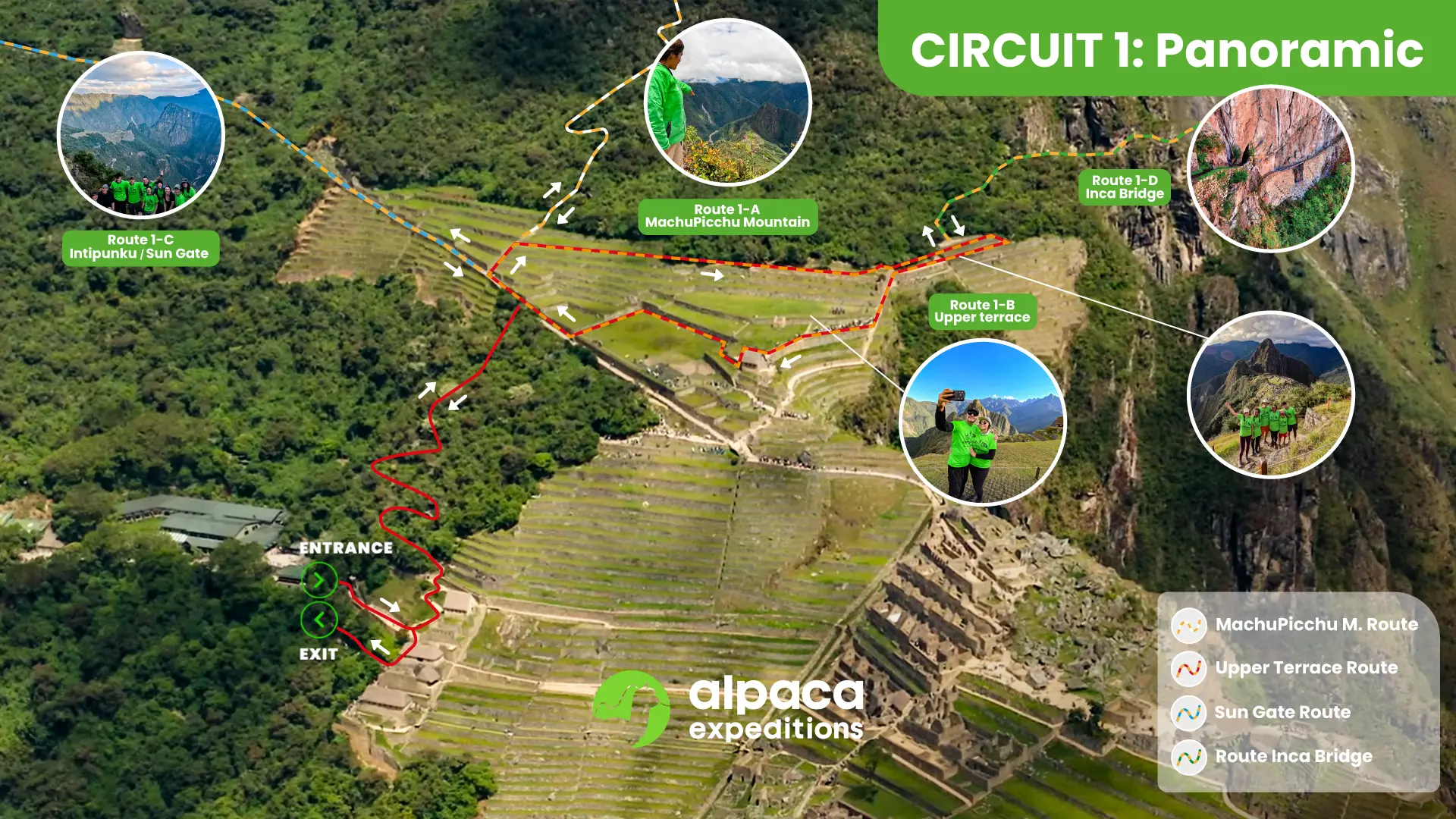 This circuit is perfect if your goal is the best views and unforgettable photos. You’ll walk through the highest, most open viewpoints of the sanctuary—such as the upper terraces where the classic photo is taken—plus options like hiking to Intipunku (Sun Gate), the Inca Bridge, and climbing Machu Picchu Mountain. It’s ideal if you want the full panoramic image of the citadel and its dramatic surroundings.
- Number of tickets for this circuit: 1,100 per day
This circuit has four different routes. You can choose the one that best matches your interests:
Route 1A: Machu Picchu Mountain
Machu Picchu Mountain sits at 3,082 m a.s.l. and is the highest point in the sanctuary. The climb can be tiring, but the reward is a truly impressive 360° view. Along the way you pass the Lower and Upper Observatory, and one advantage is that it’s usually less crowded than Huayna Picchu, making it a calmer option for travelers who want to enjoy the experience without rushing.
Key details:
- Includes: Access to Machu Picchu + Machu Picchu Mountain.
- What you’ll see: Machu Picchu Mountain, panoramic views, the Guardian’s House viewpoint, Upper Terraces.
- Difficulty: Moderate
- Time allowed: Up to 7 hours.
- Circuit: Entry is via Circuit 1, which connects to the trailhead.
- Availability: All year
Route 1B: Upper Terrace
This option grants access only to the upper area of Machu Picchu, highly recommended if you want the iconic panoramic photo of the citadel. It includes both the Lower and Upper Observatory with 360° viewpoints.
Key details:
- Includes: Entry to Machu Picchu + upper terraces.
- Time allowed: Up to 2.5 hours inside the Historic Sanctuary.
- What you’ll see: Main viewpoints and the classic postcard view from the Guardian’s House.
- Difficulty: Easy
- Entry times: Morning (06:00–09:00) and afternoon (12:00–15:00).
- Availability: All year.
Route 1C: Intipunku (Sun Gate)
This route leads to the Sun Gate, the traditional arrival point of the Inca Trail and one of the most iconic places in Machu Picchu. From here you’ll get a unique panoramic view of the citadel. The route also includes the Lower and Upper Observatory.
Key details:
- Includes: Entry to Machu Picchu + Intipunku.
- What you’ll see: Guardian’s House, Upper Terraces, part of the Qhapaq Ñan (Inca Trail network), and Intipunku.
- Difficulty: Easy
- Time allowed: Up to 4 hours inside the sanctuary.
- Entry times: Morning only (08:00–11:00).
- Availability: High season only (June to October)
Route 1D: Inca Bridge
The Inca Bridge is a remarkable construction on a cliff edge, part of the ancient Inca road system. The hike offers incredible views and passes the Lower and Upper Observatory before reaching the checkpoint. For safety reasons, crossing the bridge is not allowed.
Key details:
- Includes: Entry to Machu Picchu + Inca Bridge.
- What you’ll see: Guardian’s House, Upper Terraces, panoramic views, and the Inca Bridge in its strategic location.
- Difficulty: Intermediate
- Time allowed: Up to 3 hours inside the sanctuary.
- Entry times: Morning only (08:00–11:00).
- Availability: High season only (June to October)
Circuit 2 – Classic
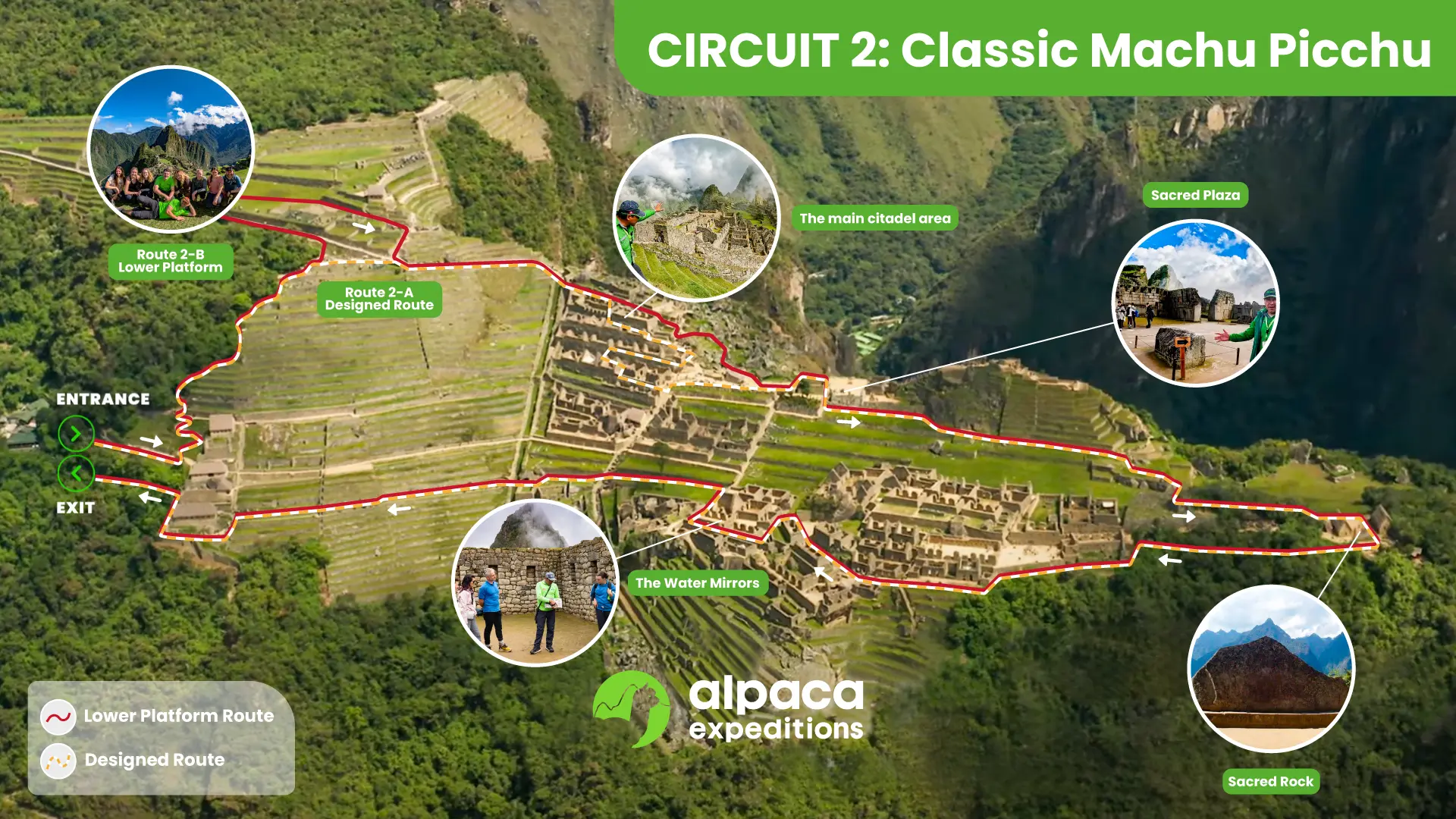 This is the circuit most similar to the old “traditional” visit. It takes you straight into the heart of Machu Picchu, where you’ll find temples, plazas, and the main ceremonial and urban sectors. It’s the best choice for first-time visitors who want the essential highlights and to understand why this place is so globally famous.
- Number of tickets for this circuit: 3,050 per day.
This circuit includes two similar routes:
Route 2A: Classic Designed
This is the most complete route to cover the main landmarks of Machu Picchu, including the Lower Observatory, Quarry sector, Temple Plaza, Sacred Rock, 12 Doorways, Storehouses, Water Mirrors, the Temple of the Condor, and Pisonay Plaza. From the lower observatory you also get a 360° view of the citadel.
Key details:
- Includes: Entry to Machu Picchu + main structures.
- What you’ll see: Terraces, agricultural areas, religious temples, quarry sector, Temple of the Sun, Machu Picchu’s main esplanade, storehouses, Sacred Rock, Water Mirrors, Pisonay Plaza—and the classic photo from the Guardian’s House.
- Difficulty: Easy
- Time allowed: Up to 2.5 hours inside the sanctuary.
- Entry times: Morning (06:00–09:00) and afternoon (12:00–15:00).
- Availability: All year.
Route 2B: Lower Terrace
An easier version of the classic route, ideal for seniors or travelers who prefer fewer stairs and shorter walks. It still allows the classic view and includes key spots such as the Temple of the Sun, Temple Plaza, Sacred Rock, 12 Doorways, Storehouses, Water Mirrors, and the Temple of the Condor.
Key details:
- Includes: Entry to Machu Picchu + adapted access to key sectors.
- What you’ll see: Terraces, agricultural areas, religious temples, quarry sector, Temple of the Sun, esplanade, storehouses, Sacred Rock, Water Mirrors, plus the classic photo from the Guardian’s House from a lower viewpoint.
- Time allowed: Up to 2.5 hours inside the sanctuary.
- Difficulty: Easy
- Entry times: Morning (06:00–09:00) and afternoon (12:00–15:00).
- Availability: All year.
Circuit 3 – Royalty (Designed)
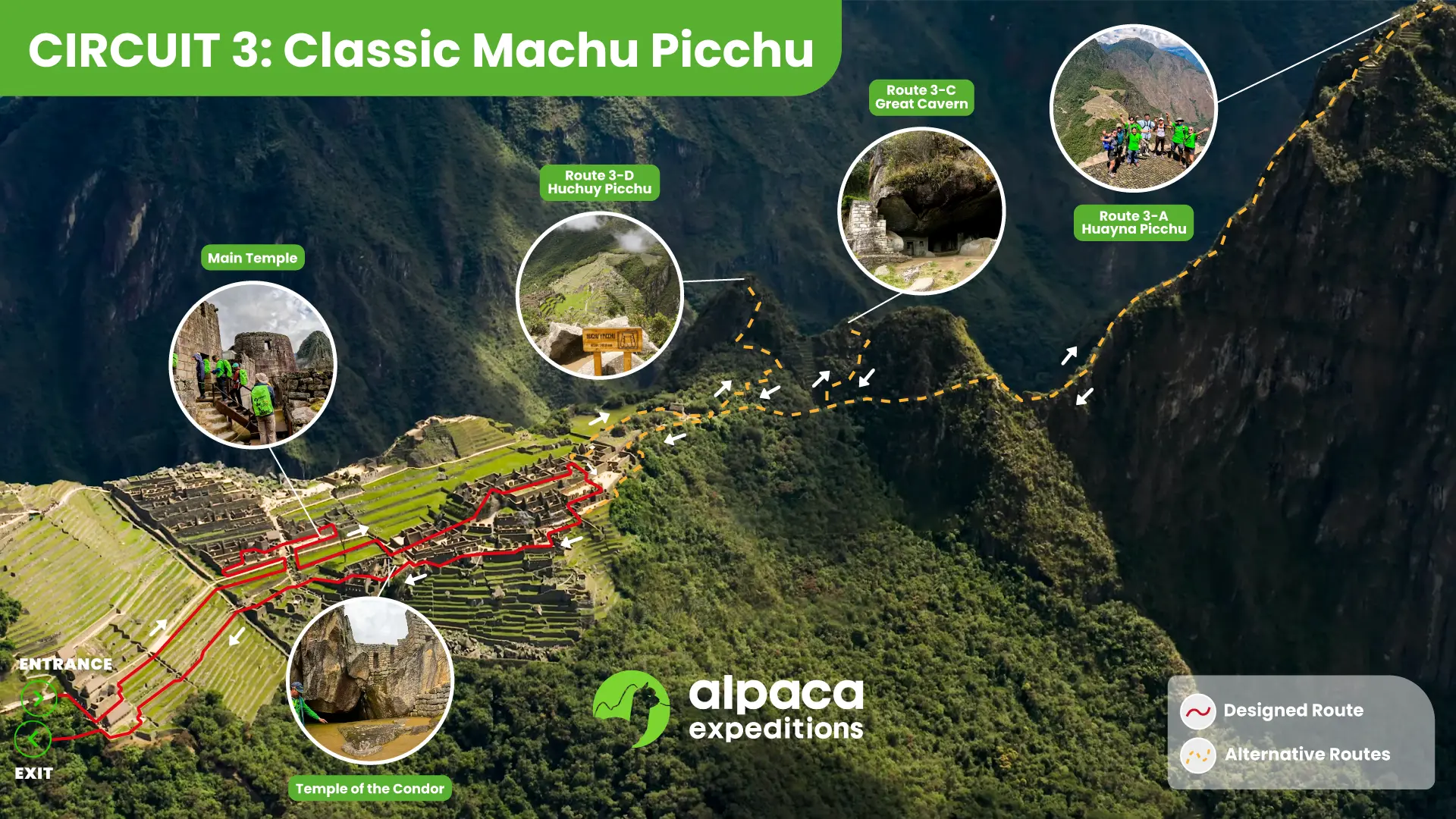 This circuit includes routes through the most sacred and exclusive spaces associated with Inca royalty. Unlike the others, the focus here is on ceremonial areas and hikes that require more effort. This is where famous add-ons like Huayna Picchu, Huchuy Picchu, and the Great Cavern (also called the Temple of the Moon) are found. It’s not the easiest option, but it’s made for travelers who love challenges and want to explore unique corners that fewer visitors reach.
- Number of tickets for this circuit: 1,450
This circuit offers four different routes:
Route 3A: Huayna Picchu Mountain
This route lets you climb iconic Huayna Picchu and explore the lower part of Machu Picchu, including the Temple of the Sun, 12 Doorways, Storehouses, Temple of the Condor, Water Mirrors, and the Sacred Rock. The hike is steep, with rock sections and handrails, and rewards you with spectacular views from the summit.
Key details:
- Duration: approx. 2 hours round trip to Huayna Picchu.
- Includes: Entry to Machu Picchu + Huayna Picchu.
- What you’ll see: Inca trails, steep stone stairs, mountain range views from above, Water Mirrors, and the Temple of the Condor.
- Difficulty: High
- Time allowed: Up to 6 hours inside the sanctuary.
- Availability: All year.
Route 3B: Royalty (Designed)
This route covers only the lower part of Machu Picchu, including the Temple of the Sun, 12 Doorways, Storehouses, Temple of the Condor, and Water Mirrors. It’s ideal for travelers who want a comfortable visit with less physical effort.
Key details:
- Includes: Entry to lower sectors of Machu Picchu.
- What you’ll see: Lower terraces, lower temples, Temple of the Condor, and Water Mirrors.
- Difficulty: Easy
- Time allowed: Up to 2 hours 30 minutes inside the Historic Sanctuary.
- Entry times: Morning (06:00–11:00) and afternoon (12:00–14:00).
- Availability: All year.
Route 3C: Great Cavern (Temple of the Moon)
This route takes you to the Temple of the Moon, located behind Huayna Picchu and accessible only in high season. It also includes the lower section of Machu Picchu with sites such as the Temple of the Sun, 12 Doorways, Storehouses, Temple of the Condor, Water Mirrors, and the Sacred Rock.
Key details:
- Includes: Entry to Machu Picchu + Temple of the Moon.
- What you’ll see: Lower terraces, lower temples, Sacred Rock, Temple of the Sun, 12 Doorways, Water Mirrors, Temple of the Condor, and storehouses; however, this route does not include the classic Machu Picchu postcard photo spot.
- Difficulty: High
- Time allowed: Up to 7 hours inside the sanctuary.
- Entry times: Morning only (07:00–08:00).
- Availability: High season only (June to November)
Route 3D: Huchuy Picchu
Huchuy Picchu is the smaller mountain next to Huayna Picchu (2,498 m a.s.l.). It allows you to explore the lower part of Machu Picchu before climbing. The hike to the top takes about 25 minutes and offers amazing views of the citadel from a different angle.
Key details:
- Duration: approx. 50 minutes round trip + lower section visit.
- Includes: Entry to Machu Picchu + Huchuy Picchu.
- What you’ll see: Main temples, citadel structures, and panoramic views from the summit of Huchuy Picchu.
- Difficulty: Easy.
- Time allowed: Up to 3 hours 30 minutes inside the Historic Sanctuary.
- Entry times: Morning (11:00–12:00).
- Availability: High season only (June to November)
- On this route you can see: Lower terraces, Temple of the Sun, lower temples, Sacred Rock, 12 Doorways, eastern storehouses, Water Mirror sector, Temple of the Condor, Pisonay Plaza, and Huchuy Picchu.
Time allowed for each route
| Route | Estimated time |
|---|---|
| Machu Picchu Mountain | Approx. 3 hours hiking (up & down) on Machu Picchu Mountain; maximum time allowed: 7 hours. |
| Upper Terrace | Up to 2 hours 30 minutes. |
| Intipunku (Sun Gate) | The hike to Intipunku takes about 40 minutes depending on your pace; maximum time allowed is 4 hours. |
| Inca Bridge | Short hike, about 30 minutes to the Inca Bridge; maximum time allowed is 3 hours. |
| Classic Designed | Up to 2 hours 30 minutes inside the Inca citadel. |
| Lower Terrace | Up to 2 hours 30 minutes inside the Inca citadel. |
| Huayna Picchu Mountain | The ascent and descent averages about 2 hours depending on your pace; maximum time allowed inside the citadel: 6 hours. |
| Royalty (Designed) | Up to 2 hours 30 minutes inside the citadel (lower section). |
| Great Cavern (Temple of the Moon) | Round trip to the Great Cavern takes about 4 hours depending on pace, plus 1 hour 30 minutes inside the citadel; maximum time allowed: 7 hours. |
| Huchuy Picchu | The climb to the summit takes about 40 minutes depending on pace; maximum time allowed: 3 hours 30 minutes. |
Machu Picchu entry times and grace period
Each Machu Picchu ticket has a specific entry time, and visitors must enter within that time slot. The grace period is about 30 minutes; after that, you may lose your entry. This helps control visitor flow and protect the Historic Sanctuary of Machu Picchu.
| Machu Picchu entry times | Grace period (regular months) | Grace period (high season: June 1–Oct 15, and Dec 30–31) |
|---|---|---|
| 06:00 am | Until 06:30 am | Until 06:45 am |
| 07:00 am | Until 07:30 am | Until 07:45 am |
| 08:00 am | Until 08:30 am | Until 08:45 am |
| 09:00 am | Until 09:30 am | Until 09:45 am |
| 10:00 am | Until 10:30 am | Until 10:45 am |
| 11:00 am | Until 11:30 am | Until 11:45 am |
| 12:00 pm | Until 12:30 pm | Until 12:45 pm |
| 01:00 pm | Until 01:30 pm | Until 01:45 pm |
| 02:00 pm | Until 02:30 pm | Until 02:45 pm |
| 03:00 pm | Until 03:30 pm | Until 03:45 pm |
Note: The checkpoint entry for Machu Picchu Mountain, Huayna Picchu, and Huchuy Picchu has no grace period.
Top highlights in each circuit
Inside Circuit 1 – Panoramic, you’ll find:
Upper Terraces
The Incas were one of South America’s most influential civilizations, and Machu Picchu is the greatest proof of their ingenuity—built in one of the most challenging landscapes in the Andes. The terraces (also called agricultural terraces) are wide stone steps built into the slopes. They served three main purposes:
- Stabilization: they helped prevent landslides.
- Agriculture: they expanded farming areas and included irrigation channels.
- Ceremonial use
Intipunku (Sun Gate)
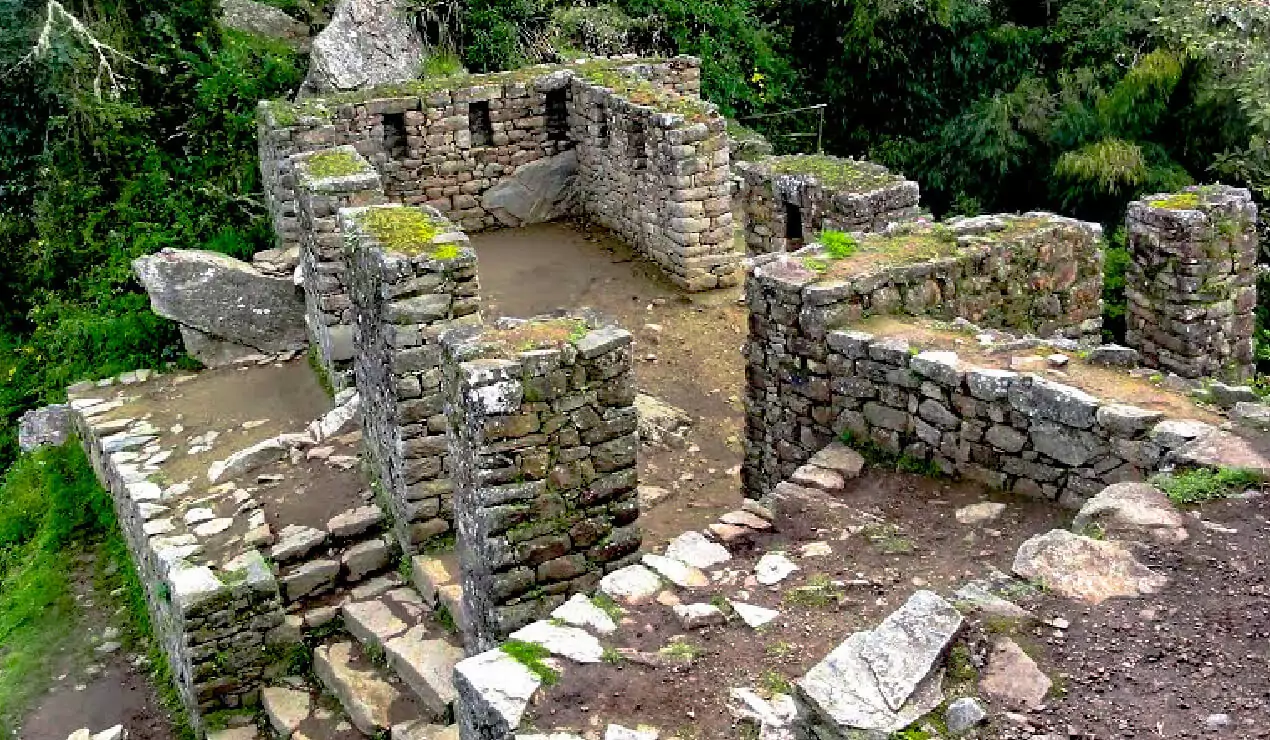 The Sun Gate (Intipunku) served as a control entrance to Machu Picchu, built in a strategic location and reserved for the Inca elite. It was dedicated to the worship of the Sun, and during the summer solstice the sun’s rays aligned directly through this point. Those returning from the citadel were received with reverence by other travelers.
After the 1911 rediscovery, the main access shifted to the base of the citadel, and Intipunku became most associated with those who hike the Inca Trail or climb up from below.
Other “Sun Gates” existed across the Inca Empire, usually on strategic high points designed to emphasize solar worship—such as in Ollantaytambo or near Waqrapukara.
Inca Bridge
The Inca Bridge in Machu Picchu is made of wooden logs supported by stone walls on a very steep slope. By removing the logs, passage would be blocked—so it worked not only as a pathway but also as a defensive barrier.
To reach it, you walk about one kilometer (around 20 minutes) from the Guardian’s House along narrow trails beside cliffs. Access is safe, but you must register both entry and exit. Because it sits at the edge of the citadel, it tends to receive fewer visitors.
Guardian’s House
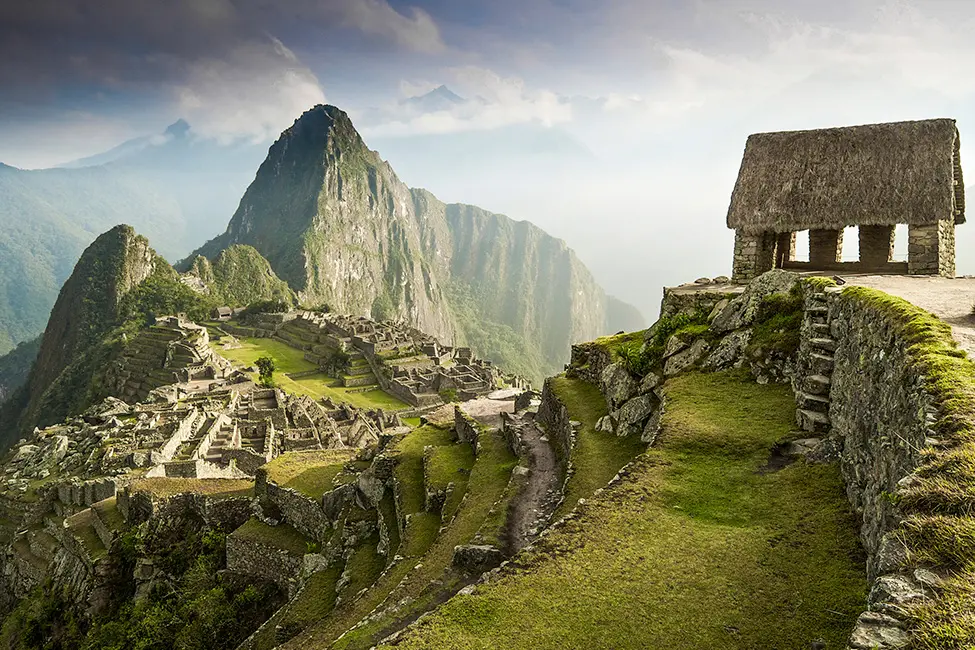 The Guardian’s House is a simple structure in Machu Picchu, built with small stones and adobe, and traditionally covered with a thatched roof—one of the few roofed buildings in the site.
Its main purpose was to oversee what happened in the citadel thanks to its strategic elevated position. From its three windows you can enjoy an exceptional view of the entire archaeological complex. Local history suggests it was built in the 15th century, like many of the other Inca structures. Nearby, you can also see a carved rock with steps, believed to have been used for ritual preparations before funerals.
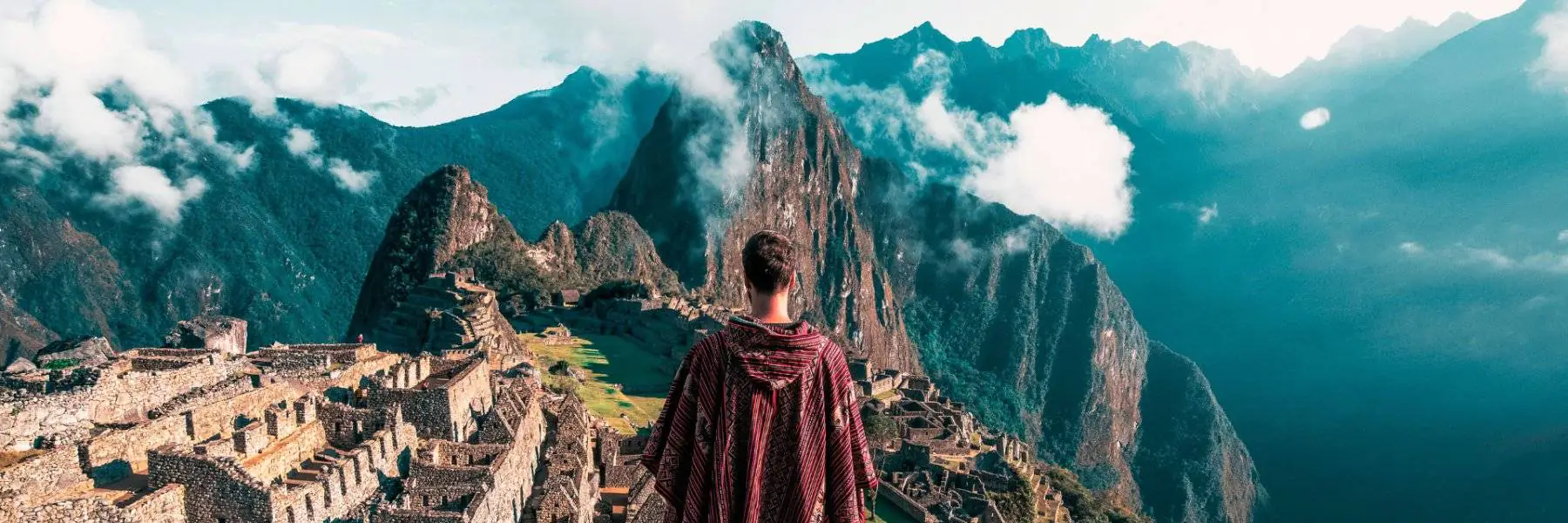
Today, the Guardian’s House is famous for the iconic panoramic view—the classic Machu Picchu postcard photo spot—making it one of the most visited viewpoints in the sanctuary.
Machu Picchu Mountain
Machu Picchu Mountain is an impressive peak behind the Inca citadel, reaching 3,082 m a.s.l.—about 600 meters higher than Machu Picchu itself.
What makes the hike worth it are the spectacular summit views: the citadel appears from a new angle, the Urubamba River winds through the valley, and the surrounding mountains complete a breathtaking panorama. The trail also passes through areas rich in flora and fauna, adding a strong nature element to the adventure. Overall, it’s a memorable experience that combines history, scenery, and a rewarding physical challenge.
Inside Circuit 2 – Classic, the main highlights include:
Temple of the Sun
The Temple of the Sun is one of the most important and awe-inspiring places in Machu Picchu. It was a sacred sanctuary where the Incas honored Inti (the Sun), their main deity closely tied to agriculture, imperial power, and life itself. Because of its religious nature, access was reserved for priests and Inca nobility.
-
- What was it and what was its purpose?
The temple had an astronomical and ceremonial function. Rituals and offerings were performed here in honor of the Sun—especially during solstices—when sunlight entered with precision through its windows to illuminate the central altar. It likely also worked as an astronomical observatory and, in the lower part, as a mausoleum—possibly linked to the burial of the Inca ruler Pachacútec.
- Construction features
- It is the only circular structure in Machu Picchu.
- It is built above a natural cave known as the Royal Tomb.
- Its granite walls are imperial Inca style, assembled with exceptional precision.
- It has a double-jamb trapezoidal doorway, niches, and two strategically oriented windows.
- One curved wall—about 10 meters long—shows remarkably precise stonework.
Sacred Rock
The Sacred Rock is a large granite monolith, about 3 meters tall and 7 meters wide, carved in the shape of a mountain. Its worked base—like an altar—suggests a religious purpose, where offerings such as coca leaves or llama sacrifices may have been made.
It sits between two huayranas (roofless structures) separated by a courtyard, reinforcing its ritual character. Today, it’s one of the most photographed spots in the citadel, and many visitors associate it with “good energy.”
-
- What was it and what was its purpose?
It’s said that the Sacred Rock was mainly dedicated to the worship of Apu Yanantin—one of the most sacred mountains in the Machu Picchu valley. For the Incas, mountains were protective deities (Apus) influencing life, agriculture, and community well-being. The Sacred Rock functioned as an altar and ceremonial center where offerings and rituals helped maintain harmony between people and nature.
Water Mirrors
In the urban sector of Machu Picchu, you can find the Water Mirrors: two circular basins carved into rock. While they may look like mortars, they were likely used to reflect the sky, moon, and stars—serving as an astronomical and spiritual link. For the Incas, these were sacred spaces where water connected the earth with the cosmos.
-
- What were they and what was their purpose?
For the Incas, the Water Mirrors were far more than simple basins. When filled, they reflected the moon (Killa) and the stars, symbolically connecting the earthly world with the divine. Their construction highlights the importance of water as a sacred element—source of life and of ritual meaning. Because they have no roof, the sky reflects with clarity, turning them into natural altars of the cosmos.
Inside Circuit 3 – Royalty
Huayna Picchu Mountain
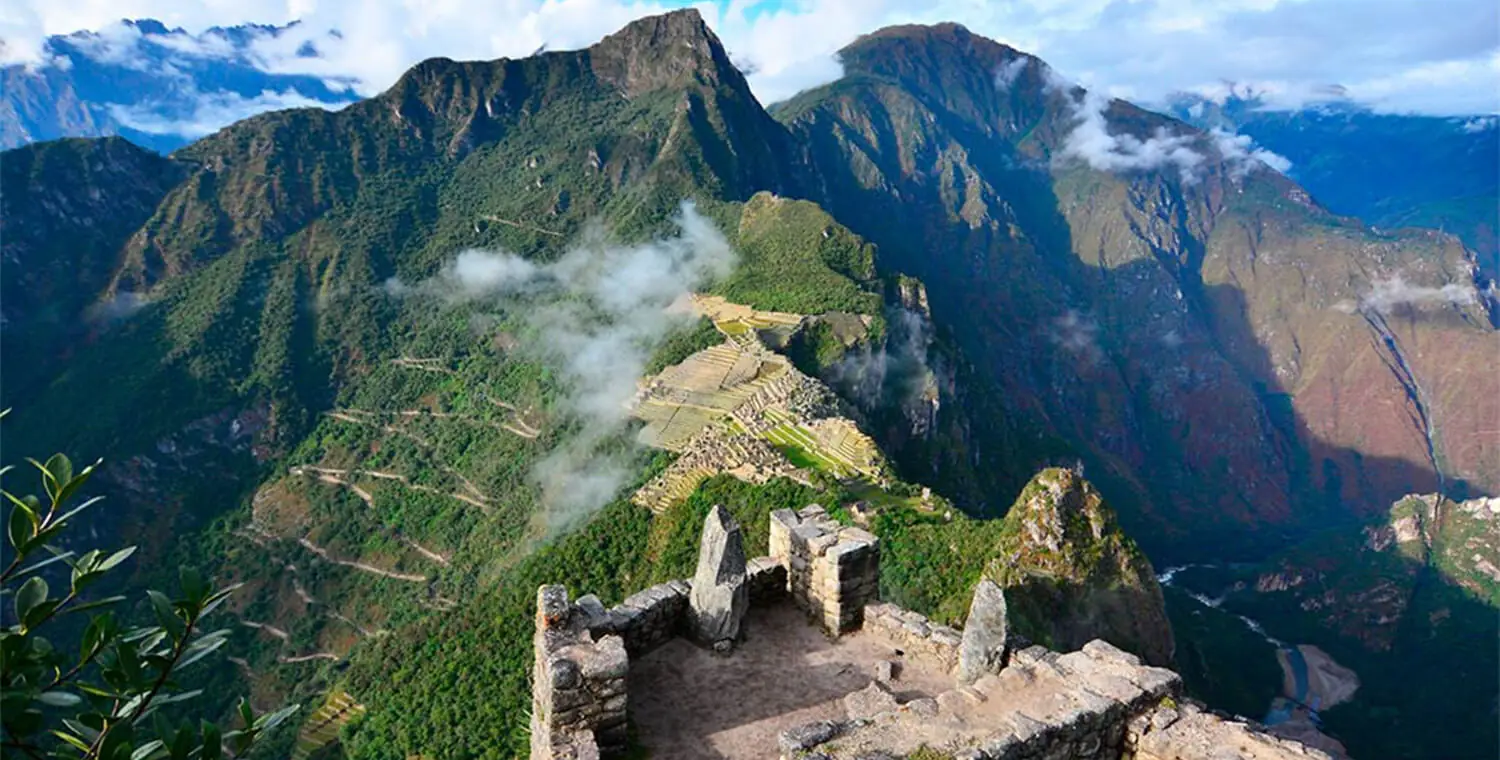 Huayna Picchu is one of the most famous peaks in Machu Picchu. Its name in Quechua is often interpreted as “young mountain.”
Climbing Huayna Picchu involves narrow trails and steep stone stairways, sometimes called the “Stairs of Death.” The reward is absolutely worth it: dramatic panoramic views of Machu Picchu. Along the way you’ll also see Inca terraces, and a variety of flora— including orchids.
Great Cavern or Temple of the Moon
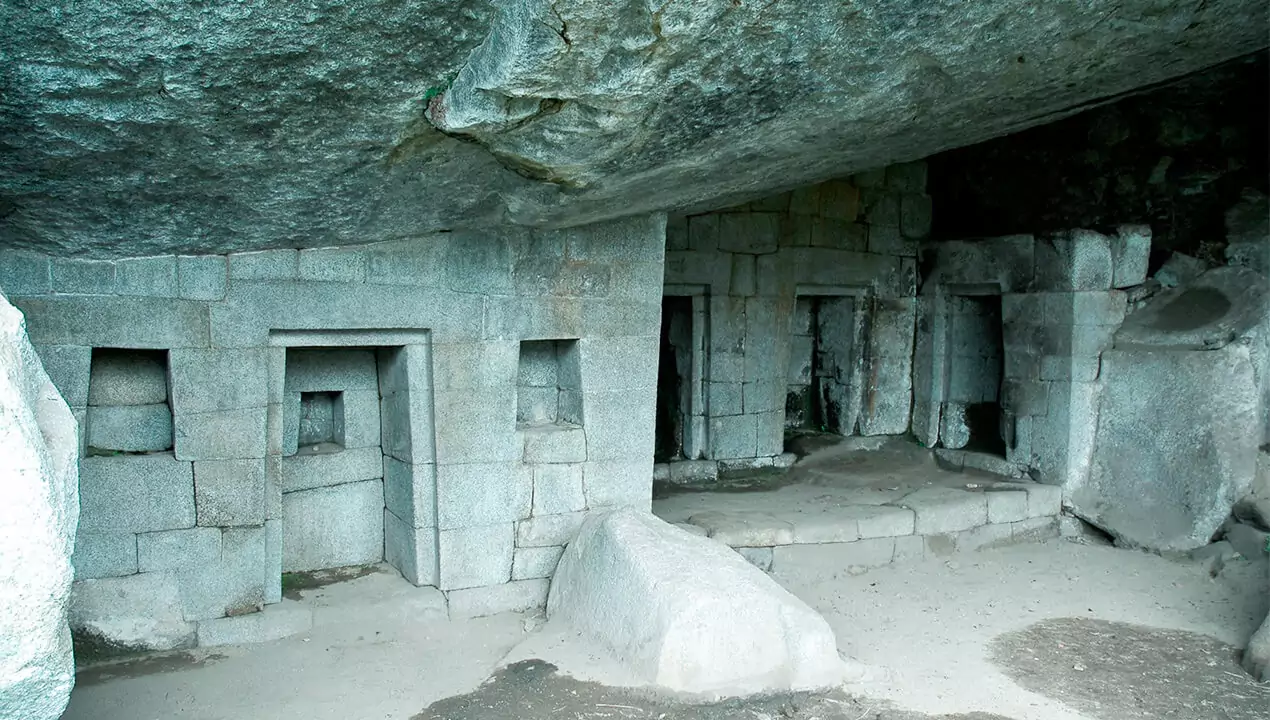 The Great Cavern, also known as the Temple of the Moon, is one of the most mysterious places in Machu Picchu. It is located behind Huayna Picchu and can only be visited during high season (June to October).
-
- What was it in Inca times?
For the Incas, caves were gateways to the underworld (ukhu pacha). That’s why they built altars, doorways, and finely carved niches here—spaces for offerings to the Earth, sacred mountains (apus), and the Moon goddess (Killa).
- Features:
- Very fine stonework—just as precise as the most important temples in the citadel.
- The trail is long and demanding; entry is only for visitors over 12 years old.
- The hike takes approx. 2.5 hours one way (about 5 hours total).
- Entry is with the Machu Picchu + Great Cavern ticket – Route 3C.
Huchuy Picchu
Huchuy Picchu means “small mountain” in Quechua and sits next to Huayna Picchu, reaching 2,497 m a.s.l. The hike is short—about 1 to 2 hours total—but it offers a unique viewpoint over the citadel and the Vilcanota River valley.
The trail ascends via Inca stone steps surrounded by nature, including orchids and birds typical of the sanctuary. While it’s less famous than other mountains, its advantage is a calmer, more accessible experience—perfect for travelers who want incredible panoramas without the intense effort.
Which route should you choose if it’s your first time visiting Machu Picchu?
Start by thinking about what excites you most—because not every visitor wants the same thing. If your dream is the classic photo with the citadel in the background, Circuit 1 is the must-do option since it includes the upper terraces and the Guardian’s House viewpoint. If you enjoy walking through temples and feeling the history, Circuit 2 will be more satisfying: that’s where you’ll find the Temple of the Sun, the Intihuatana, and the Temple of the Condor. And if adventure and longer hikes are your thing, Circuit 3 with mountain access is the most thrilling—Huayna Picchu, Huchuy Picchu, or even the Great Cavern if you have the time and energy.
Tips to make the most of your visit
- Arrive early: The best time to visit Machu Picchu is between 6:00 a.m. and 9:00 a.m., when the light is softer and there are fewer visitors.
- Pack only what you need: a small daypack, water, sunscreen, and insect repellent.
- Remember that large items are not allowed inside.
- Hire an official guide: An authorized Machu Picchu guide adds cultural and historical context you won’t notice on your own.
- Plan extra time in Aguas Calientes: Relax in the hot springs or visit the Manuel Chávez Ballón museum before or after your visit.
Which route do locals from Cusco use on Sundays to enter Machu Picchu?
Benefits for locals and Cusco residents
On Sundays, Cusco residents have a special benefit: free entry to Machu Picchu, established by the Peru Ministry of Culture as part of cultural access to heritage sites. This benefit applies only to residents of the Cusco region, who must present a valid national ID (DNI) showing an address in Cusco.
Free entry is available only for Circuit 2 (Classic), so locals can enjoy the main route that includes temples, plazas, ceremonial spaces, and the central areas of the citadel.
Most common circuit and route chosen by Cusco locals
In practice, most Cusco residents choose Circuit 2 because it offers the most complete experience in the shortest time. Entry is usually in the morning since demand on Sundays is high. Many residents also combine their Machu Picchu visit with time in Aguas Calientes, such as enjoying the hot springs or local food—turning the day into a cultural and leisure experience.
Differences from traditional tourist routes
Unlike international travelers and non-resident Peruvians, Cusco locals cannot choose among different circuits when entering for free.
While an international traveler can purchase a ticket for Huayna Picchu or the Inca Bridge, locals must follow the main central route (Circuit 2). This is because Circuit 1 and 3 tickets are considered more exclusive and require advance purchase.
How many daily tickets are available in high and low season?
Since the new access system started on June 1, 2024, Machu Picchu operates with a dynamic daily visitor limit that changes by season to protect the site and improve the visitor experience.
- High season and holidays such as Christmas, New Year’s, and Peru’s Independence celebrations: up to 5,600 visitors per day.
- Low season: the daily cap drops to 4,500 visitors per day.
Final tips to enjoy your Machu Picchu visit
When and how to book your ticket
- Book in advance: If you’re a domestic or international traveler, it’s best to reserve at least 2 to 3 months ahead—especially in high season.
- Official channels: Tickets should be purchased through the official website of Peru’s Ministry of Culture or authorized agencies.
- Flexibility: In low season, availability is usually easier, but booking ahead is still recommended.
Entry rules and visit duration
Each visitor can stay between a maximum of 3 to 7 hours inside the citadel, depending on the chosen circuit and route. The route is one-way, meaning you cannot go back or re-enter once you exit. However, you can enter again the same day if you purchased two separate tickets for different circuits and routes.
Not allowed:
- Selfie sticks
- Tripods
- Large umbrellas
- Backpacks over 20 liters
- Large meals
- Alcoholic beverages
- Feeding wild animals
- Photos or filming for advertising/commercial purposes
- Climbing on walls
- Removing flora or fauna
- Smoking
- Littering
- Not respecting the designated circuits or routes
- Drones
- Unauthorized street vending
Local guide recommendations
Hiring an official guide at the entrance helps you understand the history, Andean worldview, and the symbolism behind the temples. Guides also recommend the best time slot depending on your goals:
- Early morning: Best photos with fewer visitors.
- Midday: More crowds, but often clearer skies.
- Afternoon: Fewer visitors, ideal for those seeking a quieter experience.
Frequently asked questions about Machu Picchu
Which circuit is the most popular in Machu Picchu?
The most popular option is Circuit 2. It’s the favorite for most travelers because it covers nearly the entire citadel, including iconic spots like the lower terrace viewpoint, the Granite Chaos area, the Sacred Rock, the Water Mirrors, the Temple of the Sun, and other major structures.
Can I finish a circuit faster if I have a “fast guide”?
It doesn’t depend on the guide’s speed but on the circuit and route you choose. If you have limited time inside Machu Picchu, we recommend Circuit 1 because it allows you to get the classic panoramic photo and includes shorter route options.
Are there restrooms or services inside Machu Picchu?
There are no restrooms inside the citadel, so it’s best to use the facilities before entering.
Can I enter with food or drinks?
- Allowed: light snacks (energy bars, nuts) and water in reusable bottles.
- Not allowed: single-use plastic bottles and large meals.
Also, nothing is sold inside the archaeological site, so bring what you need to stay hydrated and energized.
What if it rains during my visit?
Rain is common, especially from November to March. To be prepared:
- Bring a rain poncho (umbrellas are not allowed inside the archaeological site).
- Wear light but warm layers and shoes with good traction.
Can I combine circuits or visit more than one circuit on the same day?
With a single ticket, you cannot combine circuits—each entry is valid only for its specific route. However, you can explore more than one circuit by purchasing tickets for different routes on different time slots or on different days.
How do I get to Machu Picchu from Aguas Calientes?
Bus: takes around 20 to 30 minutes to the Machu Picchu entrance. Hike: takes about 2 hours, is free, and lets you enjoy the natural surroundings on the way up.
Can I buy more than one Machu Picchu ticket for the same day?
Yes, you can purchase multiple tickets for the same day, but you must select different entry times for each one. This allows you to experience different routes or mountains and maximize your visit.
Can I change my Machu Picchu entry date after buying my ticket?
If you’re planning your Machu Picchu visit, keep this in mind: once you purchase your ticket, the date cannot be changed. This applies whether you buy through an agency or through official channels. Only minor corrections (name, document number, or date of birth) may be possible. Your ID must match your ticket at the entrance—so plan carefully and double-check your details before purchasing.
What happens if I arrive after the 45- or 30-minute grace period?
If you arrive after the grace period, it’s very likely you won’t be allowed to enter Machu Picchu, since entry times are strictly controlled. The grace period depends on the season: it’s usually 30 minutes in low season and up to 45 minutes in high season. After that, entry is not guaranteed, so plan your arrival with enough time to be punctual.
Conclusion
Choosing among the Machu Picchu circuits and routes is not just a logistical decision—it’s the key to experiencing the visit you imagined. If you want the classic photo and unforgettable viewpoints, choose Circuit 1. If you want to feel the heartbeat of the citadel and explore its temples, go with Circuit 2. And if you’re drawn to adventure, challenging climbs, and unique angles, Circuit 3 is your best match. With clear rules, timed entry, and controlled capacity, planning well makes the difference between a rushed visit and an epic memory.
Leave it in our hands: we’ll help you choose the ideal route and book the best entry times and access options for you.
Explore our tours and secure your entry today to experience Machu Picchu without stress.
Recent Post
Alpaca Expeditions Recognitions
ISO (International Organization for Standardization)
In the pursuit to stand out from the rest, Alpaca Expeditions has obtained four ISOs plus our carbon footprint certificate to date. These achievements result from our efforts to implement the internationally-recognized integrated management system. They also represent our commitment to all of our clients and staff of operating sustainability and responsibility in every way possible.




World Travel Awards
Alpaca Expeditions is internationally recognized as a leading tourism company in Peru. As proof, we have been awarded the World Travel Award for Peru´s Best Tour Operator 2021 for the second time.


TRIPADVISOR RECOGNITIONS
Our goal at Alpaca Expeditions is to create the best experience for all of our clients. We create journeys that are to be remembered for a lifetime. Journeys you can be proud of and can share with everybody around you.












As Featured In











Scan Here!




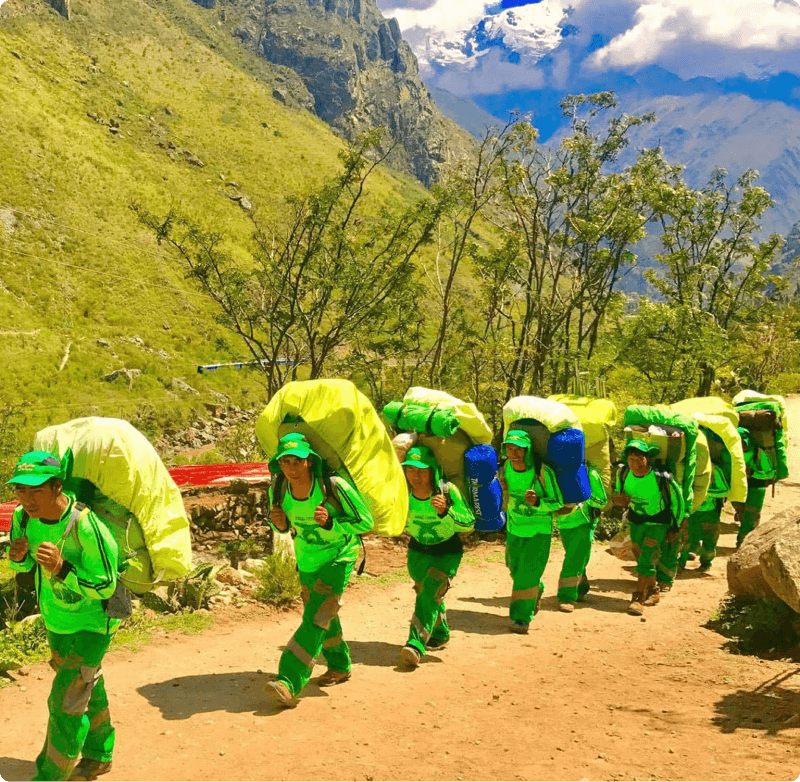 Porters will carry up to 7 kg of your personal items, which must include your sleeping bag and air mat (if you bring or rent one). From us, these two items weigh a combined total of 3.5 kg.