


Celebrating Christmas in Cusco: A Complete Guide to Festive Traditions in Peru
Christmas in Cusco isn’t merely a date on the calendar—Celebrating Christmas in Cusco is an immersive cultural experience that fuses centuries‑old Andean traditions with colonial Spanish heritage. Imagine strolling through cobblestone streets perfumed by fresh pine and sweet bread, fireworks lighting up a sky framed by the Andes, and artisanal markets bursting with handcrafted nativity figures.
Every December, our team at Alpaca Expeditions witnesses this magical transformation as Cusco prepares for Noche Buena (Christmas Eve). We’ve guided countless travelers through bustling plazas, cozy cocoa gatherings, and mist‑wrapped ruins, and we’ve seen how a simple holiday visit becomes a deeply moving memory.
In this guide, we share our collective experiences and local expertise to help you plan a meaningful visit. We cover everything from the history of the Santurantikuy market to the spiritual roots of the Misa de Gallo, midnight mass, from tips on handling high altitude to itinerary suggestions that weave Machu Picchu, the Sacred Valley, and Rainbow Mountain into your Christmas adventure.
You’ll find practical information about weather, costs, permits, and packing lists as well as heartfelt anecdotes from our guides and travelers. This isn’t just a list of things to do; it’s a story about how Christmas in the Andean highlands bridges cultures and connects people.
About Cusco: Geography, Altitude, and Climate
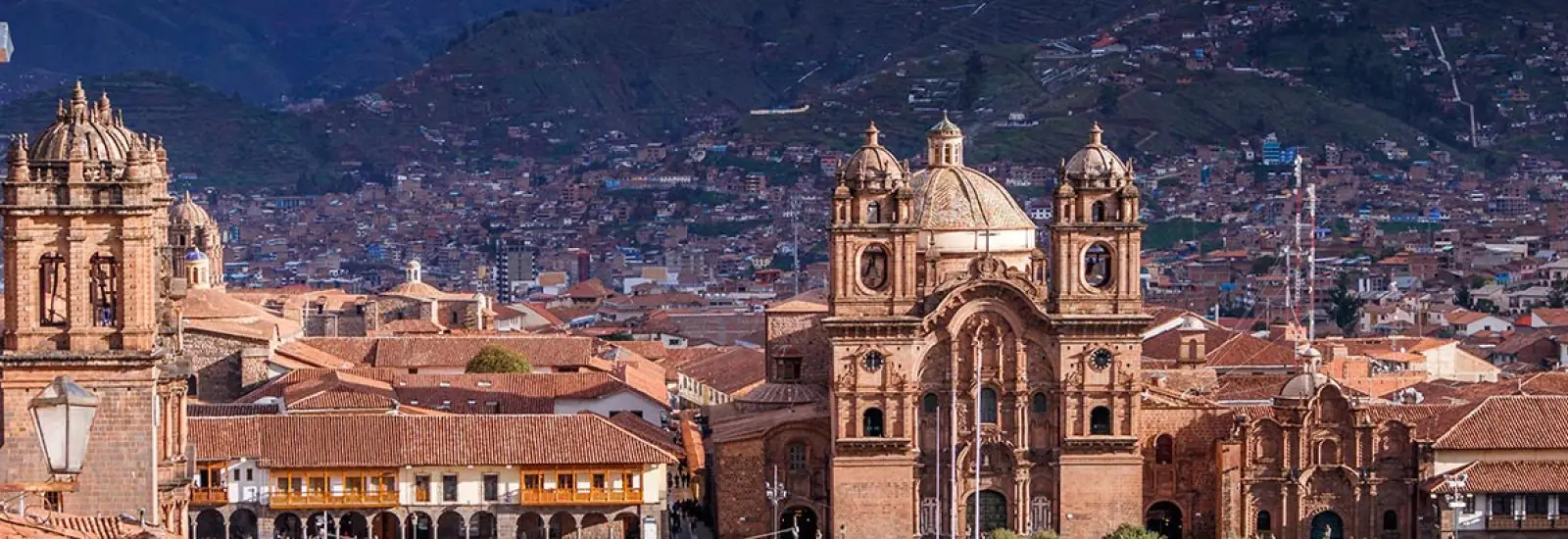
Cusco sits in the southeastern highlands of Peru, surrounded by the rugged peaks of the Andes and the fertile valleys of the Urubamba and Huatanay rivers. Once the heart of the Inca Empire, today it’s a thriving city with around 428,000 inhabitants and UNESCO World Heritage status. The city lies at an elevation of about 3,399 m (11,152 ft) above sea level, which means that visitors often feel the effects of thin air during their first days here.
The altitude shapes both culture and climate. Cusco experiences a subtropical highland climate with two main seasons: a dry winter from April to September and a wet summer from October to March. Winter days are sunny and crisp with cold nights and occasional frosts, while summer brings warmer days and frequent afternoon showers.
 About Cusco: Geography, Altitude, and Climate
December, when Santurantikuy takes place, falls squarely in the rainy season, so expect variable weather and pack accordingly. Average temperatures range between 5.3 °C (41.5 °F) and 12.9 °C (55.2 °F), with an average of around 8.4 °C (47.2 °F). December also receives significant rainfall—about 201 mm (7 in) over about 20 rainy days, so a waterproof jacket and good boots are essential.
The city’s altitude also contributes to dramatic sunlight and UV levels; Cusco was once found to have the highest average ultraviolet radiation on earth. Travelers should wear sunscreen year-round and be mindful of dehydration.
Best Time to Visit Cusco and the Sacred Valley
The most popular months for visiting Cusco are during the dry season from May to October. During these months, clear blue skies and minimal rainfall make for breathtaking views of the Andes. A travel guide from Jacada Travel notes that the dry season from May to October is the best time to visit Cusco and the Sacred Valley because it offers excellent sightseeing weather and coincides with major festivals.
Festivals like Qoyllur Rit’i in May draw pilgrims from across the region, while Inti Raymi in June brings Incan history to life on the Sacsayhuaman fortress. The shoulder months of April and November provide mild weather and smaller crowds.
If you’re planning to experience Christmas in Cusco, however, you’ll be traveling during the rainy season. December and January witness heavier rainfall and lush green valleys. While this can obscure some vistas, it also transforms the mountains into vibrant landscapes and contributes to the festive atmosphere with wildflowers and fresh scents. Prepare for varying weather by packing layers, waterproof gear, and sturdy shoes, and embrace the spontaneity of afternoon showers.
History of Christmas in Cusco: From Colonial Roots to Contemporary Celebrations
Colonial Origins and Andean Syncretism
Christmas arrived in Peru during the 16th century when Spanish missionaries introduced Catholic religious practices to the Andean world. By 1535, missionaries were celebrating the Nativity in Lima, and soon after, Christmas traditions blended with indigenous beliefs in the highlands.
In Cusco, the December festivities fused Catholic themes of the birth of Jesus with pre‑Hispanic reverence for the seasons and agricultural cycles. Andean communities had long celebrated solstices and harvests; the Spanish calendar introduced new saints’ days and religious icons that were integrated into existing rituals.
One of the most striking examples of this cultural syncretism is the Santurantikuy fair. Held every December 24 in the main square of Cusco, this market’s name derives from the Quechua words santu (saint) and rantikuy (to buy something for oneself), meaning “buy me a little saint” or “sale of saints”.
The event emerged during the colonial era when indigenous artisans were allowed to sell religious figurines and nativity scenes to the Spanish colonists. Over time, Santurantikuy evolved into a cultural phenomenon that reflects both Andean and Catholic traditions.
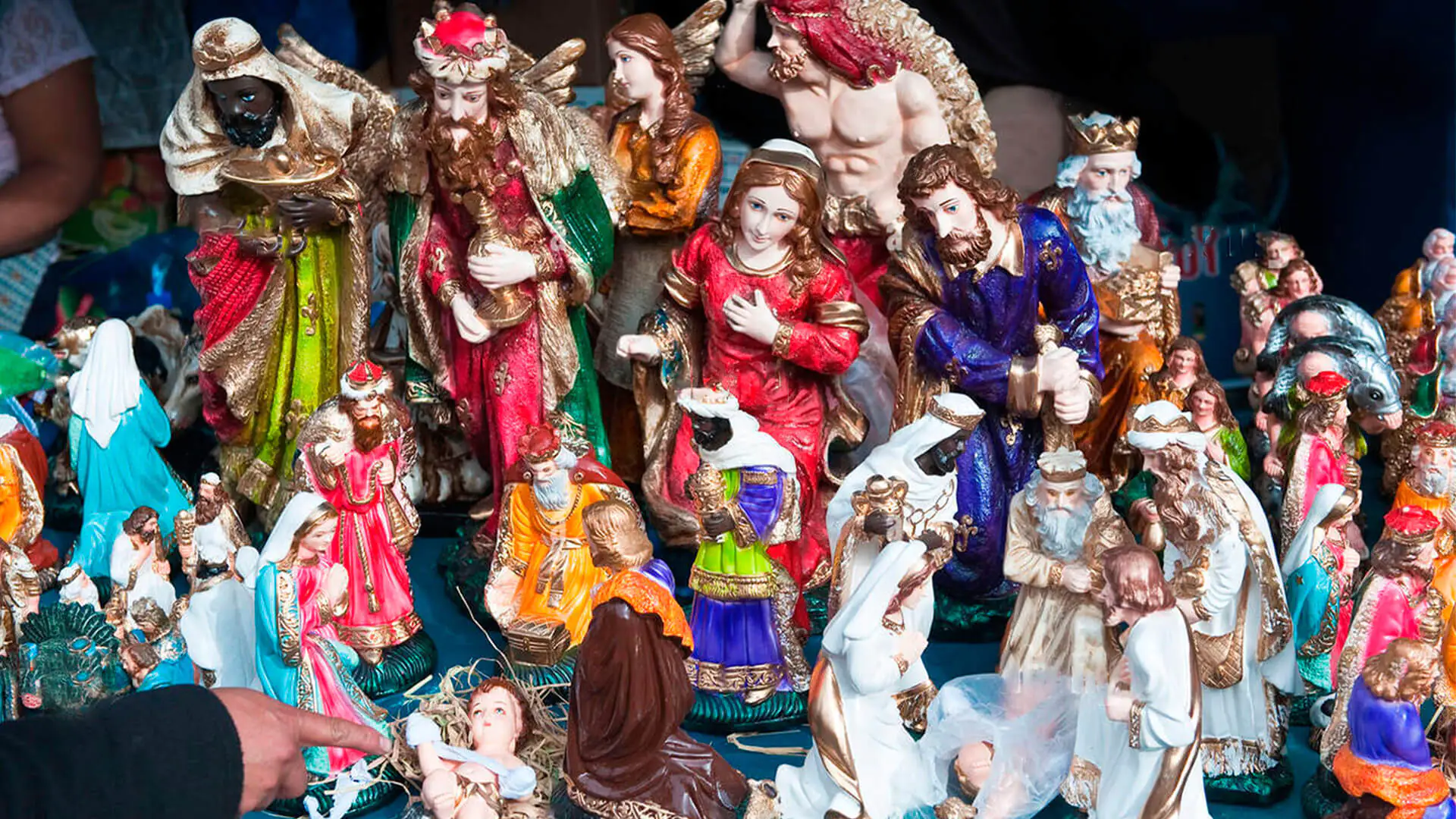
The fair not only sells sculptures and images of saints but also incorporates Andean motifs—alpacas, llamas, local herbs, and miniature houses—into nativity scenes. Families travel from surrounding valleys to purchase new figurines for their nacimientos (home nativity displays).
Evolution of the Fair and Cultural Heritage Recognition
For centuries, the Santurantikuy fair remained a humble local gathering, but it gained national recognition in the 20th century. In 2009, the Peruvian government declared Santurantikuy a National Cultural Heritage fair.
Even children’s encyclopedias emphasize its importance; Kiddle notes that the fair is “one of the biggest and most famous Christmas fairs in Peru” and a “special craft fair held every year on December 24”. The same source explains that the Peruvian government recognized it as part of the country’s identity.
Today, Santurantikuy has grown into an expansive market of over a thousand stalls that fill the Plaza de Armas and spill into adjacent streets. Artisans from Cusco and other regions arrive with their families the night before Christmas Eve to set up wooden booths laden with clay figurines, carved saints, baskets of moss and straw, woolen clothing, silver jewelry, and local delicacies.
The fair typically begins at dawn on December 24 and lasts through the evening. It culminates with the Romería del Niño Manuelito, when vendors and shoppers alike process with images of the Baby Jesus (locally known as Niño Manuelito).
The term Manuelito is derived from the Spanish Emmanuel, meaning “God with us.” According to Kiddle, the Niño Manuelito figurines are central to Christmas decorations in Cusco; families often buy a new Manuelito each year, dressing the figure in colorful Andean garments.
Many households keep small altars where they place the Niño Jesús in a miniature retablo (a decorative box with wooden doors) as a symbol of protection and prosperity.
The Cathedral and Misa de Gallo
Another key component of Christmas Eve in Cusco is the Misa de Gallo, or “Rooster Mass.” Catholic tradition holds that the rooster was the first animal to announce the birth of Christ, hence the midnight mass is so named.
In Peru, the Misa de Gallo usually starts around 10 pm on Christmas Eve. The cultural site explains that many people attend this mass, which is a special church service held on Noche Buena. After the mass, families return home to enjoy the main Christmas meal and exchange gifts around midnight.
 The Cathedral and Misa de Gallo
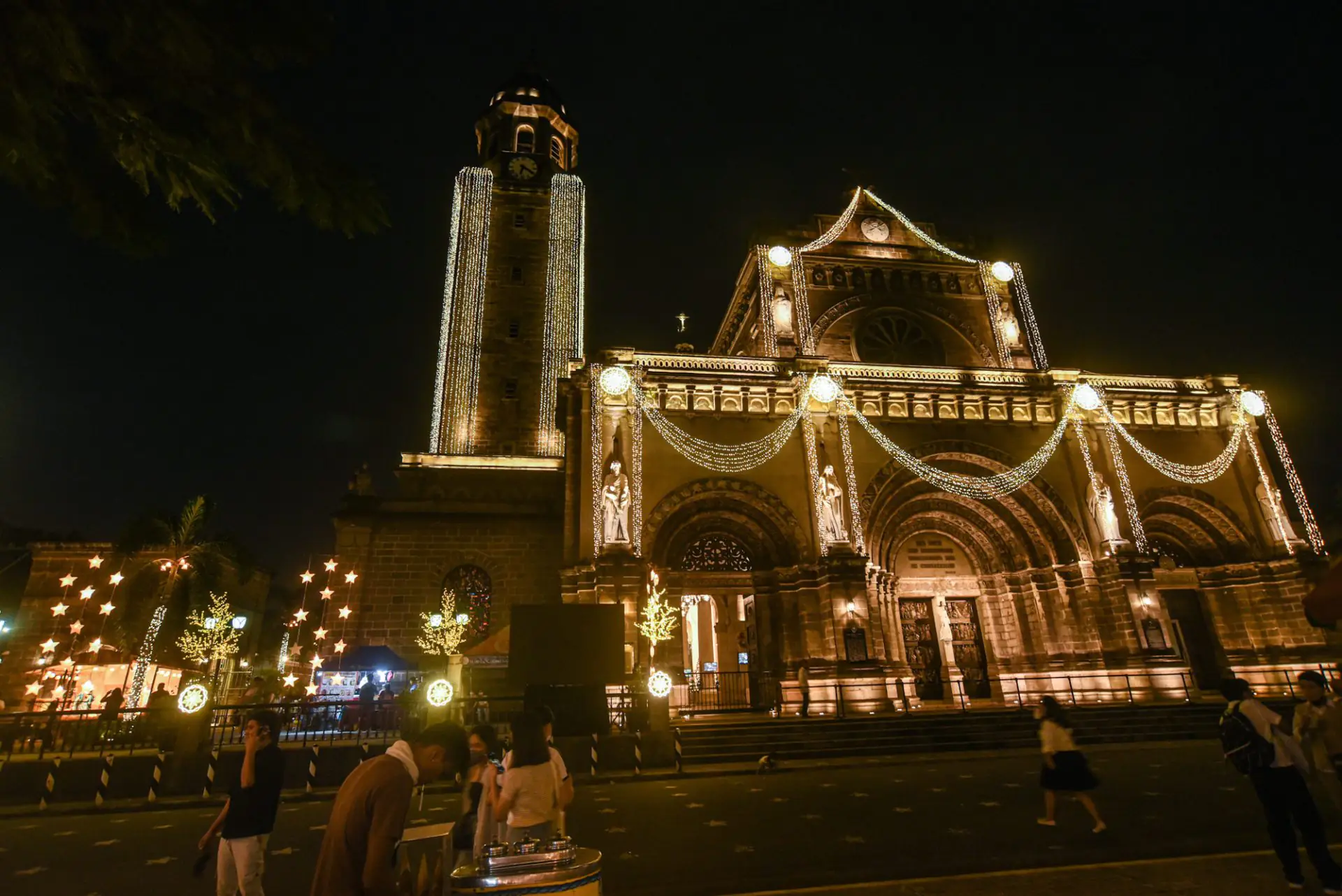
In Cusco, the mass takes place inside the Cathedral of Santo Domingo, an imposing baroque structure on the Plaza de Armas built atop the Inca temple of Kiswarkancha. Inside, colonial gold altars, intricate wood carvings, and the statue of the Black Christ (Señor de los Temblores) create a solemn atmosphere. During the Misa de Gallo, the cathedral is overflowing with locals and visitors. Some families bring their own Niño Manuelito figures to be blessed by the priests. Outside, vendors sell sparklers and fireworks in anticipation of the midnight celebrations.
Nativity Scenes and Retablos
Peruvian nativity scenes—known as nacimientos or pesebres—are an essential part of holiday decor. Homes, churches, and public buildings display elaborate scenes with Mary, Joseph and the Baby Jesus surrounded by shepherds, musicians, and animals. In the Andes, the figures often wear traditional Quechua clothing and include local animals such as alpacas and vicuñas.
According to, nativity scenes can be very large and sometimes include native animals like llamas and alpacas. There is also a tradition of retablos, portable boxes with hinged doors that depict religious scenes; Christmas retablos feature the Holy Family along with Andean villagers bringing gifts.
Families typically place the Baby Jesus figure in the manger after midnight mass. On December 6 (Feast of Saint Nicholas) or December 8 (Feast of the Immaculate Conception), families set up their nativity scenes and gradually add figures. On January 6 (Epiphany), the Three Wise Men figures are moved closer to the manger. This blending of the Catholic liturgical calendar with Andean rhythms underscores the syncretic nature of Peruvian Christmas.
Chocolatadas and Panetón
Christmas in Peru is also marked by culinary customs with deep cultural significance. Chocolatadas are social events where people gather to drink hot chocolate and share panetón (Peruvian panettone) with family and neighbors. These gatherings often serve philanthropic purposes—traditionally, chocolatadas were organized by churches and community groups to provide treats and gifts for less fortunate children.
Notes that in Peru, “there are special events called ‘chocolatadas’ where people meet to see each other and drink hot chocolate and eat some panetón”. The hot chocolate is typically made with pure cocoa, cloves, cinnamon, and sometimes a touch of pisco. Panetón—a sweet, airy bread filled with raisins and candied fruit—originated in Italy but became a Peruvian holiday staple. Most Peruvians believe that a Christmas celebration isn’t complete without both panetón and hot chocolate.
Other festive foods include roast turkey, chicken or pork, tamales wrapped in banana leaves, rice dishes, and salads. At midnight, the families toast with champagne or sparkling wine and sometimes with hot chocolate, then head into the streets to set off fireworks.
Santurantikuy: The Heart of Christmas in Cusco
Meaning and Significance
As mentioned earlier, Santurantikuy translates roughly to “sale of saints.” Kiddle succinctly explains the etymology—combining santu (“saint”) and rantikuy (“to buy something for oneself”).
The fair’s significance lies in how it brings together art, religion, and tradition. Kiddle describes Santurantikuy as a lively open‑air market where thousands of people, including locals and tourists, gather. The fair is a living tradition that preserves Peruvian culture and supports local artisans, which is why it was declared a national treasure.
For travelers, wandering through the Santurantikuy fair is like stepping into a living museum. The Plaza de Armas transforms into a giant marketplace filled with colourful stalls.
You’ll see artisans demonstrating how to shape tiny clay figurines, families haggling over straw for nativity scenes, children marveling at carved gourds, and foreigners tasting aniseed–flavored bread. Each booth represents a tradition passed down through generations.
What to Expect at the Fair
- Artisans and Their Creations: Skilled craftspeople arrive from across the region to sell Nativity figures made of clay, wood, gourds, metal, and even bread dough. They also offer handwoven textiles, knitted alpaca hats, hand‑hammered silver, carved gourds, miniature pottery, and candles. The fair is a great place to buy sustainable gifts while supporting local livelihoods.
- Niño Manuelito: The central figure at Santurantikuy is the Niño Manuelito. Kiddle explains that artisans create many different versions of Niño Manuelito, each with unique clothes and expressions, and families often buy one or accessories for their existing nativity scenes. You’ll see baby Jesus figures with Andean hats, knitted booties, tiny ponchos, and straw cradles.
- Traditional Medicinal Plants: Vendors also sell fragrant herbs and moss used to decorate nativity scenes. The moss is called q’oya, collected from high‑altitude wetlands. People believe it brings protection and fertility to the household.
- Local Food: Food stalls at Santurantikuy offer Andean treats such as anticuchos (marinated beef heart skewers), chiri uchu (cold dish with roasted guinea pig, corn, and cheese), ponche (spiced warm drink), tamales, and sweet breads.
- Spiritual Atmosphere: The fair has a spiritual undertone. Many vendors bring small altars, and at noon, priests bless the artisans’ images of saints. Throughout the day musicians play huayno songs, and families pause to pray at the Cathedral before continuing their shopping.
- The Procession: In the late afternoon, the faithful gather for the Romería del Niño Manuelito—a procession where they carry their own Niño Jesús figures to the Cathedral to be blessed. This solemn moment contrasts with the boisterous energy of the market and underscores the fair’s religious roots.
Tips for Visiting the Fair
- Arrive Early: Although the fair officially begins at dawn, artisans start setting up before sunrise. Arriving early allows you to see the booths being arranged and to chat with vendors without the afternoon crowd.
- Dress in Layers: December mornings can be chilly and damp; by afternoon, the sun may emerge. Wear layers, waterproof shoes, and a hat to protect from both rain and intense UV.
- Bring Cash: Most vendors accept cash only. Carry small notes and coins to make purchases easier.
- Learn Basic Spanish or Quechua: A few words like por favor (please), gracias (thank you) and ayni (reciprocity in Quechua) are appreciated.
- Support Local Artisans: Bargaining is acceptable, but remember that most artisans work all year for this event. Paying a fair price supports their families.
- Respect Traditions: Avoid taking photographs of people without asking permission and don’t handle sacred objects carelessly.
- Stay Alert: While the fair is generally safe, pickpocketing can occur in dense crowds. Keep your belongings close and remain aware of your surroundings.
Origins and Evolution of Santurantikuy
Understanding the deeper history of Santurantikuy adds another layer of meaning to a visit. The fair’s name is a hybrid of Spanish and Quechua – santu meaning “saint” and rantikuy meaning “to buy for yourself” – and the event itself is a fusion of Andean and European cultural traditions.
According to local historians, the fair likely emerged in the sixteenth century shortly after the Spanish conquest, when missionaries sought to evangelize indigenous populations. Catholic images were sold on the steps of Cusco’s cathedral as part of the colonization strategy. The earliest documented reference to a market resembling Santurantikuy dates back to 1834, suggesting the tradition has endured for at least two centuries.
 Origins and Evolution of Santurantikuy
What began as a way for Spanish clergy to introduce religious iconography into native households has grown into a vibrant celebration of Cusqueño identity.
Over time, Andean artisans appropriated and transformed the imported religious symbols. They crafted saints and nativity figures that resembled local people, wore woven ponchos, and were accompanied by llamas and alpacas. A particularly beloved adaptation is the Niño Manuelito.
While Emmanuel is a biblical name meaning “God with us,” in Cusco, the Baby Jesus is affectionately called Manuelito. Early Jesuit missionaries introduced the figure, but local artisans quickly began dressing him as an Inca prince, complete with feathered crowns and golden ornaments.
Antonio Olave Palomino:
This blending of spiritual motifs led to tensions with the colonial church, yet ultimately created a unique Andean iconography. In the 1970s, master sculptor Antonio Olave Palomino elevated the cult of Manuelito with his creation of the Niño de la Espina, depicting the Child Jesus with a thorn in his foot. Olave’s version, modeled on oral traditions from the Vilcabamba region, became the prototype for many subsequent figurines.
The fair itself has also evolved from a strictly religious marketplace into a showcase of regional artistry. Today it is described as “much more than a place to find everything you need for nativity scenes” – it embodies “the spirit of Cusco, tradition, culture, art and devotion”.
While nativity figures remain central, the stalls overflow with woven blankets, silver jewelry, paintings, carved gourds, leather goods, and woolen hats. Entire rooms’ worth of miniature villages are sold to construct elaborate pesebres (nativity scenes) with landscapes, rivers, and little bridges.
Families treat these scenes as living artworks that grow each year, adding new houses, animals, and mountains. Santurantikuy’s longevity is a testament to its adaptability – it has survived colonial suppression, political upheavals, and commercialization while remaining a cornerstone of Cusco’s holiday season.
Artisans and Their Stories: Keeping Tradition Alive
The magic of Santurantikuy comes from the people who make it. Many vendors travel for days from remote villages in the Andes, carrying their wares in woven cloth bundles. Among them are the hierberas, families from highland provinces who sell different herbs and mosses used to adorn nativity scenes.
These families often speak Quechua as their first language and sleep with their children under the porticos of the Plaza de Armas because they cannot afford lodging. For them, the fair is not just an economic opportunity; it is a pilgrimage that honours both their faith and their craft.
Community groups in Cusco recognize this sacrifice and organize initiatives to support them. Volunteers from organizations such as Caravana Cusco dress in colourful costumes and perform mime, storytelling, and games to entertain the children. Charitable associations serve hot chocolate, panetón, and distribute gifts, ensuring the visiting families feel welcome.
Behind each artisan’s table lies a story of generational craftsmanship. Many sellers come from the San Blas neighborhood, long known as Cusco’s artisan quarter, where families specialize in woodcarving, silverworking, or ceramics. The Mendívil family, for instance, is famous for elongated, stylized angels and saints carved from local woods and embellished with silver.
Nearby stalls might belong to descendants of the Olave family, whose members continue Antonio Olave’s tradition of sculpting Niño Manuelito figures with lifelike expressions. Other artisans bring retablos (portable altar boxes) adorned with tiny Andean scenes. Weaver families, mostly women, sell handspun textiles dyed with natural pigments. Leatherworkers craft belts, purses, and backpacks decorated with intricate patterns.
Silversmiths hammer raw ore into delicate filigree earrings, bracelets, and religious charms. These crafts are often passed down from grandparents to grandchildren; by purchasing directly at Santurantikuy, visitors help sustain intangible cultural heritage and the livelihoods tied to it.
Renewal and Innovation at the Fair
While rooted in tradition, Santurantikuy continually reinvents itself. notes that when you have “satiated your craving for culture and tradition” you can discover “another side of the fair” that offers imaginative clothing, accessories and contemporary art. In recent years artisans have introduced whimsical chullos (knitted hats) with ears resembling llamas, cats or mythical creatures. There are puppets of mischievous elves and fairies, lamps shaped like miniature circus tents, paintings by established Cusqueño artists and emerging talent. Leather goods range from belts and backpacks to elaborately carved chests and chairs. Children’s toys include colourful wooden trucks that double as decorative shelves. The fair’s vendors display dry flower arrangements, candles molded into animal shapes and headbands embellished with leather flowers. This diversity attracts new generations of shoppers and ensures that Santurantikuy remains relevant in a globalized world.
Innovation is also evident in the event’s scheduling. Historically, the fair took place only on December 24. Since 2015, however, organizers have extended it to include December 23. The additional day allows visitors more time to explore the stalls, reduces crowding and helps artisans increase sales. Another innovation involves competitions – local authorities and cultural organizations sponsor awards for the most creative nativity scene or the most skillful carving. These contests encourage artisans to push boundaries and experiment with new techniques while staying rooted in traditional themes. The result is a dynamic marketplace that celebrates both continuity and creativity.
Christmas Across Peru: Regional Variations and Unique Traditions
While Cusco’s Santurantikuy fair is perhaps Peru’s most iconic Christmas event, the country’s vast geography and cultural diversity mean that holiday customs vary significantly from one region to another. In the coastal capital of Lima, families typically gather for an elaborate Cena de Navidad featuring roasted turkey, Russian salad, and sweet rice pudding.
Fireworks light up the sky at midnight, and many people attend midnight mass followed by dance parties that last until dawn. Coastal nativity scenes often reflect fishing or maritime themes – you might spot a miniature fishing boat moored by the manger.
In contrast, communities in the Andean highlands blend Catholic rituals with indigenous beliefs. In some villages in Ayacucho and Puno, celebrations begin on December 16 with La Novena, a nine‑night prayer gathering culminating on Christmas Eve.
Families may wait until January 6, known as Día de los Reyes Magos or Epiphany, to exchange gifts. On this day children leave their shoes out for the Three Kings to fill with treats, and adults parade through the streets with brightly coloured masks representing the kings and Andean deities.
Villagers may perform danza de tijeras (scissor dance) competitions or stage Yawar fiestas, syncretic festivals that combine bullfighting with Andean rituals.
On the shores of Lake Titicaca, Quechua and Aymara communities celebrate with processions of boats carrying nativity scenes across the water. Women in embroidered skirts sing carols while men play panpipes and drums.
In the Amazon Basin, particularly around Iquitos, the holiday vibe is tropical – palm trees replace pines, and floats decorated with lights cruise along the rivers. Coastal Afro‑Peruvian communities in Chincha mark the holiday with energetic dances like festejo and landó.
Across Peru, the common threads are fellowship, feasting and reverence for the nativity, yet the local flavors and rhythms give each celebration its own character.
Giving Back: Volunteer Opportunities and Community Support
For many Cusqueños, Christmas is a time of generosity. As mentioned above, poor families from remote villages sleep in the cold porticos of the Plaza de Armas during the fair. Various organizations step up to provide comfort.
Caravana Cusco volunteers, recognizable by their clown costumes, spend the mornings playing games and telling stories to children. Community groups serve steaming cups of chocolate caliente and slices of panetón to vendors who seldom have time to leave their stalls.
Churches organize charity drives where locals donate clothes and toys for families in need. Visitors can participate by donating supplies, volunteering time or simply purchasing goods at fair prices. When you buy directly from artisans, you support their livelihoods and affirm the value of their heritage.
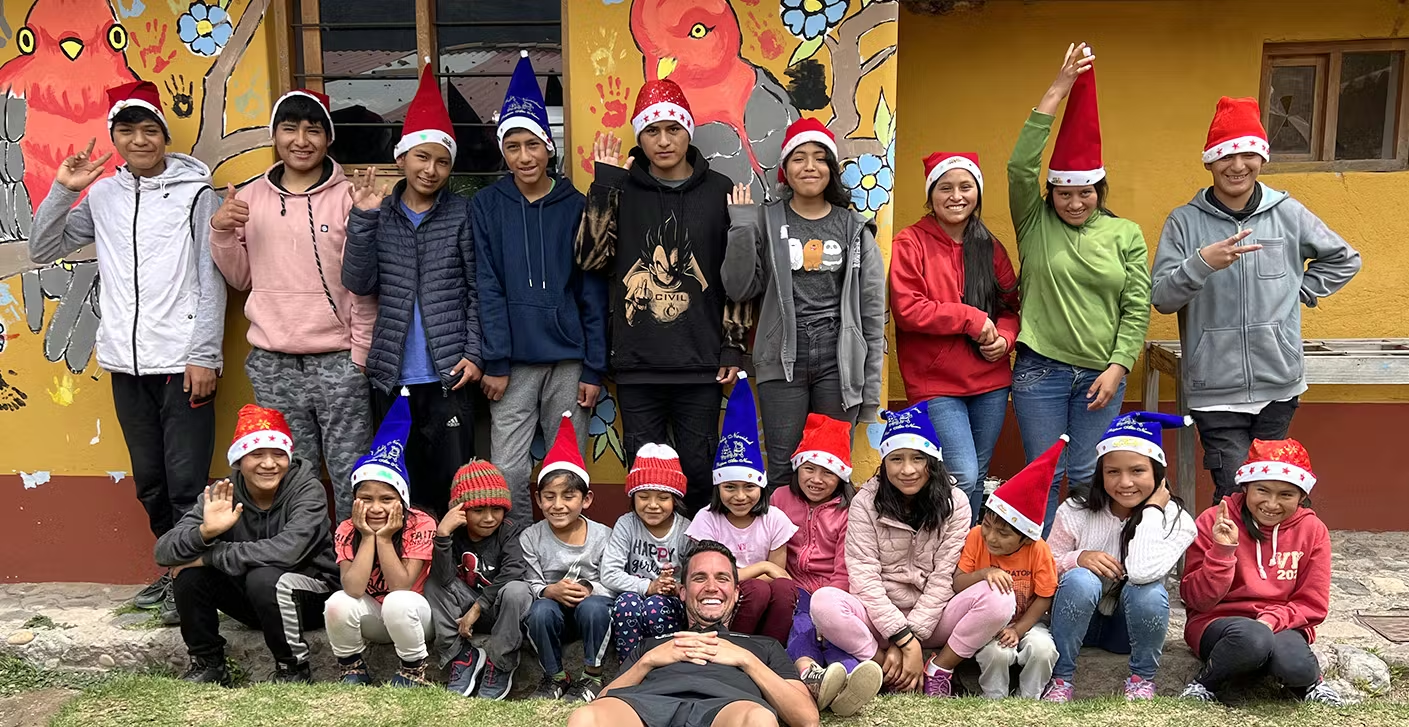
Alpaca Expeditions also embraces this spirit of giving. Each December we partner with local NGOs to host chocolatadas for porters and their families. We deliver food baskets to villages in the Sacred Valley, provide school supplies for children and sponsor medical campaigns.
Travelers joining our tours during the holiday season are invited to contribute to these initiatives. Even small acts – sharing a smile, learning a few Quechua words, tipping fairly – make a difference.
We encourage guests to bring extra warm clothing or books to donate to communities along trekking routes. Engaging in meaningful exchanges deepens your cultural experience and helps ensure that tourism benefits everyone involved.
Responsible Travel and Cultural Etiquette
Sustainable tourism is essential in fragile highland environments, particularly during peak seasons like Christmas. Here are some guidelines to help you travel responsibly:
- Respect Sacred Spaces: In churches and during processions, dress modestly and behave respectfully. Ask permission before photographing people or religious ceremonies. Avoid touching or rearranging altars and figurines.
- Support Fair Trade: When bargaining at Santurantikuy, remember that artisans have spent months creating their pieces. Pay a fair price and avoid pushing for unreasonably low discounts. Beware of mass‑produced souvenirs that may undercut local craftspeople.
- Reduce Waste: Bring reusable bags, water bottles and utensils. Cusco’s waste management infrastructure is strained during the holidays; carrying your own cup to chocolatadas reduces single‑use plastics.
- Protect the Environment: Stick to marked paths when hiking; do not pick plants or leave litter. High‑altitude ecosystems recover slowly. If you smoke, carry your cigarette butts until you find a bin. On treks, use biodegradable soap and pack out all trash.
- Mind the Animals: Don’t support businesses offering photo opportunities with sedated animals. If visiting a petting zoo, ensure the animals are well cared for.
- Cultural Sensitivity: Learn basic Quechua greetings and ask before hugging or touching locals. Avoid loud behavior late at night; many families live near the Plaza de Armas and appreciate quiet streets after celebrations.
- Health Precautions: The thin air and strong UV radiation in Cusco require extra self‑care. Wear sunscreen, hydrate regularly, avoid heavy drinking at altitude and schedule rest days. If you feel unwell, inform your guide immediately.
By following these practices you help preserve the very traditions and landscapes that make your holiday special.
Getting to Cusco and Travel Logistics
Air Travel: Most international visitors arrive in Peru through Lima’s Jorge Chávez International Airport. From Lima, direct flights to Cusco’s Alejandro Velasco Astete Airport take about 1 hour 20 minutes and are offered by several carriers, including LATAM, Sky Airline and JetSmart. Book flights early during the Christmas season as they sell out quickly, especially on December 23 and 24 when locals travel home. If you are coming from other South American cities, there are direct flights from Santiago, La Paz and Bogotá. Flights to Cusco can be affected by weather; morning departures are generally more reliable during the rainy season.
Overland Routes: Traveling by bus from Lima to Cusco is an adventure in itself. The journey covers roughly 1,100 km (680 mi) and takes about 20–24 hours, passing through desert coastlines, high mountain passes, and deep valleys. Luxury bus companies like Cruz del Sur and Oltursa offer comfortable reclining seats, meals, and entertainment. If you have time, consider breaking the trip with stops in Nazca to see the famous geoglyphs or Arequipa to visit the white‑stone colonial center and nearby Colca Canyon.
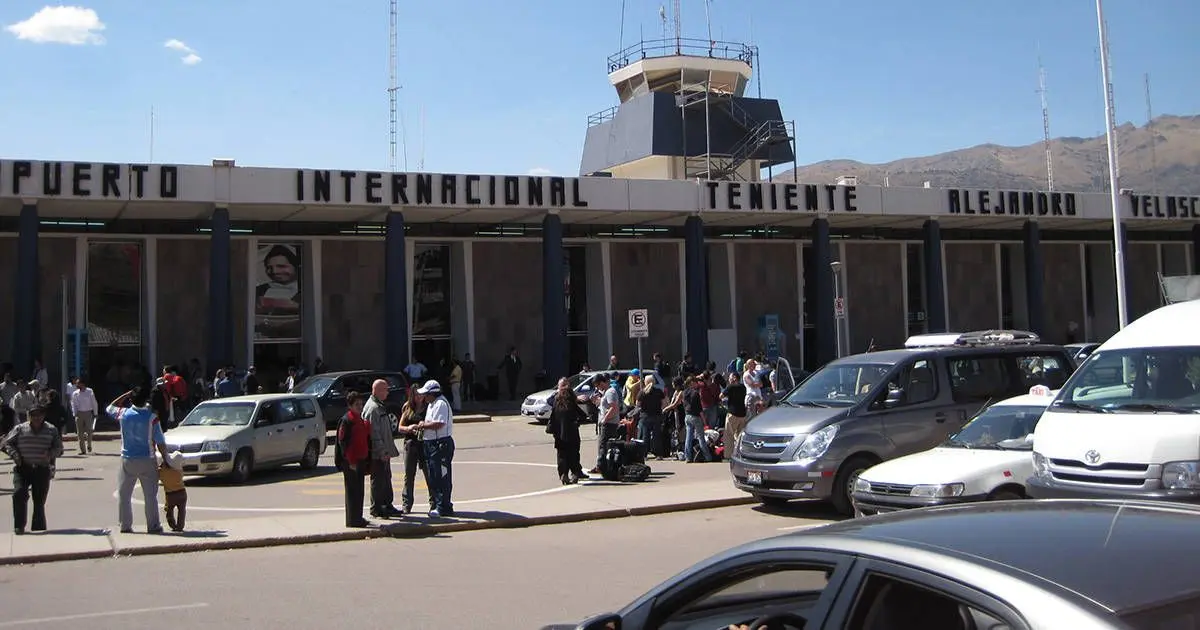
Local Transport:
In Cusco, most attractions in the historic center are walkable. For longer trips, taxis are plentiful; always agree on the fare before riding, as they do not use meters. Ride‑hailing apps like Uber and Cabify operate in the city and offer clearer pricing.
Buses to the Sacred Valley depart from the Puputi and Pavitos streets; colectivos (shared vans) leave when full and are inexpensive. To reach Aguas Calientes for Machu Picchu, you must take a train from Poroy, Ollantaytambo, or San Pedro stations. Purchase train tickets well in advance for holiday dates.
Accommodation Tips: Popular hotels and hostels in Cusco fill up quickly for Christmas. Reserve your lodging at least three months ahead. Consider staying in the San Blas neighborhood for a quieter atmosphere, or choose a hotel near the Plaza de Armas to be close to Santurantikuy.
Eco‑lodges in the Sacred Valley provide a peaceful retreat after the festivities. If you prefer to immerse yourself in local culture, book a homestay in a nearby village where you can share meals and traditions with a family.
Connectivity and Safety: Peru uses 220V electricity; bring a travel adapter if your devices require 110V. Purchase a local SIM card or an eSIM for data; Claro and Movistar have good coverage in Cusco and the Sacred Valley.
Always keep an eye on your belongings in crowded areas and use ATMs inside banks or shopping centers to reduce the risk of card skimming.
Beyond Cusco: Festive Adventures Across Peru
If you’re extending your stay, Peru offers countless holiday experiences beyond the Inca heartland.
Arequipa – Known as the White City for its sillar stone buildings, Arequipa enjoys sunny weather in December. The city holds a vibrant Christmas parade featuring giant floats, marching bands, and dancers in traditional yanesha and tinya costumes.
Nearby attractions include Colca Canyon, where you can watch Andean condors soar, and the snow‑capped volcanoes Misti and Chachani. Arequipa’s cuisine is famed for dishes like rocoto relleno (stuffed spicy peppers) and queso helado (a sweet frozen dessert).
Puno and Lake Titicaca –
On the Altiplano, you’ll find communities that blend Catholic Christmas with ancient lake myths. Boat tours on Lake Titicaca visit Uros floating islands, where families decorate their reed homes with lights and host visitors for traditional meals.
In the town of Juliaca, markets sell brightly coloured hats and gloves perfect for the cold nights. After New Year’s, Puno hosts the Fiesta de la Candelaria, a massive religious and folkloric festival, making January a lively time to visit.
The Amazon – Spend Christmas in a jungle lodge near Tambopata or Iquitos to experience a completely different atmosphere. River boats lit with lanterns cruise through the waterways while guides point out nocturnal wildlife. Lodges prepare fusion holiday dinners blending local fish, plantains and Amazonian fruits. Some communities hold boat processions carrying nativity scenes carved from palm wood.
Northern Beaches – For a sun‑and‑sand Christmas, head to Máncora, Huanchaco or Zorritos. These coastal towns offer warm temperatures, surfing and seafood feasts. Locals organize beach bonfires and fireworks displays on Christmas Eve. In Trujillo and Chiclayo, you can combine beach time with visits to the archaeological sites of the Moche and Chimú cultures, such as Chan Chan and Huaca de la Luna.
The Colca Valley and the Highlands – Towns like Chivay and Yanque host Christmas pageants where local children reenact the nativity in Quechua and Spanish, wearing embroidered costumes.
Villages near Ausangate hold Takanakuy, an Andean festival in which people settle disputes through ritualized fistfights; while not directly connected to Christmas, it often coincides with the holiday season and draws curious travelers.
These destinations illustrate Peru’s incredible diversity. Whether you choose to stay in Cusco or explore further afield, you’ll encounter a rich tapestry of traditions, landscapes and flavours.
Customize Your Festive Journey with Alpaca Expeditions
Every traveler is unique. That’s why Alpaca Expeditions offers flexible itineraries tailored to your interests, fitness level, and holiday schedule. Want to balance city exploration with remote hikes? We can combine a Santurantikuy visit with a private Sacred Valley tour and a lodge‑based trek to Huchuy Qosqo.
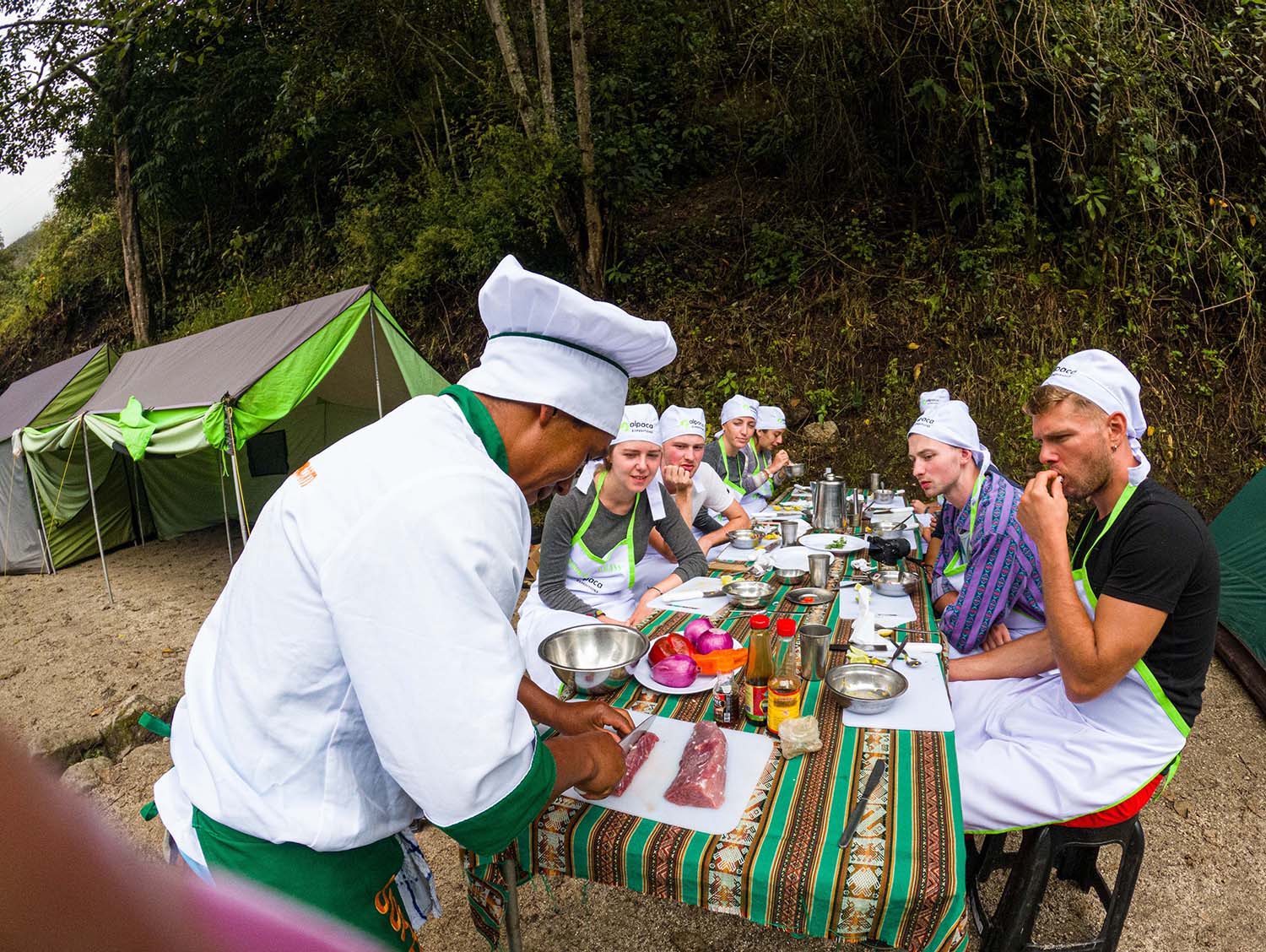
Prefer a family‑friendly pace? We arrange shorter excursions with hands‑on activities like pottery workshops in Raqchi, weaving lessons with local cooperatives in Chinchero, or cooking classes focused on holiday dishes. Adventurers might opt for the Salkantay or Ausangate treks, while history buffs could add tours of Tipón, Moray, and Chinchero archaeological sites.
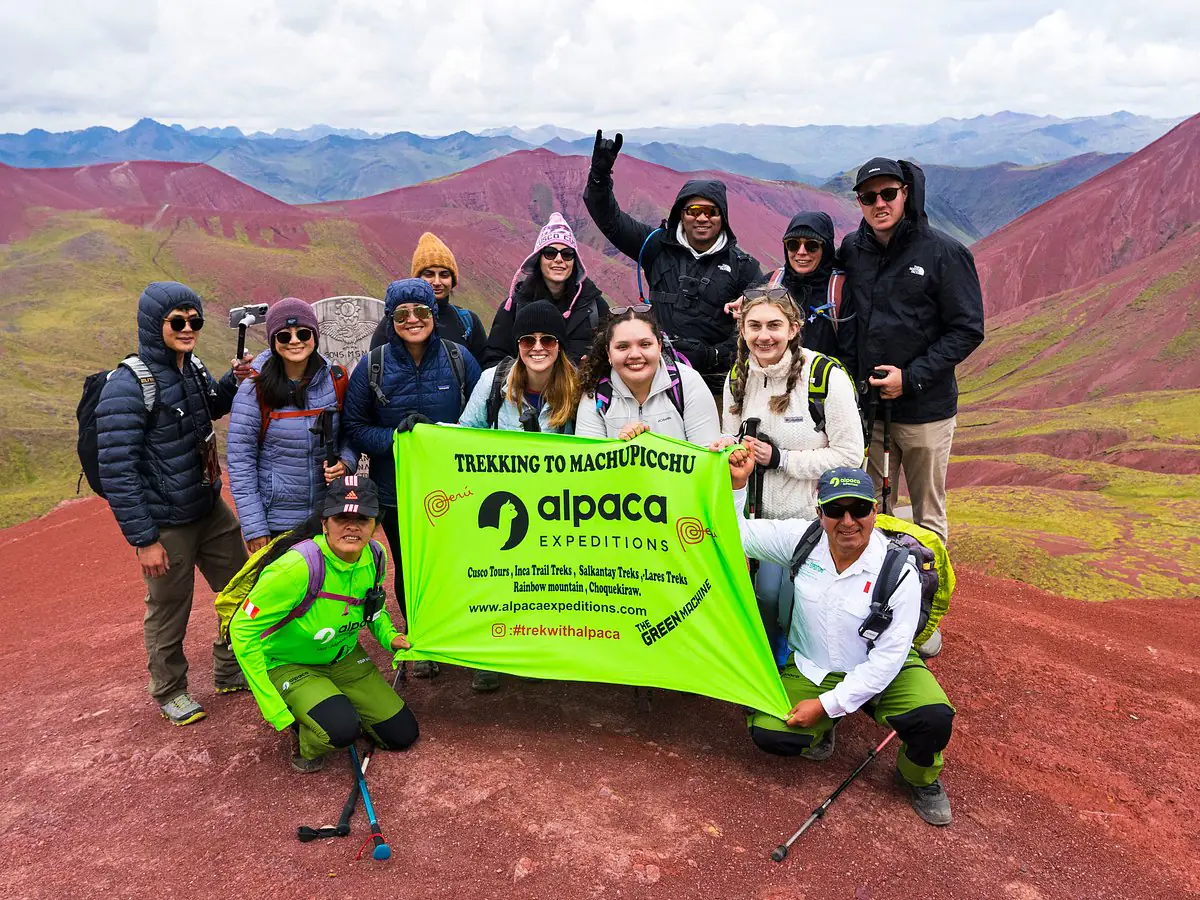
Because holiday schedules are busy, we handle all logistics – obtaining trek permits, booking trains, securing accommodations, and arranging transfers. We’ll advise on the best dates to avoid crowds and ensure you have time to acclimatize before strenuous activities. If your dream is to attend midnight mass in Cusco and then greet the sunrise at Machu Picchu, we’ll craft an itinerary that makes it happen.
Our team is happy to integrate volunteer opportunities, weaving cooperative visits or Andean music workshops into your plan. As locals, we have relationships with artisans and farmers who welcome visitors into their homes.
Let us know what moves you – whether it’s learning about Andean astronomy, visiting the Chocolate Museum, or joining a Christmas chocolatada – and we’ll design a holiday adventure that’s truly yours.
Christmas Traditions in Cusco
Chocolatadas: A Tradition of Sharing
Chocolatadas are social gatherings where hot chocolate and panetón are shared with friends, family, and often strangers. Historically, religious orders and wealthy families organized chocolatadas to give treats and gifts to less fortunate children. Today, schools, offices, and neighborhoods host their own events.
Hot chocolate in Peru is rich and fragrant; the beverage is made with pure cocoa, cinnamon, cloves, condensed milk, and occasionally pisco or rum. According to, chocolatadas started as a way of sharing food and gifts with those less fortunate. The tradition now symbolizes community, generosity, and equality.
At Alpaca Expeditions, we often host small chocolatadas for our porters and their families. We bring large pots of steaming chocolate, baskets of panetón, and presents for the children. Watching the smiles that light up their faces as they sip the warm drink reminds us that Christmas is as much about giving as it is about celebrating.
Noche Buena and Cena de Navidad
While many countries reserve the main celebration for December 25, Peruvians celebrate primarily on December 24, known as Noche Buena. Families gather for a late dinner or cena de Navidad after the Misa de Gallo. The meal often includes roast turkey, chicken, or pork, served with salads, rice, mashed potatoes, applesauce, and tamales.
Notes that the main meal might feature roast turkey or chicken and that panetón is the traditional dessert. Many Cusqueñan families also serve lechón (roasted suckling pig), arroz arabe (Peruvian‑style rice with raisins and noodles), and ensalada rusa (beet and potato salad).
After dinner and the midnight toast, families exchange gifts. Some households open presents at midnight, others wait until after breakfast on December 25. Fireworks and sparklers light up the streets, and neighbors step outside to greet each other with “¡Feliz Navidad!” The night air fills with the scent of pine, smoke, and baking bread.
Street Celebrations and Fireworks
Fireworks are an integral part of Christmas Eve in Cusco. Locals and visitors purchase sparklers, roman candles and small rockets from street vendors. After midnight, the Plaza de Armas erupts into a kaleidoscope of colors; fireworks illuminate the stone façades of colonial churches and Inca walls. While spectacular, the celebration can be chaotic—practice caution if you participate. Wear protective eyewear, watch your step and stay aware of stray explosives.
The atmosphere in Cusco’s streets after midnight is electric. People dance to traditional huayno music played by street bands, share laughter and drinks with strangers and enjoy roasted corn and churros from vendors. It’s a communal experience that brings together people from diverse backgrounds.
Day of the Three Kings (Día de los Reyes Magos)
Christmas festivities in Cusco extend beyond December 25. On January 6 Peruvians celebrate the Epiphany or Día de los Reyes Magos (Day of the Three Kings). Families move the figurines of the Three Wise Men closer to the manger in their nativity scenes, and children may receive small gifts.
It is also customary to bless houses and share food with neighbors. In rural communities, this day includes parades featuring masked dancers and musicians representing the kings and the Andean deities.
Weather and Packing Guide for Christmas Visits
Weather Conditions in December
As previously noted, December is part of Cusco’s rainy season. Average temperatures hover around 8.4 °C (47.2 °F) with highs near 12.9 °C and lows of 5.3 °C. Rainfall averages 201 mm (7 in) distributed over about 20 days.
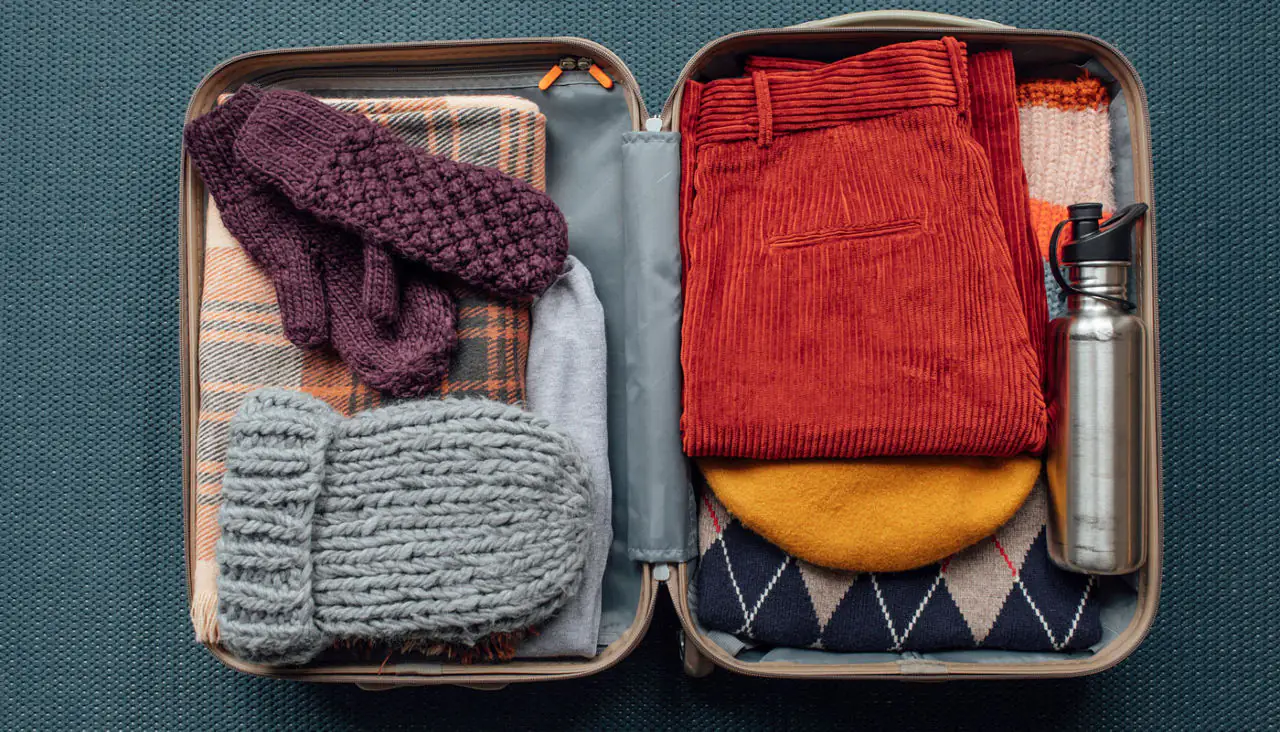
You may experience clear sunny mornings followed by heavy afternoon showers, or vice versa. Fog can envelop the mountains in minutes, while strong UV radiation penetrates the thin air when the sun breaks through.
What to Pack for Cusco at Christmas
Traveling to Cusco during the rainy season requires thoughtful packing. Our guides recommend the following:
- Layered Clothing: Bring long‑sleeve shirts, sweaters or fleece jackets for chilly mornings and evenings, and T‑shirts for milder afternoons. Thermal underwear is useful for early tours or excursions at higher elevations such as Rainbow Mountain.
- Waterproof Outerwear: A good waterproof jacket or rain poncho is essential. Also pack waterproof pants or quick‑dry trousers.
- Footwear: Waterproof hiking boots with good grip are important, especially if you plan to explore archaeological sites or do day hikes. Bring an extra pair of dry shoes for evenings.
- Accessories: A wool hat, gloves, and a scarf help with cold nights, while a wide‑brimmed hat and sunglasses protect from the midday sun. Sunscreen with high SPF is crucial due to strong UV levels.
- Altitude Supplies: Bring your preferred remedies for altitude sickness (more on this below), reusable water bottle, electrolyte packets, and any medications recommended by your doctor.
- Daypack: A small backpack for daily excursions to carry water, snacks, a camera, rain gear, and warm layers.
- Reusable Bags: Vendors appreciate if you carry cloth bags for purchases.
- Travel Adapter: Peru uses 220V electricity with types A and C outlets, so pack an adapter if necessary.
Preparing for the Altitude
At 3,399 m (11,152 ft), Cusco’s elevation can induce altitude sickness (also known as acute mountain sickness). Common symptoms include headaches, dizziness, nausea, and fatigue. The Voyagers Travel blog notes that altitude sickness is a common concern for travelers to high‑altitude destinations like Cusco and that symptoms can affect anyone. Here are some strategies for a smoother acclimatization:
- Ascend Gradually: Plan your itinerary to arrive in Cusco and spend at least two days acclimating before engaging in strenuous activities. Take gentle walks around the city to help your body adjust.
- Stay Hydrated: Drink plenty of water throughout the day, but avoid overhydration. Dehydration can worsen symptoms, and alcohol and caffeine should be limited.
- Eat Light Meals: Foods high in carbohydrates help your body process oxygen more efficiently. Avoid heavy, greasy meals during the first days.
- Rest and Sleep: Adequate rest is crucial to acclimatization. Plan quiet evenings and avoid partying upon arrival.
- Consider Medication: Prescription drugs like acetazolamide (Diamox) can aid acclimatization. Consult your doctor before travel.
- Natural Remedies: Locals recommend chewing coca leaves or drinking coca tea to ease headaches and nausea. Coca candy and herbal teas like muña (Andean mint) can also provide relief.
- Supplemental Oxygen: Hotels and travel companies may provide oxygen tanks or portable oxygen bottles. Use them if symptoms persist.
- Listen to Your Body: Take breaks when needed and adjust your plans if you feel unwell. If severe symptoms occur, seek medical attention immediately.
- Physical Preparation: Engage in cardiovascular exercise before your trip to improve stamina.
- Insurance: Consider travel insurance that covers high‑altitude medical issuesl.
Our team at Alpaca Expeditions provides oxygen and first aid kits on all tours. We also schedule gradual ascents and build rest days into itineraries.
Itinerary Suggestions for a Christmas Trip
Below are sample itineraries that combine the Santurantikuy fair and Christmas festivities with some of the most iconic sites in the Cusco region. Feel free to adapt these based on your interests and timeframe.
4‑Day Itinerary: Christmas and Cusco Highlights
Day 1 (December 22 or 23): Arrive and Acclimatize
- Arrive in Cusco and transfer to your hotel. Spend the morning resting and drinking coca tea.
- After lunch, take a leisurely walking tour of the historic center. Visit the Plaza de Armas, Cathedral of Santo Domingo, Church of the Society of Jesus, and Qoricancha (Temple of the Sun).
- Enjoy a welcome dinner with Andean dishes such as lomo saltado or alpaca steak.
Second Day (December 24): Santurantikuy and Noche Buena
- Wake up early and head to the Santurantikuy fair before the crowds. Wander through artisan stalls, talk with vendors, purchase handcrafted nativity figures, and sample street food.
- Visit the San Pedro Market to buy local snacks, fruit, and souvenirs.
- Rest in the afternoon or attend a cooking class to learn how to make ceviche and pisco sour.
- In the evening, attend the Misa de Gallo at the Cathedral. Observe the cultural blend of Catholic and Andean traditions.
- Return to your hotel or join a Christmas Eve dinner hosted by Alpaca Expeditions. Enjoy roasted turkey, panetón, hot chocolate and Peruvian side dishes.
- Step outside at midnight to watch fireworks and celebrate with locals.
Day 3 (December 25): Sacred Valley Excursion
- Drive to the Sacred Valley, stopping at the Pisac Market to see more crafts and Andean textiles.
- Visit the Pisac Archaeological Site with its terraces and temples.
- Continue to Ollantaytambo, exploring its fortress and cobblestone streets.
- Enjoy a festive picnic or lunch in the valley.
- Return to Cusco for a relaxed evening or optional spa session.
Fourth Day (December 26): Optional Day Trip to Rainbow Mountain or Humantay Lake
- If acclimated and physically prepared, take a day trip to Rainbow Mountain (Vinicunca) or Humantay Lake.
- These tours start early (around 4 am) and involve hiking at high altitude.
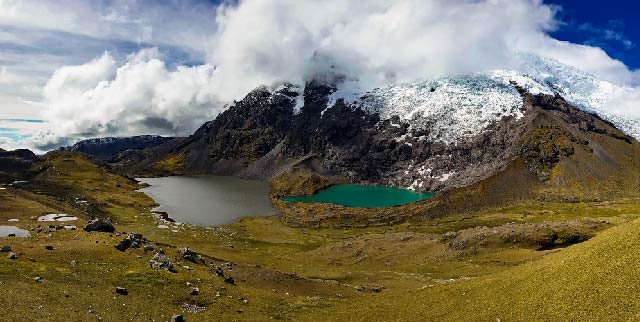
- For Rainbow Mountain, you’ll hike to a spectacular, multicolored summit at over 5,000 m (16,400 ft). At Humantay Lake, you’ll trek to a turquoise glacial lake surrounded by snow‑capped peaks.
- Return to Cusco in the evening.
7‑Day Itinerary: Combining Cusco with Machu Picchu
Day 1–2: Follow Days 1–2 from the 4‑Day Itinerary, focusing on acclimatization and the Santurantikuy fair.
Day 3 (December 25): Sacred Valley tour (Pisac, Ollantaytambo). Stay overnight in Ollantaytambo to shorten the train ride the next day.
Day 4 (December 26): Take the Vistadome or Expedition train from Ollantaytambo to Aguas Calientes, the gateway to Machu Picchu. Spend the afternoon exploring the town, visiting the hot springs or the Mandor Gardens.
Day 5 (December 27): Rise early to catch the bus up to Machu Picchu. Explore the citadel with a licensed guide who will explain the history and engineering of this Incan wonder. Climb Huayna Picchu or Machu Picchu Mountain for panoramic views if you have permits. Return to Cusco in the evening.
Day 6 (December 28): Choose a day hike to Moray & Maras (agricultural terraces and salt ponds) or Huchuy Qosqo (an Incan site reachable by a high‑altitude trek).
Day 7 (December 29): Enjoy a relaxing day in Cusco. Visit museums such as the Museo de Arte Precolombino, Museo Inka or the ChocoMuseum; shop for souvenirs; take a weaving workshop in the San Blas neighborhood.
Longer Itineraries: Adding Treks and Lake Titicaca
For travelers with 10–14 days, consider adding multi‑day hikes or other regions:
- Inca Trail (4 days): This classic trek requires a permit and crosses cloud forests and alpine passes before arriving at Machu Picchu through the Inti Punku (Sun Gate). The Peruvian government limits daily access on the trail to 500 people, including porters and guides. Permits sell out months in advance, especially for peak months (May–September).
- Salkantay Trek (5–7 days): A challenging alternative trek that traverses high passes near Mount Salcantay—the highest peak in the Vilcabamba range at 6,271 m (20,574 ft)—before descending into the cloud forest leading to Machu Picchu.
- Lares Trek (3–4 days): This less crowded route passes through traditional Quechua villages and hot springs.
- Rainbow Mountain & Ausangate (2–7 days): For trekkers seeking high elevation and unique geology.
- Lake Titicaca (2–3 days): From Cusco, you can travel to Puno and explore the Uros floating islands and Taquile island.
Costs and Budgeting
Costs in Cusco vary widely depending on travel style, accommodation and activities. Below is a general guideline (prices in USD):
- Accommodation: Budget hostels start around $15–$25 per night. Mid‑range hotels range from $50–$120, while boutique and luxury hotels can range from $150 to $400 per night.
- Food: Local meals at markets or small restaurants cost $3–$8. Upscale restaurants in the historic center charge $20–$40 per person.
- Transportation: Taxis within the city cost $2–$5; buses to the Sacred Valley are $5–$10. Train tickets to Machu Picchu start around $55 (Expedition class) and go up to $85–$100 for Vistadome or IncaRail.
- Tours: Day tours to the Sacred Valley or Rainbow Mountain range from $40–$80. Multi‑day treks like Salkantay start at $450, while the Classic Inca Trail can cost $650–$900 due to permit fees and porters.
- Santurantikuy: Shopping at the fair is generally affordable; small figurines cost $2–$10, while larger nativity scenes can reach $50–$100. Keep cash on hand and be prepared to negotiate respectfully.
- Christmas Dinner: Restaurants and hotels offer special Noche Buena menus starting at $35 per person for a set dinner.
Currency Note: The Peruvian Sol (PEN) is the official currency; however, US dollars are accepted in some establishments. Always carry smaller bills and coins to avoid change issues. ATMs are widely available in Cusco, but notify your bank of travel plans to prevent card blocks.
Permits and Reservations
Inca Trail Permits
If you plan to trek the Classic Inca Trail over the holidays, securing a permit is crucial. The Peruvian government caps daily access to 500 people (including trekkers, porters, guides, and cooks), as described in Alpaca Expeditions’ permit guide. Only about 200 permits are allotted for trekkers; the remaining 300 permits are reserved for support staff.
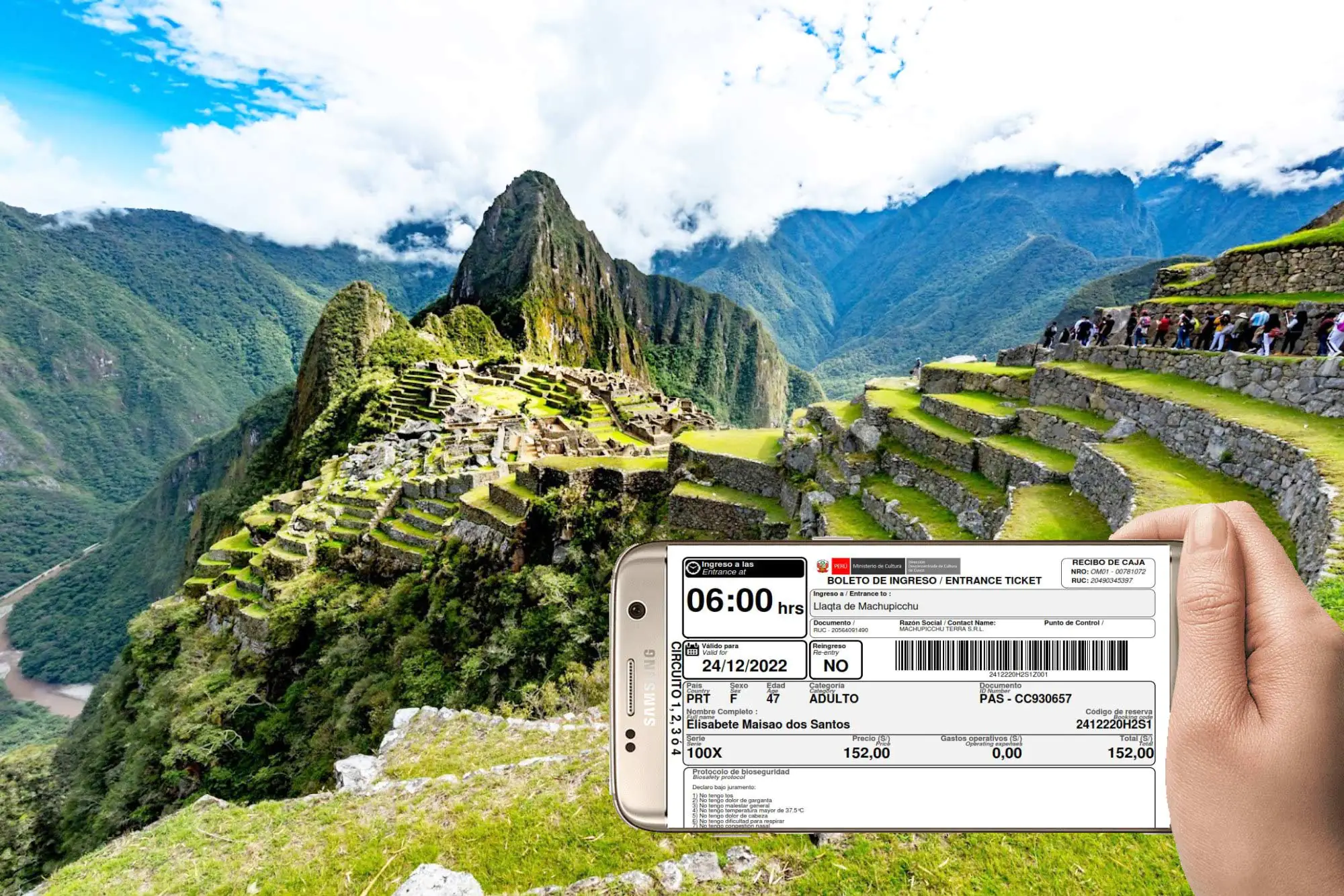
These regulations were implemented to protect the trail from erosion and ensure safety. Permits for the most popular months (May–September) sell out 6–9 months in advance. For Christmas or shoulder season (November–December), you may find availability up to 3–4 months before, but we still recommend booking early.
The Inca Trail is closed every February for maintenance.
Alternative Treks and Day Hikes
Alternative routes like the Salkantay, Lares, Huchuy Qosqo, Choquequirao and Ausangate treks do not require permits. However, they still require booking and proper planning. Salkantay and Ausangate reach altitudes above 4,600 m (15,091 ft), so acclimatization is essential.
Train and Machu Picchu Entry Tickets
Visiting Machu Picchu requires both a train ticket and an entry ticket with designated time slots. Purchase tickets through official websites or authorized agents. High-demand dates around Christmas sell out quickly. Consider visiting on December 25 or 26 when crowds are lighter.
Accommodation and Dining Reservations
For Noche Buena, book restaurants or hotel dinners well in advance; many locals dine out, and reservations fill quickly. Similarly, boutique hotels and eco‑lodges near the Sacred Valley or Cusco may have minimum stay requirements during the holiday season.
Food and Drink: A Culinary Journey
Peruvian cuisine is one of the world’s most diverse, blending Incan ingredients with Spanish, African, Chinese, and Japanese influences. Christmas menus reflect this fusion:
- Roast Turkey or Chicken: Marinated with cumin, garlic, and Peruvian herbs, served with apple sauce and sweet potatoes.
- Lechón al Horno: Slow‑roasted pork, crispy outside and juicy inside.
- Tamales: Corn dough stuffed with meat, olives, and eggs, wrapped in banana leaves.
- Aji de Gallina: Shredded chicken in a creamy, mildly spicy sauce thickened with bread and walnuts.
- Papas a la Huancaína: Potatoes topped with spicy cheese sauce.
- Arroz Arabe: Flavorful rice cooked with noodles, raisins, and spices.
- Panetón: Sweet bread loaded with candied fruit. According to, panetón is the traditional dessert of Peru’s Christmas dinner.
- Hot Chocolate (Chocolate Caliente): Often spiced with cinnamon and cloves, served at chocolatadas and after midnight fireworks.
- Chicha Morada: A non‑alcoholic drink made from purple corn and fruits, sometimes served at holiday feasts.
- Pisco Sour: While not specifically a Christmas drink, many travelers enjoy Peru’s national cocktail during holiday dinners.
Vegetarians and vegans will find delicious options such as quinoa salads, locro de zapallo (pumpkin stew), tacu tacu (crispy rice and beans), and Andean vegetables like olluco and mashua. Many restaurants in Cusco cater to dietary restrictions.
Where to Eat in Cusco During Christmas
- Local Markets: San Pedro Market offers traditional dishes and affordable meals.
- Traditional Restaurants: Pachapapa (San Blas) serves Andean specialties in a colonial courtyard; Cicciolina offers Mediterranean‑Peruvian fusion; Chicha by Gastón Acurio showcases modern Peruvian cuisine.
- Street Food: Try picarones (fried sweet potato doughnuts), mazamorra morada (purple corn pudding), and emoliente (herbal tea).
- Special Christmas Dinners: Many hotels and restaurants host Christmas Eve dinners with live music and Andean dancing. Alpaca Expeditions can arrange festive meals with local families or at eco‑lodges.
Altitude, Acclimatization, and Health Tips
We’ve already discussed hydration, rest, and coca tea. Here are additional health considerations:
- Sun Protection: Due to high UV radiation, apply sunscreen of at least SPF 50 and wear sunglasses. The thin atmosphere intensifies sun exposure even on cloudy days.
- Vaccinations: Consult your doctor about routine vaccines and any additional shots recommended for travel to Peru. If traveling to the Amazon after Cusco, consider yellow fever vaccination and malaria prophylaxis.
- Travel Insurance: Choose a policy covering medical evacuation, altitude sickness, and trip cancellation.
- Hydration and Diet: Avoid excessive alcohol and heavy meals during acclimatization. Hydrate with water, coca tea, and electrolytes; eat light, carbohydrate‑rich foods.
- Medical Facilities: Cusco has hospitals and clinics, but remote villages have limited access. Carry a personal first aid kit with medications for pain, stomach upset, allergies, and altitude.
Why Choose Alpaca Expeditions?
Local Expertise and Cultural Immersion
As a locally owned and operated company, Alpaca Expeditions is deeply rooted in the Andean community. Our founder, Raul Ccolque, grew up in a small village in the Sacred Valley and started as a porter on the Inca Trail. He understands the challenges faced by local communities and the importance of sustainable tourism.
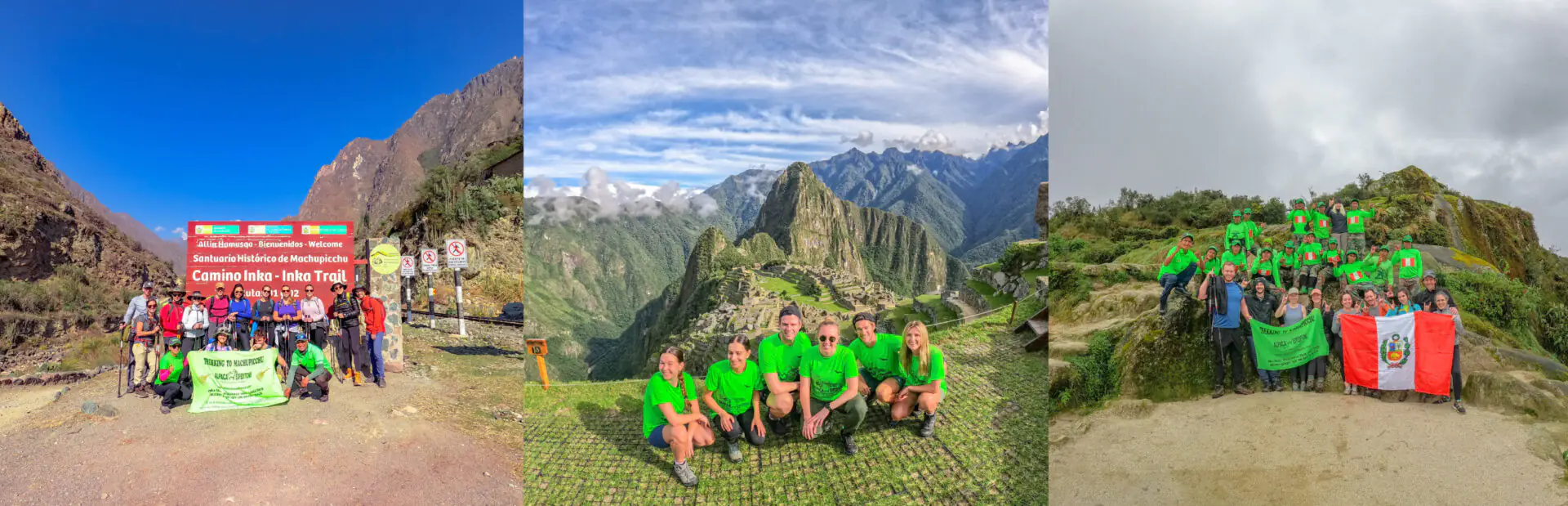
Our guides are all native Peruvians who speak English, Spanish, and Quechua. They share not only historical facts but personal stories about life in the Andes, giving travelers authentic insights.
Sustainable Tourism and Social Projects
We’re committed to protecting Peru’s fragile ecosystems and cultural heritage. Our sustainability initiatives include:
- Reforestation: We plant trees along our trekking routes to offset carbon emissions and prevent erosion.
- Porter Welfare: We provide fair wages, high‑quality equipment, proper meals, and health insurance for our porters. Our company built a Porter House in Ollantaytambo where they can rest and store their belongings.
- Community Support: Alpaca Expeditions invests a portion of profits into education and social projects. We fund school supplies, uniforms, scholarships, and community kitchens.
- Environmental Stewardship: We follow Leave No Trace principles, pack out all waste and use reusable utensils. We encourage travelers to bring reusable water bottles and avoid single‑use plastics.
- Women’s Empowerment: We employ female guides, chefs, and porters and support women‑owned businesses in communities we visit.
Customized Festive Experiences
Christmas travel is special, and we tailor experiences accordingly:
- Private and Small‑Group Tours: We keep group sizes small for personal attention and deeper cultural immersion.
- Exclusive Santurantikuy Tours: Our guides take you behind the scenes at the fair, introducing you to master artisans and helping you find meaningful souvenirs.
- Festive Meals: We organize dinners with local families or chefs who prepare traditional Christmas dishes.
- Accommodation Choices: From luxury hotels to family‑run homestays, we suggest places that enhance your holiday experience.
- Flexibility: We craft itineraries that account for weather, altitude and your interests.
Safety and Reliability
We conduct all tours with safety at the forefront. Our guides are trained in first aid and have portable oxygen. Our equipment is top quality—from waterproof tents to comfortable sleeping pads. We monitor weather conditions and adjust itineraries as needed.
Consistently High Reviews
Alpaca Expeditions consistently ranks among the top tour operators in Cusco on review platforms. Travelers praise our organization, passionate guides, delicious food, and ethical practices. Many describe our tours as life‑changing and highlight the strong sense of community among our staff.
Glossary of Quechua and Festive Terms
Traveling in the Andes introduces you to a new vocabulary of words that carry deep cultural meaning. Familiarizing yourself with these terms will enrich your experience and help you connect with locals on a deeper level.
- Ayni – A principle of reciprocity and mutual aid that permeates Andean society. When someone offers you help or hospitality, it is customary to return the favor in some way. This concept underpins the spirit of sharing that defines Christmas chocolatadas and community gatherings.
- Pollera – A voluminous, colorful skirt worn by Quechua and Aymara women. Polleras are often layered and embroidered with flowers or geometric patterns. You’ll see them swirling in traditional dances during holiday processions.
- Chullo – A knitted Andean hat with earflaps, traditionally made from alpaca or sheep wool. At Santurantikuy, you’ll find chullos of every color, some adorned with tassels or animal ears.
- Retablo – A portable wooden box with hinged doors that opens to reveal a three‑dimensional scene, often depicting religious events, festivals or village life. Retablos sold at Santurantikuy frequently feature the Holy Family surrounded by Andean villagers and animals.
-
Chakana
– Also known as the Andean or Inca Cross, the chakana is a stepped cross representing the three levels of existence (the underworld, the world of the living and the upper world) and the cardinal directions. Its design appears in textiles, jewelry and architecture throughout Cusco.
- Cusqueño/Cusqueña – A person from Cusco. Locals are proud of their heritage and will appreciate your using the correct demonym when speaking about them.
- Panetón – A sweet, dome‑shaped bread studded with candied fruits and raisins, eaten during the holiday season. Though of Italian origin, panetón has become a symbol of Peruvian Christmas.
- Chocolatada – A community event where people gather to drink hot chocolate and share panetón and gifts. Chocolatadas foster a sense of equality and are a way to ensure that even the poorest families enjoy holiday treats.
- Pollada – While not specific to Christmas, this term refers to a fundraising event where home‑cooked chicken (pollo) is sold to raise money for a cause, such as medical expenses or community projects. During the holiday season, polladas are sometimes organized to help families afford gifts or travel.
- Niño Manuelito – The Andean representation of the Baby Jesus, often dressed in Inca attire. Each family may have its own Manuelito figure, and buying a new one or new clothing for him at Santurantikuy is a cherished tradition.
Learning these words will not only improve communication but also demonstrate respect for local culture. Don’t hesitate to ask vendors or guides about other terms you encounter – language is a gateway into the heart of the Andes.
Real Traveler Stories and Insights
A Traveler’s First Santurantikuy
*“When we arrived at the Plaza de Armas before sunrise, steam from vendors’ pots rose like incense into the crisp air. An elderly woman in a bright pollera dress beckoned us to her booth, where clay angels and tiny llamas lay neatly arranged. She told me each figure was blessed by her village’s priest before she traveled to the city. I chose a baby Jesus with a woven hat. ‘This will protect your home,’ she said.
Later, we watched a procession of families carrying their Niño Manuelito statues to the cathedral. Tears welled up as I realized how much faith and love were poured into each figurine. That night, after the Misa de Gallo and a feast of tamales and panetón, we stepped onto our hotel’s balcony to watch fireworks paint the Andean sky. I felt connected not just to a holiday but to a tradition centuries old.” — Lisa, traveler from the United States
Porters’ Chocolatada
*“As a porter with Alpaca Expeditions, I’d always been on the other side of Christmas—carrying heavy loads for tourists while missing celebrations at home. Last year, our agency surprised us with a chocolatada. They set up long tables laden with hot chocolate and panetón.
Our children ran around the yard holding new toys. For the first time, I saw my little boy receive a wrapped gift. I felt proud to work for a company that cares for our families and honors our traditions.” — Juan, Alpaca Expeditions porter
Christmas on the Inca Trail
*“Hiking the Inca Trail during the Christmas season was magical. Our group bonded quickly; we shared stories under starry skies and listened to our guide tell Quechua legends. On Christmas Eve we reached Intipata, a terraced hillside overlooking the Urubamba valley. The chef prepared roasted chicken, potatoes and a small cake.
Our porters led us in a song in Quechua and Spanish, and we exchanged hugs like old friends. The next day, we arrived at the Sun Gate at sunrise. Mist swirled around Machu Picchu like a veil being lifted. It felt like a gift from the mountains.” — Akiko, traveler from Japan
Frequently Asked Questions (FAQ)
To help you plan your journey, we’ve compiled answers to common questions. These can also be structured as FAQ schema for SEO.
- What is Santurantikuy?
Santurantikuy is a traditional Christmas Eve market in Cusco where artisans sell handcrafted saints, nativity figures and Christmas decorations. It is derived from the Quechua words santu (saint) and rantikuy (to buy something for oneself). The fair occurs on December 24 and is recognized as a national cultural heritage event. - Where does Santurantikuy take place?
The fair is held in Cusco’s Plaza de Armas, spilling into adjacent streets. Vendors arrive before dawn to set up booths, and the event continues until late evening. - What is Niño Manuelito?
The Niño Manuelito is the Baby Jesus figure central to Peruvian nativity scenes. Artisans create various versions of Manuelito with different clothing and facial expressions; families often purchase a new one each year. - What is Misa de Gallo?
The Misa de Gallo (“Rooster Mass”) is a Catholic mass celebrated on Christmas Eve, usually around 10 pm. Many Peruvians attend this mass before sharing a Christmas meal. -
What should I wear to Santurantikuy?
Dress in layers with a waterproof jacket. Rain and sunshine can alternate rapidly in December. Wear comfortable, waterproof shoes for walking on cobblestones and potentially muddy streets.
- Are there entrance fees for Santurantikuy?
No, the fair is free to attend. However, bring cash for purchases and consider small bills for easier transactions. - Is Cusco safe during Christmas?
Yes, Cusco is generally safe during the holidays, but like any crowded event, pickpocketing can occur. Keep valuables secure and stay aware of your surroundings. - Do I need permits for the Inca Trail?
Yes, if you plan to hike the Classic Inca Trail. Daily permits are limited to 500 people, including porters and guides. Permits should be booked months in advance. - What are alternative treks if permits are sold out?
Popular alternatives include the Salkantay, Lares, Huchuy Qosqo, Choquequirao and Ausangate treks. These routes do not require permits and offer breathtaking landscapes and cultural encounters. -
What is the weather like in Cusco during Christmas?
December is part of the rainy season. Temperatures average around 8.4 °C (47.2 °F) with highs of 12.9 °C (55.2 °F) and lows of 5.3 °C (41.5 °F). Expect frequent rain showers.
- How can I prevent altitude sickness?
Ascend gradually, stay hydrated, eat light meals, rest, and consider coca tea or prescribed medication. - What is a chocolatada?
A chocolatada is a community gathering where people drink hot chocolate and eat panetón, often organized to share treats with those less fortunate. - What should I bring as gifts or souvenirs?
Handcrafted nativity figures, woven textiles, silver jewelry and carved gourds make meaningful gifts. Support local artisans by purchasing directly from them. -
Are restaurants open on Christmas Day?
Many restaurants and cafes open in the afternoon, while markets operate normally. Some may close or open later in the day, so check schedules and make reservations.
- Can I combine Christmas in Cusco with a visit to Lake Titicaca or the Amazon?
Yes. Many travelers extend their trip to Lake Titicaca after Cusco. Flights and buses operate year‑round but schedule adjustments may occur during holidays. - Are fireworks allowed?
Fireworks are widely sold and used during Noche Buena. Exercise caution, keep a safe distance, and respect local regulations. - Is it appropriate to tip?
Tipping is customary for tour guides, porters and drivers. A typical tip is $5–$10 per day for guides and $3–$5 per day for porters on multi‑day treks, but adjust according to service quality. - How do I greet people in Quechua?
Say rimasunki (hello), sulpayki (thank you) and alli puncha (good day). Locals appreciate visitors making the effort.
Conclusion
Christmas in Cusco is more than a holiday; it’s a tapestry of stories woven over centuries. From the bustling Santurantikuy market to the solemnity of the Misa de Gallo, from the fragrant steam of chocolatadas to the crackling excitement of midnight fireworks, the city offers a festive experience unlike any other.
Travelers share in rituals that blend Catholic liturgy with Andean spirituality, taste flavors that unite Italian, Spanish and indigenous traditions, and discover the warmth and generosity of Cusqueñans who open their homes and hearts.
At Alpaca Expeditions, we’re honored to guide visitors through these experiences. And our local guides, sustainable practices and community partnerships ensure that your Christmas journey is authentic, safe and enriching.
Whether you’re wandering the aisles of Santurantikuy searching for the perfect Niño Manuelito, sipping hot chocolate under fireworks, hiking to Rainbow Mountain or exploring Machu Picchu after a festive night, we’ll be by your side sharing stories and laughter.
Ready to create unforgettable holiday memories in the Andes? Book your Christmas adventure with Alpaca Expeditions and experience the magic of Cusco like never before. Contact us today to customize your itinerary and secure your spot for the most enchanting season of the year.
Alpaca Expeditions Recognitions
ISO (International Organization for Standardization)
In the pursuit to stand out from the rest, Alpaca Expeditions has obtained four ISOs plus our carbon footprint certificate to date. These achievements result from our efforts to implement the internationally-recognized integrated management system. They also represent our commitment to all of our clients and staff of operating sustainability and responsibility in every way possible.



World Travel Awards
Alpaca Expeditions is internationally recognized as a leading tourism company in Peru. As proof, we have been awarded the World Travel Award for Peru´s Best Tour Operator 2021 for the second time.


TRIPADVISOR RECOGNITIONS
Our goal at Alpaca Expeditions is to create the best experience for all of our clients. We create journeys that are to be remembered for a lifetime. Journeys you can be proud of and can share with everybody around you.


As Featured In











Scan Here!




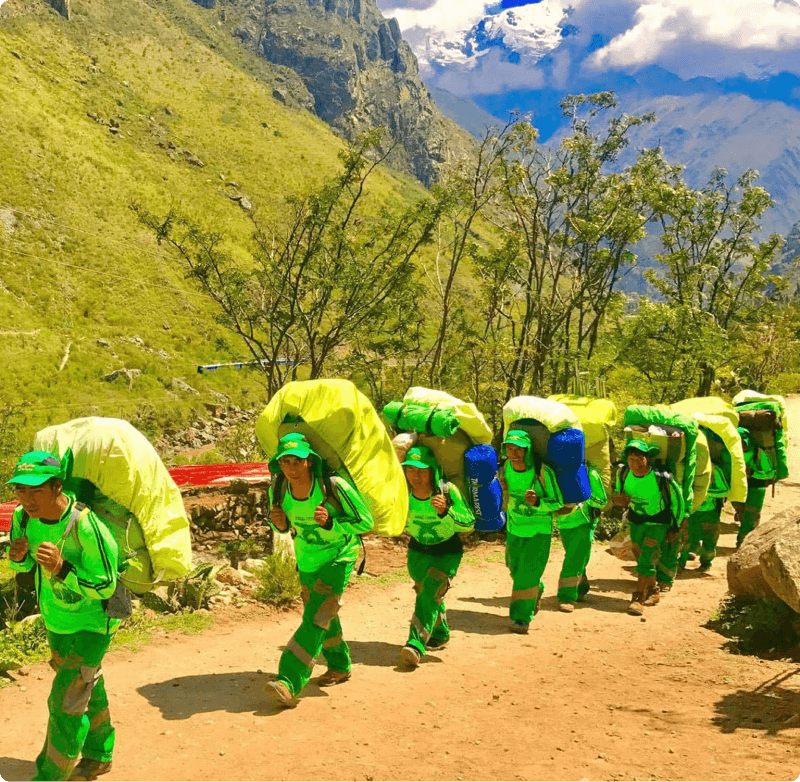 Porters will carry up to 7 kg of your personal items, which must include your sleeping bag and air mat (if you bring or rent one). From us, these two items weigh a combined total of 3.5 kg.