

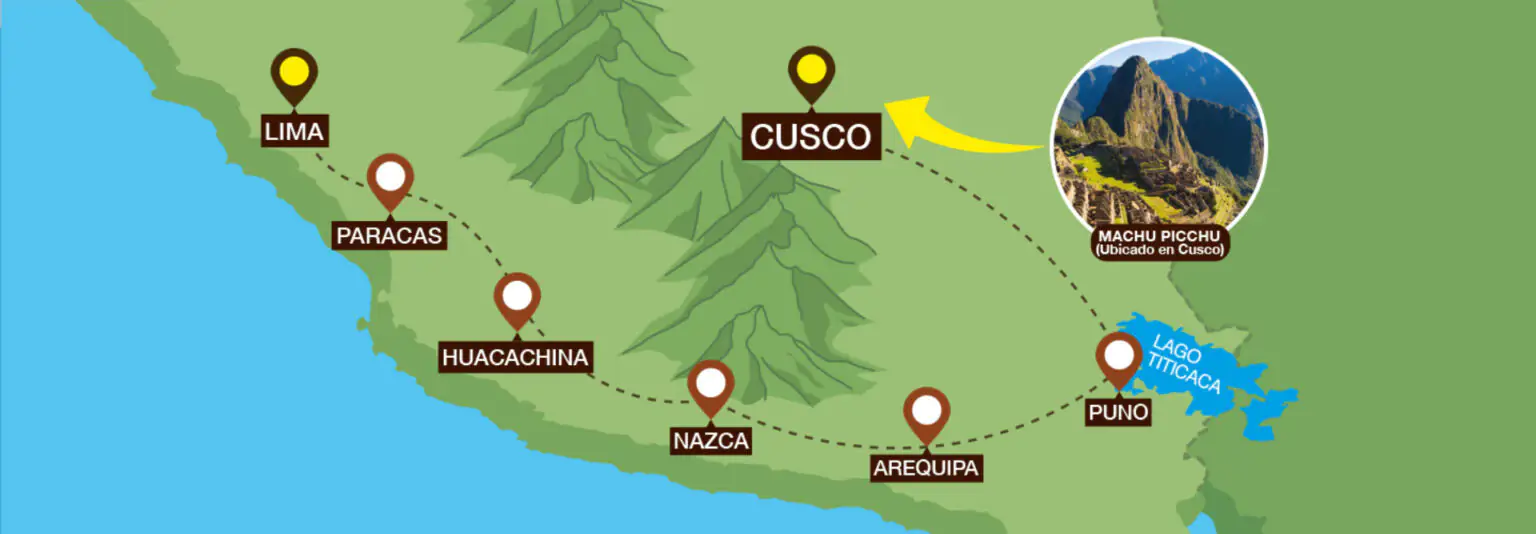
Every traveler who arrives in Peru shares a dream—to stand among the misty terraces of Machu Picchu. The journey Lima to Machu Picchu is more than just a trip; it’s a pilgrimage through high‑altitude plains, colonial cities, and cloud forests.
At Alpaca Expeditions, we’ve spent decades guiding people along the safest routes, making sure each step reveals the Andes’ beauty while keeping you comfortable and informed. This detailed guide draws upon our local knowledge, official tourism data, and verified travel sources to give you a human, storytelling‑driven roadmap from Lima to Machu Picchu.
As a Peruvian company, we speak from experience: we’ve flown the short hop over the Andes, survived 24‑hour bus rides, hiked hidden valleys, and tested every train class. We’ve also seen how confusing the logistics can be, especially now that the Peruvian government has introduced new ticketing rules, daily visitor caps, and circuit systems.
This guide solves the puzzle. We compare flight vs bus, train vs trek, and dry vs rainy seasons, explain permits and acclimatization, share sample itineraries and packing lists, and answer the questions our travelers ask most. By the end, you’ll know which route suits your schedule and style, how to avoid altitude sickness, what to pack, and how to experience Machu Picchu responsibly.
Why trust Alpaca Expeditions?
We aren’t just another tour operator. We’re locals from Cusco and the Sacred Valley who grew up in the shadow of the Andes. Our guides are certified, our porters are treated ethically, and our kitchens serve Peru’s finest dishes at high altitude.
We’ve earned top ratings on TripAdvisor and have led thousands of travelers safely to Machu Picchu via the Inca Trail, Salkantay, and Lares treks, as well as train and luxury tours.
We support indigenous communities through our social projects and adopt sustainable practices to protect these fragile environments. This guide reflects that commitment to experience, expertise, authoritativeness, and trustworthiness (EEAT).
Grab a warm coca tea and enjoy this immersive trip planning resource.
Step 1: Getting from Lima to Cusco
Lima, Peru’s coastal capital, sits at sea level while Cusco—gateway to Machu Picchu—perches at roughly 3,400 m (11,152 ft) above sea level. That 3‑kilometer altitude gain is no joke; it can cause altitude sickness if you ascend too quickly. Choosing the right transport from Lima to Cusco depends on your budget, time, sense of adventure, and need for acclimatization. There are three main options: plane, bus, or private vehicle.
Option 1: Flying from Lima to Cusco
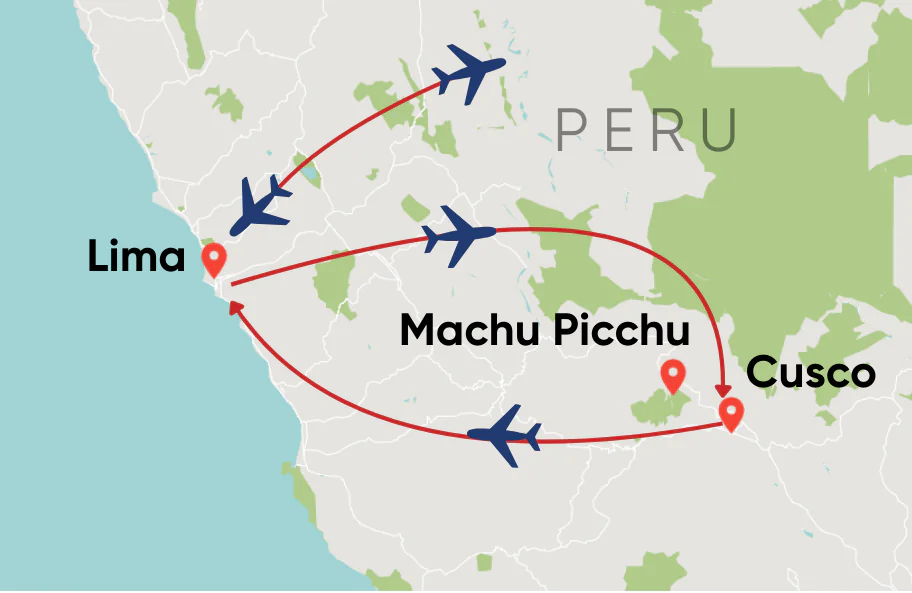
If time is tight, the simplest route is to fly. Dozens of flights depart daily from Jorge Chávez International Airport (LIM) in Lima to Cusco’s Alejandro Velasco Astete Airport (CUZ). Major airlines include LATAM, Sky Airline, and JetSMART.
Flying from Lima to Cusco
Flight times average 1 hour 20 minutes, and tickets often cost US $45–130, depending on season, booking window, and baggage. Google Flights and airline websites show current pricing; booking early can secure deals. Peak months (June–August) cost more.
Advantages
- Speed and comfort: A direct flight lets you sleep in Lima, explore the Miraflores district or the historic center, and still arrive in Cusco before lunch. Perfect for travelers with limited vacation time.
- Convenience: You avoid long hours on winding mountain roads. Tickets include seat assignments, and some airlines offer Peruvian snacks.
- Multiple departures daily: Even if your international flight arrives late, there’s usually another flight to Cusco within hours.
Disadvantages
- Altitude shock: Going from sea level to 3,400 m in under two hours can trigger headaches, dizziness, and shortness of breath. Many travelers feel mild altitude sickness within the first 24 hours. The remedy? Rest, hydrate, avoid alcohol and—if possible—descend to the Sacred Valley (2,900 m) for your first night.
- Airport logistics: Cusco’s small airport can get congested during high season. Leave extra time for baggage claim and ground transport.
Flying tips
- Choose an early morning flight for the smoothest ride. Afternoon flights often experience turbulence due to thermal currents over the Andes.
- Book your return flight separately if you plan to travel overland from Cusco to other cities (e.g., Puno or Arequipa).
- Check baggage restrictions. Most airlines allow one small carry‑on plus a personal item; checked bags might cost extra.
- Have your passport handy for domestic flights—it’s required for boarding in Peru.
Option 2: Taking the bus from Lima to Cusco
For budget travelers or those seeking to see more of the country, bus travel is an adventure. The bus from Lima to Cusco takes 22–24 hours along the mountainous Costa‑Sierra highway. Several reputable companies operate comfortable “cama” (semi‑bed) and “bus‑cama” (full reclining bed) services:
- Cruz del Sur – The most popular with foreigners, offering clean buses, on‑board meals, and entertainment.
- Oltursa – Known for their safe drivers and strong seatbelts.
- Civa and Tepsa – Budget options with varying comfort levels.
- Peru Hop – A hop‑on/hop‑off service for travelers wanting to stop at coastal attractions (Paracas, Huacachina, Nazca lines) and cities like Arequipa and Puno. Passes start around US$179 and include transfers to hostels and optional tours. This route extends the journey to several days but turns transportation into a mini‑tour.
Two main highways connect Lima and Cusco:
- Via Nazca – Abancay – Cusco (Central Highway): The faster (22 hrs) but winding mountain road through the highlands. Expect stunning vistas but sharp turns—Dramamine recommended. Buses depart from Lima’s Terminal Javier Prado or Plaza Norte.
- Via Nazca – Arequipa – Cusco (Southern Route): The scenic route loops south through Arequipa and Juliaca/Puno near Lake Titicaca. It adds several hours (26–30 hrs) but offers the chance to stop at the Nazca Lines, the desert oasis of Huacachina, and colonial Arequipa. Many travelers combine this route with a multi‑day hop‑on/hop‑off ticket.
Advantages
- Affordability: Bus tickets cost roughly S/70–250 (US $25–70) depending on the company and seat class. Peru Hop passes cost more but include stops and tours.
- Scenic experience: You’ll witness Peru’s diverse geography—from coastal deserts to fertile valleys and snowcapped mountains. Long daytime legs reveal landscapes you’d never see from an airplane.
- Gradual altitude gain: Slowly ascending by bus gives your body more time to acclimatize before reaching Cusco.
Disadvantages
- Time commitment: Spending a full day or more on a bus is tiring, especially if you’re on a tight schedule.
- Road conditions: Landslides, road construction, and traffic delays are common. During the rainy season (Nov–Mar) the route may temporarily close for maintenance.
- Safety: Choose reputable companies and avoid traveling at night. Always keep valuables close, and do not stow passports or electronics in the overhead bins.
Bus travel tips
- Book directly with the bus company or a trusted travel agent; avoid unlicensed touts near bus terminals.
- Opt for “cama” or “bus‑cama” seats (160–180° reclining) for long journeys.
- Bring layers; the air‑con can get cold at night.
- Carry snacks and water, though most companies include meals and snacks.
- Plan a stop in Arequipa or the Sacred Valley to break up the journey and acclimatize.
Option 3: Driving or hiring a private vehicle
Adventurous travelers sometimes rent cars or hire private drivers. Driving from Lima to Cusco takes 18–20 hours and follows the same highways described above. You can stop whenever you want—surfing in Paracas, sandboarding in Huacachina, exploring the Nazca Lines, or admiring colonial plazas in Arequipa.
However, you must be comfortable with narrow mountain roads, unpredictable weather, and local driving customs. Fuel, tolls, and parking fees add up, and you’ll need a valid driver’s license plus an international permit.

Driving or hiring a private vehicle
Hiring a private driver is safer and lets you sit back, but it costs more (US$200+). If you’re traveling with family or a group, the cost per person can be reasonable. This option gives you control of your itinerary and altitude acclimatization (e.g., spending a night in Nazca at 520 m or Arequipa at 2,335 m before climbing to Cusco).
Acclimatization Strategy: Head to the Sacred Valley First
Because Cusco sits at 3,400 m, many travelers experience altitude symptoms upon arrival. A smart alternative is to descend to the Sacred Valley after landing. The valley’s towns—Pisac (2,972 m), Urubamba (2,871 m), and Ollantaytambo (2,792 m)—sit 400–600 m lower. Staying there your first night helps your body adjust gradually.
The World Is a Book travel blog recommends going to the Sacred Valley first because it’s lower than Cusco. You can explore Inca ruins, markets, and weaving communities while acclimatizing, then return to Cusco later.
At Alpaca Expeditions, our custom itineraries often include a transfer from Cusco airport to the Sacred Valley, so you can sleep low and visit sites like Pisac, Moray, Maras salt mines, and Ollantaytambo before tackling higher altitudes. We provide oxygen and know the best tea houses for coca and muña tea to ease symptoms.
Step 2: Traveling from Cusco to Aguas Calientes (Machu Picchu Pueblo)
Once you’re acclimatized in Cusco or the Sacred Valley, your next destination is Aguas Calientes, the small town at the base of Machu Picchu. There are three ways to get there: train, alternative bus + hike via Hidroeléctrica, or multi‑day trek.
Traveling by Train
The train is the most popular and comfortable method. Two companies operate this route: PeruRail and Inca Rail. Each offers multiple classes, from budget to luxury, and departs from various stations around Cusco and the Sacred Valley. Key points:
- Stations: The train journey can start at San Pedro Station in Cusco, Poroy (20 min outside Cusco), or Ollantaytambo (Sacred Valley). Travel time depends on the station: San Pedro – Aguas Calientes ≈ 4 h 40 m, Poroy – Aguas Calientes ≈ 3 h 40 m, and Ollantaytambo – Aguas Calientes ≈ 1 h 30 m. Most travelers depart from Ollantaytambo after visiting the Sacred Valley.
- Ticket prices: Fares range from US $55 (economy Expedition) to US $550 (luxury Hiram Bingham). Prices vary by season and departure time. PeruRail’s Expedition and Vistadome (with large windows) are mid‑range, while Inca Rail’s 360° offers panoramic windows. The lavish Belmond Hiram Bingham includes gourmet meals, drinks, and live music.
- Luggage restrictions: Both companies limit luggage to one bag, about 7–8 kg (17 lb). Larger suitcases can be stored at your hotel or with Alpaca Expeditions in Cusco.
- Departure times: Trains run from early morning to late afternoon. Early trains help you arrive at Machu Picchu for sunrise; midday trains are less crowded. Inca Rail also operates the First Class and Private services with fewer passengers and gourmet dining.
- Travel experience: The journey along the Urubamba River is scenic—glaciers, agricultural terraces, and cloud forest zipped by your window. On the Vistadome or 360° trains, panoramic windows and skylights enhance the view. Live performances and snacks (e.g., corn nuts and cakes) add to the experience.
Booking tips
- Reserve early (2–3 months in advance) during high season (June–August) and especially if you want a specific class or schedule.
- Match your train to your ticket time (morning or afternoon circuit) since you’ll need to coordinate bus/hike times in Aguas Calientes.
- Bring your passport and printed ticket; you’ll need them to board.
- Consider a round‑trip ticket from Ollantaytambo if you plan to return to Cusco the same day.
- For custom itineraries, Alpaca Expeditions secures train tickets as part of our packages and arranges transfers to the station.
Alternative Route via Hidroeléctrica
Budget travelers and adventure seekers sometimes take the “Hidroeléctrica route.” This combination of bus and hike allows you to bypass train fares. Steps include:
- Bus from Cusco to Hidroeléctrica: Shared vans depart near Avenida Arcopata or can be booked via tour agencies. The ride takes 7–8 hours and costs US $15–20. The road winds through the Abra Málaga pass and down into tropical valleys. Expect stunning views but also tight curves.
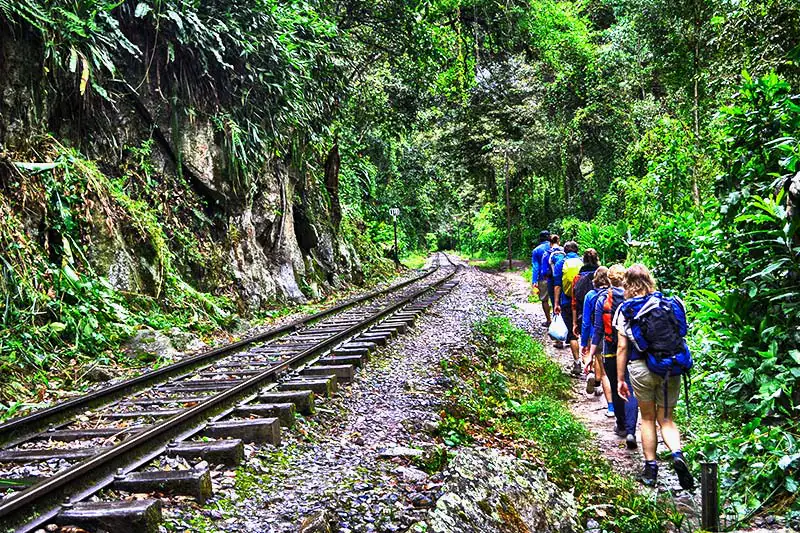
- Hike to Aguas Calientes: From the Hidroeléctrica station, follow the flat railway tracks along the Urubamba River for 2–3 hours. The walk is scenic—banana trees, orchids and waterfalls line the path. Bring snacks, water, insect repellent and sun protection. You’ll reach Aguas Calientes by early evening. Local train service from Hidroeléctrica to Aguas Calientes exists but is primarily reserved for locals.
- Return via the same route or take the train back to Ollantaytambo (if tickets are available). Note that the road may close during heavy rains or landslides.
Alternative Route via Hidroeléctrica
This route is best for experienced hikers with extra time. It saves money but requires stamina and careful planning. Alpaca Expeditions does not recommend it for first‑time visitors or during the rainy season because of safety concerns and unpredictable road conditions.
Multi‑Day Treks to Machu Picchu
Trekkers can turn the journey into an odyssey by hiking one of several classic trails to Machu Picchu. Each trek offers distinct landscapes, challenges, and cultural experiences. Here’s how they compare:
Inca Trail (Classic)
- Distance: ~43 km (26 mi)
- Duration: 4 days/3 nights
- Highest point: Dead Woman’s Pass (4,215 m)
- Highlights: Original stone pathways laid by the Incas, cloud forests, archaeological sites (Wiñay Wayna), and Sun Gate arrival overlooking Machu Picchu.
- Permits: Only 500 people per day (including porters and guides) may start the trail. Permits sell out 6–8 months in advance.
- Suitability: Best for moderately fit hikers comfortable with steep ascents and staircases. Porters carry camping gear; you carry a daypack.
Salkantay Trek
- Distance: ~60 km (37 mi)
- Duration: Typically 5 days (there are also 4‑day and 3‑day versions)
- Highest point: Salkantay Pass (4,650 m)
- Highlights: Massive Salkantay Mountain, glacial lakes, high‑alpine scenery, coffee farms, and tropical cloud forest. Options to visit Humantay Lake and soak in Santa Teresa hot springs.
- Permits: None required (except for the final Machu Picchu ticket), so it’s more flexible and often available last minute.
- Suitability: For adventurous and physically fit hikers. The pass is higher and colder than the Inca Trail. You can ride horses or mules on some sections. Our 5‑day itinerary includes a guided mule train and comfortable campsites with proper toilets and hot meals.
Lares Trek
- Distance: ~33 km (20 mi)
- Duration: 3–4 days
- Highest point: Ipsaycocha Pass (4,450 m)
- Highlights: Less crowded; passes through remote Andean villages where you’ll meet Quechua families and see traditional weaving. Natural hot springs near Lares are perfect for soaking muscles.
- Permits: No permits required. It ends in the Sacred Valley, where you take a train to Aguas Calientes.
- Suitability: Great for cultural immersion and families who want to avoid the permit scramble.
Inca Jungle Trek
- Distance: Varies (total ~65 km including biking)
- Duration: 4 days
- Highest point: ~4,300 m (Abra Málaga)
- Highlights: Combines mountain biking, hiking, zip‑lining, and river rafting. You’ll descend from the highlands into the jungle, passing coffee plantations and fruit orchards. The trek concludes with the Hidroeléctrica walk.
- Suitability: Perfect for adrenaline seekers; less physically demanding than the Inca Trail but more varied.
We also offer luxury treks where you overnight in domes or lodges and have professional chefs prepare gourmet Andean meals. Our groups are small (usually 8–12 people) to ensure personalized attention and less environmental impact. We support local communities by employing porters from villages along each route and paying fair wages.
Step 3: From Aguas Calientes to Machu Picchu
Aguas Calientes (also called Machu Picchu Pueblo) sits at 2,040 m (6,693 ft) in a lush cloud forest. It’s a charming town with restaurants, hot springs, and souvenir shops. Your final approach to Machu Picchu begins here.
From Aguas Calientes to Machu Picchu
Option A: Shuttle Bus
The quickest and easiest route from town is the CONSETTUR shuttle bus. Buses start running at 5:30 AM and depart every 5–10 minutes. The ride climbs roughly 400 m up a series of hairpin turns and takes 25–30 minutes.
- Cost: US $12 one way; round‑trip tickets cost around US $24 and can be purchased in Aguas Calientes the night before or online.
- Queues: Lines are long in the morning. Arrive 60–90 minutes before your entrance slot, especially during high season. Afternoon lines are usually shorter.
- What to bring: Passport, Machu Picchu ticket, bus ticket, water, and rain gear. Buses drop you near the entrance, where you’ll show your documents.
Option B: Hiking to the Entrance
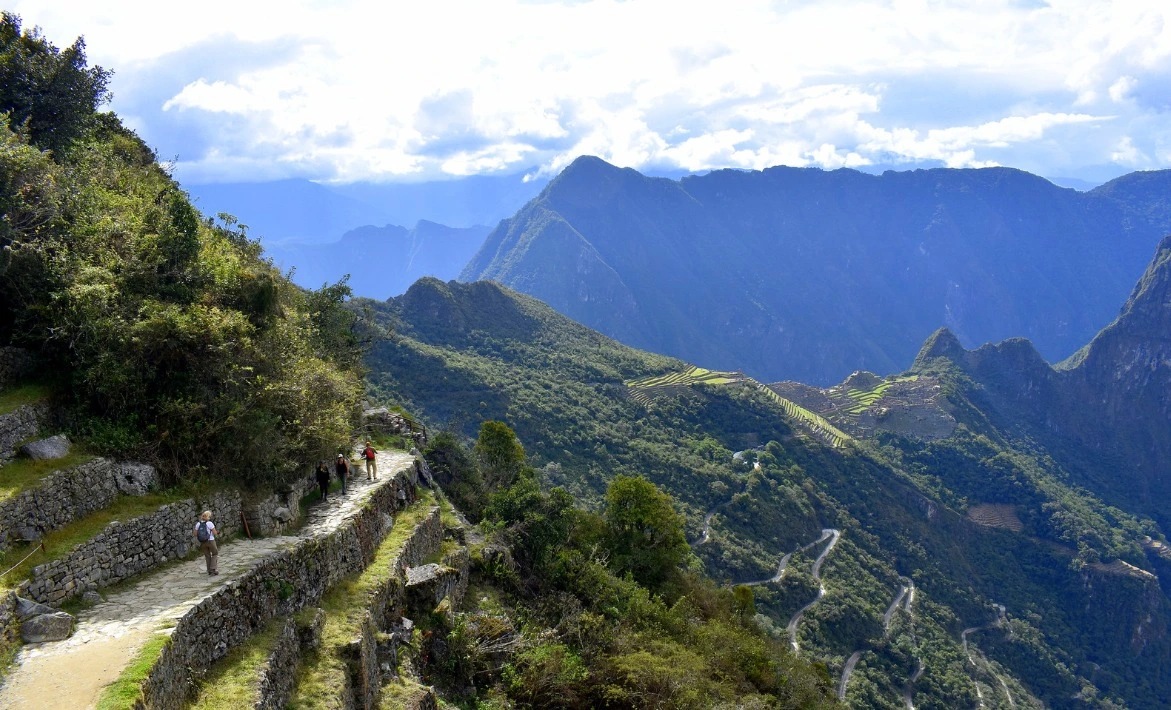
Energetic travelers can hike up the Hiram Bingham Road. The steep 1.5–2 hour hike climbs stone steps and dirt paths through the rainforest. It’s rewarding but strenuous:
- Entrance fee: None; the trail is free, but you still need a Machu Picchu ticket.
- Time: ~60–90 minutes for fit hikers going up, ~45 minutes going down.
- Difficulty: Moderate–hard. The humidity and altitude can make breathing tough. If you plan to hike Huayna Picchu or Machu Picchu Mountain later, save your energy.
Entrance Tickets, Visitor Limits, and Circuits (2025–2026 Rules)
Machu Picchu’s popularity means strict regulations to protect the site. The Peruvian government introduced new daily visitor limits and circuits in 2024:
- Daily visitor cap: 5,600 visitors per day in high season; fewer in low season. Tickets sell out quickly, so book months ahead.
- Time slots: There are two main shifts—morning (6 AM–12 PM) and afternoon (12 PM–5:30 PM). You can enter within the first hour of your slot and must leave by closing time. Afternoon sessions are slightly less crowded and offer softer light.
- Circuits: Visitors must follow one of several pre‑set circuits.
- Circuit 1 (Panoramic): Routes 1A–1D, ascending to the Guardhouse for postcard‑perfect vistas before descending through the upper terraces.
- Circuit 2 (Classic): Routes 2A–2B, passing through the Temple of the Sun, Main Plaza, and Sacred Rock; ideal for first‑timers who want to explore the core ruins.
- Circuit 3 (Royal): Routes 3A–3D, starting in the lower terraces, visiting the House of the Inca and Temple of the Condor. It connects with Huayna Picchu or Huchuy Picchu if you have those permits.
- Ticket categories:
- General Circuit: S/.172 (≈US $45) for adults; students S/.86; children S/.43.
- Circuit + Huayna Picchu or Machu Picchu Mountain: S/.221 (≈US $60). Limited to 400 visitors per day; must be booked 3–4 months in advance.
- Rules: No large backpacks (>20 L), tripods, drones, or plastic bottles; follow your guide and circuit; no re‑entry once you exit.
Our team monitors availability daily. When you book a trek or tour with Alpaca Expeditions, we secure your permits and tickets automatically, so you won’t miss out.
Add‑On Hikes: Huayna Picchu vs Machu Picchu Mountain
Two dramatic peaks overlook the citadel—each offers a unique challenge and view.
Huayna Picchu
- Altitude: 2,693 m (8,835 ft)
- Access: Only 400 visitors per day, divided into two entry groups (7–8 AM and 10–11 AM). Tickets must be booked at least three months in advance.
- Difficulty: Moderately difficult; narrow paths and steep drop‑offs require sure footing and no fear of heights. Round‑trip takes about 2.5 hours.
- Best months: May–July (dry season). Avoid rainy days because the steps become slippery.
- Age limit: Minimum age is 12.
Machu Picchu Mountain
- Altitude: 3,082 m (10,111 ft)—higher than Huayna Picchu.
- Trail length:2 km (2 mi) round‑trip; 3–4 hours.
- Difficulty: Moderate; the path is wider and less exposed, making it safer for families and those with mild vertigo.
- Views: Panoramic views of Machu Picchu and the surrounding mountains from above; fewer crowds.
- Suitability: Perfect for photographers and travelers who want a less intense climb than Huayna Picchu.
We offer tours including either peak. Our guides know how to pace the ascent and capture the best photos.
Planning Your Trip: Best Times to Visit
Peru’s Andes have two main seasons that influence your experience at Machu Picchu:
Dry Season (April–October)
The dry season brings clear skies, cooler temperatures, and excellent hiking conditions. This is the most popular time to trek, so expect larger crowds and higher prices, especially from June–August when North American and European travelers visit during summer vacation.
Nights can be cold (down to 0°C), and morning fog may linger. Shoulder months April, May, September, and early October are ideal for fewer crowds and crisp weather.
Wet Season (November–March)
The rainy season runs from November to March, with frequent heavy rain. Trails can be muddy, and landslides occasionally disrupt travel. However, the landscape transforms into lush green, waterfalls surge, and there are fewer visitors. December and January offer vibrant scenery and better photography. If you trek during this time, bring waterproof gear and extra days in case of delays.
Month‑by‑Month Highlights
- April: Start of dry season; hills are still green from rains; fewer crowds.
- May: Excellent weather; Inca Trail permits sell out far in advance.
- June: Inti Raymi (Festival of the Sun) in Cusco; busiest month.
- July–August: Peak season; book flights, trains, and permits at least six months ahead.
- September: Warm, sunny days; fewer tourists; good time for treks.
- October: End of dry season; occasional showers; vibrant foliage.
- November: Start of rains; good for photographers.
- December: Christmas in Cusco; lush scenery but heavy showers.
- January–February: Heaviest rains; some trekking routes may close (the Inca Trail closes for maintenance in February). Trains and buses still operate, but expect delays.
- March: Rains begin to subside; waterfalls are at their fullest.
Holiday and Festival Considerations
- Inti Raymi (June 24): Cusco’s biggest festival; hotels and flights sell out weeks in advance.
- Semana Santa (Holy Week): Late March or April; busy and vibrant with processions.
- Peru’s Independence Day (July 28): Peak domestic travel; plan early.
Weather Tips
- Pack layers—the Andean climate can shift from warm sun to cold wind quickly.
- Bring a waterproof jacket year‑round. Even during the dry season, you may encounter afternoon showers.
- Sunscreen and sunglasses are essential due to high UV levels.
Packing for Machu Picchu and the Trails
Proper gear makes the difference between comfort and misery on the trail. Alpaca Expeditions recommends the following packing list, adapted from our comprehensive gear guide.
1. Essential Gear
- Backpack (30–50 L): Choose a lightweight, sturdy pack with padded shoulder straps, hip belt, and multiple compartments. Pack weight should not exceed 25 % of your body weight.
- Sleeping bag: Rated to 0 °C (32 °F); a compact, insulating bag keeps you warm on cold Andean nights. For luxury treks, we provide warm quilts and mattresses.
- Trekking poles: Adjustable poles with comfortable grips reduce strain on knees and help with balance on descents. They are especially useful on the Inca Trail’s steep stone steps.
2. Clothing Essentials
- Base layers: Moisture‑wicking tops and thermal long johns to stay dry.
- Mid layers: Fleece or lightweight down jacket for insulation.
- Outer layers: Waterproof, breathable jacket and pants to protect against rain and wind.
- Trekking pants/shorts: Quick‑drying material; convertible pants are versatile.
- Footwear: Sturdy hiking boots with ankle support and good traction. Break them in before your trip! Pack comfortable sandals for campsites.
- Accessories: Hat (sun and cold), gloves, scarf/neck buff.
- Socks: Thermal and moisture‑wicking; bring extra pairs to change when they get wet.
3. Personal Items
- First‑aid kit: Bandages, antiseptic wipes, blister treatment, pain relievers, and personal medications.
- Sunscreen and lip balm with SPF: The high altitude increases UV exposure.
- Insect repellent: Protect against sandflies and mosquitoes.
- Toiletries: Biodegradable soap, toothbrush, toothpaste, toilet paper; pack out all trash.
4. Food and Hydration
- Water bottles or hydration bladder: Capacity of at least 2 L; bring purification tablets or a filter.
- Snacks: Energy bars, nuts, dried fruit, and chocolate for quick fuel.
- Electrolyte tablets: Help replace salts lost through sweating.
- Reusable utensils and a mug.
5. Documentation and Money
- Passport: Required for all checkpoints and for Machu Picchu entry.
- Permits and tickets: Printed copies of trek permits, train tickets, bus tickets and entrance passes.
- Cash: Small bills (Peruvian soles) for tipping guides and porters, buying snacks and souvenirs. Many rural vendors don’t accept cards.
6. Optional Items
- Camera and binoculars: Capture wildlife and dramatic landscapes.
- Notebook and pen: Journal your experiences.
- Portable battery and charger: Keep your phone and camera powered.
- Dry bags and packing cubes: Organize gear and keep clothing dry.
Packing Tips
- Pack light: Porters carry equipment on treks, but weight limits apply. Use multi‑purpose clothing and share toiletries among your group.
- Use waterproof stuff sacks for electronics and important documents—rain showers can appear unexpectedly.
- Layering is key: You might experience all four seasons in one day. Always carry a rain jacket and a warm layer in your daypack.
- Carry only essentials to Machu Picchu: Large bags must be stored at your hotel; the site allows only small backpacks.
At Alpaca Expeditions, we provide quality tents, sleeping pads, dining tents and cooking equipment. On luxury treks, we include hot showers and private domes or lodges. Ask us about equipment rental if you don’t want to bring gear from home.
Sample Itineraries
Planning your travel days can be overwhelming. Here are two sample itineraries to inspire you—one for a classic train route and another combining a trek. You can adapt the number of days, activities, and transportation to your preferences.
7‑Day Classic Route: Lima – Cusco – Sacred Valley – Machu Picchu
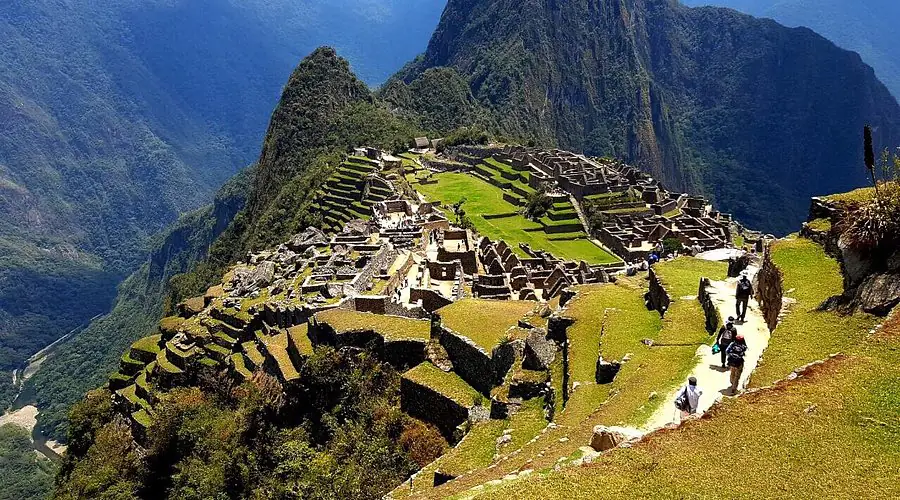
Lima – Cusco – Sacred Valley
Day 1: Arrive in Lima
- Land in Lima and transfer to a hotel in Miraflores or Barranco.
- Stroll along the Malecón cliffs, visit Larcomar shopping center, or explore the historic Plaza Mayor. Sample Peruvian seafood (ceviche) and pisco sours.
- Overnight in Lima.
2nd Day: Flight to Cusco & Transfer to Sacred Valley
- Morning flight from Lima to Cusco (1h 20m). Take it slow upon arrival to avoid altitude shock.
- Meet our Alpaca Expeditions driver and transfer to the Sacred Valley. Stop at the Awanacancha weaving center to meet llamas and alpacas.
- Check into an Ollantaytambo or Urubamba hotel. Explore the local market or relax at your lodge.
- Acclimatization tip: Cusco sits at 3,400 m but the Sacred Valley is around 2,800–2,900 m; staying here helps your body adjust.
Day 3: Sacred Valley Highlights & Train to Aguas Calientes
- Visit Pisac Ruins with terraced hillsides and a colorful market.
- See the circular agricultural terraces of Moray and the salt ponds of Maras.
- Explore Ollantaytambo Fortress, an impressive Inca site with astronomical functions. Take time to climb the terraces and admire the Temple of the Sun.
- Board an afternoon train from Ollantaytambo to Aguas Calientes (1h 30m). Check into your hotel, enjoy thermal baths, and rest for the day ahead.
4th Day: Machu Picchu Day Tour
- Early breakfast. Take the shuttle bus up to Machu Picchu (25 min) or hike up the mountain path (1.5–2 hrs).
- Enter the site according to your chosen circuit and explore with our expert guide. Learn about the temples, terraces, and astronomical alignments.
- If you have a permit, climb Huayna Picchu or Machu Picchu Mountain for an aerial view.
- In the afternoon, take the bus back to Aguas Calientes. Board the train back to Ollantaytambo and drive to your hotel in Cusco or stay in the Sacred Valley.
Day 5: Cusco City Tour & Sacsayhuamán
- Explore Cusco—the Plaza de Armas, Cathedral, Qoricancha (Temple of the Sun), and vibrant San Blas Enjoy Andean cuisine at a local restaurant.
- In the afternoon, visit Sacsayhuamán, an enormous Inca fortress of cyclopean stones.
- Optional: Continue to Qenqo, Puca Pucara, and Tambomachay.
- Overnight in Cusco.
6th Day: Rainbow Mountain or South Valley
- If you’re still energetic, join our day tour to Rainbow Mountain (Vinicunca) or Palccoyo. Altitude is high (5,020 m), so only attempt if you feel well acclimatized.
- Alternative: Discover the South Valley (Tipón, Piquillacta, Andahuaylillas), offering pre‑Inca and colonial sites.
- Overnight in Cusco.
Day 7: Return to Lima & Depart
- Fly back to Lima for your onward flight home. If you have extra days, explore Barranco’s street art, surf at Playa Costa Verde or tour the Ballestas Islands in Paracas.
9‑Day Trekking Adventure: Inca Trail
Day 1–2: Same as above (arrive Lima; fly to Cusco; transfer to Sacred Valley).
3rd Day: Cusco & Trek Briefing
- Meet your Alpaca Expeditions trekking team. Check gear and permits. Enjoy a walking tour of Cusco and Sacsayhuamán.
Day 4: Inca Trail—Km 82 to Wayllabamba
- Early drive to Km 82. Begin the hike through valleys and along the Urubamba River. Camp at Wayllabamba.
5th Day: Wayllabamba to Pacaymayo
- Ascend to the highest point, Dead Woman’s Pass (4,215 m). Descend to Pacaymayo
Day 6: Pacaymayo to Wiñay Wayna
- Climb to Runkurakay Pass, visit Sayacmarca and Phuyupatamarca Descend to Wiñay Wayna campsite, known for its terraces and orchids.
7th Day: Wiñay Wayna to Machu Picchu
- Pre‑dawn hike to the Sun Gate (Inti Punku) for your first view of Machu Picchu. Descend for a guided tour. Afternoon bus to Aguas Calientes; celebrate with your crew.
Day 8: Return to Cusco
- Take a leisurely morning train from Aguas Calientes to Ollantaytambo, then transfer to Cusco. Enjoy a farewell dinner.
9th Day: Depart or Extend
- Fly to Lima and onward. Or extend to Lake Titicaca, the Amazon Rainforest, or Colca Canyon.
We offer similar itineraries for the Salkantay and Lares treks. Custom tours can combine trekking with train travel and luxury hotels.
Tips for a Safe and Enjoyable Journey
- Book early: Reserve flights, train tickets, trek permits, and Machu Picchu entrance tickets several months in advance—especially during peak season. Permits are limited.
- Carry identification: Keep your passport, immigration car,d and permits with you at all times.
- Drink bottled or filtered water: Tap water is not potable in Peru. Refill from hotel filters or use purification tablets.
- Stay hydrated: High altitude dehydrates you quickly; drink at least 3 L of water daily.
- Eat light & avoid alcohol at altitude: Heavy meals and alcohol can exacerbate altitude sickness.
- Use sunscreen: The UV index is high in the Andes.
- Respect local culture: Ask permission before photographing locals; learn some basic Quechua or Spanish phrases; dress modestly in rural areas.
- Practice Leave No Trace: Pack out all trash, stick to marked trails, and avoid touching archaeological structures.
- Support sustainable operators: Choose companies like Alpaca Expeditions that pay porters fair wages, provide them with proper gea,r and invest in local communities.
Safety & Health
- Altitude sickness (Soroche): Recognize symptoms such as headaches, dizziness, nausea, and shortness of breath. Rest, hydrate and descend if symptoms worsen. Acetazolamide (Diamox) may help; consult your doctor. Coca tea and muña tea are natural remedies.
- Travel insurance: Purchase insurance that covers trip cancellation, medical evacuation, and high‑altitude trekking.
- Vaccinations: No specific vaccines are required for Lima–Cusco–Machu Picchu, but consider hepatitis A, typhoi,d and tetanus boosters. Malaria medication is recommended only for Amazon extensions.
- Money safety: Use ATMs in banks or secure locations, carry small bills and be wary of pickpockets in crowded areas.
Alpaca Expeditions: Why Travel With Us?
Choosing a local operator is the key to an unforgettable Machu Picchu adventure. At Alpaca Expeditions, we go beyond logistics—we craft life‑changing experiences while caring for people and the planet.
Our Commitment to Porters and Communities
We were among the first companies to provide dedicated porter shelters, hot meals, proper uniforms and footwear, and health insurance for our porters. We cap loads to comply with government regulations and ensure fair wages. Our social projects—including school supply drives, medical campaigns, and reforestation—support Andean villages. When you travel with us, your trip sustains local economies.
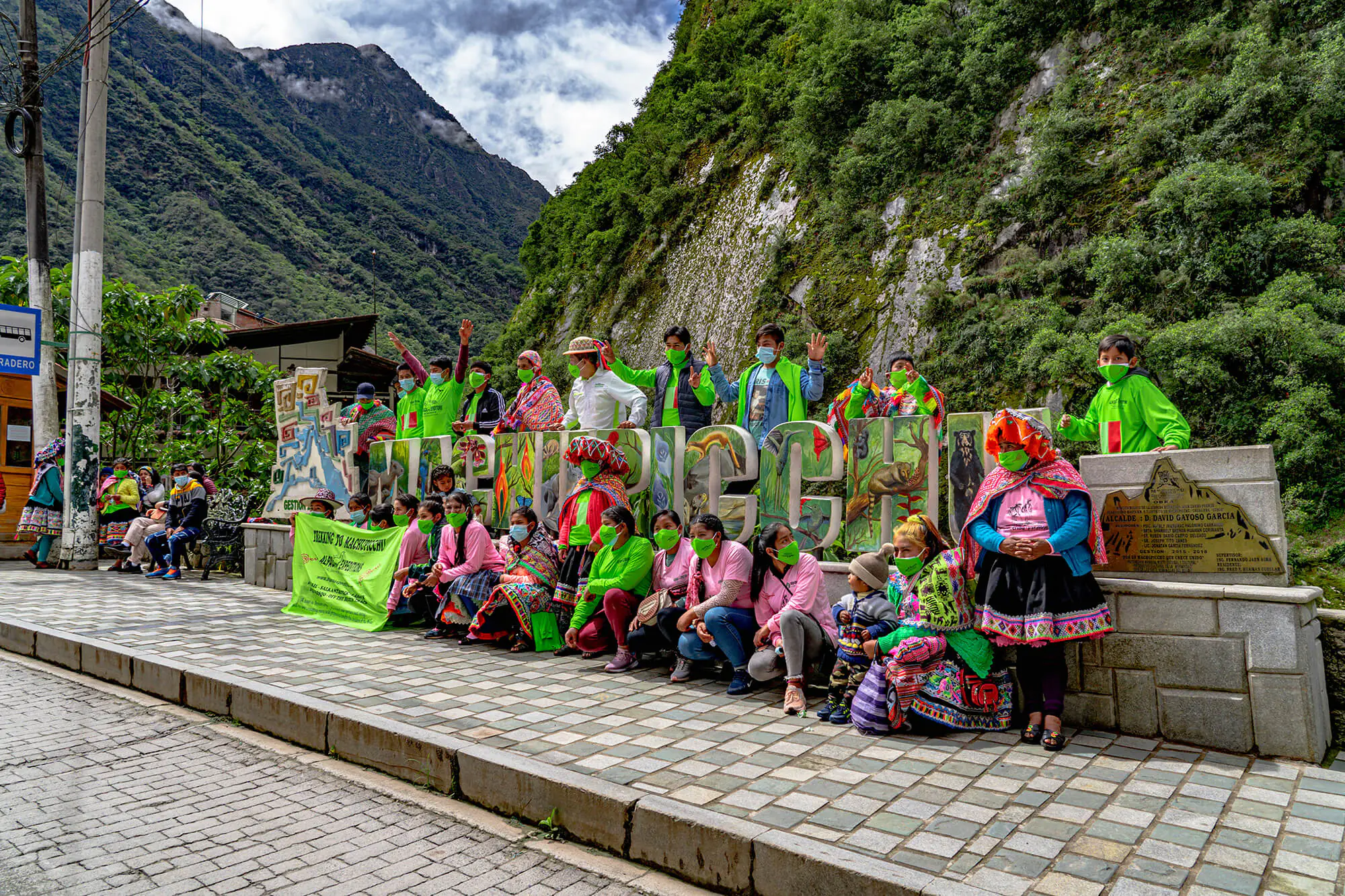
Commitment to Porters and Communities
Trained Guides & Safety
Our guides are certified in high‑altitude wilderness first aid and speak English, Spanish, and Quechua. They carry oxygen tanks, first‑aid kits, and radios, and attend regular training. Many are passionate archaeologists or naturalists who bring Inca history to life. We never compromise on safety—your well‑being is our priority.
Sustainable Practices
We operate low‑impact campsites, use biodegradable products, and encourage travelers to bring reusable water bottles. Our cooks prepare wholesome meals from locally sourced ingredients. We support the Mountain Lodges of Peru network to reduce overcrowding and partner with environmental groups for trail maintenance and cleanup.
Tailored Experiences
Whether you’re a solo traveler, family with kids, photographer, luxury seeker, or budget backpacker, we design itineraries for every style. From luxury lodge treks with hot showers and gourmet dining to adventurous camping treks under the stars, our team provides personalized service. We also offer photography tours, women‑only treks, and private departures.
Awards and Reviews
Our commitment has earned us TripAdvisor Travelers’ Choice Awards, TourCert sustainability certification, and glowing reviews. But the greatest recognition comes from our travelers returning year after year.
Frequently Asked Questions (FAQ)
- How far is Machu Picchu from Lima?
In straight‑line distance, it’s about 500 km (310 mi). By plane and train/bus combinations, the journey spans roughly 1 day with transfers. The actual travel time depends on your chosen route (flight + train vs bus vs trek). - Do I need to book Machu Picchu tickets in advance?
Yes! Machu Picchu operates under a daily visitor cap of about 5,600. Tickets—especially for Huayna Picchu and Machu Picchu Mountain—can sell out months ahead. We recommend booking at least 3–4 months in advance. -
What’s the difference between the circuits?
Circuits define the path you must follow inside Machu Picchu. Circuit 1 leads to panoramic views from the Guardhouse; Circuit 2 covers the classic core temples; Circuit 3 explores the lower terraces and accesses Huayna Picchu. Choose based on your interests and additional hikes.
- Do I need a guide at Machu Picchu?
Guides are not mandatory but highly recommended. They interpret the site’s history, astronomy, and engineering, ensure you follow regulations, and enhance your experience. On treks, guides are compulsory. -
How do I avoid altitude sickness?
Ascend gradually, rest upon arrival, stay hydrated, avoid alcohol, eat light, and consider altitude medication. Spending your first night in the Sacred Valley instead of Cusco helps. Our itineraries build in acclimatization time.
- Is the Hidroeléctrica route safe?
During the dry season and with proper preparation, yes. However, the bus ride is long and the trail remote. We only recommend it for experienced hikers and budget travelers. Always check road conditions and avoid traveling during heavy rains. - Can children visit Machu Picchu?
Absolutely! The site welcomes children of all ages. Keep them hydrated, apply sunscreen, and consider hiring a private guide to tailor the pace. For Huayna Picchu, the minimum age is 12. -
Are there direct buses from Cusco to Machu Picchu?
No. All buses stop at Ollantaytambo or Hidroeléctrica. The final leg requires a train ride or a hike.
- What should I do if it rains at Machu Picchu?
Bring a poncho or rain jacket year‑round. Rain often comes in short bursts followed by sunshine. Wet conditions can make stone steps slippery—use trekking poles and wear sturdy footwear. -
How much should I tip porters and guides?
While tipping is not obligatory, it’s customary to show appreciation. For multi‑day treks, consider tipping US $20–30 per porter and US $50–60 for the guide per group. On day tours, US $5–10 per person is typical. Alpaca Expeditions pools tips to ensure fair distribution.
Conclusion
Traveling from Lima to Machu Picchu is not a single act—it’s a transformation. You’ll leave a bustling metropolis at sea level, wind through deserts, mountains, and cloud forests, and arrive at a sacred citadel suspended in the Andes.
Each mode of transport—plane, bus, train or trek—offers different experiences, challenges, and rewards. The key is planning: book early, acclimatize properly, pack wisely, and trust local experts.
At Alpaca Expeditions, we stand ready to turn your dream into reality. Our guides will navigate you through crowded airports, hidden valleys, and ancient stone steps. The chefs will nourish you with Peruvian superfoods.
Our porters will carry the weight, literally and figuratively, so you can focus on the magic of the journey. We handle permits, tickets, and logistics; you soak in the history, culture, and breathtaking panoramas.
Ready to explore?
Contact Alpaca Expeditions today to plan your perfect adventure. Whether you’re walking the Inca Trail, glamping on the Salkantay route, or sipping tea aboard a panoramic train, we guarantee a safe, enriching, and unforgettable experience. Let us show you Machu Picchu and the Andes—through local eyes and with the care you deserve.
Book your next adventure with Alpaca Expeditions and experience the Andes like never before.