


The Traveler’s Guide to Peruvian Fruits & Vegetables: History, Flavor, and Trekking Tips
Peru is often called the world’s pantry, and not without reason. Few countries on Earth can match its astonishing variety of fruits and vegetables. To understand why a trekker wandering through a Cusco market can discover produce they have never seen before, we need to look at three interwoven forces: geography, history, and culture.
The Geography of Abundance
Peru is a nation built across three natural worlds:
- The Coast (La Costa): a desert strip punctuated by fertile river valleys where irrigation makes year-round harvests possible.
- The Andes (La Sierra): soaring mountain ranges with altitudes that stretch from 2,500 to over 4,800 meters. Here, ancient terraces still nurture potatoes, quinoa, and root vegetables.
- The Amazon Basin (La Selva): a humid jungle that acts as a living greenhouse, producing exotic fruits that burst with vitamin C, antioxidants, and flavors unfamiliar to the western palate.
This microclimatic diversity creates thousands of niches for plants to thrive. It’s the reason you’ll hear claims like “Peru has 4,000 varieties of potatoes” or “Peru is home to fruits found nowhere else on Earth.” For a traveler, that means each valley, each trek, each village market can present something entirely new.
The Inca Agricultural Heritage
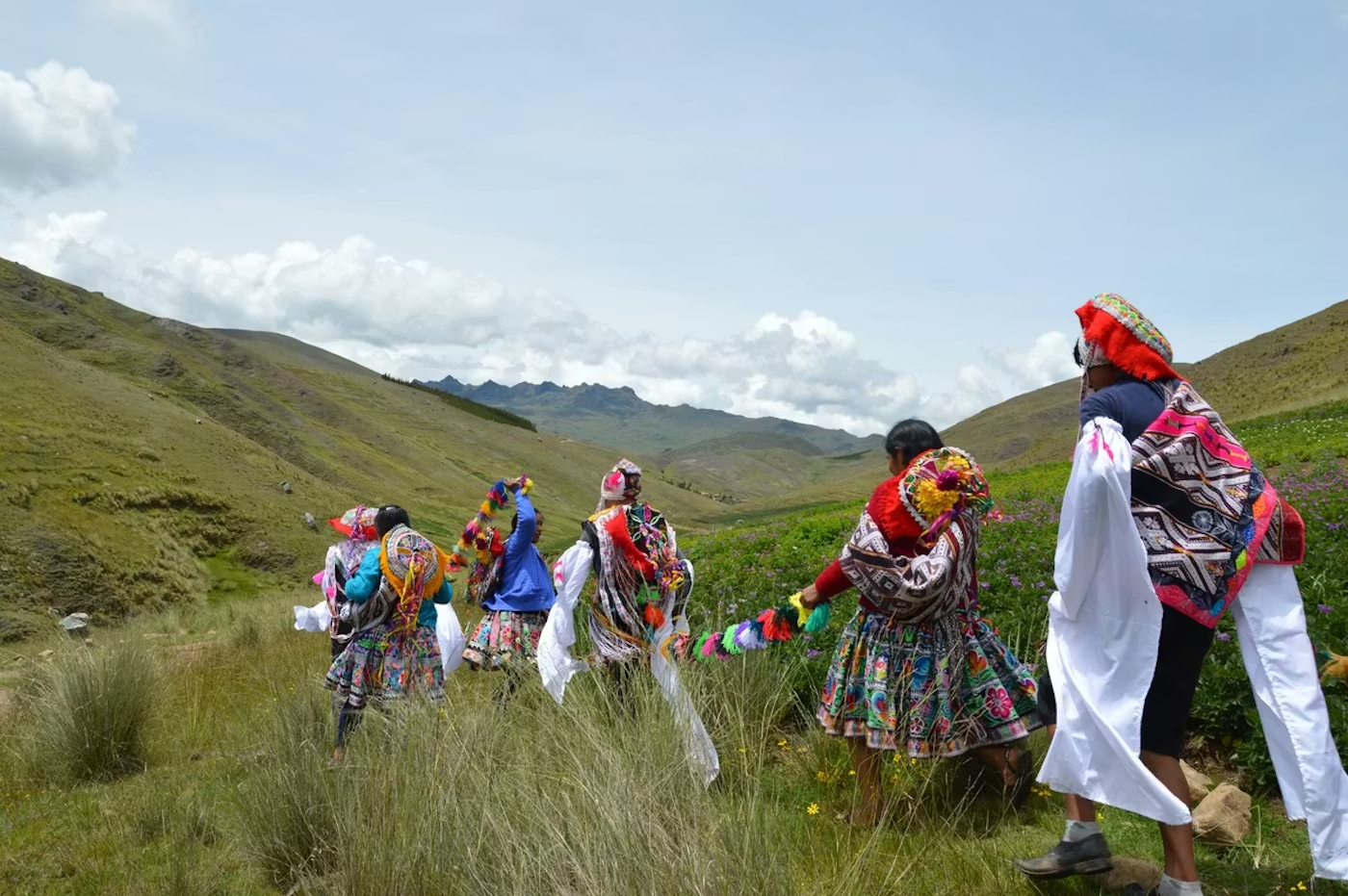
The Incas were not just builders of stone fortresses; they were masters of agriculture. They cultivated food at altitudes where Europeans assumed nothing could grow. By creating terraced farms and inventing irrigation systems, the Incas managed to feed an empire that stretched from Colombia to Chile.
Their diet was anchored by:
- Potatoes (papa): dried into chuño for preservation.
- Maize (corn): used in sacred chicha beer and daily stews.
- Quinoa and kiwicha: “pseudo-grains” packed with protein.
- Roots like oca, olluco, mashua: staples in Andean kitchens to this day.
Even more remarkable, the Incas preserved foods for storage and transport—vital for long treks through the mountains. Freeze-drying potatoes overnight at high altitudes allowed them to last for years. This technology, called chuño, is still practiced by families near Lake Titicaca.
Modern Peru: Exporter and Innovator
Walk into a supermarket in London or New York and you may already be buying Peruvian produce without realizing it.
- Asparagus is one of Peru’s top exports, available year-round thanks to desert irrigation.
- Avocados, blueberries, and grapes are now global exports from Peru.
- Quinoa transformed from a highland staple to an international health food craze.
Yet despite this global footprint, the most unique fruits and vegetables often remain within Peru. Many are highly perishable, grown only in specific valleys, and sold fresh in local markets—making them treasures that visitors can only taste in country.
A Living Market Experience
Every traveler should experience at least one local market. Imagine walking through Cusco’s San Pedro Market:
- Mountains of yellow, purple, and red potatoes piled high.
- Women in traditional skirts offering cups of chicha morada, a purple corn drink.
- Fruit stalls with aguaymanto berries spilling out of handwoven baskets.
- Juicers blending lucuma into smoothies right before your eyes.
This sensory overload is not just shopping; it is a living museum of biodiversity.
Trekking Context: Fruits & Vegetables on the Trail
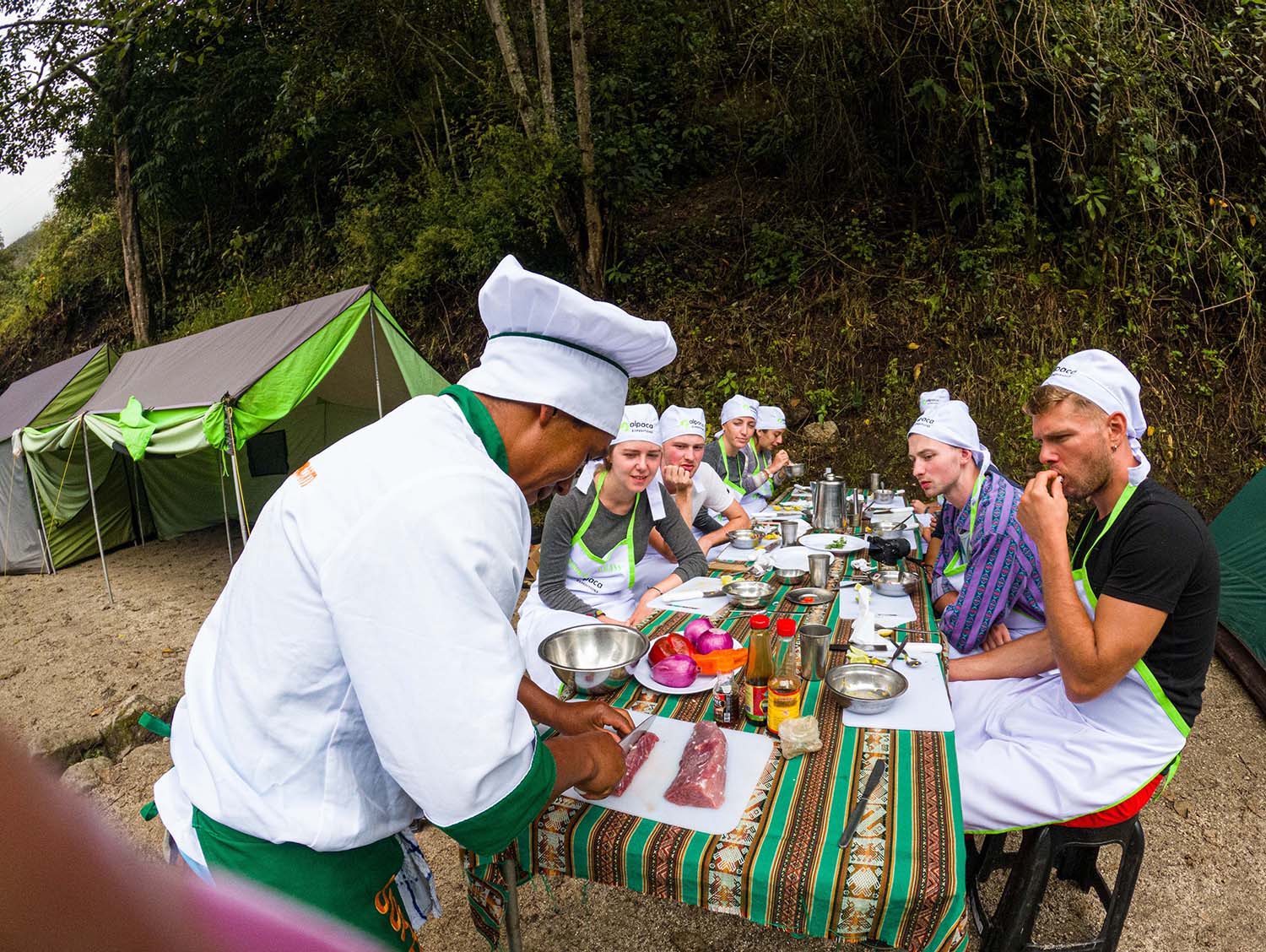
On treks such as the Inca Trail or the Salkantay Trek, Alpaca Expeditions’ chefs use this pantry daily.
- Morning coca tea leaves are served to help acclimatization.
- Lunches may include quinoa soup, olluco stews, and fresh vegetables carried by porters.
- Snack breaks feature fruits like pepino dulce or aguaymanto, which travel well.
Travelers often note how well they eat on the trail—meals are not only filling but also culturally authentic, built on the very fruits and vegetables they came to learn about.
Why It Matters for Travelers
Understanding Peru’s fruits and vegetables is not a side note—it shapes the entire journey:
- Culinary Experience: Tasting chirimoya or lucuma becomes a memory tied to place and people.
- Health & Acclimatization: Certain foods, like maca or coca tea, play roles in energy and altitude adjustment.
- Cultural Connection: Sharing food with local farmers or porters bridges worlds more than sightseeing ever could.
- Sustainability: Supporting local producers ensures your travel dollar contributes directly to Andean communities.
Fruits of the Andes
The Andes are a natural laboratory where altitude, soil minerals, and sharp climate shifts create fruits unlike anywhere else on Earth. When travelers think of the Andes, potatoes and quinoa usually come first. But step into a market in Cusco or the Sacred Valley, and you’ll find stalls stacked with fruits that look exotic, taste extraordinary, and are deeply woven into local life.
Here are the Andean fruits every traveler should know, taste, and remember.
Lucuma – The “Gold of the Incas
- Appearance: Green skin, golden-orange flesh, shaped like a small avocado.
- Taste profile: A sweet, dry texture often described as a cross between maple syrup, butterscotch, and sweet potato.
- Cultural role: Called “Gold of the Incas” because seeds of lucuma were found in pre-Columbian tombs.
- Modern uses: Lucuma is rarely eaten raw. Instead, it is beloved as an ice cream flavor, smoothie ingredient, and dessert base across Peru.
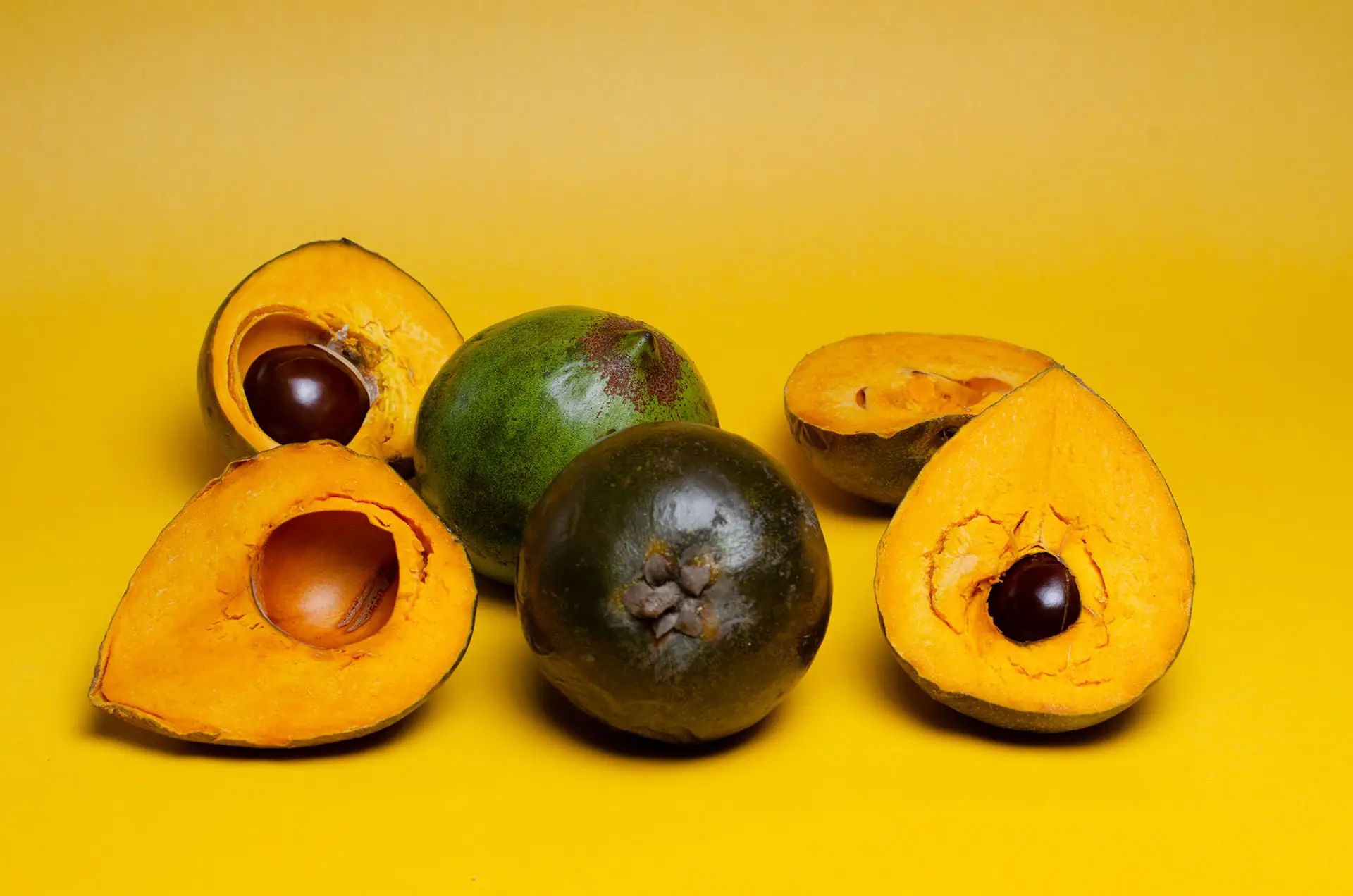
Lucuma – Peruvian Fruits
Traveler Tips:
- Try lucuma ice cream in Cusco — it’s almost a rite of passage.
- On treks, powdered lucuma is sometimes added to drinks for a natural energy boost.
- Lucuma is not easily exported, so savor it here; you likely won’t find fresh lucuma outside Peru.
Chirimoya – The Custard Apple
- Appearance: Green, heart-shaped, scaly skin.
- Taste profile: Nicknamed the “custard apple” because its creamy white flesh tastes like a blend of banana, pineapple, and vanilla pudding.
- Cultural role: Mark Twain once called chirimoya “the most delicious fruit known to man.”
- Modern uses: Eaten fresh by cutting in half and spooning out the flesh. Seeds are inedible.
Traveler Tips:
- Buy ripe chirimoya at markets (soft to the touch, but not mushy).
- Perfect snack after a long hike; locals believe its calming properties aid digestion.
- Do not pack on treks—it bruises easily. Best eaten at base towns like Cusco or Ollantaytambo.
Aguaymanto – The Andean Golden Berry
- Appearance: Small orange berries enclosed in a papery husk.
- Taste profile: Tangy and sweet, like a citrusy tomato mixed with pineapple.
- Cultural role: Known as “aguaymanto” in Peru, “physalis” in Europe, and “cape gooseberry” in English-speaking countries.
- Modern uses: Snackable fresh, added to salads, jams, or chocolate coatings. Rich in antioxidants.
Traveler Tips:
- Light and portable — a favorite for trek snack bags.
- Buy from small bags sold in markets; peel off the husk before eating.
- Chefs sometimes garnish quinoa salads with these bright berries.
Pepino Dulce – The Sweet Melon Cucumber
- Appearance: Pale yellow fruit with purple streaks, shaped like an eggplant.
- Taste profile: Mild, refreshing flavor similar to honeydew melon with a hint of cucumber.
- Cultural role: A cooling fruit, often eaten in hot valleys between Cusco and the Sacred Valley.
- Modern uses: Eaten raw, cut into wedges; sometimes added to fruit salads.
Traveler Tips:
- Best enjoyed when fully ripe (skin should yield slightly to pressure).
- Carry it for short day hikes—it travels better than chirimoya but still delicate.
- A perfect refresher if you’re adjusting to dry Andean air.
Tumbo – The Andean Passionfruit
- Appearance: Elongated yellow-green fruit, shaped like a cucumber.
- Taste profile: Tart pulp filled with seeds, very similar to passionfruit but sharper.
- Cultural role: Sometimes called “banana passionfruit,” tumbo grows naturally on vines at mid-altitudes.
- Modern uses: Blended into juices or cocktails, used in jams, or spooned raw.
Traveler Tips:
- Often found in fruit juice stands in Cusco markets.
- Perfect for refreshing drinks after trekking or during acclimatization days.
- High vitamin C content supports immune health at altitude.
Pacay – The Ice Cream Bean
- Appearance: Long, thick green pods up to a foot long.
- Taste profile: Inside, fluffy white pulp surrounds seeds; the pulp tastes like sweet cotton candy or vanilla ice cream.
- Cultural role: A favorite of children in rural communities; sometimes eaten during breaks in farm work.
- Modern uses: Eaten raw; seeds are usually discarded or roasted.
Traveler Tips:
- Fun to try while walking through markets—vendors will crack pods open for you.
- Very perishable; eat on the spot rather than trying to carry it during treks.
- An unusual photo opportunity: white pulp against the giant pod.
Granadilla – The Sweet Passionfruit
- Appearance: Orange shell with a crunchy exterior, filled with black seeds in jelly-like pulp.
- Taste profile: Sweet, mild passionfruit, less sour than tumbo.
- Cultural role: Popular snack for children; said to have calming properties.
- Modern uses: Eaten fresh, cracking shell and slurping pulp with a spoon.
Traveler Tips:
- Extremely travel-friendly; shell protects fruit, making it a great trek snack.
- Locals recommend it as a gentle food for stomach sensitivity.
- Look for bright orange shells with no shriveling.
Seasonal & Trekker’s Table
| Fruit | Best Season | Trek-Suitability | Flavor Notes | Traveler Tip |
| Lucuma | Apr–Sep | Powdered form | Maple-sweet, dry | Try in ice cream |
| Chirimoya | Oct–May | Not suitable | Custard-like, vanilla, banana | Eat fresh in town |
| Aguaymanto | Year-round | Excellent snack | Tangy, pineapple-like | Pack dried versions |
| Pepino Dulce | Oct–Mar | Moderate | Honeydew-cucumber | Slice before trek |
| Tumbo | Year-round | Juice, not portable | Tart passionfruit | Order fresh juice |
| Pacay | Dec–Apr | Not portable | Sweet cotton candy | Eat at markets |
| Granadilla | Year-round | Excellent | Mild sweet passionfruit | Great trek fruit |
Nutritional Highlights
- Lucuma: Rich in beta-carotene, fiber.
- Chirimoya: High in vitamin C, B6, and potassium.
- Aguaymanto: Antioxidant powerhouse; supports immune health.
- Pepino Dulce: Hydrating, low-calorie fruit with vitamin C.
- Tumbo: Very high in vitamin C, supports altitude adjustment.
- Pacay: Low calorie but sweet; fun, light treat.
- Granadilla: Good source of dietary fiber and calming magnesium.
The Traveler’s Experience
What makes Andean fruits unforgettable is not only their taste but also the setting in which you eat them:
- Sitting on stone steps in Ollantaytambo with a granadilla cracked open.
- Stopping on a trek for aguaymanto shared from a porter’s pouch.
- Tasting lucuma ice cream on a sunny plaza in Cusco.
These sensory experiences root travelers in place, ensuring that each fruit becomes a memory as well as a flavor.
Amazonian Jewels
The Peruvian Amazon stretches across more than half of the country, forming a lush green basin that feels like a different world from Cusco’s stone streets or the dry highlands of Arequipa. Here, humidity feeds trees heavy with fruits that glow in colors ranging from fiery red to deep purple. Many of these Amazonian “jewels” are loaded with vitamin C, antioxidants, and exotic flavors. They are not just delicious—they are lifelines in a hot, humid environment where hydration and quick energy matter.
Camu Camu – The Vitamin C Powerhouse
- Appearance: Small, round, reddish-purple berry, about the size of a cherry.
- Taste profile: Extremely sour—rarely eaten raw.
- Nutritional claim: Camu camu has one of the highest vitamin C concentrations of any fruit in the world.
- Cultural role: Traditionally used by Amazonian communities to treat colds and boost immunity.
- Modern uses: Blended into juices with sugar, added to jams, or dried into powder for export.
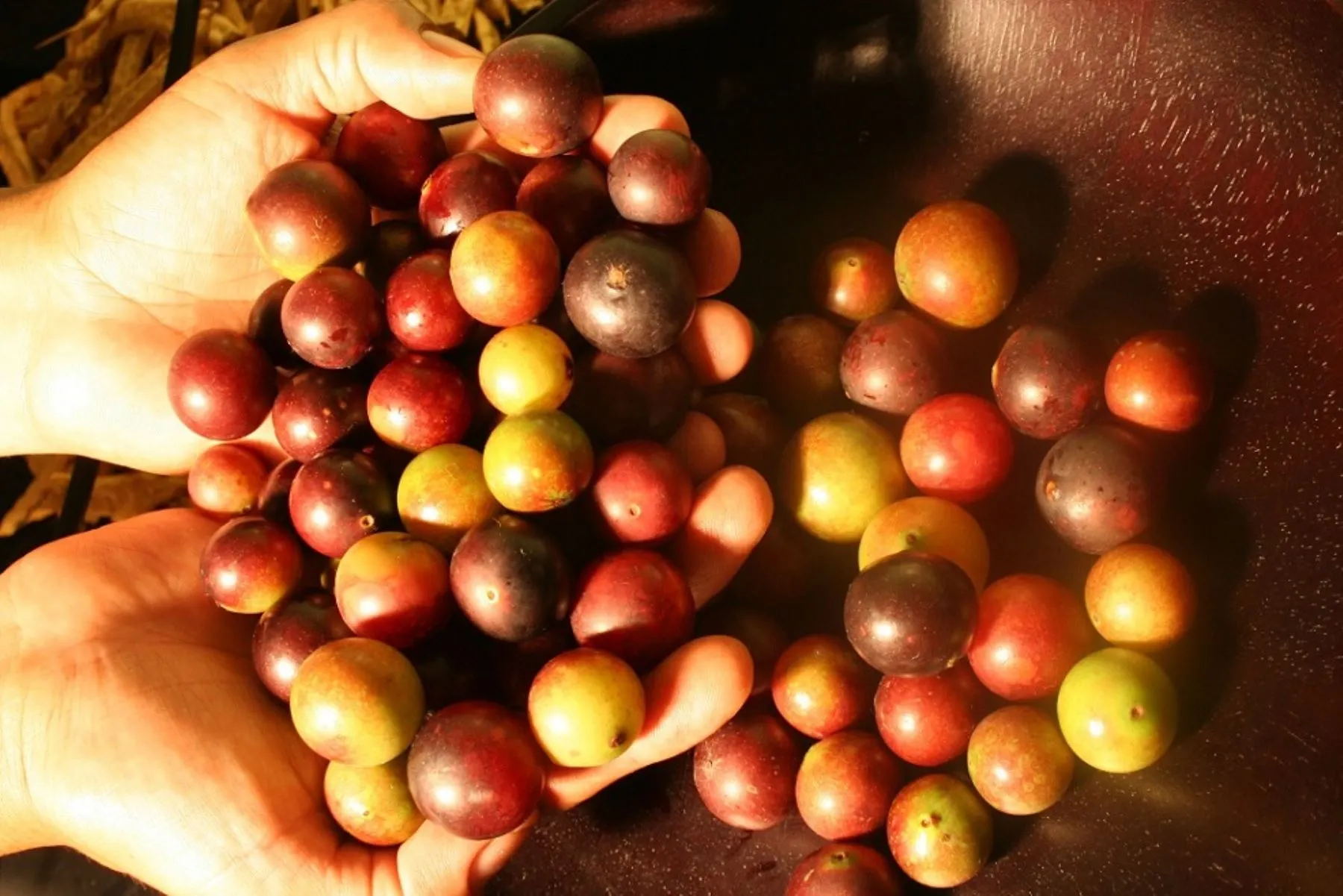
Camu Camu – Peruvian Fruits
Traveler Tips:
- Try fresh camu camu juice in Iquitos or Puerto Maldonado.
- Excellent immune support for travelers—especially important if shifting climates from dry Andes to humid jungle.
- Too sour to eat plain, so always look for prepared versions.
Cocona – The Amazonian Tomato
- Appearance: Bright yellow or orange, round fruit about the size of a tomato.
- Taste profile: Tangy, citrus-tomato blend, often described as lemony.
- Cultural role: Known as “Amazon tomato,” cocona is a kitchen staple in jungle households.
- Modern uses: Used in sauces, chutneys, and a beloved spicy dip called ají de cocona (cocona mixed with hot peppers).
Traveler Tips:
- Look for cocona sauces served with grilled river fish.
- It pairs perfectly with spicy jungle dishes—fresh, sour, and cleansing.
- In markets, buy a small bag and eat like a tomato snack.
Guayaba – Peruvian Guava
- Appearance: Green to yellow skin, pink or white interior filled with seeds.
- Taste profile: Sweet and fragrant with floral notes.
- Cultural role: Common fruit across tropical Peru, but Amazon guayabas are especially aromatic.
- Modern uses: Juices, jams, candies, eaten raw.
Traveler Tips:
- Be ready for many small seeds—locals chew them and swallow.
- Best enjoyed fresh-squeezed as juice in Amazon towns.
- Perfect to cool down in humid conditions.
Guanábana – The Soursop
- Appearance: Large, green, spiky fruit, weighing up to 5kg.
- Taste profile: Sweet-tart blend, like pineapple mixed with banana and strawberry.
- Cultural role: Used in juices, desserts, and sometimes traditional medicine.
- Modern uses: Blended into smoothies, eaten raw, or frozen into popsicles.
Traveler Tips:
- Too big to carry on treks—buy juice cups in Amazon markets.
- Seeds are not edible; flesh scooped with a spoon or blended.
- Popular in Peruvian heladerías (ice cream shops).
Aguaje – The “Tree of Life” Fruit
- Appearance: Dark red scaly skin resembling snake scales, oval-shaped.
- Taste profile: Sweet, earthy, with a nutty hint; eaten after boiling or softening in warm water.
- Cultural role: Called the “Tree of Life” in the Amazon because of its nutritional value and cultural importance.
- Modern uses: Made into aguaje ice cream, juices, or fermented drinks.
Traveler Tips:
- Aguaje is believed locally to have health benefits, especially for skin and hormonal balance.
- Best tried as juice in Amazon towns like Iquitos.
- The scales are peeled off before eating.
Arazá – The Amazonian Guava
- Appearance: Small yellow fruit resembling a lemon.
- Taste profile: Very sour, even more intense than guava.
- Cultural role: Nicknamed “Amazon lemon” for its acidity.
- Modern uses: Juices, jams, sherbets.
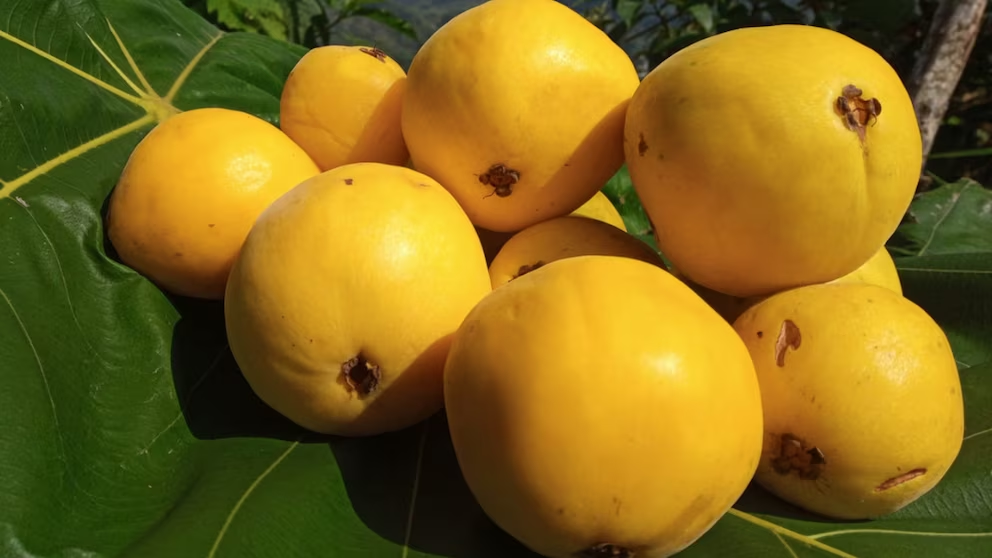
Arazá – Peruvian Fruits
Traveler Tips:
- Always consumed with sugar—it’s too sour alone.
- Look for ice creams flavored with arazá, refreshing in jungle heat.
- Highly perishable; usually only found near harvest sites.
Pijuayo – Peach Palm Fruit
- Appearance: Small reddish-orange fruits that grow in clusters.
- Taste profile: Nutty, starchy, slightly sweet—texture like a chestnut.
- Cultural role: A staple food in Amazonian villages.
- Modern uses: Boiled, peeled, and eaten with salt or honey; also made into flour.
Traveler Tips:
- Often sold in street stalls, boiled and ready to eat.
- High-energy food, good for long jungle excursions.
- Pairs well with coffee for breakfast.
Amazon Market Experience
Walking through Belén Market in Iquitos is like stepping into a kaleidoscope of fruit colors and aromas:
- Buckets of camu camu juice being ladled into plastic cups.
- Pyramids of aguaje glistening in the heat.
- Street vendors offering slices of chilled guanábana.
- Women blending cocona with chili peppers into fiery sauces.
For a traveler, it’s overwhelming but unforgettable—the perfect way to connect with Amazon culture.
Trekking & Traveler Context
While many of these fruits are too delicate to carry into the highlands, they play a role in Amazon treks or post-Andes recovery days:
- Camu camu juice for immunity.
- Aguaje ice cream to cool down after jungle hikes.
- Pijuayo fruit as a filling energy snack.
If your itinerary includes both Andes and Amazon, the contrast between granadilla on the Inca Trail and camu camu juice in Iquitos creates a vivid memory of Peru’s biodiversity.
Amazonian Fruits Summary Table
| Fruit | Flavor Profile | Best Form for Travelers | Nutritional Highlight |
| Camu Camu | Extremely sour | Juice, powder | Highest vitamin C |
| Cocona | Tangy tomato-lemon | Sauce, fresh | Vitamin C, antioxidants |
| Guayaba | Sweet floral | Juice, raw | Fiber, vitamin A & C |
| Guanábana | Sweet-tart creamy | Juice, ice cream | Vitamin C, calcium |
| Aguaje | Sweet, earthy | Juice, ice cream | Vitamin A, phytoestrogens |
| Arazá | Very sour | Ice cream, juice | Vitamin C, antioxidants |
| Pijuayo | Nutty, starchy | Boiled fruit | Protein, energy, fiber |
Vegetables of the Highlands
When travelers imagine the Andes, visions of Machu Picchu or winding trekking trails come to mind. But beneath your boots lies something equally significant: soil that has nurtured vegetables for millennia. The highlands of Peru are a living archive of ancient agriculture, producing hardy crops that thrive where most plants fail. These vegetables have not only fed civilizations but also shaped global diets — think potatoes and quinoa, both of which originated here.
Let’s explore the most iconic and unique vegetables of the Peruvian Andes.
Quinoa – The Andean Super Grain
- Botanical note: Not technically a grain but a pseudo-cereal.
- Appearance: Tiny round seeds, usually white, red, or black.
- Taste profile: Nutty, slightly earthy, fluffy when cooked.
- Cultural role: Known as the “mother grain” by the Incas, sacred in rituals.
- Modern uses: Soups, salads, porridges, energy bars, even beer.
Traveler Tips:
- Quinoa soup is a trekking staple, warming and protein-rich.
- Try quinoa chaufa (Andean stir-fry) in Cusco restaurants.
- For altitude treks, quinoa’s protein helps with muscle recovery.
Maca – The Energy Root
- Appearance: Looks like a radish or turnip, colors range from yellow to purple.
- Taste profile: Earthy, nutty, slightly sweet when dried.
- Cultural role: Consumed for stamina and fertility since Inca times.
- Modern uses: Powdered maca is added to smoothies, porridges, and teas.
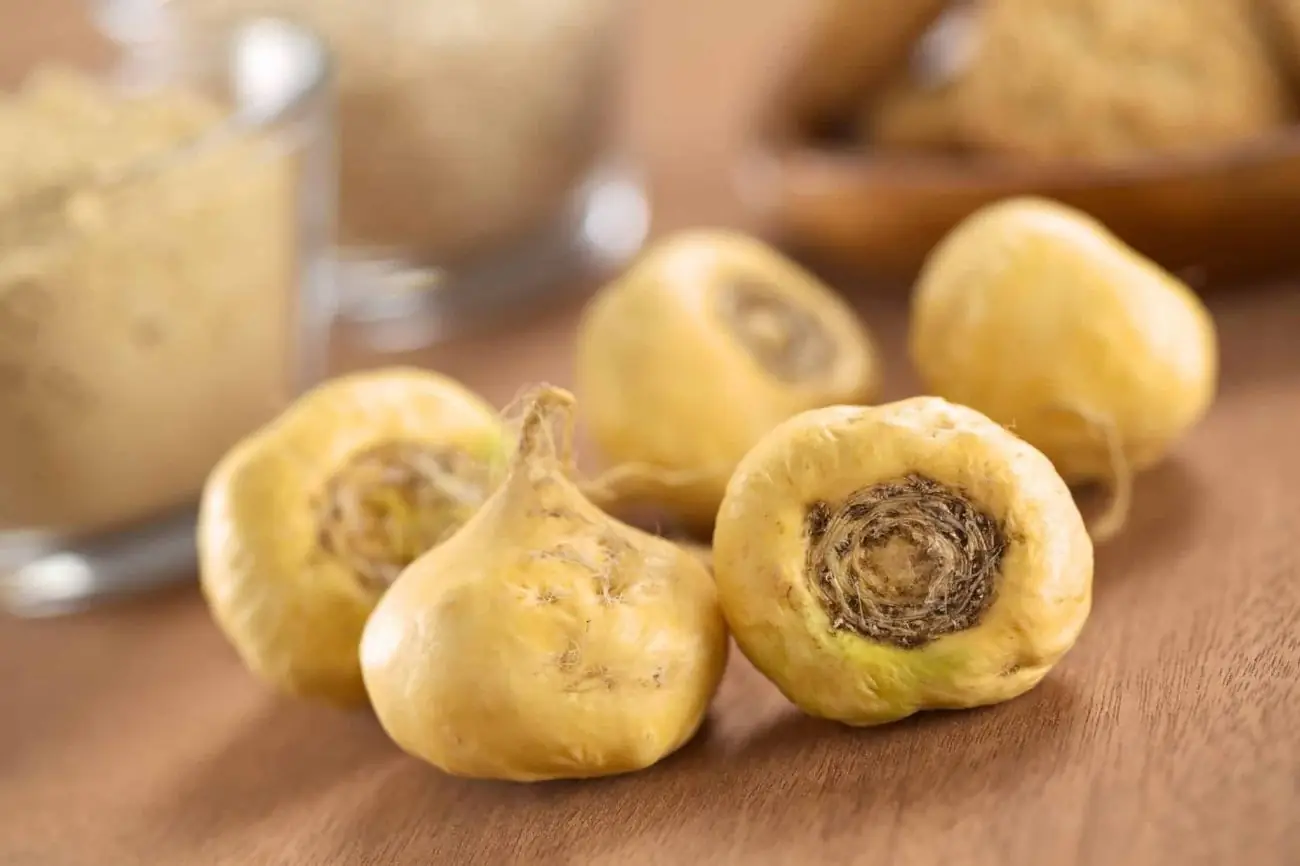
Arazá – Peruvian Fruits
Traveler Tips:
- Often called “Peruvian ginseng.” Locals believe it enhances endurance at high altitude.
- Try maca porridge at breakfast before trekking days.
- Most often consumed in powdered form; raw maca root is rarely eaten by visitors.
Olluco – The Colorful Andean Tuber
- Appearance: Bright yellow, red, or purple small tubers.
- Taste profile: Waxy, juicy texture, similar to potato but with earthy undertones.
- Cultural role: One of the oldest Andean staples, resistant to cold climates.
- Modern uses: Cooked into stews such as olluquito con charqui (olluco with dried llama meat).
Traveler Tips:
- Look for olluco dishes in traditional Andean restaurants.
- Its high water content makes it unsuitable for drying like potatoes, so it’s usually eaten fresh.
- Trekking cooks sometimes add it to soups for hydration and variety.
Oca – The Sweet Andean Root
- Appearance: Small, elongated tuber, often red, orange, or yellow.
- Taste profile: Tangy when raw, sweet when sun-dried.
- Cultural role: Second only to potatoes in Andean importance.
- Modern uses: Boiled, roasted, or sun-dried into oca pasa (sweetened, raisin-like oca).
Traveler Tips:
- Farmers often leave oca to sweeten in the sun before selling.
- Try oca roasted as a side dish on trekking expeditions.
- Nutritious, portable, and less perishable than many fresh vegetables.
Mashua – The Natural Healer
- Appearance: Long tuber, usually cream or yellow with purple patches.
- Taste profile: Pungent, peppery, slightly bitter.
- Cultural role: Known for medicinal properties—used by Inca warriors for strength but also as a natural contraceptive.
- Modern uses: Boiled, roasted, or used in soups.
Traveler Tips:
- Flavor is strong; often eaten mixed with other tubers.
- Ask trekking cooks if they include mashua—it’s warming and filling.
- Believed locally to aid kidney and urinary health.
Tarwi – The Andean Lupin
- Appearance: Small, white, bean-like legume.
- Taste profile: Nutty, slightly bitter until soaked and boiled.
- Cultural role: Important Inca protein source.
- Modern uses: Cooked into stews, ground into flour, or added to salads.
Traveler Tips:
- Tarwi must be processed to remove bitterness—don’t eat raw.
- Look for tarwi salad in local markets.
- High in protein, good for vegetarian travelers.
Arracacha – The Andean Carrot
- Appearance: White or yellow root vegetable, shaped like a carrot but stouter.
- Taste profile: Creamy, nutty, often compared to celery root or parsnip.
- Cultural role: Popular across the Andes, valued for its versatility.
- Modern uses: Used in purees, soups, stews, or fried like yucca.
Traveler Tips:
- Try arracacha soup in highland eateries.
- Its mild flavor makes it traveler-friendly for sensitive stomachs.
- Not often exported, so Peru is one of the few places to taste it fresh.
Highland Nutritional Table
| Vegetable | Nutritional Highlights | Traditional Use | Trekker Benefit |
| Quinoa | Protein, iron, magnesium | Ritual grain, daily soups | Muscle recovery, energy |
| Maca | Adaptogens, iron, vitamin C | Stamina, fertility | Altitude endurance |
| Olluco | Vitamin C, fiber | Stews with dried meat | Hydration in soups |
| Oca | Carbohydrates, beta-carotene | Roasted, sun-dried sweets | Long-lasting snack |
| Mashua | Antioxidants, isothiocyanates | Medicinal food, warrior diet | Warming on treks |
| Tarwi | Plant protein, fiber | Legume stews, flours | Vegetarian protein |
| Arracacha | Calcium, vitamin A, starch | Soups, purees | Gentle on digestion |
Farming & Inca Legacy
These vegetables are still grown using terraced fields built centuries ago. Farmers in villages above the Sacred Valley plant olluco, mashua, and oca in rotations that respect soil cycles. Each harvest isn’t just agricultural—it’s cultural continuity.
Travelers who visit farming communities see women in traditional dress digging roots with wooden tools, children carrying baskets of oca, and elders teaching how to sun-dry tubers. This preservation of food knowledge is as impressive as any Inca stonework.
Traveler’s Context: On the Plate and Trail
On Alpaca Expeditions treks, highland vegetables appear daily:
- Lunch soups with quinoa, olluco, and local herbs.
- Side dishes of roasted oca or arracacha.
- Breakfast porridges flavored with maca powder.
Beyond sustenance, these foods offer connection—trekkers often ask cooks about roots they’ve never seen before, turning meals into cultural lessons.
Seasonal Availability
| Vegetable | Peak Harvest |
| Quinoa | May–Sep |
| Maca | Jun–Aug |
| Olluco | Apr–Jul |
| Oca | May–Sep |
| Mashua | May–Aug |
| Tarwi | Year-round (processed) |
| Arracacha | Year-round |
Corn & Potatoes – Peru’s Staples
No two crops are more central to the story of Peru than potatoes and corn. They are the foundation of the Andean diet, the backbone of Inca agriculture, and the daily comfort food of modern Peruvians. For travelers, sampling these staples is like eating straight from history.
The Potato: Peru’s Gift to the World
A Thousand Faces of the Andes
Peru is home to over 4,000 potato varieties. From tiny, finger-sized papas to massive, purple-skinned giants, every region has its favorites.
- Colors: Red, yellow, purple, black, even spotted.
- Textures: Waxy, floury, creamy.
- Flavors: Nutty, earthy, sweet, buttery.
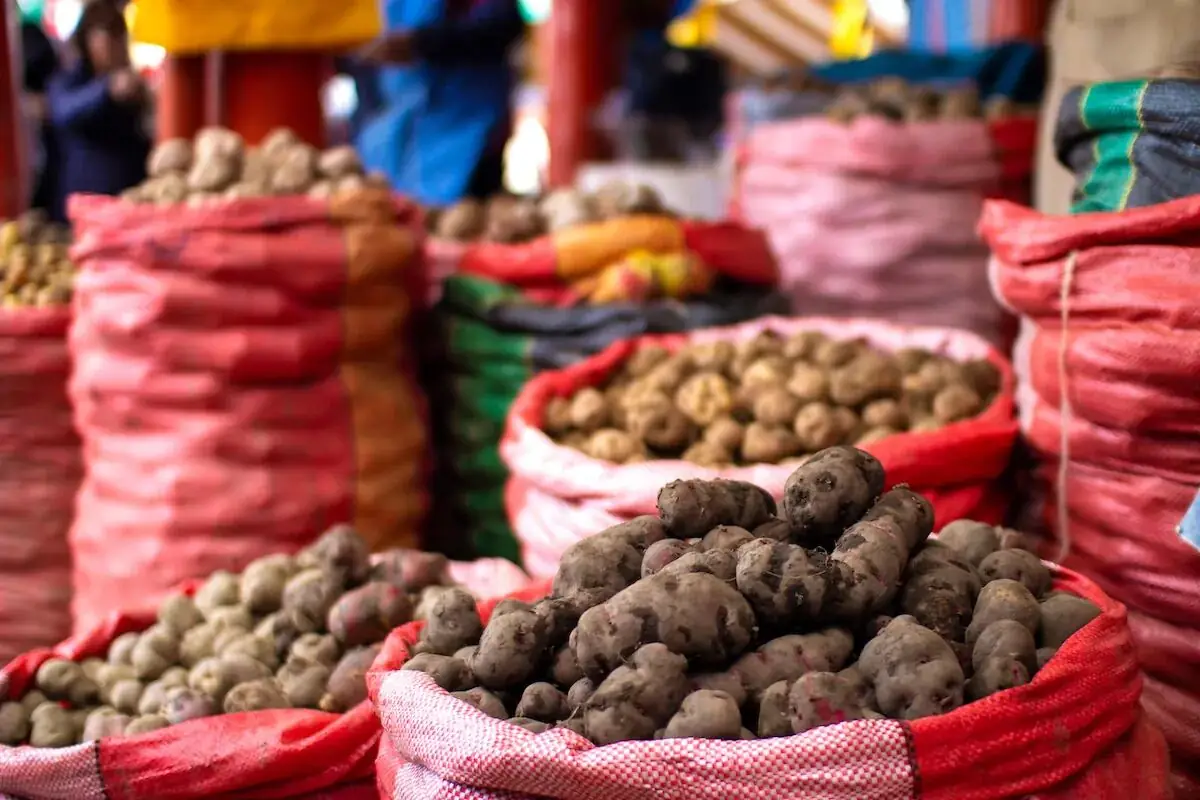
The Potato – Peruvian Fruits
The Inca Potato Revolution
Potatoes were domesticated in the Andes more than 7,000 years ago. They were vital to the Inca Empire, which devised preservation methods like:
- Chuño: Freeze-dried potatoes created by leaving them in high-altitude frosts overnight, then sun-drying. They can last up to 20 years.
- Tunta: A white variety of chuño soaked in river water, then dried again for extended storage.
These techniques ensured survival in times of famine or long journeys across the empire.
Modern Culinary Uses
- Papa a la Huancaína: Boiled potatoes covered in a spicy cheese sauce.
- Causa Limeña: Mashed yellow potatoes layered with avocado, chicken, or tuna.
- Papa rellena: Potato croquette stuffed with meat or vegetables.
Potatoes on the Trek
Alpaca Expeditions chefs use potatoes daily on treks:
- Mashed potatoes to accompany trout or chicken.
- Quinoa soup thickened with chunks of papa amarilla (yellow potato).
- Chuño added to stews for high-calorie endurance meals.
For trekkers, potatoes provide:
- Long-lasting energy from starch.
- Minerals like iron and magnesium for recovery.
- A cultural bridge — porters and guides often share potato-based comfort foods.
Corn: Maize of the Andes
Sacred and Abundant
Maize (corn) was another Inca staple and sacred crop. In fact, the Incas used maize in rituals, offerings, and even architecture (corn-shaped vessels have been found in archaeological sites).
Giant Cusco Corn (Maíz Blanco)
Cusco is famous for its maíz gigante, massive white kernels unlike any corn in the world.
- Texture: Soft, chewy, satisfying.
- Served: Often boiled with cheese (choclo con queso) or roasted into crunchy cancha
Chicha: Corn Beer & Purple Drinks
- Chicha de jora: A lightly fermented corn beer, still served in rural villages.
- Chicha morada: A refreshing purple corn drink flavored with pineapple, cinnamon, and clove.
Both are widely available to travelers. Chicha morada in particular is a trekker favorite — hydrating, antioxidant-rich, and non-alcoholic.
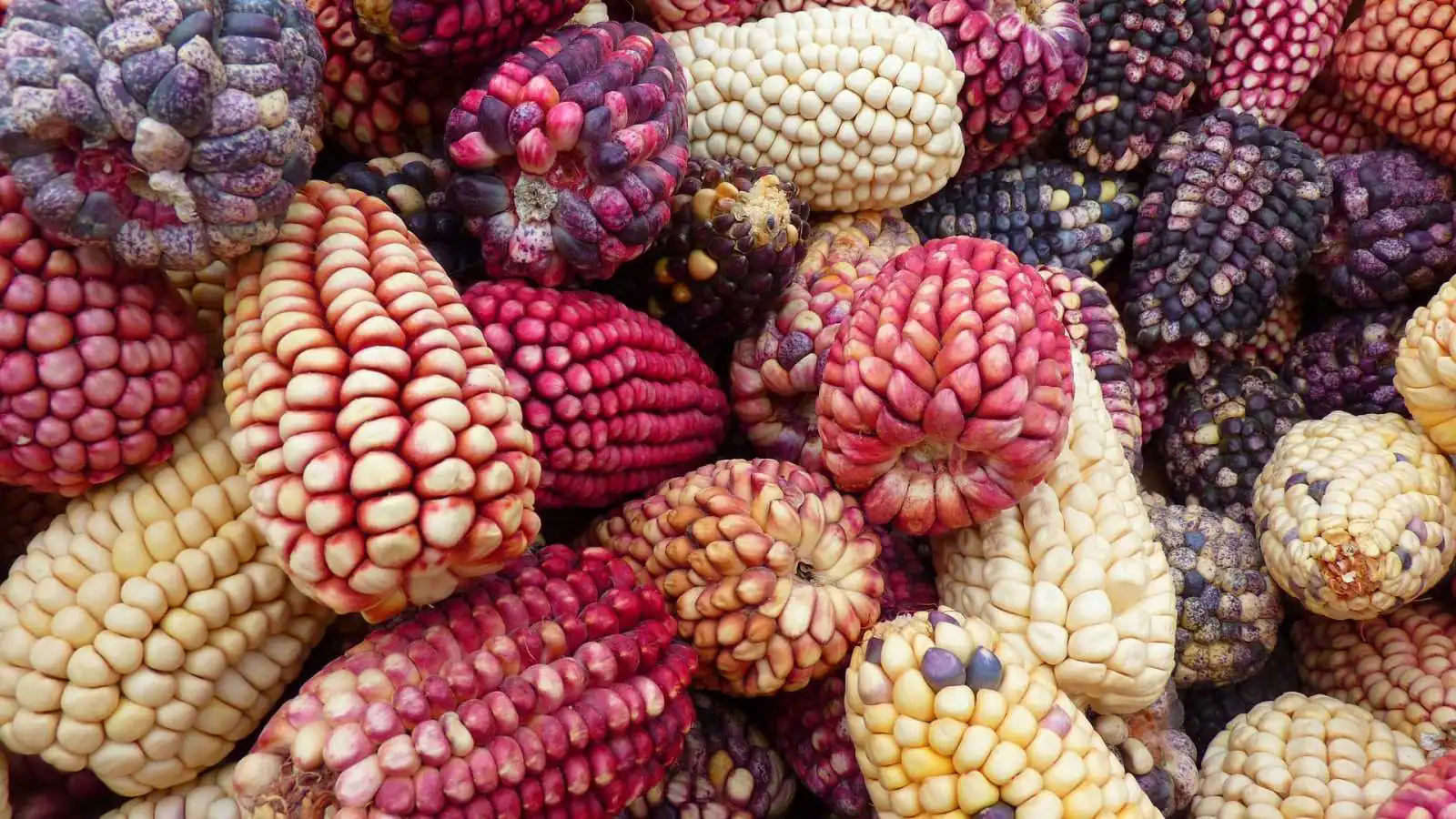
Chicha – Peruvian Fruits
Corn on the Trail
Treks often feature:
- Cancha (toasted corn): Crunchy, salty, perfect snack while hiking.
- Corn soups: Hearty and filling, cooked in large pots at camps.
- Choclo con queso: Giant boiled corn served with fresh white cheese.
Corn is lighter than potatoes, making it a good snack in day packs.
Potatoes vs. Corn – A Comparison
| Feature | Potatoes | Corn (Maize) |
| Origin | Andes, Peru | Andes, Peru |
| Varieties | 4,000+ | 50+ traditional landraces |
| Preservation | Chuño, Tunta | Dried kernels, cancha, chicha |
| Nutritional Use | High in starch, vitamin C | Fiber, antioxidants, complex carbs |
| Trek Benefit | Long energy, hearty meals | Portable snacks, hydration drinks |
Festivals & Cultural Moments
- Day of the Potato (Día de la Papa): Celebrated on May 30 across Peru, with fairs displaying tuber varieties.
- Inti Raymi (Festival of the Sun): Corn offerings still part of rituals in Cusco.
- Village markets: Women proudly display baskets of native potatoes, often dyed with natural colors.
For a traveler, stumbling into one of these celebrations is an unforgettable way to see how central these crops remain in modern life.
The Global Impact
It’s easy to forget, but without Peru’s potato and maize, the modern world’s diet would not exist.
- Potatoes spread to Europe in the 1500s, fueling population booms.
- Corn became a staple in Africa and Asia.
- Today, both crops are part of global food security.
For a trekker in Peru, eating potatoes and corn is like tasting the roots of world history.
Traveler’s Checklist: Potatoes & Corn You Must Try
| Must-Try Dish | Where to Taste It | Traveler Tip |
| Papa a la Huancaína | Cusco restaurants | Rich, filling lunch |
| Causa Limeña | Lima or Cusco markets | Cold dish, refreshing |
| Papa Rellena | Trekking lunches | Portable stuffed potato |
| Choclo con Queso | Sacred Valley stalls | Perfect trek snack |
| Cancha Corn | Treks & markets | Carry in day pack |
| Chicha Morada | Everywhere in Peru | Non-alcoholic, refreshing |
| Chicha de Jora | Rural villages | Mildly fermented, ask guide first |
Practical Traveler’s Guide
Traveling through Peru means more than just seeing Machu Picchu or trekking the Inca Trail. To truly connect with the country, you need to taste it — and that means knowing how, where, and when to experience its fruits and vegetables. This guide is built for trekkers, food enthusiasts, and cultural travelers who want to make the most of Peru’s edible bounty.
Where to Taste Unique Fruits & Vegetables
Local Markets
Markets are the beating heart of Peruvian food culture. Each city and town has its own, but a few stand out for travelers:
- San Pedro Market (Cusco): A sensory explosion just steps from the historic center. Rows of potatoes, corn, and quinoa sit alongside juice stands blending lucuma, chirimoya, and tumbo.
- Pisac Market (Sacred Valley): Famous for crafts, but the produce stalls are equally colorful, especially on Sundays.
- Surquillo Market (Lima): A great introduction before heading to the Andes or Amazon; urban but authentic.
- Belén Market (Iquitos): A jungle market where camu camu, aguaje, and cocona dominate the fruit stalls.
Traveler Tip: Go with a local guide to understand what you’re tasting. Many fruits are eaten differently than they appear — some raw, some juiced, some only after boiling.
Farm Visits
More trekking itineraries now include community farm visits. These are not staged tourist stops but opportunities to walk Inca-style terraces, dig oca or olluco with farmers, and share a simple meal.
- Sacred Valley homestays often include potato tastings.
- Andean communities near Chinchero welcome trekkers to see quinoa harvests.
- Amazon villages may show how aguaje is peeled or camu camu prepared.
Traveler Tip: Always ask permission before taking photos; for many farmers, produce is their identity as well as livelihood.
Restaurants & Street Stalls
Even short breaks in towns offer chances to try unique produce:
- Cusco cafés: Lucuma cakes, aguaymanto cheesecakes.
- Lima fusion restaurants: Tarwi hummus, arracacha puree.
- Street snacks: Choclo con queso, pacay pods sold by vendors.
How to Pack Fruit & Vegetable Snacks on Treks
Treks are demanding, and not all produce is trek-friendly. Here’s how to think about packing:
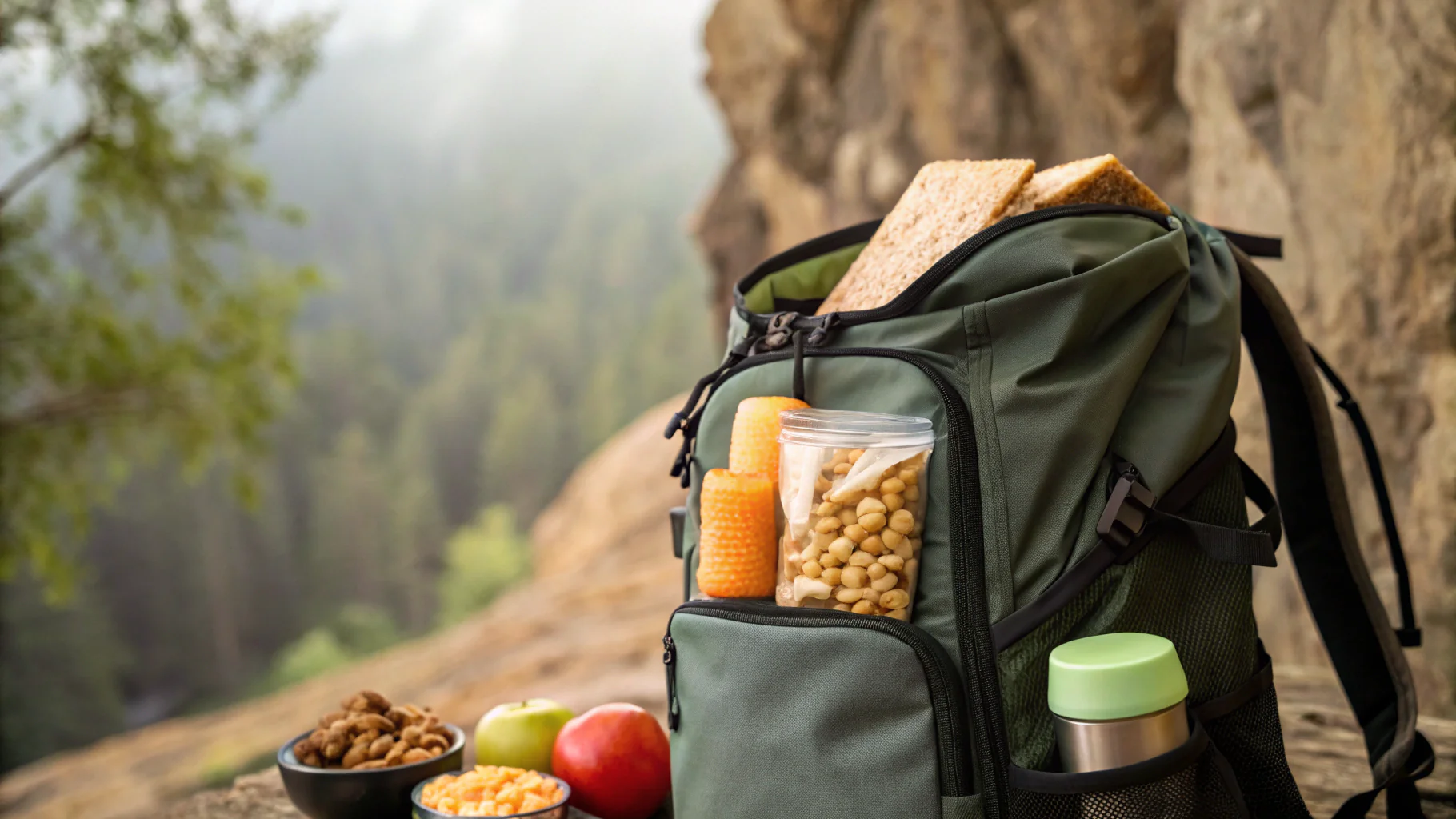
How to Pack Fruit & Vegetable – Peruvian Fruits
Best Fruits for Treks
- Granadilla: Shell protects pulp, easy to carry.
- Aguaymanto: Lightweight, portable in small bags.
- Dried lucuma or oca: Long shelf-life, compact energy.
Best Vegetables for Treks
- Chuño (dried potatoes): High-calorie, long-lasting.
- Quinoa energy bars: Compact protein.
- Tarwi beans (pre-cooked): Protein boost for vegetarians.
Avoid Bringing
- Chirimoya (bruises easily).
- Pacay (perishable).
- Guanábana (huge and messy).
Printable Trekking Snack Checklist
| Item | Why Pack It |
| Granadilla | Hydrating, shell-protected fruit |
| Aguaymanto | Tangy, energizing, lightweight |
| Dried Oca | Sweet, long-lasting carbohydrate |
| Quinoa Bar | Protein-rich, easy to pack |
| Cancha Corn | Crunchy, salty snack |
| Tarwi Beans | Vegetarian protein option |
| Chicha Morada Mix | Hydrating purple corn drink powder |
Foods for Acclimatization
Adjusting to high altitude is one of the biggest challenges travelers face. While there’s no magic cure, certain foods can support the body’s adaptation:
- Coca tea (mate de coca): Traditional Andean leaf infusion, believed to help with oxygen uptake.
- Quinoa soups: Light but nutrient-dense, easy to digest.
- Garlic: Locals say it helps circulation at altitude.
- Vitamin C fruits (tumbo, camu camu): Support immunity and recovery.
- Maca: Energy-boosting adaptogen, especially in powdered form.
Traveler Tip: Avoid heavy, greasy foods the first two days at altitude; instead, lean on light soups, fruits, and herbal teas.
Hygiene & Safety with Produce
While markets are thrilling, food safety matters.
- Always wash fruit before eating; use bottled or boiled water.
- Peel when in doubt: Fruits like bananas, granadilla, or pacay are safer because they come naturally sealed.
- Juice stands: Go to busy stalls where turnover is fast.
- Street stalls: Opt for cooked corn or boiled potatoes if you’re concerned about hygiene.
Traveler Tip: Carry a small travel knife for peeling fruits on the go.
Supporting Local Communities
Every sol you spend on produce makes a difference. Trekking responsibly means more than carrying your gear — it’s also about supporting the farmers and porters who sustain Andean life.
- Buy directly from small vendors or women’s cooperatives at markets.
- Respect prices; haggling for tiny savings may cut into livelihoods.
- Learn fruit and vegetable names in Quechua or Spanish — it shows respect.
Case Study: A Trek Day Menu
Here’s what a single day of trekking meals might look like with local produce:
- Breakfast: Quinoa porridge with maca powder, coca tea.
- Snack break: Granadilla and cancha corn.
- Lunch: Quinoa soup with olluco and tarwi salad.
- Afternoon tea: Chicha morada and aguaymanto sweets.
- Dinner: Grilled trout with arracacha puree, side of oca.
This isn’t just fuel — it’s a culinary journey alongside the physical trek.
Packing Smart for Produce Lovers
If you want to bring flavors home (check customs laws before travel):
- Allowed (usually): Packaged quinoa, maca powder, dried aguaymanto, cancha corn.
- Restricted: Fresh fruits and vegetables are generally not allowed through US/UK customs.
Traveler Tip: Buy powders, flours, or dried forms — they last months and are legal imports.
Sustainability & Responsible Tasting
Travel in Peru is not just about exploration; it’s also about preservation. Every lucuma smoothie, every bite of quinoa soup, every handful of aguaymanto has a story of farmers, porters, ecosystems, and cultural heritage behind it. Responsible tasting means enjoying the bounty of Peru’s produce while ensuring that the people and land that sustain it thrive long after you leave.
The Importance of Ethical Food Tourism
Peru’s fruits and vegetables are not mass-produced commodities. Many are grown in small plots by families who rely on seasonal markets. When travelers choose to spend consciously:
- They support farming traditions that stretch back to Inca times.
- They help maintain agrobiodiversity — the survival of multiple potato, quinoa, and oca varieties.
- They strengthen local economies where cash income is often limited.
Traveler Insight: Each sol you spend in a village market can ripple outward — funding schoolbooks, improving farm tools, and keeping young people rooted in farming communities.
Porter Welfare and Produce
On treks like the Inca Trail, the fruits and vegetables trekkers enjoy do not magically appear at campsites. They are carried by porters, the backbone of Andean trekking.
Ethical Practices Include:
- Weight Limits: Ensuring porters carry fair loads (Confirm current policy: many operators set 20–25 kg maximum per porter).
- Nutritious Meals: Providing porters with the same balanced produce trekkers eat — not just rice and potatoes.
- Fair Pay: Choosing trekking companies that guarantee salaries above government minimums.
- Gear Support: Companies that supply porters with warm clothing, footwear, and rain protection for long journeys.
Alpaca Expeditions has led reforms in porter welfare, ensuring that the produce carried and cooked is a shared experience, not a privilege only for clients.
Supporting Women Farmers
Across the Andes, women are often the primary guardians of seed varieties and farming traditions. They are the ones selling potatoes at markets, drying oca in the sun, or preparing tarwi for festivals.
Ways travelers can support:
- Buy directly from women at markets.
- Choose treks that partner with women’s cooperatives for farm visits.
- Value traditional cooking demonstrations offered by women in homestays.
Traveler Tip: Learning to say a few Quechua words when buying produce (like “sulpayki” for thank you) is a sign of respect and creates real connections.
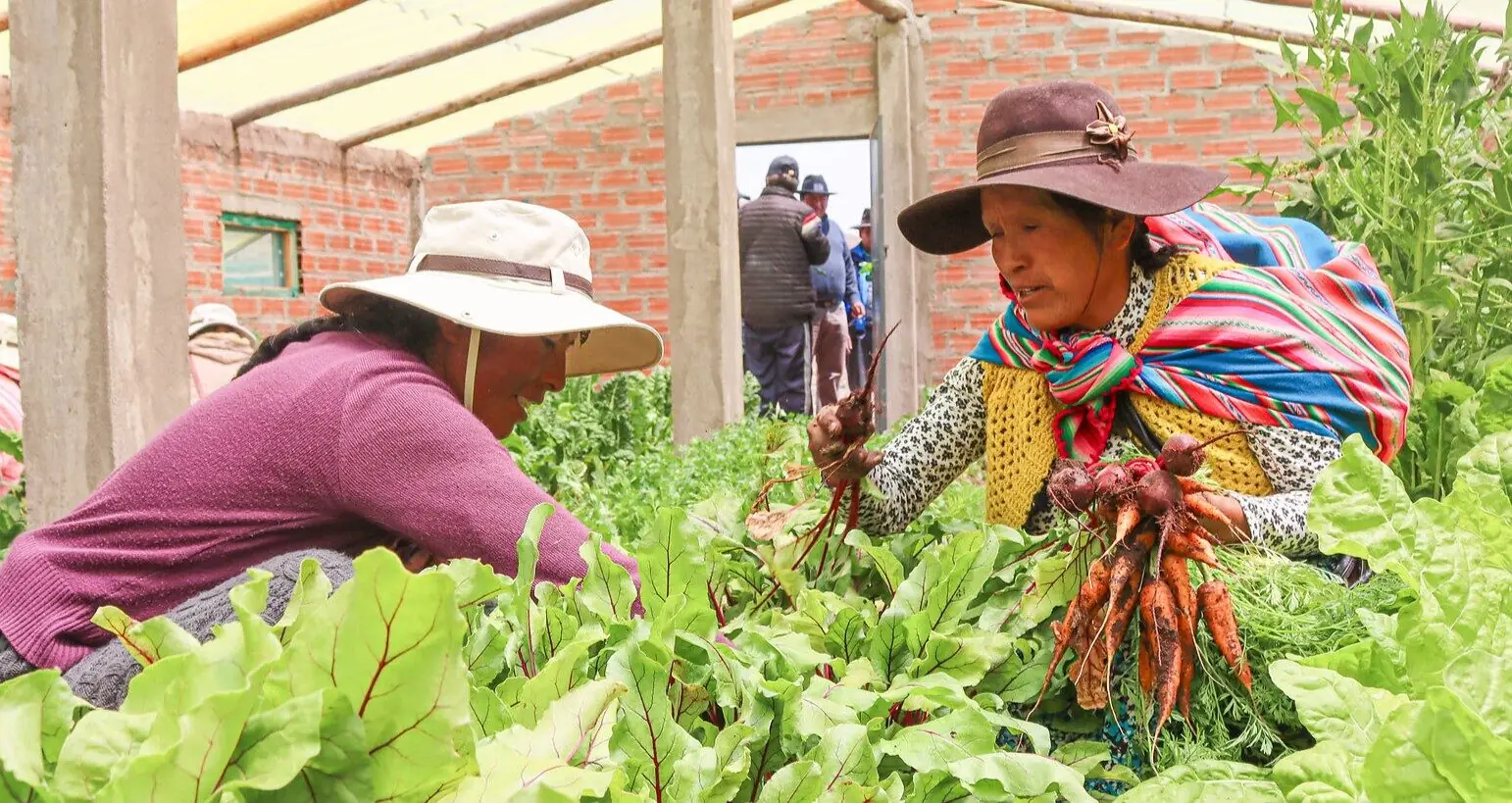
Supporting Women Farmers
Minimizing Food Waste on Treks
Food waste is one of the biggest sustainability issues in tourism. Large trekking groups can over-order or over-pack produce, leaving leftovers.
How Alpaca Expeditions manages this:
- Careful Menu Planning: Chefs know exactly how much quinoa, potatoes, or corn to prepare for groups.
- Recycling Organic Waste: Leftovers can feed animals in local villages.
- Traveler Education: Encouraging trekkers to request realistic portion sizes.
Traveler Tip: On treks, always finish what you take — respect the food carried on porters’ backs.
Biodiversity at Risk
Peru’s biodiversity is extraordinary, but also fragile. Modern agriculture, climate change, and demand for export crops (like asparagus or avocados) can overshadow native varieties.
- Threatened Crops: Some potato varieties survive only in remote highland fields.
- Climate Pressure: Warmer weather is forcing farmers to plant at higher altitudes.
- Market Economics: Superfood booms (quinoa, maca) can sometimes price out locals.
Traveler Action:
Seek out and ask for native, lesser-known produce — olluco, mashua, cocona. By creating demand, you help protect diversity.
Farm-to-Trek Connections
Alpaca Expeditions increasingly sources produce directly from small farmers. This ensures that:
- Farmers receive fair prices.
- Trekkers eat the freshest possible food.
- There’s a direct link between agriculture and tourism.
This model creates closed-loop sustainability — the food you eat while trekking supports the very villages you hike past.
Responsible Tasting Guidelines for Travelers
Do:
- Buy seasonal fruits and vegetables.
- Taste new things — don’t stick only to potatoes and corn.
- Choose local eateries over global chains.
- Respect food customs (for example, sharing coca tea respectfully).
Don’t:
- Waste food by over-ordering.
- Haggle aggressively for small produce amounts.
- Take photos without asking vendors.
- Demand imported foods in remote areas.
Sustainability & Storytelling
Every fruit and vegetable carries a story:
- Quinoa, once dismissed as “peasant food,”is now exported globally.
- Mashua is remembered as the tuber that kept Inca armies strong.
- Camu camu became suddenly famous worldwide as a “superfruit.”
By tasting responsibly, you become part of that story without disrupting its future.
Traveler’s Sustainability Checklist
| Action | Impact |
| Buy from women vendors | Supports cultural continuity & local income |
| Eat seasonal produce | Reduces environmental strain |
| Finish your trek meals | Respects porter’s effort & minimizes waste |
| Request native varieties | Helps preserve biodiversity |
| Choose ethical operators | Ensures fair porter welfare |
Glossary of Peruvian Produce
Travelers often forget names after markets or treks. Here’s a quick reference glossary:
- Aguaymanto: Golden berry with papery husk.
- Arracacha: Creamy Andean root, “white carrot.”
- Camu Camu: Sour Amazon berry, vitamin C powerhouse.
- Chirimoya: Custard apple, creamy fruit.
- Chuño: Freeze-dried potato, long storage.
- Cocona: Tangy Amazon “tomato.”
- Granadilla: Sweet passionfruit, jelly pulp.
- Guanábana: Soursop, spiky green fruit with creamy pulp.
- Kiwicha: Small Andean pseudo-grain, related to amaranth.
- Lucuma: Golden-fleshed fruit, tastes like caramel/sweet potato.
- Maca: Root used as a powdered adaptogen and, stamina booster.
- Mashua: Spicy Andean tuber, medicinal.
- Maíz Gigante: Giant Cusco corn with marble-sized kernels.
- Oca: Sweet Andean tuber, sun-dried for caramel flavor.
- Olluco: Juicy Andean tuber, colorful and waxy.
- Pacay: Ice cream bean, pod with cotton-candy pulp.
- Pepino Dulce: Melon-cucumber fruit, refreshing.
- Pijuayo: Peach palm fruit, nutty and filling.
- Quinoa: Sacred Andean pseudo-grain, high in protein.
- Tarwi: Lupin bean, high-protein legume.
- Tumbo: Banana passionfruit, tangy pulp.
Closing Note
By now, you’ve walked through markets, trekked mountain passes, and shared meals with farmers — all through the lens of Peru’s fruits and vegetables. From the Gold of the Incas (lucuma) to the Tree of Life (aguaje), these foods are more than nutrition; they are bridges between travelers and communities, between past and present.
Eating them is not just delicious — it’s an act of cultural respect and sustainability.
Click here to read more blogs like this!

Alpaca Expeditions Recognitions
ISO (International Organization for Standardization)
In the pursuit to stand out from the rest, Alpaca Expeditions has obtained four ISOs plus our carbon footprint certificate to date. These achievements result from our efforts to implement the internationally-recognized integrated management system. They also represent our commitment to all of our clients and staff of operating sustainability and responsibility in every way possible.





World Travel Awards
Alpaca Expeditions is internationally recognized as a leading tourism company in Peru. As proof, we have been awarded the World Travel Award for Peru´s Best Tour Operator 2021 for the second time.


TRIPADVISOR RECOGNITIONS
Our goal at Alpaca Expeditions is to create the best experience for all of our clients. We create journeys that are to be remembered for a lifetime. Journeys you can be proud of and can share with everybody around you.












As Featured In











Scan Here!





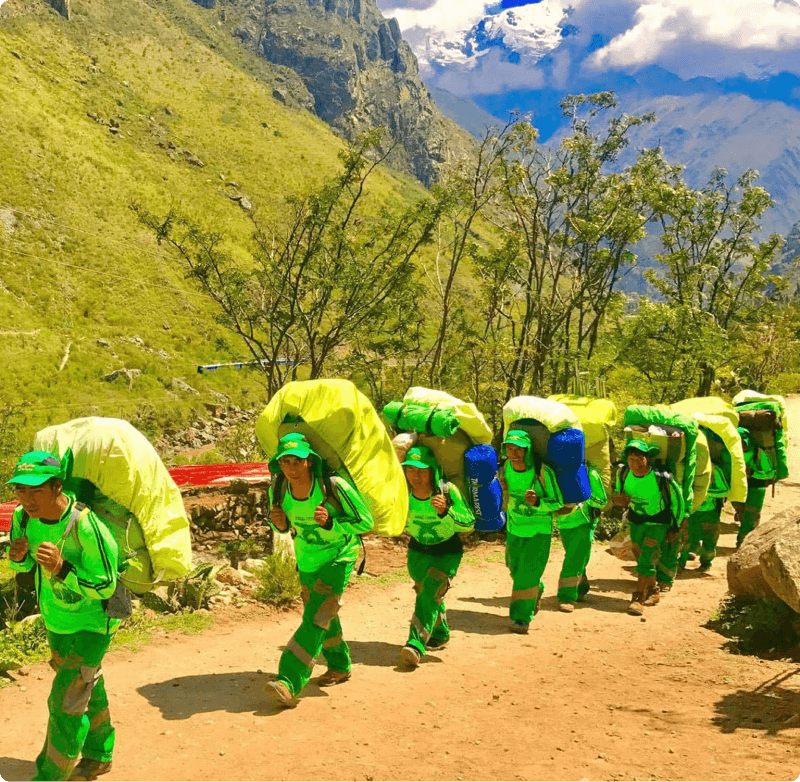 Porters will carry up to 7 kg of your personal items, which must include your sleeping bag and air mat (if you bring or rent one). From us, these two items weigh a combined total of 3.5 kg.