



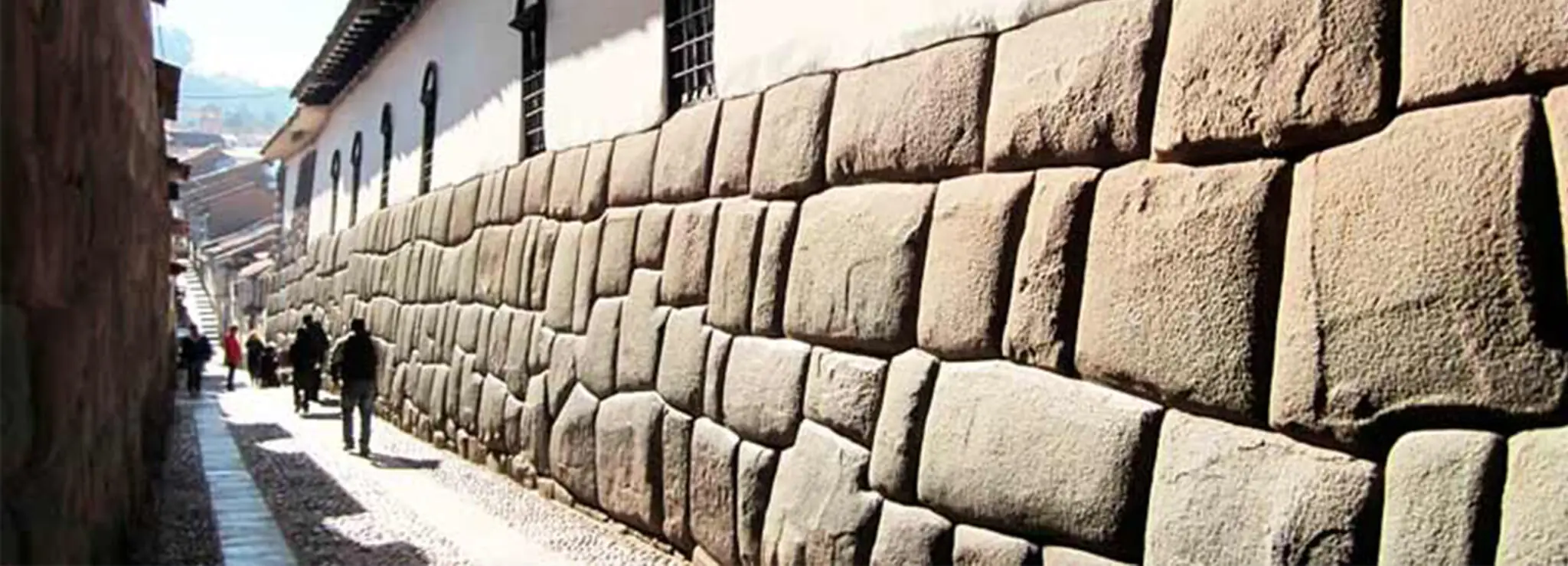
Why This Stone Matters Globally
Cusco is not short of remarkable architecture. From the sweeping plazas to the baroque churches, and of course, the nearby ruins of Sacsayhuamán, the city breathes history at every corner.
Yet, among all the grand monuments, one particular object — not even a building, but a single block of stone — has managed to capture the imagination of travelers from across the world. This is the Twelve Angled Stone, a polished green diorite block nestled into a narrow street wall in the historic center.
At first glance, it may appear ordinary: one block among hundreds in a long Inca wall. But look closer. Its twelve distinct corners fit perfectly against surrounding stones, leaving no space for mortar, not even the thinnest blade of grass. The symmetry is deliberate, the craftsmanship astonishing, and the resilience of this structure speaks volumes about the Inca’s engineering mastery.
The stone has become one of Cusco’s most photographed icons. For Peruvians, it symbolizes ingenuity and cultural identity. For travelers, it is often the first hands-on encounter with the Inca’s legendary building style before they trek further into the Sacred Valley or Machu Picchu.
This guide unpacks the Twelve Angled Stone in depth. Beyond the famous photo opportunity, we’ll explore why it matters, how it fits into the larger history of Cusco, what legends surround it, and how you can visit respectfully while planning your broader Andean journey.
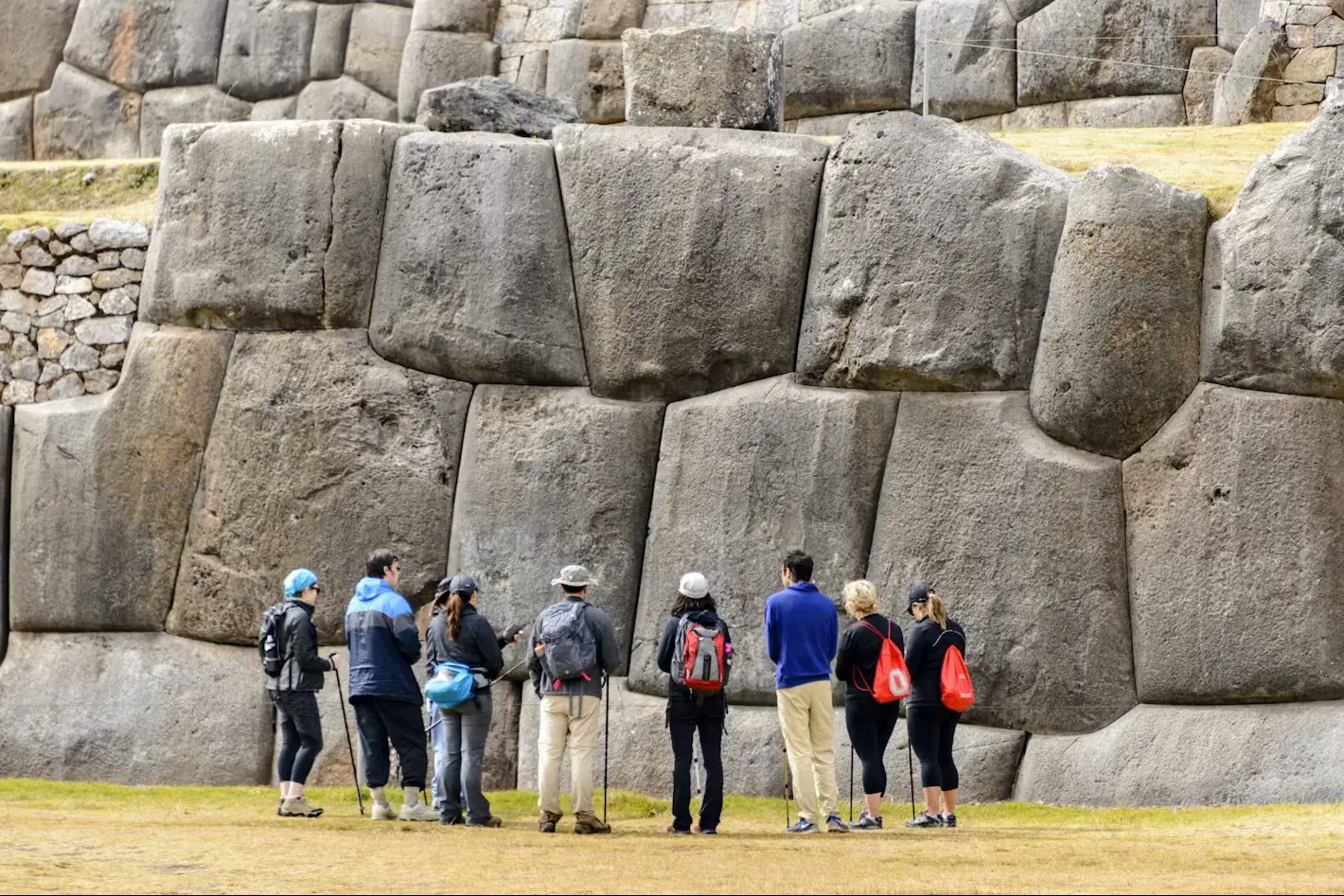
The Twelve Angled Stone
History of Cusco and Inca Architecture
Foundations of Cusco as Capital
Cusco, or Qosqo in Quechua, was the beating heart of the Inca Empire. By the 15th century, it had become the political, religious, and administrative center of the largest empire in pre-Columbian America. The Incas referred to Cusco as the “navel of the world,” a place where spiritual and earthly power converged.
The city was laid out in the form of a puma, a sacred animal in Andean cosmology, with the head formed by the fortress of Sacsayhuamán and the tail extending toward the southern valley. The streets radiated outward like arteries, channeling commerce, processions, and ceremonies.
At the heart of Cusco were palaces, temples, and finely crafted walls. Among them were the residences of Inca nobility, and the Twelve Angled Stone is thought to have been part of one such structure, possibly the palace of Inca Roca, the sixth ruler of the dynasty.
Inca Stone-Cutting Techniques
The Twelve Angled Stone is not just a block — it is a demonstration of technique. The Incas did not use mortar. Instead, they quarried massive rocks, shaped them with hammer stones, and fitted them together through patient abrasion. Each stone was carved in response to its neighbors, ensuring a perfect interlocking system.
Why did they do this? The Andes are earthquake-prone. Mortared walls would crumble, but interlocking stones shift gently and then resettle without collapsing. When earthquakes struck Cusco — as they have repeatedly over centuries — Spanish colonial structures often fell, yet the Inca walls remained intact.
Some theories suggest the Incas heated stones with fire and then rapidly cooled them with water to create fractures for shaping. Others argue they used sand, gravel, and endless manual grinding. What is certain is that the precision achieved with such limited tools is extraordinary.
Earthquake Resistance Design
Cusco sits in a seismic zone where tremors are part of life. The Inca mastered earthquake resistance not only with their interlocking technique but also by creating walls that taper slightly upward, wider at the base and narrower at the top. This trapezoidal style adds stability.
Even the doors and windows were trapezoidal rather than rectangular. This gave them flexibility under pressure. It is this architectural foresight — the combination of strength, balance, and shock absorption — that ensured Cusco’s ancient walls outlasted the Spanish conquest, earthquakes, and centuries of weather.
The Twelve Angled Stone is perhaps the most famous demonstration of these principles because it combines so many angular fits within a single block. While most stones have six or eight faces, this one has twelve, all snugly joined without mortar.
The Twelve Angled Stone Itself
Location – Hatun Rumiyoc Street
You’ll find the stone on Hatun Rumiyoc Street, a narrow cobblestoned lane in central Cusco. The name means “Great Stone” in Quechua, and the street lives up to it. The wall that houses the Twelve Angled Stone once formed part of the palace of Inca Roca. Today, the building belongs to the Archbishop’s Palace and Museum of Religious Art.
The street runs between the Plaza de Armas and the San Blas neighborhood. Because of this, the Twelve Angled Stone is passed daily by thousands of locals and visitors. Street vendors, musicians, and guides often linger nearby, offering explanations or selling alpaca wool products.
Despite its fame, it is easy to miss if you are not looking closely. The wall is uniform in style, and only upon inspection does the distinctive block stand out. Look for a subtle plaque and often a small crowd of people taking photographs.
Dimensions and Physical Features
The Twelve Angled Stone measures about one meter high and is made of green diorite, a volcanic rock abundant in the region. Its surface is polished and slightly convex, glistening under Cusco’s sunlight.
What makes it remarkable is not its size — there are larger blocks in Sacsayhuamán — but its shape. Twelve distinct angles create twelve adjoining fits with neighboring stones. Not one is out of place. The margins are so fine that locals say not even a sheet of paper can slip between them.
This precision without mortar is the hallmark of Inca engineering. The block is not decorated or inscribed, yet its craftsmanship itself serves as a message of authority and permanence.
Symbolism of 12 Angles
Why twelve? Scholars debate this.
- Some argue the number twelve has cosmic meaning in Andean culture, relating to lunar cycles or social organization into twelve clans.
- Others suggest it was simply a demonstration of skill — the more angles, the greater the mastery.
- Local oral tradition often emphasizes the stone’s role as a test of apprentices. Only the finest stonemasons could attempt such complexity.
While we may never know the precise symbolic intention, the fact remains: the stone is both functional and artistic, embodying strength and beauty at once.
Legends and Local Beliefs
Cusco is full of legends, and the Twelve Angled Stone has its share:
- Test of Mastery: Some guides tell visitors that apprentices were challenged to create increasingly complex shapes. The Twelve Angled Stone became a benchmark of excellence.
- Energy Flows: Certain locals believe the stone radiates energy, aligning with Cusco’s status as a spiritual hub. Visitors sometimes place their hands on it for good fortune.
- Guardian of Cusco: Folk tales say as long as the stone stands, Cusco will remain protected.
Importantly, while touching the stone is now discouraged to prevent erosion, these beliefs underline how central it is to Cusco’s cultural memory.
Visiting the Twelve Angled Stone
How to Get There
Finding the Twelve Angled Stone is straightforward once you know where to look. It is located on Hatun Rumiyoc Street, one of the narrow pedestrian lanes that branch off from Cusco’s central Plaza de Armas.
- Walking from Plaza de Armas: Head northeast along Calle Triunfo for about 5 minutes until you reach Hatun Rumiyoc. The stone sits on the right-hand wall, about halfway up the street.
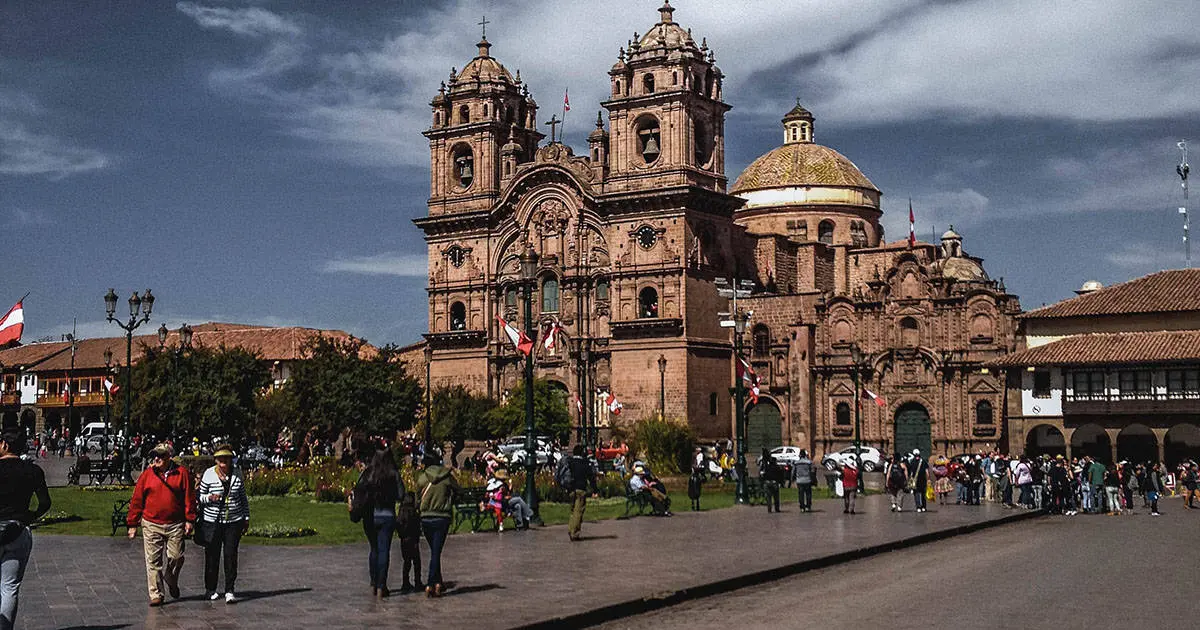
Walking from Plaza de Armas
- From San Blas: If you’re exploring the bohemian San Blas district, simply walk downhill toward the Plaza de Armas, and Hatun Rumiyoc will lead you there.
The street is cobblestoned and often crowded, so expect to walk slowly. Taxis cannot access the lane directly, but you can be dropped nearby and continue on foot.
The stone is outdoors, visible 24/7, and there is no entry fee. This accessibility is part of its appeal — you don’t need tickets, guides, or reservations. However, that also means it can be busy.
Best Time of Day
Crowds form throughout the day, especially during mid-morning and late afternoon when walking tours pass by. If you want to appreciate the stone in peace or capture a clear photo, aim for:
- Early morning (7–8 am): The light is soft, the street nearly empty, and vendors are just setting up.
- Evening (after 8 pm): The area is lit by streetlamps, giving the stone a mystical glow. This is also when most tour groups are gone.
Travelers who enjoy photography should note that around midday, shadows can be harsh and people often crowd the narrow space.
Photography Etiquette
The Twelve Angled Stone is one of the most photographed spots in Cusco. While it’s tempting to rush in, respect is essential:
- Do not touch or lean on the stone. Oils from hands cause long-term damage to the diorite’s surface.
- Step aside quickly after taking your shot. The lane is narrow, and blocking it disrupts both visitors and locals.
- Avoid flash photography at night. Locals often find it intrusive.
- Consider context shots. Instead of just zooming in, capture the stone within its wall, the street, or nearby vendors. This gives a sense of place.
Many street performers and vendors hang around the stone. If you take their photo, tip them fairly. It’s part of the local economy.
Accessibility
- Mobility: The cobblestoned street can be uneven and tricky for wheelchairs or those with walking difficulties. Assistance is recommended.
- Altitude: Remember that Cusco sits at 3,400 meters (11,150 ft). Even short walks may feel demanding on your first day. Pace yourself.
- Safety: The area is generally safe, but always watch your belongings, especially in crowds. Petty theft can happen.
Nearby Attractions
The Twelve Angled Stone is not an isolated landmark. It sits in the middle of Cusco’s historic core, surrounded by must-see sites. You can easily combine it with other visits to create a meaningful walking tour.
San Blas Neighborhood
Just above Hatun Rumiyoc lies San Blas, Cusco’s artistic quarter. Whitewashed houses with blue balconies climb the hillside, connected by steep alleys and staircases.
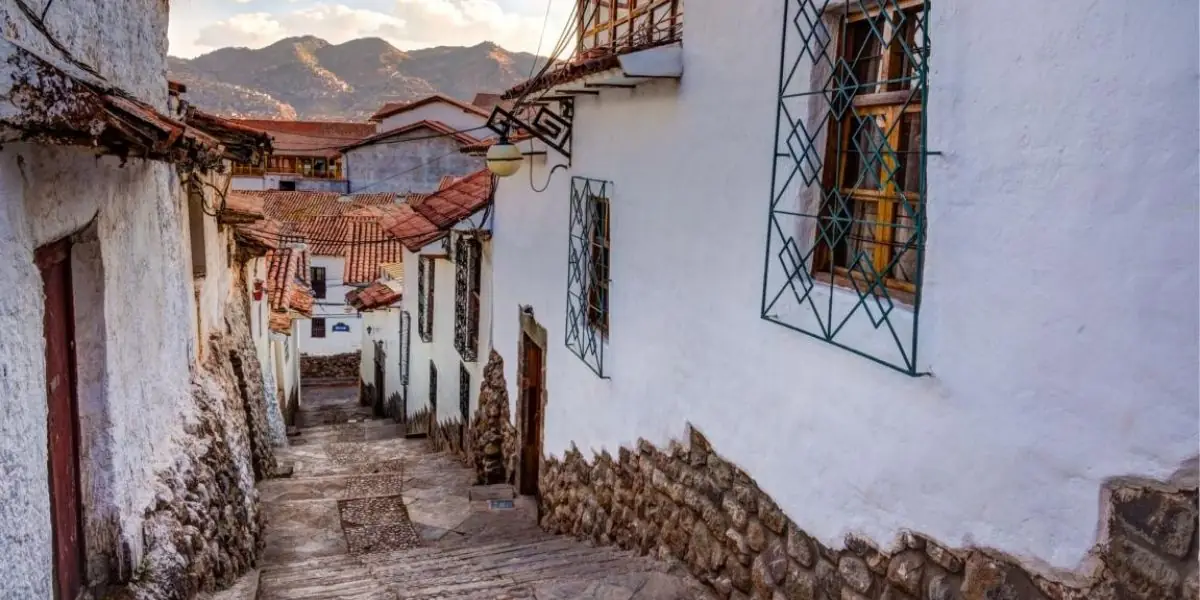
San Blas Neighborhood
- Workshops & Galleries: San Blas is home to local artisans — woodcarvers, painters, jewelers, and textile weavers. Many families have practiced these crafts for generations.
- San Blas Church: A small 16th-century church known for its ornate pulpit carved from a single cedar trunk.
- Atmosphere: Cafés and small restaurants line the streets, making this a great area to relax after your visit to Hatun Rumiyoc.
Tip: The uphill walk to San Blas is steep. Move slowly, especially if you’re still acclimatizing.
Cusco Cathedral & Plaza de Armas
At the heart of the city is Plaza de Armas, framed by colonial arcades and overlooked by the Cathedral Basilica of the Assumption of the Virgin.
- Cusco Cathedral: Built on the foundations of an Inca palace, the cathedral is a blend of Gothic, Baroque, and Renaissance styles. Inside, you’ll find colonial paintings — including the famous “Last Supper” featuring Andean food like guinea pig and chicha.
- Jesuit Church (Iglesia de la Compañía de Jesús): Another stunning Baroque landmark on the plaza.
- Plaza Life: Benches, gardens, and constant activity make this an ideal spot to observe daily life.
Walking between the Twelve Angled Stone and Plaza de Armas takes less than 10 minutes.
Sacsayhuamán Fortress
A short drive or a steep uphill walk from the Plaza de Armas, Sacsayhuamán is one of the Inca Empire’s greatest constructions.
- Colossal Stones: Some weigh over 100 tons, fitted together with the same precision seen in Hatun Rumiyoc.
- Views: The fortress sits on a hilltop with sweeping views of Cusco below.
- Festivals: Each June 24, Sacsayhuamán becomes the stage for Inti Raymi, the Festival of the Sun, where actors and locals reenact Inca rituals.
Visiting Sacsayhuamán after seeing the Twelve Angled Stone provides perspective. You’ll recognize the same principles of stonemasonry, magnified on a monumental scale.
Qorikancha (Temple of the Sun)
A 15-minute walk from Hatun Rumiyoc lies Qorikancha, once the most sacred temple of the Inca Empire.
- Inca-Spanish Fusion: The base walls are classic Inca stonework, topped with Spanish colonial architecture (Santo Domingo convent).
- Spiritual Significance: Dedicated to Inti, the Sun God, it was covered in sheets of gold before the conquest.
- Astronomy: Qorikancha was aligned with solstices and key celestial events, showcasing the Incas’ astronomical knowledge.
Museums Nearby
- Museo Inka: Just minutes from the stone, this museum houses artifacts, textiles, and mummies, offering a deeper context for the Inca world.
- Archbishop’s Palace: The wall containing the Twelve Angled Stone belongs to this museum, which displays colonial religious art.
Insider Travel Tips for the Area
Avoiding Crowds
- Go early or late in the day.
- Visit during weekdays, as weekends draw more domestic tourists.
- If a large tour group arrives, step aside and explore a nearby alley — crowds often clear within 10–15 minutes.
Blending with Locals
The street is not just a tourist attraction; it’s also part of Cusco’s living city. Residents walk through it daily. Smile, greet locals with a simple “Buenos días” or “Allin punchaw” in Quechua. Respect their space.
Shopping
Vendors near Hatun Rumiyoc often sell alpaca scarves, jewelry, or small souvenirs. Quality varies, so if you’re seeking genuine alpaca wool, visit certified shops in San Blas or cooperative markets.
Food & Drinks
- Nearby cafés: Hatun Rumiyoc has small coffee spots, but San Blas is the better place for a quiet sit-down meal.
- Street snacks: Try local specialties like choclo con queso (giant corn with cheese).
Guided Tours vs. Independent Visit
- Independent Visit: Perfectly doable. The stone is free and requires no entry.
- Guided Tours: Adds context. Many city walking tours include Hatun Rumiyoc, often explaining Inca construction and history in detail.
Sample Half-Day Walking Route
Here’s a suggested half-day plan centered around the Twelve Angled Stone:
Morning:
- Start at Plaza de Armas.
- Walk up to Hatun Rumiyoc, admire the stone.
- Continue to San Blas for artisan shops.
Lunch:
- Eat in San Blas (small family-owned restaurants).
Afternoon:
- Return downhill to Plaza de Armas.
- Visit Cusco Cathedral.
- End at Qorikancha before sunset.
This circuit keeps walking distances short, ideal if you’re acclimating to altitude.
Practical Travel Guide
The Twelve Angled Stone is easy to visit, but Cusco itself demands preparation. At 3,400 meters (11,150 ft), altitude affects every visitor differently. Knowing how to acclimatize, what to pack, and how to structure your days makes the difference between a rushed experience and a rewarding journey.
Acclimatization to Altitude

Acclimatization to Altitude
Why It Matters
Cusco’s altitude is not extreme, but it is high enough that travelers from sea level often feel its effects. Symptoms of altitude sickness can include:
- Shortness of breath during mild exertion
- Fatigue or difficulty sleeping
- Mild headache
- Nausea or loss of appetite
Severe altitude sickness is rare in Cusco but possible if you ascend too quickly or overexert yourself on your first days.
Field Tips for Acclimatization
- Rest the First Day: Use your arrival day to walk slowly, hydrate, and eat lightly. The Twelve Angled Stone is a perfect first-day excursion because it requires no ticket and little exertion.
- Stay Hydrated: Drink 3–4 liters of water daily. Avoid excess alcohol and heavy meals.
- Coca Tea & Leaves: Locals traditionally use coca tea to ease symptoms. Many hotels offer it free in the lobby.
- Medication: If you’re prone to altitude issues, consult your doctor about acetazolamide (Diamox) before traveling.
- Sleep Lower, Tour Higher: Some travelers stay their first night in the Sacred Valley (2,800 meters) to acclimatize more gently before spending nights in Cusco.
Guide’s note: Many of our Alpaca Expeditions trekkers report that walking to the Twelve Angled Stone on their first evening becomes a symbolic start to their Andean journey — a way of testing their breath and pace before tackling higher altitudes like Sacsayhuamán or the Inca Trail.
Packing Checklist (Printable)
Here’s a practical packing list specifically for a Cusco city stay that includes walking visits like Hatun Rumiyoc:
| Category | Essential Items | Notes |
| Documents | Passport, photocopies, travel insurance card | Carry a copy, keep originals in hotel safe |
| Money | Soles (Peruvian currency), small change | Vendors near Hatun Rumiyoc may not accept cards |
| Clothing – Daytime | Light breathable layers, long-sleeve shirt | Protects from sun at altitude |
| Clothing – Evening | Fleece or light jacket | Temperatures drop quickly after sunset |
| Footwear | Comfortable walking shoes with grip | Streets are cobblestoned and uneven |
| Accessories | Sunglasses, hat, scarf | Strong sun and cool breezes |
| Health | Sunscreen (SPF 50+), reusable water bottle | High UV exposure year-round |
| Extras | Small backpack, camera/phone with extra storage | Keep hands free while walking |
| Local Integration | Phrase card with basic Spanish & Quechua greetings | Respectful communication earns smiles |
Pro Tip: Pack for layers. A day in Cusco may start chilly at 8°C (46°F), climb to 21°C (70°F) in the sun, and drop again at night.
Suggested Cusco Itineraries Including the Twelve Angled Stone
Half-Day Acclimatization Walk
- Morning or Evening: Visit Twelve Angled Stone, explore Hatun Rumiyoc, coffee in San Blas.
- Goal: Easy walk, light cultural immersion.
One-Day Cusco Highlights
- Morning: Plaza de Armas, Cathedral, Twelve Angled Stone.
- Afternoon: San Blas workshops, Museo Inka, Qorikancha at sunset.
- Evening: Dinner with Andean fusion cuisine.
Two-Day Cultural Immersion (Ideal for USA/UK visitors before Sacred Valley)
Day 1:
- Morning arrival, rest and hydrate.
- Afternoon stroll: Plaza de Armas → Twelve Angled Stone → San Blas.
- Early dinner, coca tea, rest.
Day 2:
- Morning: Visit Sacsayhuamán.
- Afternoon: Qorikancha and local market (San Pedro).
- Evening: Traditional dance performance or quiet café.
Safety and Scams to Avoid
General Safety
Cusco is generally safe, but crowds near Hatun Rumiyoc can attract pickpockets. Keep valuables zipped and avoid displaying expensive gear unnecessarily.
Common Scams
- Photo with Llama/Alpaca: Women and children in traditional dress may offer photos with baby alpacas. This is fine if you’re willing to pay a tip — but clarify price beforehand.
- Fake Guides: Some people linger around the Twelve Angled Stone, offering long explanations for a fee. Many are genuine storytellers, but confirm price before listening.
- Overpriced Souvenirs: Street vendors often mark up heavily. If buying textiles, confirm authenticity of alpaca wool (look for warmth, softness, and lack of static when rubbed).
Health Safety
- Use bottled or filtered water, even for brushing teeth.
- Wash fruit or buy peeled snacks.
- Be cautious with heavy meals on your first day.
Decision Frameworks for Travelers
Should I Visit the Stone Independently or on a Tour?
- Independent: If you enjoy self-paced discovery, the stone is easy to see on your own.
- Tour: If you want context — legends, symbolism, construction methods — a local guide adds immense value.
How Much Time to Spend?
- Quick stop: 5 minutes for a photo.
- Immersive stop: 30–40 minutes if listening to a guide or watching local street life.
Is It Worth Seeing If I’m Short on Time?
Yes. Even if you only have a single day in Cusco before heading to Machu Picchu, the Twelve Angled Stone is in the city center and requires almost no detour.
Trek Guide Commentary: A Field Perspective
As a trek guide, I’ve often watched visitors meet the Twelve Angled Stone on their first day in Cusco. It’s an intimate introduction to Inca genius. Unlike Machu Picchu or Sacsayhuamán, there’s no entrance gate, no ticket, no long bus ride. It’s right there in the street — blending with daily life.
For many trekkers, touching (or resisting the urge to touch) the stone marks a small but symbolic rite of passage. You see firsthand the precision you’ll encounter magnified in the Sacred Valley, Ollantaytambo, and eventually at Machu Picchu.
The stone teaches patience, humility, and attention to detail — qualities that are invaluable on the trail.
Sustainability & Respect
The Twelve Angled Stone is more than a tourist attraction — it’s a living piece of heritage, woven into the daily lives of Cusco’s residents. Protecting it requires conscious choices from every visitor.
Protecting Heritage
The surface of the stone has been worn down by centuries of weather and, more recently, human contact. Oils from hands and constant touching gradually erode the polished diorite. For this reason, local authorities discourage touching the stone.
Responsible Behaviors:
- Admire and photograph the stone without physical contact.
- Step aside when locals need to pass. Hatun Rumiyoc is not just a tourist lane; it’s a residential street.
- Support community initiatives — some residents volunteer to monitor the site and educate visitors.
Respect for Local Vendors and Residents
Many vendors around Hatun Rumiyoc sell alpaca scarves, hats, and souvenirs. For some families, this is their livelihood.
- Bargain politely, but do not push aggressively for very low prices.
- If photographing locals (especially women in traditional dress with llamas), ask permission and tip fairly.
- Avoid blocking doorways or private entrances while taking photos of the wall.
Guide’s note: In my experience, the most memorable exchanges happen when visitors take time to talk with the vendors, ask about their craft, or simply greet them in Spanish or Quechua. Even a small purchase — a woven bracelet or keychain — creates a meaningful connection.
Alpaca Expeditions’ Responsible Travel Policies
At Alpaca Expeditions, we emphasize Leave No Trace principles in both trekking routes and city tours. For Cusco city walks:
- We educate guests about not touching the Twelve Angled Stone.
- We support local artisan markets over mass-produced goods.
- We encourage visitors to offset carbon emissions from travel.
- We partner with community-led initiatives that promote cultural preservation.
Comparison with Other Inca Stones
The Twelve Angled Stone is unique, but it is not the only remarkable block of Inca masonry. Understanding how it compares adds depth to your visit.
The Stone of Fourteen Angles
- Located in Cusco as well, less famous but larger and with even more corners.
- Found in another wall near the San Blas neighborhood.
- Demonstrates the Inca’s increasing ambition in stone-shaping complexity.
- Why less famous? Accessibility and marketing — the Twelve Angled Stone became iconic due to its location in a highly trafficked street.
Sacsayhuamán’s Colossal Blocks
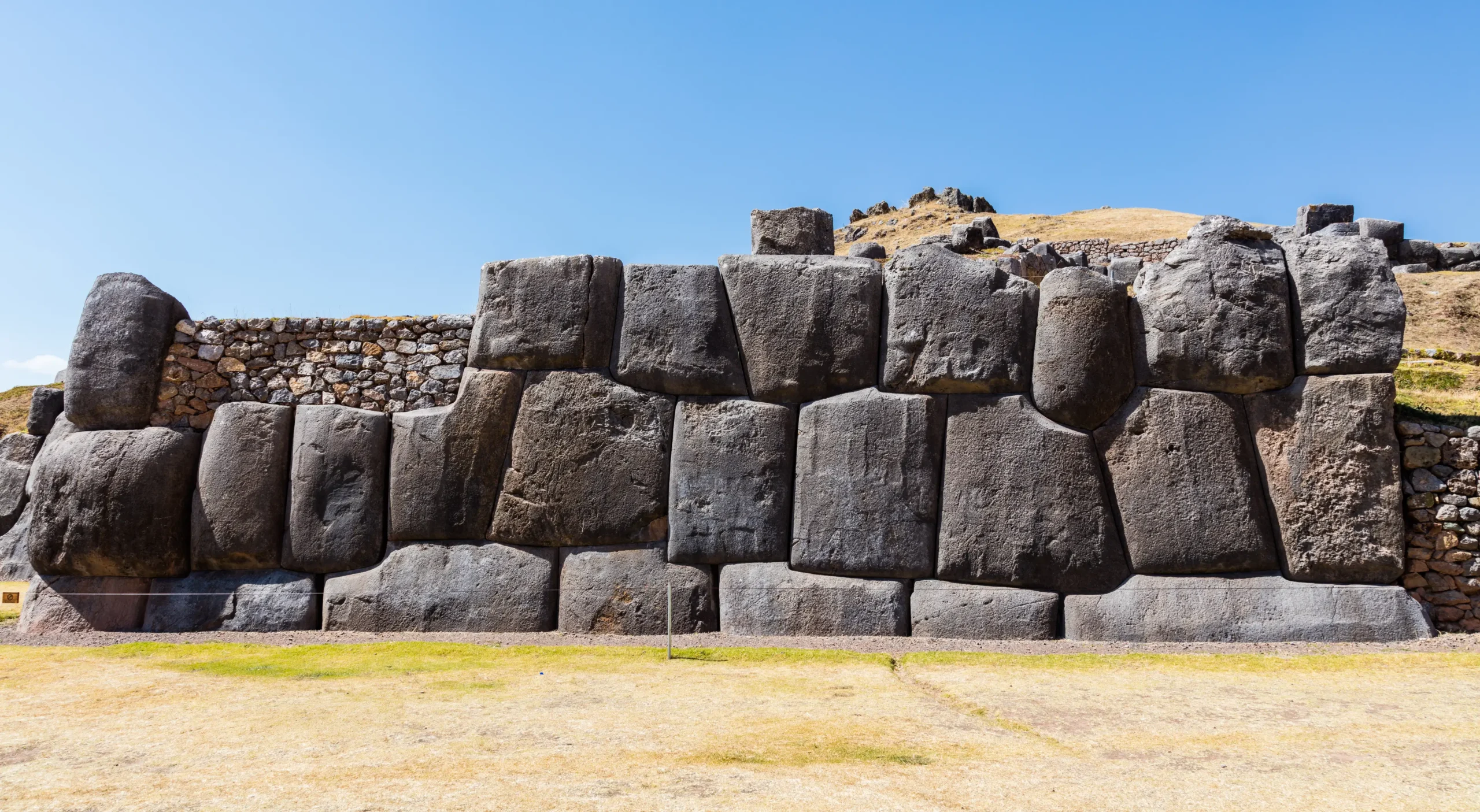
Sacsayhuamán’s Colossal Blocks
- Some stones weigh 100–120 tons, transported from quarries miles away.
- Unlike Hatun Rumiyoc, the stones here are massive but fewer angles per block.
- Their precision lies in size and stability rather than angular complexity.
- The fortress walls zigzag in a lightning-bolt pattern, symbolizing energy and defense.
Ollantaytambo Stones
- In the Sacred Valley, Ollantaytambo preserves walls with six- and eight-angled stones.
- Here, precision joins functionality: terraces, temples, and fortresses used interlocking stones for agricultural stability as well as defense.
Why the Twelve Angled Stone Stands Out
- Accessibility: No ticket, no hike, no distance from central Cusco.
- Symbolism: Twelve angles carry cultural resonance.
- Craftsmanship: A blend of beauty and precision within an everyday wall.
- Storytelling: Its legends are alive in Cusco’s oral culture.
Expert Trek Guide Notes (Field Tips)
As a trek guide for Alpaca Expeditions, I often encourage visitors to treat the Twelve Angled Stone as their gateway to understanding the Inca world. Here are my field-tested insights:
1. Use It as Your First Lesson in Inca Masonry
Before visiting Sacsayhuamán or Machu Picchu, spend 20 minutes observing the wall on Hatun Rumiyoc. Notice:
- How each stone has a unique shape.
- The subtle trapezoidal taper of the wall.
- The lack of visible gaps.
When you later see larger constructions, you’ll appreciate them more deeply because you’ve trained your eye.
2. Time Your Visit with a Purpose
If you’re a photographer, early morning is best. If you want to mingle with locals, go late afternoon when vendors are most active. For a reflective moment, visit in the evening when the street is quiet.
3. Respect Over Ritual
Some visitors place their hands on the stone believing it transmits energy. While this is part of Cusco’s mystical folklore, touching is now discouraged. Instead, take a moment to stand quietly, breathe the highland air, and feel your own connection without contact.
4. Pair It with San Blas Exploration
Don’t just stop at the stone. Continue into San Blas. The steep climb rewards you with artisan workshops and views of Cusco rooftops. It transforms a quick stop into a cultural immersion.
5. Keep the Altitude in Mind
Even though Hatun Rumiyoc is flat, just walking uphill toward San Blas can leave newcomers breathless. Take breaks, sip water, and use this walk as gentle training before trekking.
6. Watch for Festivals
During Cusco’s festivals (Corpus Christi in June, Inti Raymi in June, Christmas parades in December), Hatun Rumiyoc often becomes decorated with banners or filled with processions. Seeing the stone framed in living culture is far more powerful than seeing it in isolation.
Cultural Significance Beyond the Stone
While it is tempting to think of the Twelve Angled Stone as a single marvel, it represents a larger worldview: the Andean relationship between humans, nature, and the cosmos.
- Integration with Earth: Inca walls were not imposed on the landscape but fitted into it. Stones often mirrored natural forms.
- Spiritual Symbolism: Twelve may represent lunar months or the structure of Andean society.
- Endurance: The fact that the stone still stands — weathered but intact — mirrors Cusco’s survival through conquest and colonization.
For many locals, the stone is not just a tourist site but a quiet emblem of resilience.
Comparison Table
| Stone | Location | Features | Why Visit |
| Twelve Angled Stone | Hatun Rumiyoc Street, Cusco | 12 perfect angles, green diorite | Free, accessible, iconic |
| Fourteen Angled Stone | Near San Blas, Cusco | 14 corners, less publicized | Bigger, but quieter visit |
| Sacsayhuamán Stones | Hilltop above Cusco | Massive blocks, up to 120 tons | Scale, power, panoramic views |
| Ollantaytambo Stones | Sacred Valley | Terraces, six-angled stones | Integration with agriculture, living town |
Conclusion:
Standing before the Twelve Angled Stone is not just an encounter with a piece of ancient masonry — it’s a moment of awe before the mind of an empire. The stone is more than a marvel of precision; it’s a quiet reminder that the Inca civilization reached extraordinary levels of architectural and engineering mastery long before the tools we take for granted today.
In Cusco’s narrow Hatunrumiyoc Street, surrounded by centuries of change, this single block of diorite still fits seamlessly into the wall — every edge exact, every joint aligned, untouched by mortar or modern reinforcement. It tells us that perfection for the Incas was not only possible but essential. Their architecture was an act of respect toward the land, the gods, and the balance of nature.
Visitors who stop here often find themselves tracing the edges with their hands, feeling history carved into stone. The air carries the faint echo of chisels, prayers, and footsteps — a city that continues to breathe through its walls. Whether you’re an architect, historian, or curious traveler, the Twelve Angled Stone embodies something universal: human ingenuity guided by harmony rather than conquest.
For those traveling with Alpaca Expeditions, this site isn’t just another stop on a Cusco walking tour. It’s the opening chapter of a deeper story — one that continues along the Sacred Valley and culminates at Machu Picchu. Standing before this masterpiece reminds every traveler why the Incas are still teaching the world how to build, how to adapt, and how to endure.
Travel thoughtfully. Step lightly. Let every stone tell its story.