


Threads of Time: A Journey Through Peru’s Traditional Clothing
Peru’s allure is not only in its Machu Picchu ruins, condor‑soaring canyons, and Amazonian rainforests; it’s also woven into the textiles that spill across markets, festivals, and shoulders in every village. To travellers from the USA and UK, the sight of women in layered polleras and men wearing brightly patterned chullo hats conjures visions of ancient Peru’s Traditional Clothing and vibrant mountain life.
But to truly appreciate these garments, one must look beyond aesthetics. Each thread in a Peruvian textile carries stories of migration, conquest, spiritual belief, and climate adaptation. This guide unravels those stories, guiding you through the origins, meanings, and modern relevance of traditional Peruvian clothing, while offering practical advice for experiencing them first‑hand.
Historical Roots of Peruvian Clothing
The development of Peruvian clothing spans millennia, tracing back to pre‑Inca cultures such as the Paracas and Nazca, who wove cotton and camelid fibres into complex designs. The Incas elevated textile production to a sacred art, equating fine fabrics with wealth and power.
According to Andean scholars, the Aclla Cuna, or “Chosen Women,” were sequestered in temples to spin, dye, and weave cloth for the emperor. Textiles were so valued that they sometimes served as tribute instead of gold or silver, and certain patterns denoted imperial status.
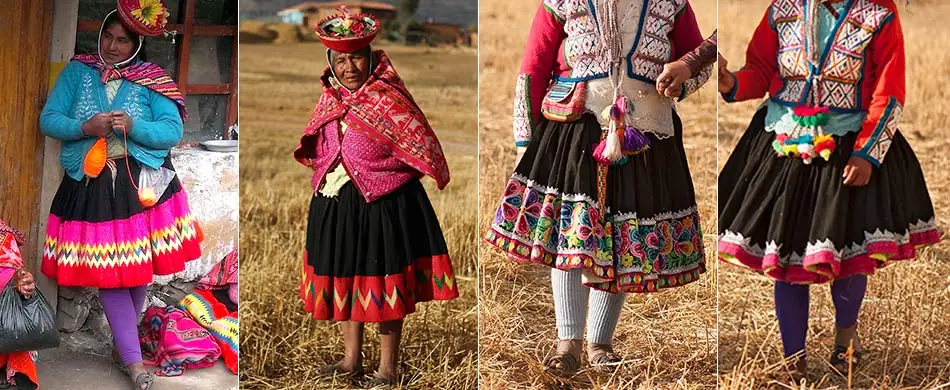
Historical Roots of Peruvian Clothing
From Inca Weavers to Colonial Influence
The Inca state organised textile production at both the household and state levels. Women across the empire wove everyday garments on backstrap looms, while state‑controlled workshops produced ceremonial cloth. When the Spanish arrived, they were captivated by the quality of Andean textiles, yet imposed dress codes that reflected European tastes.
Indigenous women were instructed to wear Spanish‑style skirts called polleras. Over time, Andean women adapted these garments using alpaca or sheep’s wool, vibrant natural dyes, and ruffled layers, transforming the pollera into a symbol of indigenous identity.
Colonial authorities also encouraged men to replace their tunics with European trousers and jackets; however, many highland communities retained the poncho and chullo. The blending of Andean and European elements resulted in distinct regional styles, with Spanish lace integrated into shawls and baroque motifs appearing alongside Inca symbols. This dynamic interplay between imposition and resistance continues to shape Peruvian fashion today.
Materials and Natural Dyes
Peruvian textiles owe their resilience and beauty to a range of fibres. Alpaca and llama wool are prized for their softness, warmth, and water resistance, ideal for cold highland climates. Vicuña fibre, finer and rarer, was reserved for nobility. Coastal and Amazonian communities used cotton due to the warmer climate.
Natural dyes created an astonishing palette: red from cochineal insects, orange from citrus rinds and tree bark, green from plants like ch’illca, purple from cochineal mixed with minerals, and blue from fermented indigo leaves. These dyes required knowledge of fermentation and fixatives.
For example, early Peruvian dyers produced indigo as far back as 6,000 years ago at Huaca Prieta, pre‑dating other civilisations. Red cochineal dye was especially valued; it produced the brightest natural red available and became a major export during colonial times.
Weaving Techniques and Social Structure
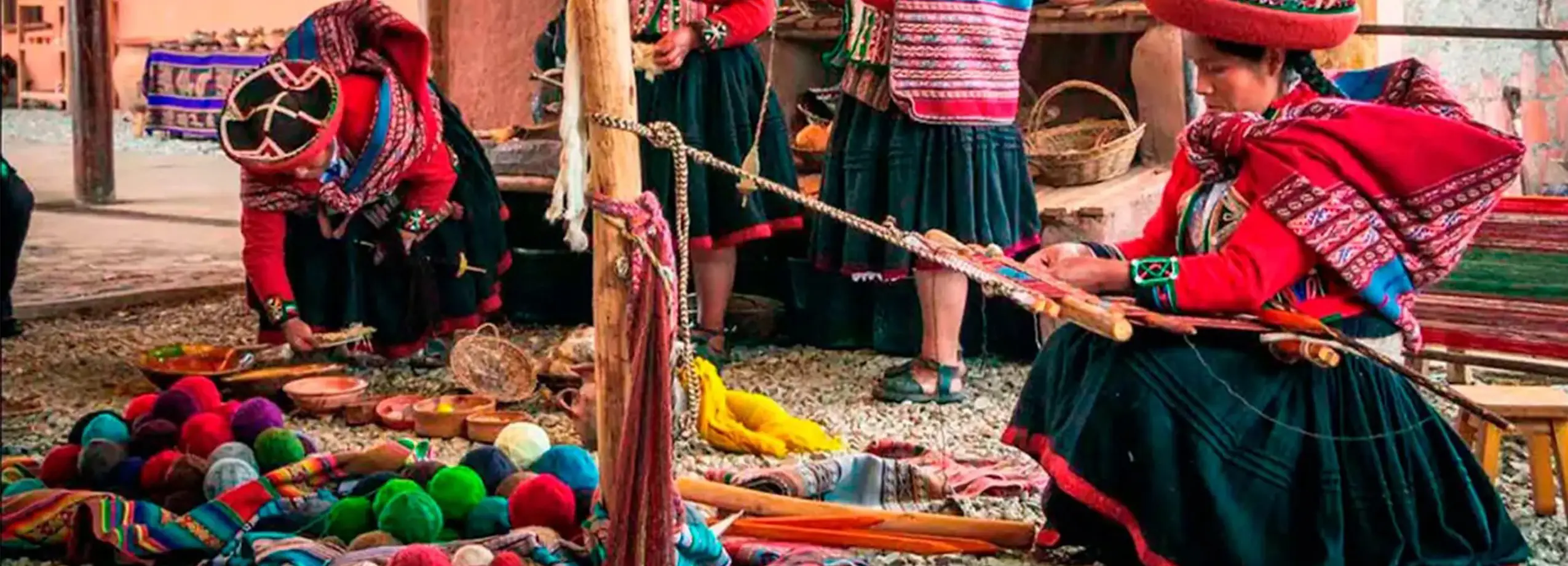
Andean weavers work on backstrap looms anchored around the waist, allowing portability and tension control. On the vertical loom, larger pieces like ponchos are woven. The interplay of warp (longitudinal) and weft (crosswise) threads gives rise to patterns known as pallay.
These motifs record ancestral stories, animals, and historical events. For example, a diamond pattern may represent the Chakana, while zigzags symbolise rivers. Weaving circles are social gatherings where women share news, songs, and stories while working. Children learn by observing their elders, and mastery of certain patterns is a rite of passage.
Women’s Traditional Clothing
The Lliclla and Awayu
The lliclla is a rectangular shawl worn by Andean women to cover their shoulders and upper body. It often doubles as a baby carrier or a basket for produce. According to ethnographic accounts, a lliclla is typically fastened at the front with a tupu pin, leaving the woman’s hands free.
Designs vary by community; some llicllas feature bright stripes, while others showcase pallay motifs. It is smaller than the awayu (also called k’eperina), a larger cloth used primarily as a carrying sling for children or goods.
Awayus are coarser in weave and often less decorative, though the edges may bear symbolic patterns. Women may fold the awayu diagonally to create a cradle for infants, a practice that emphasises the cloth’s functional versatility.
Polleras and Jobonas
One cannot speak of Peruvian women’s attire without mentioning the pollera, a voluminous skirt comprised of multiple-layered underskirts and an outer skirt trimmed with puyto bands. Each band displays geometric designs that identify the wearer’s community. In rural areas, women wear one or two polleras daily, while for festivals they may don up to ten, creating a bell shape that swishes as they dance.
The weight of the layers can exceed several kilograms, and wearing them is considered an expression of pride and endurance. The jobona is a short jacket worn over the blouse; it may feature intricate embroidery, sequins, and lace.
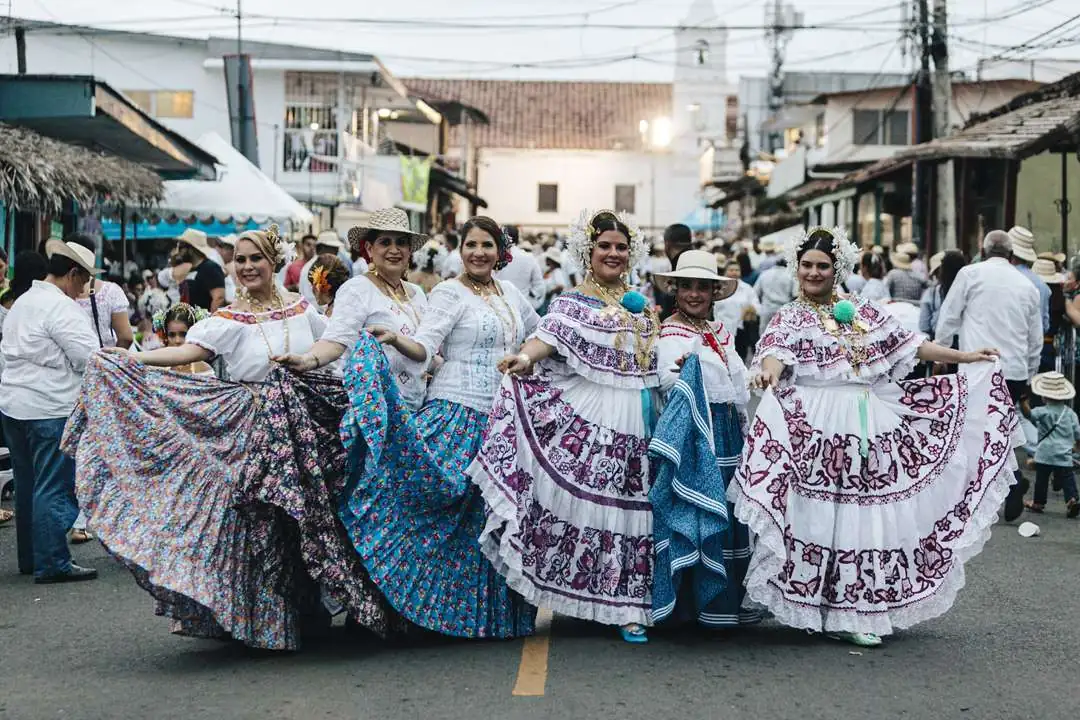
Polleras and Jobonas
The combination of pollera and jobona evolved from Spanish court dresses but now symbolises Andean resilience. In recent years, polleras have become political symbols: women in Puno and Cusco have worn them during protests and cultural events to assert indigenous rights.
Chumpi Belts and Accessories
The chumpi is a woven belt that secures the pollera at the waist and supports the lumbar muscles when carrying heavy loads. According to folklore, chumpis are more than utilitarian; they are energy belts believed to protect the wearer’s vitality. Designs often feature zigzags (representing rivers) and chevrons (mountain peaks).
Some belts are made as part of marriage traditions; when a woman accepts a chumpi from a man, it can symbolise a proposal. Women also adorn themselves with beaded necklaces, earrings, and colourful ribbons woven into their braids. These accessories vary by community and personal taste.
Montera Hats and Footwear
Monteras are wide‑brimmed hats whose shapes and decorations signify a wearer’s origin. In the Cusco region, the montera might be a flat disk with red cloth trimmed with colourful fringe, while in Puno, women wear tall, bowl‑shaped hats with pom poms hanging down. A woven strap called the sanq’apa secures the hat beneath the chin; its length and decoration reveal marital status.
Footwear for women in rural areas often consists of ojotas, sandals made by repurposing recycled tires or leather. These sandals are durable and affordable, suitable for rough terrains and long walking distances. The sustainability of ojotas reflects Andean communities’ resourcefulness and respect for the land.
Men’s Traditional Clothing
Chullo Hats
The iconic chullo is a knitted or woven hat with earflaps and decorative tassels. Traditionally made from alpaca or sheep’s wool, chullos protect men and boys from Andean wind and cold. Patterns indicate the community or social status of the wearer.
In some villages, the colours denote marital status; single men may wear bright, multicoloured chullos, while married men wear more subdued hues. Scholars debate the origin of chullos: some argue they evolved from pre‑Inca earflap designs; others suggest they reflect Spanish berets fused with Andean weaving techniques.
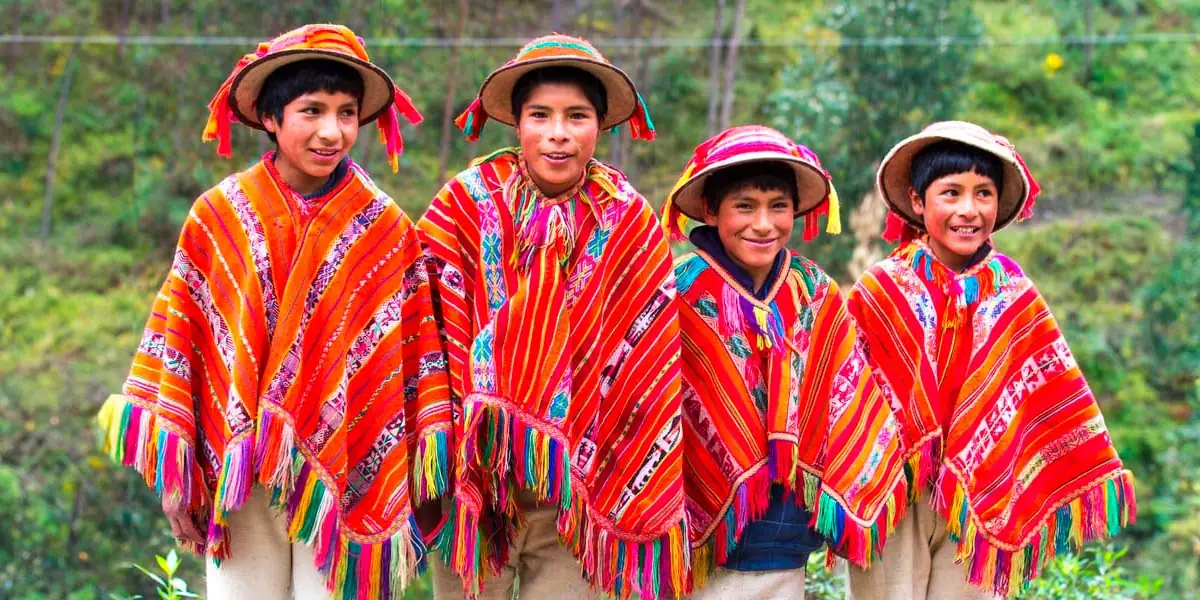
Chullo Hats
Ponchos and Jackets
Ponchos are rectangular or square cloaks with a central head opening. They offer warmth, mobility, and protection against rain. Andean men wear ponchos daily for work and during ceremonies. The thickness and pattern of a poncho can signal social status; for example, fine, densely woven ponchos with red bands may indicate a community leader.
Some ponchos are passed down as heirlooms. Men may also wear jackets called chompas or jibonas, which, like women’s jobonas, are decorated with embroidery or stripes.
Sweaters, Shirts, and Cushma Tunics
In the highlands, men often layer their clothing for warmth. Alpaca sweaters are common due to alpaca wool’s thermal properties. Younger men may wear synthetic hoodies or t‑shirts beneath their ponchos, reflecting global fashion influences.
In Amazonian regions, men traditionally wear cushma tunics-loose, knee‑length cotton garments that allow airflow. These tunics may be plain white or adorned with geometric motifs painted with plant dyes. The cushma’s simplicity contrasts with the elaborate woven attire of the highlands, illustrating how climate shapes clothing.
Belts, Footwear, and Accessories
Men wear chumpi belts similar to those of women to secure trousers or ponchos. In many communities, men also carry woven bags known as chuspas for coca leaves, money, and small tools. Footwear ranges from ojotas to leather shoes, depending on region and socio-economic status.
In cities, men might pair traditional hats with modern trousers and dress shoes, blending heritage with contemporary life. Accessories such as silver pins, carved walking sticks, and waist bags reflect regional taste.
Regional Variations Across Peru
Peru’s diverse geography-from Andean peaks to coastal deserts and Amazonian jungle-has led to a rich diversity in clothing. While there are unifying themes such as bright colours and handwoven fabrics, the specifics of garments vary widely.
Highland Regions (Cusco, Puno, Ayacucho)
In Cusco, traditional clothing features bright red and black stripes, with women wearing wide polleras and small montera hats trimmed with red pom poms. Men often sport red‑striped ponchos and multicoloured chullos. Festivities like Inti Raymi, the Inca sun festival held annually in June, showcase elaborate costumes with gold and feather adornments.
In Puno, near Lake Titicaca, women’s clothing includes heavy polleras and the chuku hat (a bowler‑like hat introduced by Europeans). The Virgen de la Candelaria festival in February features intricate costumes with sequins and masks. Ayacucho clothing is known for its subtle earth tones, reflecting the region’s conservative Catholic influence; however, its weavers are renowned for fine tapestry techniques.
Coastal and Amazonian Styles
On the coast, pre‑Columbian cultures like the Moche created cotton tunics painted with natural dyes. Modern coastal communities wear lighter fabrics to adapt to the heat. In the Amazon, tribes such as the Asháninka and Shipibo wear the cushma, decorated with kené patterns-labyrinthine motifs said to reflect the vision of ayahuasca journeys. In some communities, body painting with vegetable dyes accompanies clothing as a form of cultural expression.
Urban vs Rural Adaptation
Urban Peruvians, particularly in Lima, Arequipa, and Cusco, often wear Western clothing but maintain elements of traditional attire during festivals or in the workplace. In contrast, rural residents-especially elders-wear traditional clothing daily.
The prevalence of polleras and ponchos in rural markets underscores a sense of identity and continuity. Younger generations may alternate between jeans and polleras depending on context, reflecting fluid identities.
Symbols and Motifs in Peruvian Textiles
Mythological Symbols
Andean cosmology is encoded in textile motifs. The Chakana (Andean cross) features three levels representing the underworld (Ukhupacha), present world (Kaypacha), and upper world (Hananpacha). Its stepped form also symbolises the three moral principles of the Inca: do not steal, do not lie, do not be lazy. Inti, the sun god, is depicted as concentric circles or rays radiating outward; it represents life and agricultural cycles.
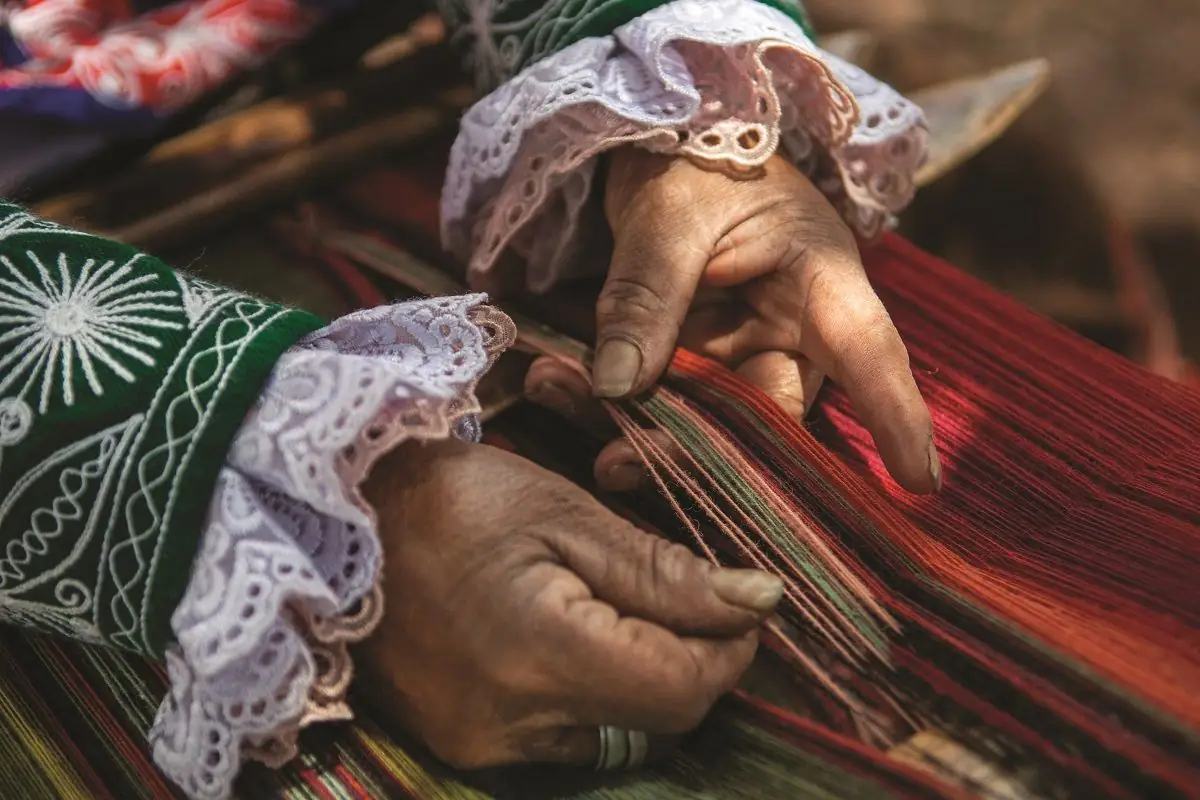
Peruvian Textiles
Amaru, the sacred serpent, is woven as a winding line or dragon‑like figure, signifying wisdom and the connection between water and earth. Puma motifs denote physical strength and the terrestrial world, while the Condor represents spiritual ascent, carrying messages between humans and gods.
Pallay Patterns and Storytelling
Beyond mythological icons, weavers encode everyday life. Pallay patterns may depict alpacas, corn, lakes, or mountains. Some patterns commemorate historical events: a series of zigzags and triangles might symbolise an earthquake or an uprising, such as the revolt led by Túpac Amaru II.
Others depict fertility rites, harvest scenes, or marriage ceremonies. Because weaving is primarily a female occupation, pallay offers a means for women to record and interpret history from their perspective.
Colour Psychology
Colour is not chosen at random. Red-derived from cochineal insects-is considered a sign of vitality and is the brightest natural dye. Blue, produced from indigo fermentation, symbolises water, life, and the flow of rivers. Yellow from flowers and leaves conveys sunlight and prosperity, while green from plants like ch’illca represents fertility and the natural world.
Purple emerges from cochineal mixed with alkaline minerals and evokes nobility and ceremony. These associations inform how weavers compose their textiles for specific purposes, such as weddings or funerals.
Weaving, Social Life, and Spirituality
Community Weaving Circles
Weaving is both labour and leisure. In many Andean villages, women form weaving circles: groups who gather in open courtyards or community halls to spin yarn, dye fibres, and weave cloth. These circles foster solidarity, provide a platform for storytelling, and enable collective childcare while women work. The sale of textiles supports households, and cooperative models empower women financially. Visitors are often welcome to observe and sometimes participate.
Spiritual Significance
Weaving begins with a ceremony. Before dyeing, some communities make offerings to Pachamama, the earth goddess, by burying coca leaves and pouring chicha (maize beer). The act of spinning threads is likened to spinning stories and lives together.
Chumpi belts are believed to channel and protect energy; some shamans instruct people to wear certain colours to balance their chakras. During festivals, textiles are blessed in churches or by local healers to ensure they bring health and prosperity.
Roles of Gender and Age
Girls typically begin learning to weave at age eight or nine, starting with simple patterns like stripes. As they master more complex pallay, they gain social status and eligibility for marriage. Elder women regard themselves as knowledge bearers and may teach at weaving schools or cooperatives.
In some regions, people knit chullos or weave ponchos, though women largely consider weaving their work. The intergenerational transmission of skills ensures continuity of tradition.
Evolution from Tradition to Modernity
Colonial Impact and Resistance
Spanish colonisation disrupted Andean social structures but also catalysed cultural blending. Colonial laws attempted to impose European fashions, yet indigenous communities resisted by integrating their own colours and motifs. The introduction of sheep replaced some camelid fibre, but Andean herders continued to raise alpacas.
Today, the pollera-once a colonial imposition-serves as a symbol of indigenous pride; women wear it as a badge of identity during festivals, political marches, and events like Women’s Day races.
Globalisation and Tourism
The late 20th century saw a surge in tourism. Markets like Pisac and Otavalo (in Ecuador) became destinations for travellers seeking textiles, leading to both positive and negative impacts. On one hand, weaving cooperatives flourished, providing income to rural families.
On the other hand, mass‑produced, machine‑woven fabrics flooded markets, threatening traditional craftsmanship. Some artisans adapted by blending synthetic threads with wool to meet tourists’ preferences for lighter fabrics. Modern designers now incorporate Andean patterns into urban fashion lines, bridging the gap between heritage and global trends.
Fashion, Identity and Politics
Traditional clothing intersects with identity politics. During the 2020s, indigenous activists in Peru wore polleras and ponchos in protests against mining and governmental policies, asserting their cultural rights. Fashion designers of Quechua descent have used runways to challenge stereotypes and celebrate diversity.
Social media campaigns encourage young Peruvians to embrace their roots by wearing traditional accessories. Meanwhile, some older community members worry that modernisation dilutes the meanings embedded in patterns, sparking debates about authenticity. As travellers, understanding these tensions helps us engage respectfully.
Practical Advice for Travellers
Choosing and Buying Ethical Textiles
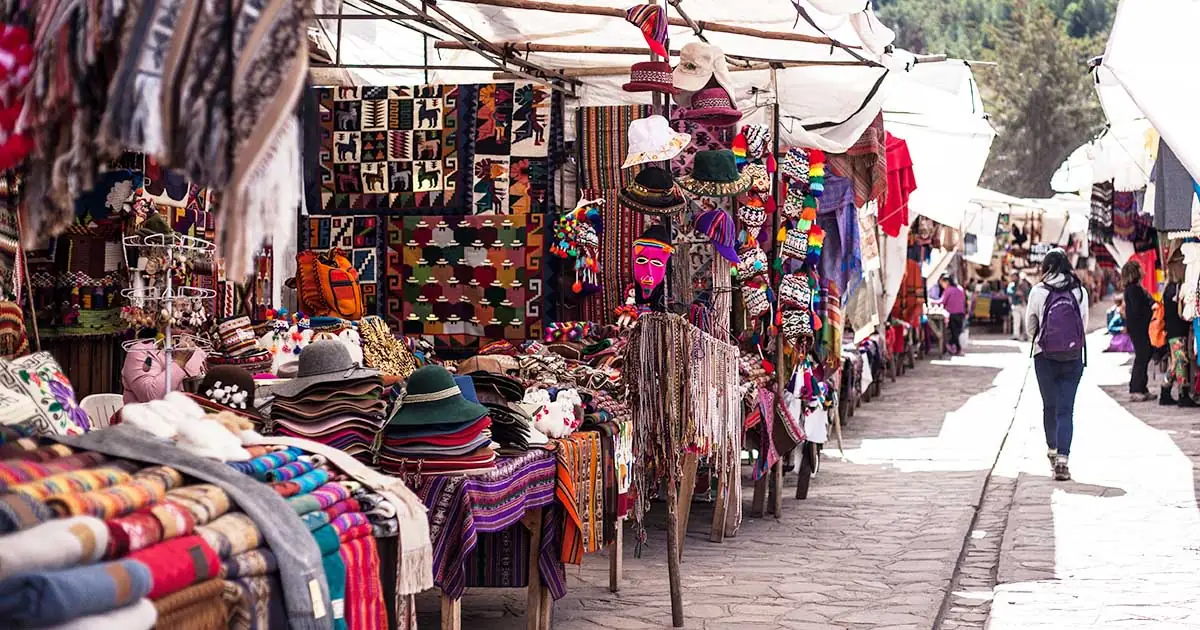
Buying a Peruvian textile is more than a souvenir; it’s a vote for heritage. To ensure your purchase supports artisans and not middlemen, visit cooperatives or certified fair‑trade shops. Look for slight irregularities that indicate handweaving: variations in thread thickness, small imperfections in patterns, and the smell of natural fibres (they feel softer than acrylic).
Choosing and Buying Ethical Textiles
Ask about the origins of the dye: natural dyes require longer preparation and command higher prices. Bargain respectfully-understand that artisans invest days or weeks in each piece. Avoid aggressive haggling that devalues their labour. Seek out pieces signed by the weaver or labelled with the cooperative’s name.
Packing List for Different Regions
Packing for Peru requires balancing warmth and flexibility. Here is a tailored packing checklist:
| Region | Essential Clothing | Accessories | Weather Considerations | Alt‑style caption |
| Highlands (Cusco, Puno) | Thermal base layers, fleece jacket, waterproof shell, breathable shirts, durable trousers, optional pollera or poncho | Wide‑brimmed hat, chullo, gloves, scarf, sun protection, hiking boots | Temperatures vary from cold mornings to warm afternoons; possibility of rain and intense sun | Pack layers to adjust to altitude and weather swings; include a poncho for festival wear. |
| Coast (Lima, Paracas) | Lightweight shirts, breathable pants or skirts, swimsuit, light sweater for evenings | Sunglasses, sun hat, sandals | Mild coastal climate with fog in winter, hot summers; humidity can be high | Light fabrics are key; carry a sweater for cooler evenings. |
| Amazon (Iquitos, Manu) | Quick‑dry shirts, long sleeves for insect protection, light trousers, rain jacket | Mosquito net or repellent, hat, water shoes | Hot, humid with frequent rain; need protection from insects and sun | Stay cool yet covered; pack waterproof gear and repellent. |
Etiquette and Cultural Sensitivity
When visiting villages and markets, ask permission before taking photos of people in traditional clothing. Many communities view being photographed as a privilege and may expect you to make a small contribution or give a gift. When trying on garments, be mindful of their sacred nature; never step on textiles or place them on the ground.
Learning a few phrases in Quechua or Aymara-such as “rimaykullayki” (hello) or “sulpayki” (thank you), can foster goodwill. If invited to a weaving demonstration, bring a small gift (pens, notebooks for children) or purchase a piece of craft. Respect the time of artisans by scheduling visits in advance through cooperatives rather than arriving unannounced.
Itineraries and Experiences
Weaving Workshops and Village Visits
Several communities welcome travellers who wish to learn about weaving. Chinchero, near Cusco, is known for its weaving cooperatives and colourful market. You can spend a day learning how to spin alpaca fiber, dye with cochineal, and weave a small bracelet. Patacancha, a high‑altitude village in the Sacred Valley, offers homestay programs where visitors share meals and participate in weaving circles.
On Lake Titicaca, Taquile Island residents maintain a unique tradition where men knit chullos and women weave belts; they host visitors who can watch the process from shearing to finished product. These visits often include a demonstration of how patterns convey messages and a chance to purchase garments directly.
Festivals Celebrating Clothing
Plan your trip around Inti Raymi (24 June) in Cusco to witness elaborately costumed processions reenacting Inca rituals. Virgen de la Candelaria in Puno (first two weeks of February) features massive dance parades with 100 groups wearing sequined costumes and layered skirts.
Qoyllur Rit’i, held in May or June near Ausangate mountain, blends Catholic and indigenous traditions; pilgrims wear decorated masks and belts while performing endurance dances at high altitude. Each festival has unique attire and offers insight into the role of clothing in communal identity.
Combining Fashion with Trekking
If you dream of trekking the Inca Trail or Salkantay trek but also want to engage with textile culture, build extra days into your itinerary. Start with a day in Chinchero or the Center for Traditional Textiles of Cusco to familiarise yourself with patterns and dyes. Then embark on your trek, where porters often wear traditional clothing.
On rest days, you might knit a simple bracelet using leftover yarn. Many trekking companies collaborate with weaving cooperatives; ask if your trek includes an artisan visit. Always allow at least two days in Cusco to acclimatise before trekking.
Health, Acclimatisation and Safety
Dealing with Altitude and Climate
Altitude sickness (soroche) can affect anyone above 2,500 metres. To acclimatise, spend two to three days at a moderate altitude (e.g., Cusco at 3,400 metres) before strenuous activity. Drink plenty of water, avoid alcohol on arrival, and try coca tea (consult your doctor if you have health conditions).
Consider prescription medicines like acetazolamide after consulting a physician. Wear layered clothing; mornings and nights can be cold even in summer. Carry sunscreen and sunglasses-the high UV index can cause sunburn and eye strain. If symptoms like severe headache, nausea, or shortness of breath occur, descend to a lower altitude and seek medical help.
Porter Welfare and Ethical Trekking
Porters are integral to trekking adventures; their welfare is essential. Before booking, research the company’s porter policies: weight limits (typically 20–25 kg), wages, insurance, and gear. Ask whether porters receive hot meals and proper shelter. Some trekking companies provide uniforms and shoes, while others expect porters to bring their own.
Consider tipping porters directly at the end of the trek and carrying some of your own gear. There may be regulations for porter welfare; confirm the current policy in your destination. As a traveller, avoid overpacking to lighten porters’ loads. When encountering porters on the trail, greet them respectfully and step aside to let them pass.
Respecting Nature and Communities
Andean landscapes are fragile. Stick to marked trails to prevent erosion and avoid trampling fragile vegetation. Pack out all rubbish. When camping, use established campsites and minimize fires. Respect sacred sites by not climbing on ruins or touching ceremonial artifacts.
Support community initiatives by choosing homestays or local guides, and leave fair tips. When visiting weaving villages, ask before entering private homes and follow local customs (e.g., remove shoes if requested).
Sustainability and Responsible Fashion
Natural vs Synthetic Materials
Traditional Andean textiles rely on natural fibres and dyes, which are renewable and biodegradable. Alpaca wool is hypoallergenic and requires little water compared to cotton. It’s also more sustainable than synthetic fibres that shed microplastics. The following table summarises the differences between natural and synthetic materials:
| Aspect | Natural Materials (Alpaca, Wool, Cotton) | Synthetic Materials (Acrylic, Polyester) | Alt‑style caption |
| Environmental impact | Renewable, biodegradable, animals graze lightly; cochineal and plant dyes are non‑toxic | Derived from petroleum; production produces greenhouse gas; microfibers pollute oceans | Natural materials align with sustainable practices; synthetic options offer cost but at ecological cost. |
| Durability | Long‑lasting when cared for; repels water; maintains warmth | Durable and light; less warm; may pill | Alpaca wool can last decades; synthetics may degrade faster under heavy use. |
| Comfort | Breathable, thermoregulating | Lightweight but may trap odour; less breathable | Natural fibres adapt to temperature changes; synthetics may cause discomfort in heat. |
| Cost | Higher upfront cost due to labour and rarity | Lower cost; mass‑produced | Investing in natural fibres supports artisans and yields better longevity. |
Community Cooperatives and Fair Trade
Supporting cooperatives ensures that profits remain within communities. Organisations like the Center for Traditional Textiles of Cusco empower weavers to set their own prices, educate consumers, and train younger generations. Fair‑trade initiatives often certify products to guarantee ethical practices; look for labels or ask about the organisation’s structure. When bargaining, remember that the price includes labour, heritage and livelihood.
How to Care for Your Textiles
To preserve your Peruvian garments, hand‑wash them gently with cold water and mild detergent; avoid bleach. For wool items, use a wool‑safe shampoo and lay flat to dry. Store them in breathable cotton bags with natural moth repellents like cedar chips or lavender. Keep them away from direct sunlight to prevent fading. If a garment tears, consult a professional weaver or learn basic weaving techniques to mend it-a small repair can maintain the integrity of the piece.
Beyond Clothing – Music, Dance and Cuisine
Andean Music and Dance
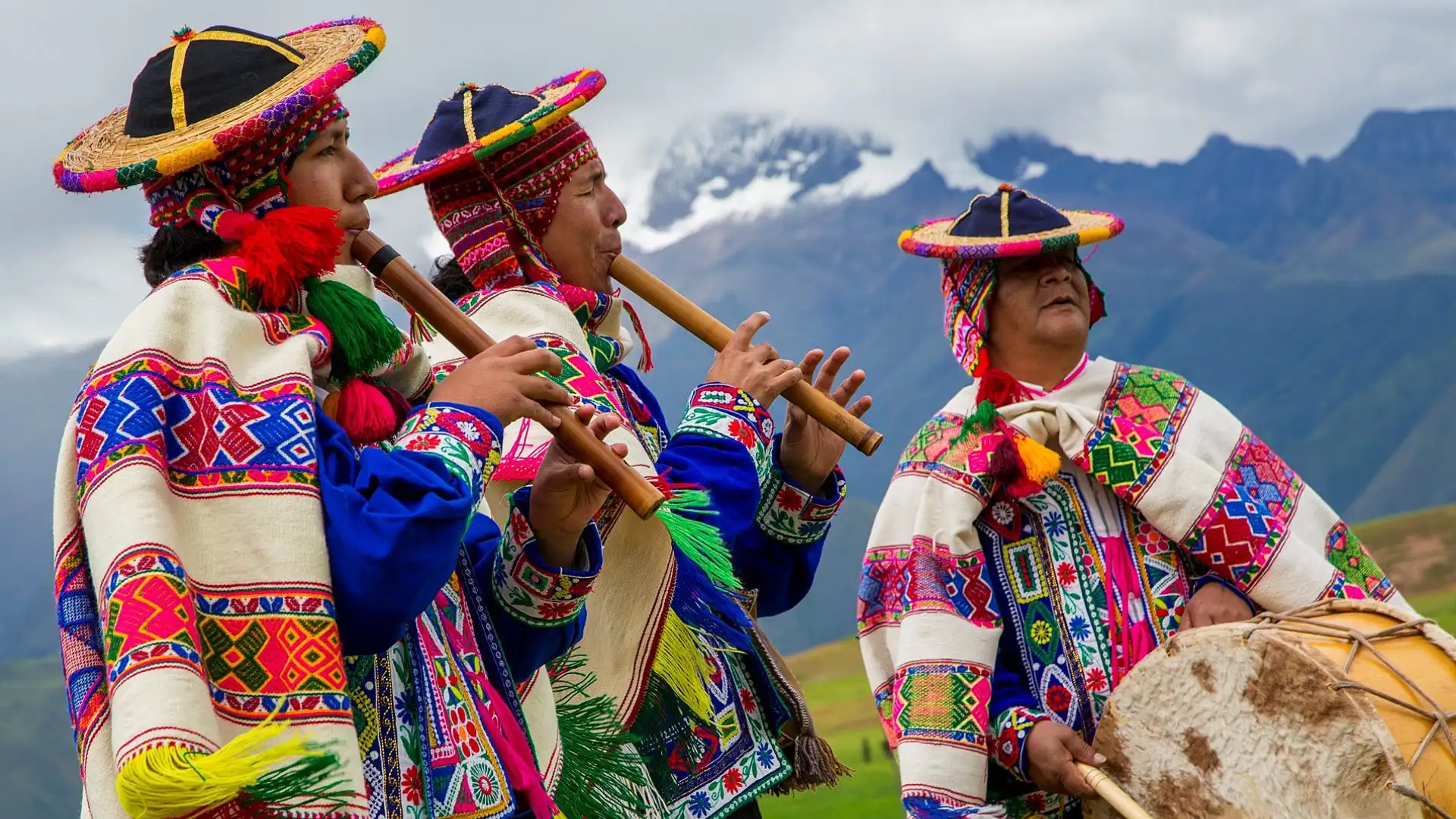
Clothing cannot be separated from the soundscape of the Andes. Traditional music features instruments like the panpipes (sikus), quena (notched flute), charango (small lute), and bombo (drum). Songs often accompany weaving; rhythmic beats guide hand movements.
Andean Music and Dance
Dances like Huayno in Cusco or Scissor Dance in Ayacucho require costumes that accentuate movement-flared skirts, embroidered pants, and jingling ankle bells. At festivals, clothing, music, and dance create a multisensory narrative of identity.
Culinary Traditions and Festivals
No exploration of culture is complete without food. Ceviche, marinated raw fish, pairs with light coastal attire; pachamanca, a highland dish cooked in an earthen oven, is often prepared during community gatherings where people wear their finest polleras and ponchos.
In the Amazon, juane (rice and chicken wrapped in bijao leaves) is eaten while wearing cushma tunics. Many festivals feature food stalls where travellers can sample delicacies and watch dancers in costume. Understanding the synergy between clothing and culinary rituals enriches your appreciation of Andean life.
Personalising Your Andean Wardrobe
Customising with Modern Fashion
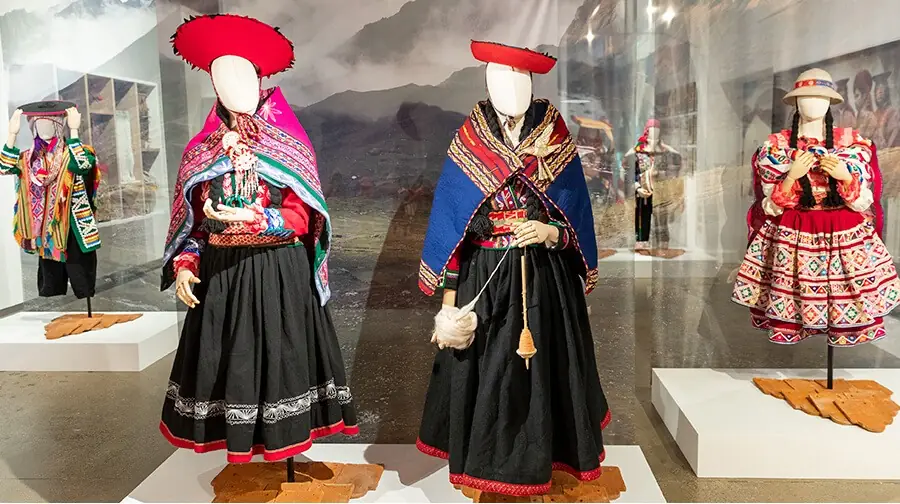
Blending Andean textiles with your wardrobe can be as simple as draping a hand‑woven belt over a dress or using a poncho as an autumn coat. Here’s a planner to experiment with:
| Outfit Component | Traditional Piece | Modern Pairing | Style Tip |
| Top | Lliclla (worn as a scarf) | White button‑down shirt | Let the lliclla be the focal point; keep the rest minimal. |
| Outerwear | Alpaca poncho | Skinny jeans, boots | Belt the poncho at the waist for a chic silhouette. |
| Bottom | Pollera-inspired wrap skirt | Neutral t‑shirt | Choose a single bold pattern to avoid visual clutter. |
| Accessory | Chumpi belt | Flowing maxi dress | Use the belt as a headband or bag strap for a boho look. |
Customising with Modern Fashion
Mixing traditional pieces with contemporary garments not only honours Peruvian culture but also adds uniqueness to your style. When wearing a pollera or poncho abroad, be ready to share its story.
DIY Projects and Workshops
For those inclined toward craft, many workshops teach basic weaving or knitting. In the Sacred Valley, classes might include spinning wool, setting up a backstrap loom, and weaving a small chuspa (bag). At home, you can repurpose leftover yarn into bracelets or belts.
Basic instructions: set up two bars or dowels to anchor the warp threads, weave over and under to create stripes, then knot off the ends and attach tassels. This hands‑on experience fosters appreciation for the time invested in larger textiles and offers a creative souvenir.
Glossary of Terms
- Aclla Cuna – Chosen Women who wove textiles for Inca rulers.
- Awayu (K’eperina) – Large carrying cloth for children or goods.
- Ceviche – Peruvian dish of marinated fish.
- Chakana – Andean cross symbolising the three realms.
- ChompA/Jobona – Short jacket worn over a blouse.
- Chollo – Tunic or jacket (variant of cushma) depending on region.
- Chullo – Knit earflap hat with tassels.
- Chumpi – Woven belt believed to channel energy.
- Cochineal – A Scale insect used to make red dye.
- Cushma – Knee‑length tunic worn by Amazonian men.
- Inti – Sun god motif symbolising life and power.
- Jobona – Embroidered jacket for women.
- Lliclla – Rectangular shawl fastened with a pin.
- Montera – A Hat whose shape and decoration identify a region.
- Ojotas – Sandals made of tire or leather.
- Pallay – Pattern or motif woven into textiles.
- Pollera – Layered skirt with decorated bands.
- Poncho – Square or rectangular cloak with central opening.
- Puyto – Decorative band at the hem of a pollera indicating community.
- Sanq’apa – Strap that secures the montera.
- Tupu – Pin used to fasten a lliclla.
Frequently Asked Questions (FAQs)
Below are concise yet informative answers to common questions about traditional Peruvian clothing, travel, and culture. These responses draw from the article’s content and sources.
-
What is the traditional dress in Peru called?
Traditional Peruvian clothing varies by region. For women, the pollera (layered skirt) paired with a jobona jacket and lliclla shawl is common in the highlands. Men often wear ponchos and chullo hats.
-
Why do Peruvian women wear layered skirts?
Layering polleras provides warmth in the cold Andean climate and expresses beauty and status. The number of layers and the decorative puyto bands indicate the wearer’s community and can mark special occasions.
-
How do I pronounce “lliclla” and what does it mean?
“Lliclla” is pronounced yee‑kya. It refers to a rectangular shawl used by women to cover their shoulders and often to carry babies or goods.
-
What is the difference between a lliclla and an awayu?
A lliclla is smaller and worn as a shawl; it is often decorative. An awayu (k’eperina) is larger, more durable, and used primarily as a carrying cloth for infants or market goods.
-
What is a chullo hat, and who wears it?
A chullo is a knitted or woven hat with earflaps and tassels. Men and boys wear it in the Andes for warmth and to signify community or marital status.
-
What are polleras made of?
Polleras are traditionally made of alpaca or sheep’s wool. Today, some include synthetic fibres for cost and weight considerations. The skirts are often decorated with colourful puyto bands.
-
Are ponchos still worn in Peru?
Yes. In rural areas and during festivals, ponchos remain central to men’s attire. They provide warmth and signal social status through their patterns and colors.
-
What do the patterns on Peruvian textiles mean?
Patterns, known as pallay, may represent animals, agricultural cycles, historical events, or mythological symbols like the Chakana, Inti, and Amaru.
-
How are natural dyes made in Peru?
Dyes are extracted from plants, insects, and minerals. Cochineal insects produce red dye; indigo leaves fermented with minerals create blue; flowers and leaves yield yellows and greens. Artisans grind, boil, or ferment these materials to produce vibrant colours.
-
Why is cochineal red so important in Andean culture?
Cochineal produces the brightest natural red dye and symbolises life and energy. Colonial times saw it become a valuable export, and people continue to use it in ceremonial textiles.
-
What is the chakana symbol, and where can I see it?
The chakana is the Andean cross representing the three realms of existence and moral principles. It appears in textiles, jewellery, and architecture across the Andes.
- What is the meaning of the Amaru or serpent motif?
The Amaru represents wisdom and transformation. In textiles, it appears as serpentine lines or dragon‑like figures, linking water and earth.
-
How many layers of skirts do women wear during festivals?
Women may wear as many as ten polleras during major celebrations to display wealth and community pride. Everyday wear typically involves one or two layers.
- Do men still wear traditional clothing in modern Peru?
Yes, especially in rural communities. Men wear ponchos, chullos, and traditional trousers. Urban men may wear modern clothing but incorporate traditional elements during festivals.
-
Where can I buy authentic Peruvian textiles?
Seek out weaving cooperatives in villages like Chinchero or fair‑trade shops in Cusco. Avoid mass‑produced markets where goods may be machine‑made. Always ask about the weaver and their community to ensure authenticity.
- How do I tell if a poncho is handmade?
Handmade ponchos have slight irregularities, a tight weave, and vibrant natural dye tones. Machine‑made fabrics often have uniform stitches and may smell of synthetic dyes. Ask the seller to identify the weaver and fibre source.
- What should I pack for a trip to the Peruvian highlands?
Pack layers: thermal base, fleece, waterproof jacket, hat, gloves, hiking boots, and sun protection. A poncho or shawl is useful for festivals. See the table in section 8.2 for details.
-
How do I avoid altitude sickness when visiting Cusco?
Acclimatise for two to three days, hydrate, avoid alcohol, and consider coca tea or medication as prescribed. Ascend gradually and listen to your body (see section 10.1).
- Are polleras a symbol of protest and pride?
Yes. Women wear polleras during political marches and festivals to assert indigenous identity and call attention to social issues.
- What is the difference between alpaca and vicuña wool?
Alpaca wool is soft, durable and accessible. Vicuña wool is finer and rarer, producing luxurious fabrics reserved for high‑end garments. Vicuña fibre is also more expensive due to conservation regulations.
- How do Andean communities make their belts (chumpi)?
Weavers weave chumpis on backstrap looms using colourful patterns. They may depict rivers, mountains, or energy lines, symbolising protection.
-
What should I know about porter welfare on treks?
Ensure the trek operator follows guidelines regarding weight limits, wages, insurance and gear. Ask about porter training and healthcare. Lighten your luggage to reduce the burden (see section 10.2).
- How can I support sustainable textile cooperatives?
Purchase directly from cooperatives, pay fair prices, share their stories on social media, and avoid bargaining that undermines artisans. Consider donating to organisations that promote sustainable weaving practices.
- Do Amazonian men wear different clothing?
Yes. In the Amazon, men traditionally wear cushma tunics-loose cotton garments decorated with kené patterns. These differ from the woven attire of the highlands (see section 3.3).
-
What is the spiritual significance of weaving to the Inca?
Weaving was sacred. The Aclla Cuna wove textiles for the emperor, and cloth served as offerings to deities and ancestors. People thought patterns and colours influenced cosmic harmony.
- How have Peruvian fashions evolved in modern times?
Indigenous styles now appear on global runways, and designers blend traditional patterns with modern cuts. Urban youth mix polleras with t‑shirts. However, there is tension between preservation and commercialisation (see section 7.3).
- What is the role of colour in Andean textiles?
Colours convey symbolism: red signifies vitality, blue relates to water, yellow to sunlight, green to fertility, and purple to ceremony.
- Are there recommended tours to learn about Peruvian textiles?
Many operators offer day trips to weaving villages or multi‑day journeys combining trekking and weaving (section 9). Look for tours that partner with cooperatives.
- What festivals celebrate Peruvian clothing and weaving?
Inti Raymi, Virgen de la Candelaria, and Qoyllur Rit’i emphasise elaborate costumes and dances. Local patron saint festivals also showcase regional attire.
- Can I customise my own Andean outfit?
Yes. You can combine traditional pieces like ponchos or belts with modern garments. Some workshops allow you to design and weave a small piece to take home (section 13).
Conclusion
Threads carry history, and clothing is a living archive. As you plan your journey to Peru, remember that each pollera, poncho, and belt you encounter embodies centuries of resilience, adaptation, and creativity.
By understanding the symbolism, materials, and context behind these garments, you not only enrich your travel experience but also honour the artisans whose hands spin these stories. Whether you find yourself learning to weave in a highland village, dancing in a festival parade, or simply admiring the intricate patterns at a market stall, let curiosity and respect guide you.
As a travel editor and trek guide with Alpaca Expeditions, I invite you to immerse yourself in Peru’s textile heritage on your next adventure. Our team collaborates closely with weaving cooperatives, ensures fair porter treatment, and designs itineraries that balance cultural immersion with outdoor exploration. Join us to walk among the threads of history and weave your own story in the Andes.
Alpaca Expeditions Recognitions
ISO (International Organization for Standardization)
In the pursuit to stand out from the rest, Alpaca Expeditions has obtained four ISOs plus our carbon footprint certificate to date. These achievements result from our efforts to implement the internationally-recognized integrated management system. They also represent our commitment to all of our clients and staff of operating sustainability and responsibility in every way possible.


World Travel Awards
Alpaca Expeditions is internationally recognized as a leading tourism company in Peru. As proof, we have been awarded the World Travel Award for Peru´s Best Tour Operator 2021 for the second time.

TRIPADVISOR RECOGNITIONS
Our goal at Alpaca Expeditions is to create the best experience for all of our clients. We create journeys that are to be remembered for a lifetime. Journeys you can be proud of and can share with everybody around you.






As Featured In









Scan Here!




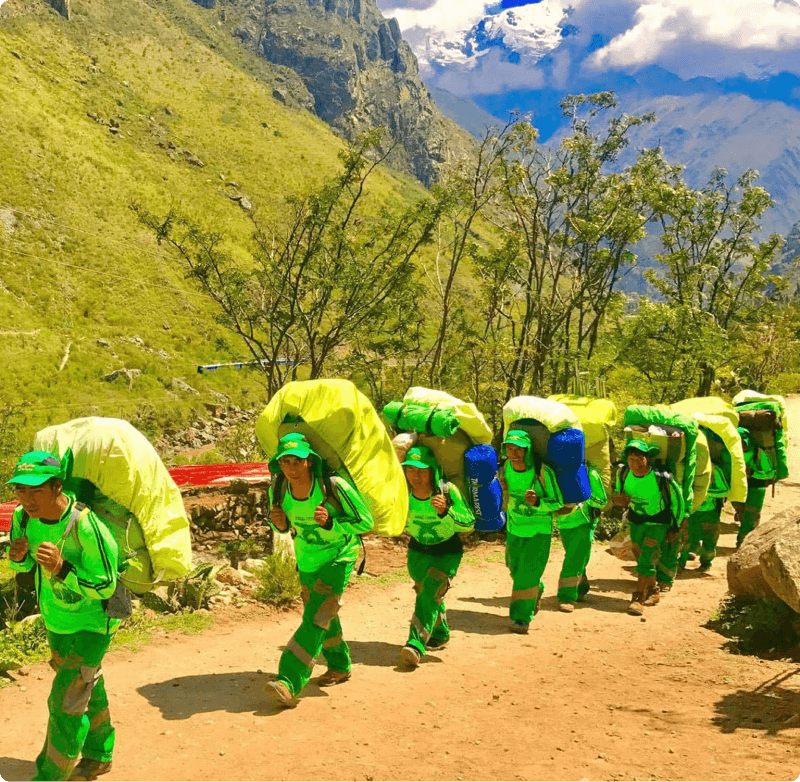 Porters will carry up to 7 kg of your personal items, which must include your sleeping bag and air mat (if you bring or rent one). From us, these two items weigh a combined total of 3.5 kg.