



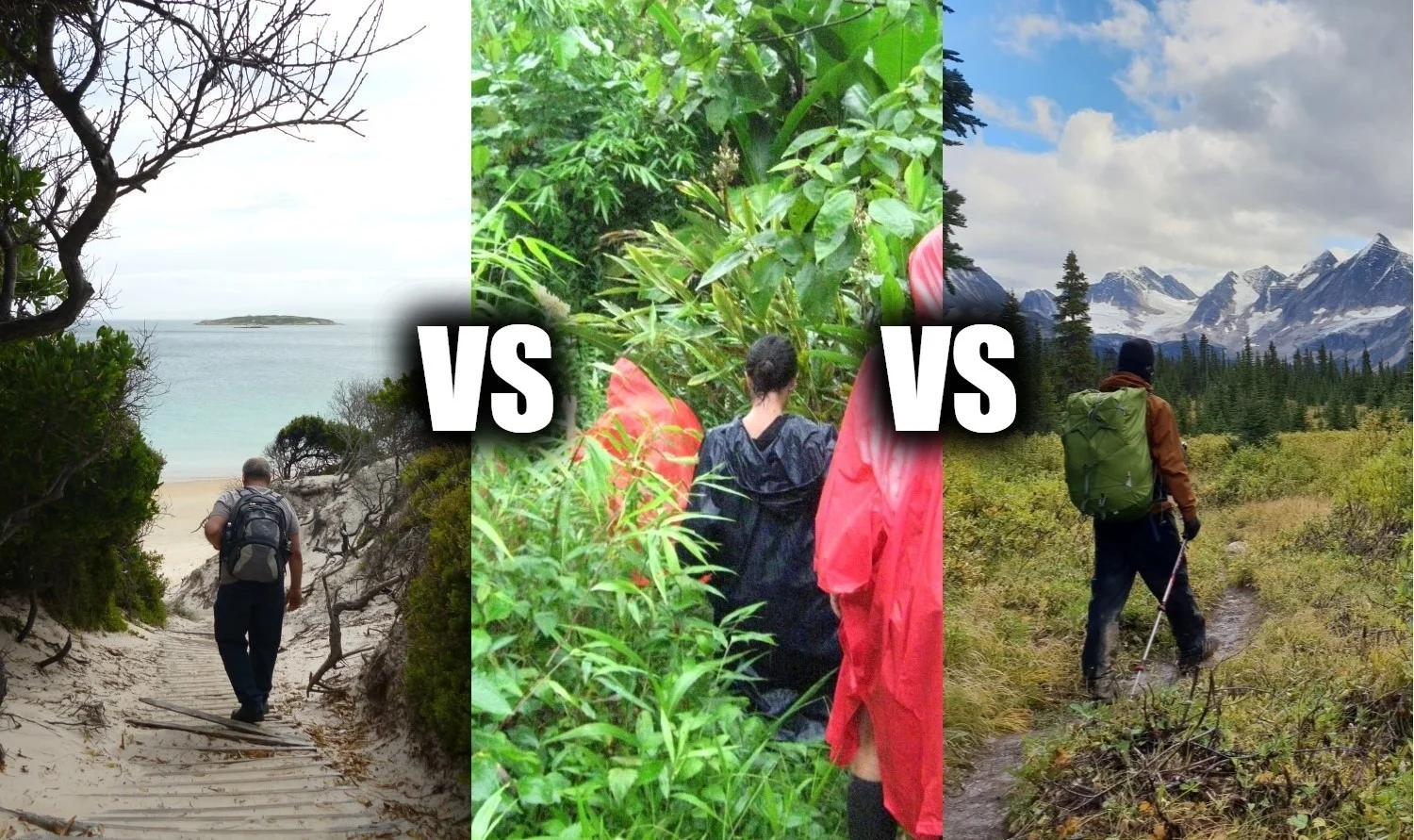
Travelers planning adventures in Peru and the wider Andes often use the words hiking and trekking interchangeably. Both involve exploring beautiful landscapes on foot, soaking in fresh mountain air, and engaging with local cultures. There are important distinctions between these activities.
Whether you’re contemplating a leisurely day walk to a lake or an epic multi‑day traverse through high Andean passes, understanding the nuances will help you choose an experience that matches your fitness, expectations, and timeframe.
This ultimate guide demystifies the terminology, explains the key differences in terrain, duration, planning, and equipment, and offers examples of the best hikes and treks in Peru. It also provides practical advice on training, altitude acclimatization, and ethical travel to help you prepare for a memorable journey with Alpaca Expeditions, Peru’s premier ethical adventure operator.
What Do “Hiking” and “Trekking” Really Mean?
Dictionary definitions and the origin of the terms
Language is fluid, and the distinction between hiking and trekking can vary by region or cultural context. To establish a foundation, it helps to look at how reputable dictionaries define the activities:
- Hiking – The Cambridge Dictionary defines hiking as “the activity of going for long walks in the countryside”. This definition emphasizes recreational walking over natural terrain rather than simply strolling through a city park. Dictionaries often equate hiking with long walks for pleasure and exercise.
- Trekking – In contrast, the Cambridge Dictionary defines trekking as “to walk a long distance, usually over land such as hills, mountains, or forests”. The noun form refers to “a long walk over land such as hills, mountains, or forests”. This wording hints at greater effort and remoteness than hiking.
Outdoor guides reinforce these nuances. An Icelandic trekking operator notes that the word “trek” comes from Afrikaans and originally referred to a leg of a journey. In their view, trekking suggests a higher difficulty level: trekkers move from point A to point B one day and then continue from point B to C the next, often carrying a day pack while support vehicles or porters transport camping gear.
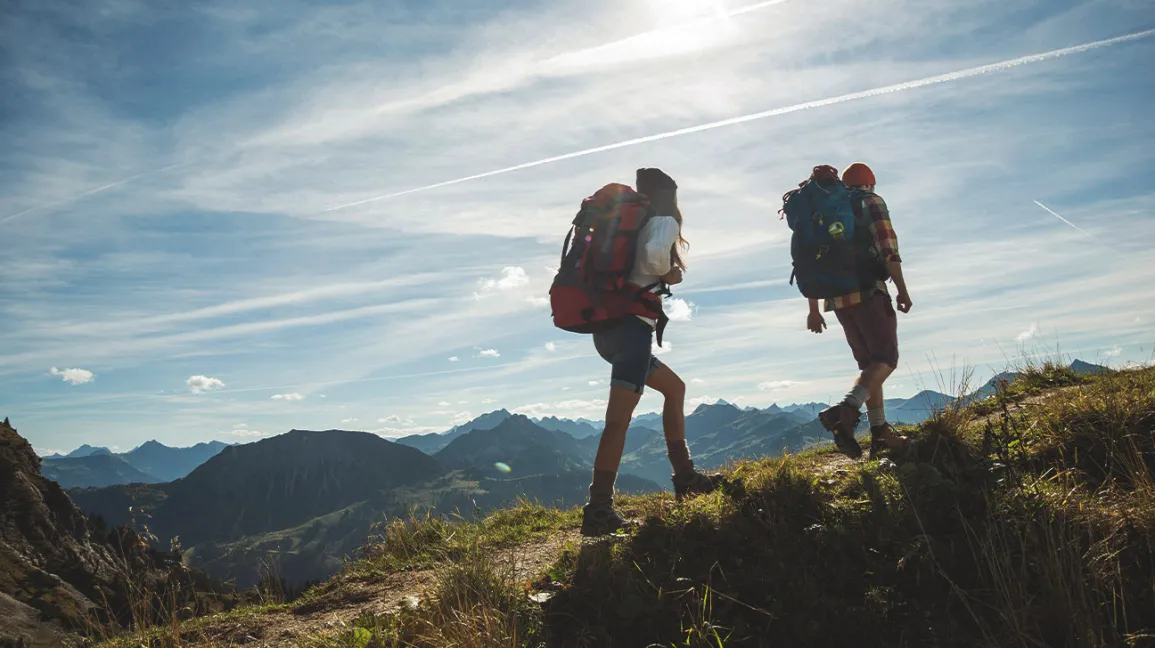
“Hiking” and “Trekking”
Another mountain guide blog points out that many people use “trekking” to refer to walks on wilder, more difficult trails that are typically longer and situated in remote locations.
These definitions reveal two core themes: duration and remoteness. Hiking tends to involve single‑day outings on marked trails, whereas trekking implies multi‑day journeys across rugged or less accessible terrain.
However, there is overlap—long hikes can be strenuous and multi‑day treks may feature well‑established trails—and the language used may differ across countries. The important point for travelers is to understand the practical distinctions that affect planning, equipment, and expectations.
Key Differences Between Hiking and Trekking
1. Duration & Distance
Hiking is typically a short‑duration activity. Peru For Less, a travel resource focusing on the Andes, describes hikes as shorter walks on well‑marked trails that can be completed in a few hours or a single day. Their table summarizing hiking versus trekking lists the usual duration of hikes as “a few hours to 1 day”.
Similarly, a Vietnam‑based adventure operator notes that day hikes may last just a few hours on marked trails and often allow hikers to return to their base camp or hotel the same day.
Trekking takes place over multiple days. The same harishchandragad trek and Peru guide defines trekking as involving “multi‑day journeys through remote or rugged terrain”, while an article on hiking and trekking differences explains that treks typically last for multiple days or even weeks, with trekkers walking for several hours each day and staying overnight in tents or lodges.
A travel blog about adventure travel compares trekking to a marathon—it’s demanding and requires significant mental preparation because you are out on the trail for days. Much Better Adventures underscores that treks are always considered multi‑day journeys that can last many days, weeks, or even months.
In short, duration is one of the clearest distinctions: hiking often refers to half‑day or full‑day outings, while trekking implies multi‑day expeditions.
2. Terrain & Environment
Hiking is usually done on well‑maintained, clearly marked trails. The Intrepid Travel guide notes that hiking provides a balanced mix of nature and structure with distance signs and varied paths through hills, forests or mountains. Trails are often located in parks, nature reserves or rural areas near civilization, making them more accessible and safer.
Trekking involves more unpredictable and remote terrain. The same Intrepid guide describes trekking as taking place in remote, untamed landscapes where trails may be barely visible. Treks often traverse rugged mountain paths, rocky slopes, dense forests and high passes. An Explore‑Share article notes that the term “trekking” is often used for walks on wilder and more difficult trails that are longer and located in more remote areas. This remoteness increases the challenge and requires better navigation and adaptability.
3. Difficulty & Physical Demands
Hiking is generally suitable for a broad range of fitness levels. The Oxalis Adventure article explains that hiking trails are shorter, less steep, and don’t require advanced skills or heavy preparation, making them ideal for beginners or those seeking a gentle outdoor experience. Intrepid Travel characterizes hiking as a friendly activity akin to a neighborhood 5K—something that most people can tackle with a decent level of fitness.
Trekking demands greater endurance and stamina. Oxalis notes that trekking journeys are longer and involve rugged, remote landscapes requiring strong fitness, stamina, outdoor experience, and specialized gear.
Intrepid’s article equates trekking to a marathon that requires serious mental preparation, high altitudes, and minimal comforts. Much Better Adventures adds that treks are more challenging than hikes, pushing participants to their mental and physical limits.
Additionally, high elevations and thin air can be a factor in treks. Travelers to the Andes must acclimatize to altitudes above 2,500 m to prevent altitude sickness; symptoms can occur in areas such as Cusco, Huaraz, Puno, or Lake Titicaca.
The U.S. Centers for Disease Control and Prevention advises talking to a doctor about prevention and treatment before visiting high destinations like Machu Picchu. These risks are less common on lower‑altitude hikes.
4. Planning & Preparation
Hiking requires minimal planning. According to the Oxalis guide, most hikes demand only light preparation—comfortable shoes, water, and snacks. Permits are rarely needed, and hikers can often decide spontaneously to explore a local trail.
Trekking demands comprehensive planning. Travelers must research the route, weather patterns, and trail regulations, set a realistic timeline, and arrange logistics like transportation and accommodation. Oxalis lists key steps for first‑time trekkers: study trail maps and regulations, create a detailed itinerary with daily distances and elevation gains, train for endurance, and pack appropriate gear.
Because treks often take place in remote regions, participants need to carry or rent camping equipment, navigation tools, first‑aid kits, and layered clothing. Permits may be required; for example, the Classic Inca Trail to Machu Picchu can only be hiked with a government‑issued permit, and permits should be reserved months in advance.
5. Gear & Equipment
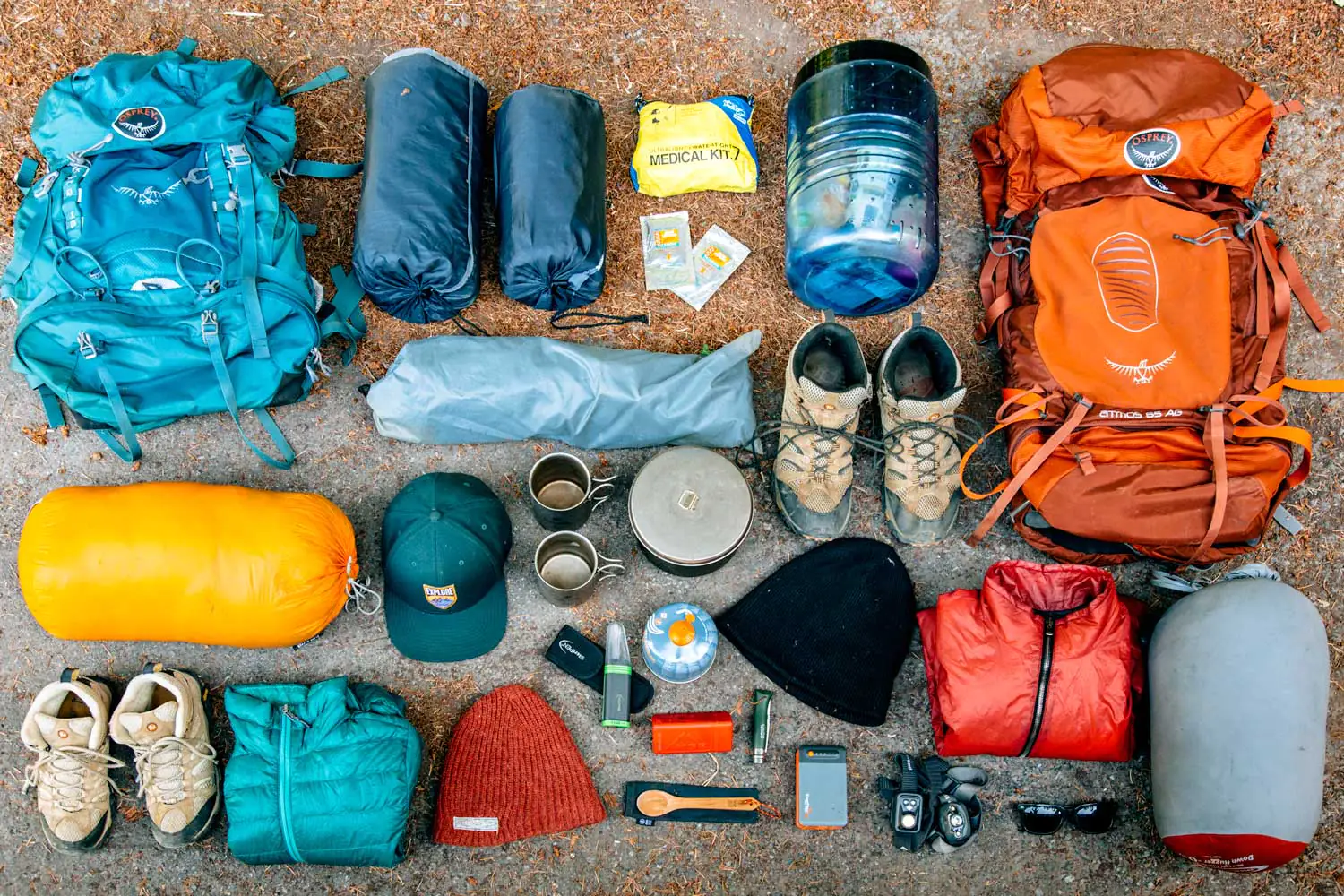
Footwear and clothing. Trekking boots must offer a strong grip, water resistance, and high‑cut ankle support to handle rocky, uneven terrain. Hiking shoes, meanwhile, are lighter and more flexible, suitable for marked trails. Both require a proper fit to prevent blisters and injuries. Intrepid Travel emphasizes that trekkers often need specialized gear such as camping equipment, cooking tools, and crampons, whereas hikers can manage with a day pack, water, snacks, and appropriate layers.
Gear & Equipment
Pack weight and support. Multi‑day treks require larger backpacks to carry supplies. On guided treks, porters or pack animals may transport the heavy gear while trekkers carry only a day pack. Hikers usually carry a light pack with water, snacks, and perhaps a rain jacket.
6. Accommodation & Support
On a hike, travelers often return to their hotel or lodge at the end of the day or spend the night in nearby guesthouses. Trekkers, by contrast, sleep in tents, rustic lodges, or mountain huts, sometimes far from roads. This difference affects comfort levels and logistical considerations. Guided treks usually include support staff to manage camps, cook meals, and handle emergencies, whereas hikers are typically self‑sufficient or accompanied by a guide for a single day.
7. Cultural & Environmental Immersion
Trekking often offers deeper immersion into remote cultures and ecosystems. Multi‑day routes pass through isolated valleys, villages, and ecological zones rarely visited on day hikes. For example, the ancient Inca road network, which spans more than 40,000 km across the Andes, connected administrative centers and facilitates modern trekking routes. Treks like the Inca Trail include visits to archaeological sites inaccessible by vehicle. Hikers may still encounter cultural heritage, but usually stay closer to populated areas, limiting the depth of the experience.
8. Cost & Logistics
Because treks last longer and reach remote areas, they typically cost more. Participants must account for guides, porters, permits, food, lodging, equipment rental, and transport to and from trailheads. The Oxalis article notes that trekking may require a larger budget due to longer durations and remote locations. In contrast, hikes are inexpensive, requiring only transport to the trailhead and minimal gear.
Benefits of Spending Time on Trails
Whether you choose hiking or trekking, time spent walking through nature delivers significant physical, mental, and social benefits. According to the U.S. National Park Service, hiking strengthens muscles and bones, improves balance and cardiovascular health, and decreases the risk of certain respiratory problems.
Walking outdoors also boosts mood and reduces stress; spending time in nature has been associated with lower depression and anxiety. The NPS Survey notes that hiking with friends or family can deepen relationships and build shared memories.
Health researchers at Harvard’s T.H. Chan School of Public Health add that spending time in green spaces is linked to lower mortality and chronic disease, better sleep and mental restoration.
Exposure to nature stimulates multiple senses, providing a break from the overstimulation of urban environments and fostering mindfulness and positive emotions. These benefits apply to both hiking and trekking; the main difference is the intensity, duration, and commitment required.
Comparing Hiking and Trekking in the Andes: Iconic Routes & Experiences
Peru and the greater Andean region offer spectacular examples of both hiking and trekking. Below are some of the most beloved routes, illustrating how the distinctions described above play out on the ground. Each example includes typical duration, altitude range, key highlights, and considerations.
Day Hikes
Rainbow Mountain (Vinicunca) – A Striped Summit in the Vilcanota Range
Rainbow Mountain, locally known as Vinicunca, is one of Peru’s most Instagram‑famous day hikes. Located south of Cusco near Ausangate Mountain, it rises to about 5,036 m (16,522 ft). The route typically involves a two‑hour drive from Cusco, followed by a 5 km (3.1 mi) walk or a slightly longer drive through Pitumarca and a short, steep hike.
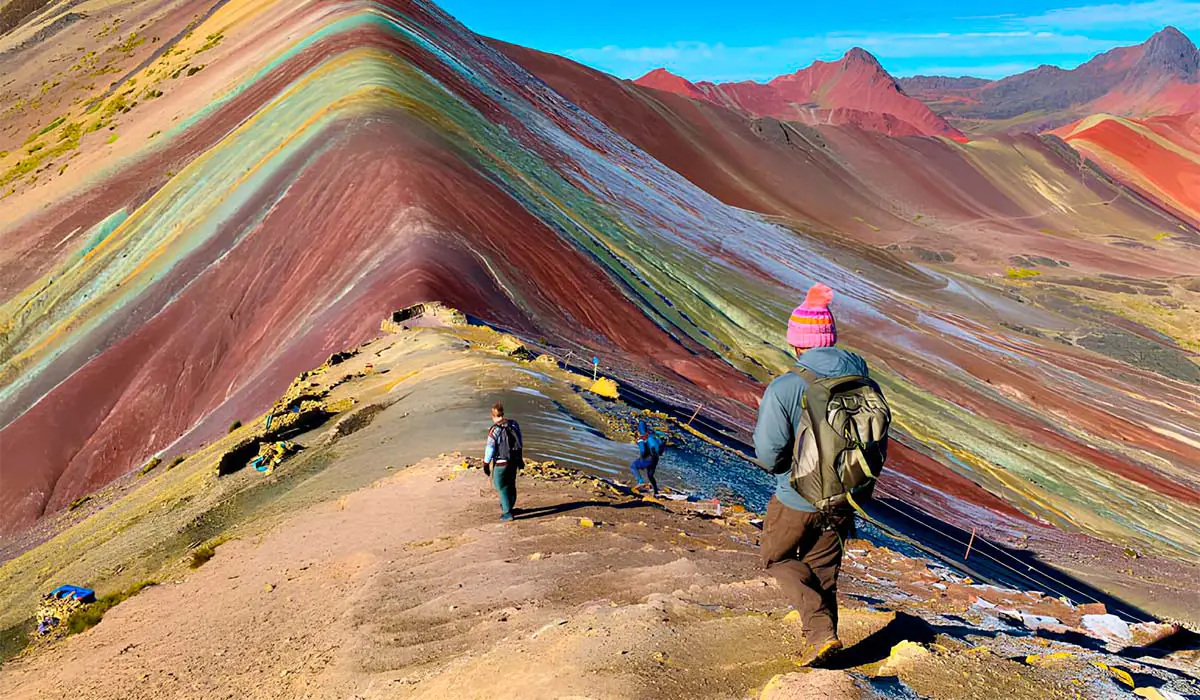
Rainbow Mountain (Vinicunca)
The climb is steep but short, making it accessible as a day hike. However, the altitude is high, so acclimatization in Cusco is essential. Mass tourism began in the mid‑2010s when the mountain’s colourful stripes became exposed after the melting of a glacier.
Laguna 69 – A Turquoise Lake in the Cordillera Blanca
Laguna 69 is a stunning glacial lake in Huascarán National Park, part of the UNESCO Biosphere Reserve in the Ancash region. The lake sits at an elevation of about 4,600 m (15,100 ft). A hiking route starts at the Cebolla Pampa campground, following a brook past waterfalls to reach the lake.
Although the round trip is around 14 km (8.6 mi) and can be completed in a day, the high altitude and 800 m ascent make it a challenging hike. Hikers should acclimatize in Huaraz and carry water, snacks, and warm clothing.
Moray and Maras Salt Mines – Ancient Agricultural Terraces and Salt Ponds
The archaeological site of Moray features concentric circular terraces built by the Incas at about 3,500 m (11,500 ft). The largest depression is roughly 30 m deep, and the terraces create temperature variations of up to 15 °C between the top and bottom, allowing the Incas to experiment with crops.
Nearby, the Salt Mines of Maras comprise thousands of terraced salt evaporation ponds at around 3,200 m (10,498 ft). Guided day hikes from Cusco or the Sacred Valley explore these sites, offering cultural and historical insights without the commitment of overnight camping.
San Pedro Markets and City Walks in Cusco
Within Cusco itself, leisurely walking tours lead you through colonial streets, markets, and museums. Cusco’s historical core sits at about 3,399 m (11,152 ft). The city is a UNESCO World Heritage site, and walking tours typically include visits to the Plaza de Armas, San Pedro Market, San Blas artisans’ quarter, and the impressive Cathedral. These city walks are ideal for acclimatization days before a high‑altitude trek.
Multi‑Day Treks
Classic Inca Trail to Machu Picchu (4 Days)
The 42 km (26 mi) Classic Inca Trail is Peru’s most iconic trek. The route climbs approximately 2,500 m overall, cresting at Dead Woman’s Pass (Warmi Wañusqa) at 4,215 m (13,829 ft) before descending to Machu Picchu at 2,430 m (7,970 ft). It traverses cloud forest and alpine tundra, passing Inca archaeological sites like Patallaqta, Runkuraqay, Sayacmarka, and Phuyupatamarka.
The Peruvian government restricts daily access to 500 people (including guides and porters) to mitigate erosion and preserve the trail. Permits must be secured months in advance. Though physically demanding, the trek offers a once‑in‑a‑lifetime journey through spectacular scenery culminating at the Sun Gate overlooking Machu Picchu.
Salkantay Trek (4–5 Days)
The Salkantay Trek is a popular alternative to the Inca Trail. Starting near Mollepata, the most common route crosses Salkantay Pass at 4,600 m (15,092 ft) before descending through cloud forests to La Playa and eventually reaching Santa Teresa or Aguas Calientes. The trek typically takes four days, though longer variants connect to the Inca Trail.
Trekkers must be prepared for cold temperatures at the pass, variable weather, and remote campsites. While no permit is required, hiring a reputable guide ensures safety and environmental responsibility.
Ausangate Circuit (4–5 Days)
This high‑altitude circuit circles the sacred Ausangate Mountain. The 70 km (43 mi) loop begins in Tinqui and ends in Pacchanta, remaining in puna ecosystems above 4,300 m. Trekkers cross passes such as Arapa (4,700 m), Apacheta (4,800 m), and Palomani (5,100 m).
The circuit is remote and lacks services; nights can be extremely cold (–10 °C). It is best undertaken with a guide, pack horses, and careful acclimatization. The route delivers sweeping views of glaciers, lagoons, and high Andean villages.
Choquequirao Trek (4–8 Days)
Choquequirao is an archaeological site often called the “sister city” of Machu Picchu. Reaching it requires a strenuous 60 km (37 mi) trek. The main trail from San Pedro de Cachora to the ruins is about 20 km one way; an alternate trail from Huanipaca is 15 km.
The trek descends 1,500 m to the Apurímac River on day one and climbs 1,800 m on day two to reach the ruins, making it a two‑day out‑and‑back journey. Many trekkers extend the route to connect with the Inca Trail or Santa Teresa; these extensions can last seven to eleven days and cross the Yanama Pass at 4,668 m.
Santa Cruz Trek (3–4 Days)
This 50 km (31 mi) trek in Huascarán National Park climbs through the Cordillera Blanca to Punta Union pass at 4,750 m (15,580 ft). The trail passes turquoise lakes, towering ice peaks, and the distinctive profile of Mount Alpamayo.
Hikers can start from Vaquería (3,700 m) or Cashapampa (2,900 m). Camping at designated sites protects the fragile environment. The trek is moderately challenging but offers a spectacular introduction to high‑altitude trekking in Peru.
Cordillera Huayhuash Circuit (10–14 Days)
Considered one of the world’s finest alpine treks, the Huayhuash Circuit is about 130 km (81 mi) long and typically takes 10–14 days. Most campsites are above 4,000 m, and passes range between 4,600 m and 5,000 m.
Trekkers circle a chain of rugged peaks and glacial lakes while spotting condors, alpacas, and viscachas. Logistics are complex; the trek begins and ends in small villages accessible from Huaraz, and you must arrange mules and guides. Its remoteness and difficulty make it a true trek rather than a hike.
Lares Trek (2–3 Days)
The Lares Trek is a high‑altitude cultural route that offers a quieter alternative to the Inca Trail. Covering about 33 km (21 mi), the trek begins near the village of Lares and ends at Ollantaytambo. It crosses the 4,450 m (14,600 ft) Ipsaycocha Pass. The route passes through weaving communities and Andean villages, providing insight into Quechua traditions. Because the trek is shorter and doesn’t require a permit, it appeals to travelers with limited time who still want a multi‑day trek.
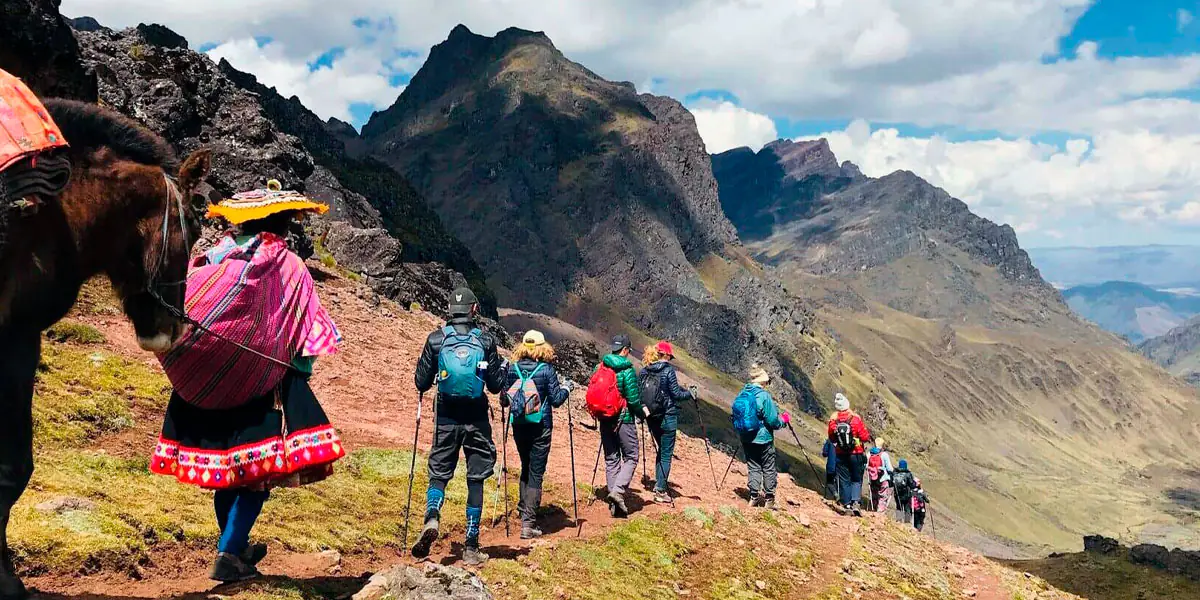
Lares Trek
Santa María to Santa Teresa Adventure (3 Days)
Combining hiking, mountain biking, and hot springs, this shorter trek connects Santa María to Santa Teresa. It’s ideal for those who want a taste of trekking without days of camping. The route follows segments of Inca trails, crosses coffee plantations, and concludes with a soak in the thermal baths at Cocalmayo. While less challenging than Ausangate or Huayhuash, it still demands moderate fitness and proper planning.
Ausangate & Rainbow Mountain Combo (5–6 Days)
For a more immersive experience, many travelers combine the Ausangate Circuit with a detour to Rainbow Mountain. This trek includes several high passes above 5,000 m and offers close encounters with glaciers, hot springs, and remote llama herding communities. Because of the altitude, acclimatization is essential, and hiring a guide ensures safe navigation.
These examples illustrate how hikes and treks differ in length, elevation, and required commitment. A day hike to Rainbow Mountain or Laguna 69 may be strenuous but doesn’t require camping or multi‑day logistics. Trekking the Inca Trail or Ausangate Circuit demands preparation, porters or pack animals, and nights under the stars.
Choosing the Right Adventure for You
Selecting between a hike and a trek depends on several personal factors. The questions below, adapted from advice on planning outdoor journeys, will help you make an informed choice:
- What is your current fitness level? Assess your physical stamina and mental resilience. Trekking requires greater endurance and strength, while hiking is accessible to most travelers with moderate fitness. If you’re new to high-altitude activities, start with day hikes and build up to longer treks.
- How much time do you have? If you have only a day or two, choose hikes or short treks like the Lares route. For deeper immersion, plan a multi‑day trek such as the Inca Trail or Ausangate Circuit, ensuring you allocate time for acclimatization and recovery.
-
What kind of terrain and environment do you prefer?
Hikes typically follow well-marked trails in national parks or near cities, while treks explore remote mountains, valleys, and high passes. Consider whether you’re comfortable navigating rough terrain or prefer more predictable paths.
- Do you want a cultural experience? Trekking often takes you through indigenous villages and past archaeological sites, offering deeper cultural engagement. Hiking can also be culturally rich—visiting sites like Moray, Maras or the Temple of the Sun (Coricancha) in Cusco—but multi‑day treks typically provide more time in traditional communities.
- Are you prepared for high altitudes? Many Andean treks exceed 4,000 m. Altitude sickness can be dangerous, so consult a doctor, ascend gradually, stay hydrated, and avoid alcohol until acclimatized. Incorporate rest days and start with lower elevation hikes.
- What is your budget? Treks involve costs for guides, porters, permits, gear rental, and transportation. Hikes are typically cheaper. Consider whether you’re willing to invest in a multi‑day expedition or prefer a day hike with fewer logistical expenses.
- Solo or group? Trekking with a group enhances safety and camaraderie. Solo hiking can be peaceful, but it may be riskier in remote areas. Choose accordingly.
Preparing for Your Adventure: Tips and Best Practices
Training and Fitness
Build your stamina and strength through regular cardiovascular workouts (walking, running, cycling) and resistance training (leg and core exercises). Focus on endurance, as treks involve consecutive long days. Include hikes with varying elevation to simulate trail conditions. Practice carrying a loaded backpack to condition your shoulders and back.
Altitude Acclimatization
Give yourself time to adjust to elevation by spending a few days in Cusco (3,399 m) or Huaraz before starting a high trek. Many travelers use local day hikes—such as visits to Sacsayhuamán fortress with its massive stone walls, or city walks exploring Cusco’s colonial and Inca heritage—to acclimatize.
Drink plenty of water, eat light meals, and avoid strenuous activity or alcohol during the first 24–48 hours at altitude. If symptoms persist or worsen, descend and seek medical help.
Essential Gear Checklist
For day hikes:
- Sturdy hiking shoes or lightweight boots with good grip
- Weather‑appropriate clothing (layers for cold mornings and hot afternoons)
- Hat, sunglasses, and sunscreen
- Day pack with water (at least 2 liters), snacks, a rain jacket, and a first‑aid kit
- Hiking poles for stability on steep or uneven trails
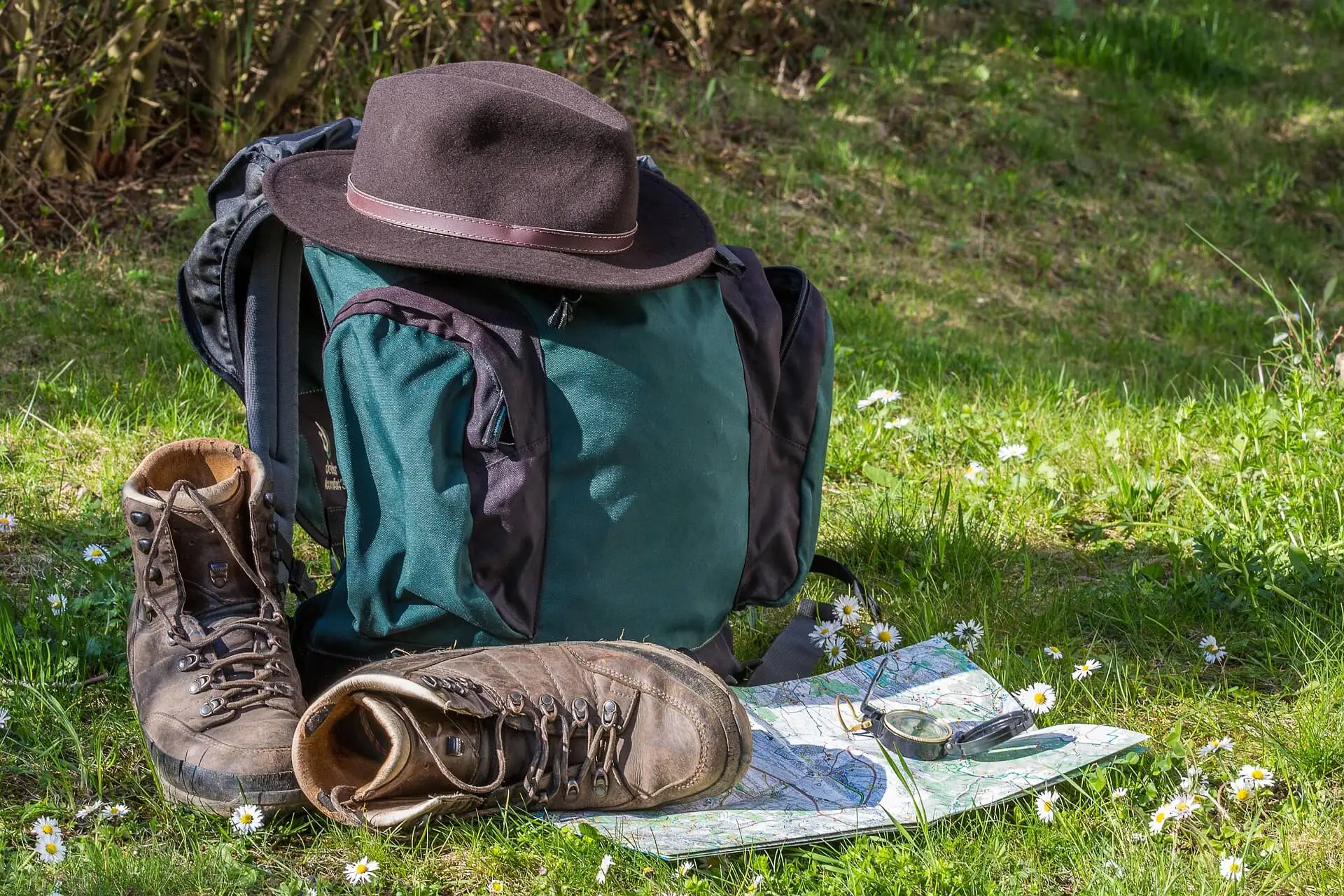 Essential Gear Checklist
For multi‑day treks:
- Sturdy, high‑cut trekking boots with ankle support
- Backpack (50–70 L) with rain cover
- Sleeping bag rated for cold nights, sleeping mat (many tour operators provide these)
- Tent (provided on guided treks) or arrangements in refuges/huts
- Layers of clothing for variable temperatures: moisture‑wicking base layers, insulating mid‑layers, waterproof outer shell
- Warm hat, gloves, buff, or scarf
- Headlamp with extra batteries
- Trekking poles, crampons, or microspikes if snow/ice is expected
- Water purification tablets or a filter
- Navigation tools (map, compass, GPS) and multi‑tool
- First‑aid kit, including altitude sickness medication if prescribed
- Toiletries, snacks, and personal items
Responsible and Ethical Travel
Alpaca Expeditions is committed to ethical, sustainable tourism. When trekking, adhere to Leave No Trace principles: pack out all waste, stay on established trails and campsites, and avoid disturbing wildlife. Respect local cultures by asking before photographing people and learning a few words in Quechua or Spanish. Support the local economy by purchasing handicrafts and hiring certified local guides. Several guides emphasize that even experienced hikers should hire certified guides for longer or more difficult treks; they provide safety, cultural interpretation, and logistical expertise.
FAQs: Your Hiking & Trekking Questions Answered
What is the main difference between hiking and trekking?
Hiking typically refers to single‑day walks on marked trails for recreation and exercise. Trekking involves multi‑day journeys through remote or rugged terrain that demand more endurance and planning.
Do I need a permit?
Most hikes do not require permits. However, popular treks such as the Classic Inca Trail require a government‑issued permit secured months in advance.
Are treks suitable for beginners?
Yes—many treks accommodate novices, especially when led by experienced guides. Begin with shorter routes like the Lares Trek or a two‑day Inca Trail. Train beforehand and acclimatize to altitude.
Which shoes are best?
For hikes, lightweight hiking shoes or trail runners with good grip are adequate. Treks require sturdy, water‑resistant boots with ankle support and strong traction.
How do I avoid altitude sickness?
Ascend gradually, rest at intermediate elevations, drink plenty of water, and avoid alcohol. Talk to your doctor about preventative medication. If symptoms such as severe headache or nausea occur, descend immediately.
What are the benefits of hiking and trekking?
Both activities improve cardiovascular fitness, strengthen muscles and bones, boost mood, reduce stress, and foster social connections. Spending time in green spaces also lowers the risk of chronic disease and improves mental health.
Can I combine hiking and trekking in one trip?
Absolutely. Many travelers acclimate with day hikes around Cusco—exploring Sacsayhuamán’s massive stone walls or visiting Moray’s concentric terraces—before embarking on a multi‑day trek. Alpaca Expeditions offers custom itineraries that mix shorter hikes with longer treks.
What should I pack for a trek in the Andes?
Essentials include sturdy boots, layered clothing, a warm sleeping bag, a tent (if not provided), water purification, navigation tools, sun protection and a first‑aid kit. A complete gear checklist appears above.
Is it safe to trek alone?
Remote trekking involves risks—altitude sickness, sudden weather changes, and navigation challenges. Traveling with a reputable guide enhances safety, ensures adherence to environmental regulations, and enriches your cultural experience.
Conclusion:
Both hiking and trekking offer profound ways to experience nature. Hiking invites you to slow down, breathe deeply, and explore scenic trails close to civilization. Trekking challenges you physically and mentally, immersing you in remote landscapes and cultures over days or weeks. The choice between them depends on your fitness, time, appetite for adventure, and desire for comfort or solitude.
When you’re ready to explore the Andes, Alpaca Expeditions can craft an itinerary tailored to your goals—whether it’s a gentle day hike to ancient salt pans or an epic trek over snow‑capped passes to lost Inca cities. With expert local guides, ethical practices, and premium service, you’ll experience Peru’s natural and cultural wonders in depth and with respect.
Embrace the journey that speaks to your heart. Lace up your boots, breathe the crisp mountain air, and set forth on a hike or a trek knowing you’ve chosen the adventure that’s right for you.