


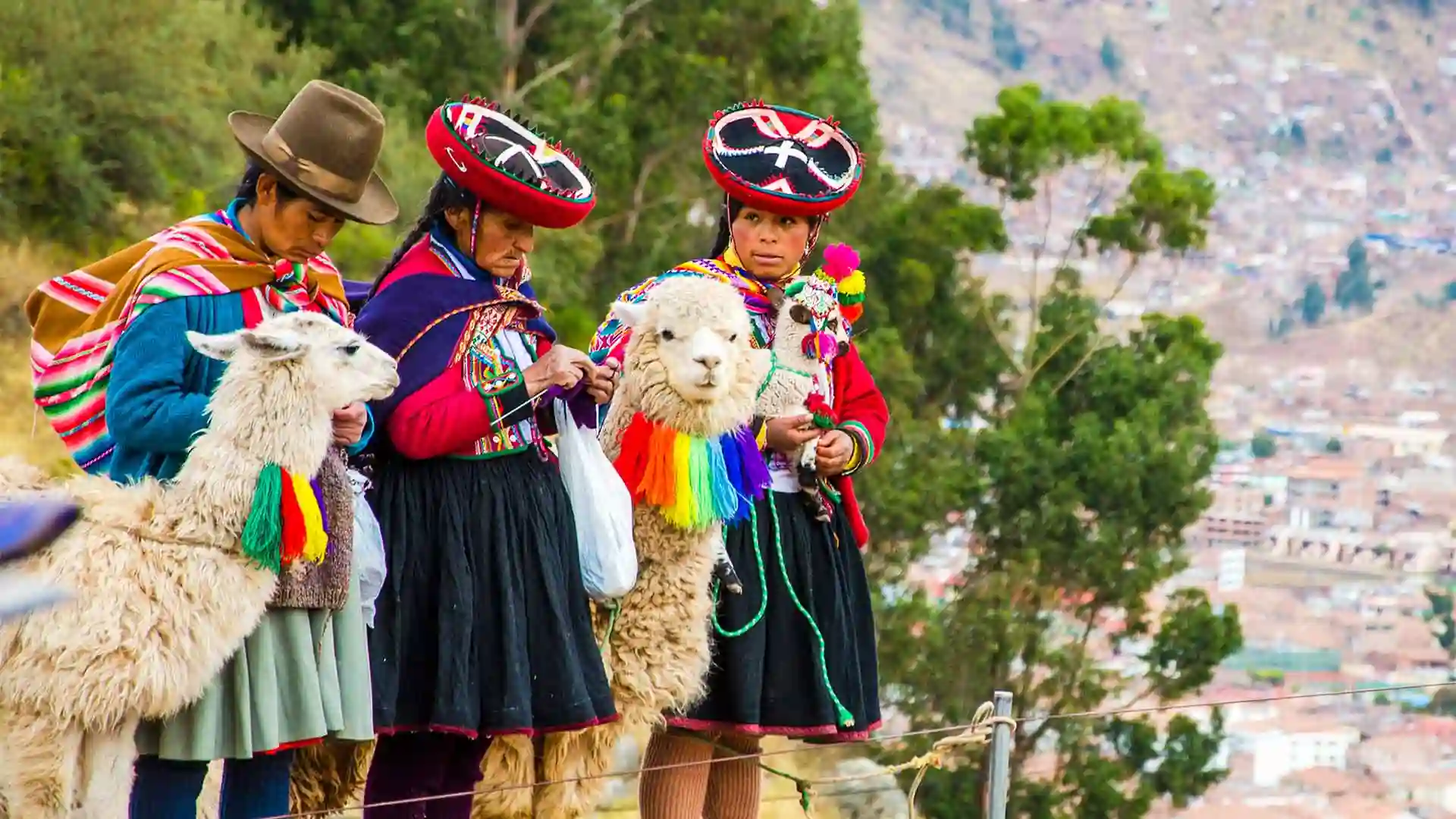
When travelers join us on an Alpaca Expeditions trek through the Andes, they quickly realize that every stone, mountain, and smile tells a story. The Inca trail is more than a hiking route; it is a living classroom where the past whispers in Quechua, the Living Language of Incas.
Known to its speakers as Runa Simi, this ancient tongue predates the empire that made it famous and continues to shape Andean identity. We invite you to journey through time as we explore the secrets and myths of Runa Simi, from its legendary origins to its place on our treks today.
Along the way, we’ll share traveler tips, cultural insights, and ways to experience this heritage respectfully. Whether you’re dreaming of climbing Dead Woman’s Pass or tracing the footsteps of the Incas to Machu Picchu, understanding the language and culture will deepen every step of your journey.
Insert image of a sunrise over the Andes with hikers learning Quechua from their guide here (alt text: hikers on an early morning trekking path listening to a guide speak Quechua).
Runa Simi vs. Quechua: What’s in a Name?
You may see the words Runa Simi and Quechua used interchangeably, but they tell different stories. Runa Simi, which literally means “language of the people” or “people’s speech,” reflects how Andean communities perceive their mother tongue.
The term Quechua derives from qheswa or qeshwa, describing the temperate valleys of central Peru where the language likely originated. Spanish chroniclers adopted the valley term to identify the language and, in the colonial period, popularized it across South America. Regardless of the name, both terms honor a linguistic heritage that predates the Inca Empire and survived colonial suppression.
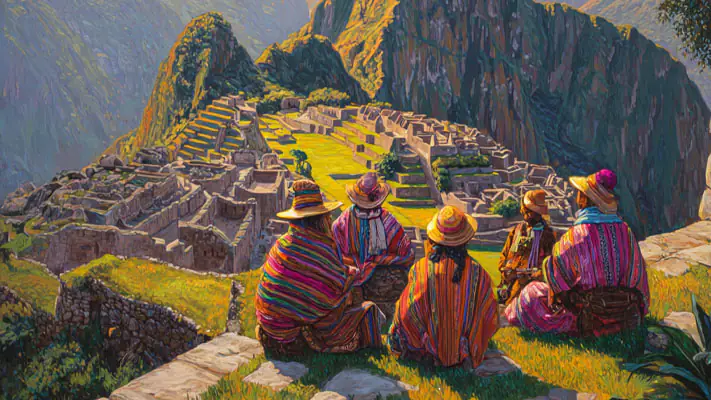
Origins and Early Spread
Archaeological evidence suggests Runa Simi was spoken along Peru’s central coast long before the rise of the Incas. The Caral civilization in the Supe Valley, one of the oldest known urban societies in the Americas, may have contributed to the language’s foundations.
As highland peoples migrated from these valleys toward the Andes, their speech evolved and diversified. When the Inca established their capital in Cusco, they adopted this local tongue and transformed it into an imperial lingua franca.
During the 15th century, Inca expansion brought Runa Simi to every corner of their empire. The amautas—learned teachers—were dispatched to newly annexed regions to teach the language and unify diverse peoples. Within decades, Runa Simi became an administrative language and a symbol of unity.
Even after the Spanish conquest, the language continued to flourish; missionaries translated Christian texts into Runa Simi and printed grammars and dictionaries as early as 1560. Francisco del Canto’s 1614 Art and vocabulary of the general language of Peru is preserved in UNESCO’s Memory of the World register.
A Living Language Today
Today, approximately eight to twelve million people speak Quechua across western South America. Variants of the language stretch from Ecuador and Colombia in the north to Bolivia, Argentina, and Chile in the south.
In Peru alone, more than 13% of the population speaks Quechua, and in Cusco—our home—over 60% of residents speak the language while 95% understand it. Despite centuries of suppression, Runa Simi gained official status in Peru (1975), Bolivia (2009), and Ecuador (2006).
In recent decades, community organizations, schools, and digital media have sparked a renaissance, offering classes, publishing literature, and preserving oral traditions. On our treks, you’ll hear porters chatting in Quechua, guides teaching phrases, and children singing in their mother tongue. By learning even a few words, travelers help keep this ancient language alive.
Myths, Legends, and the Inca Connection
Languages carry myths as surely as they carry grammar. Runa Simi is woven into the origin stories of the Andes. One myth tells that Manco Cápac and Mama Ocllo, children of the sun god Inti, emerged from Lake Titicaca and founded Cusco, teaching people agriculture, law, and language. Another tradition suggests the Inca originally spoke Pukina, a language associated with the Tiwanaku civilization near the lake.
As the Incas migrated southwards and integrated different groups, they learned Aymara and later embraced Runa Simi, spreading it as their empire expanded. Pukina remained a sacred or secret tongue, known as Qhapaq Simi (“language of the powerful”) and reserved for the nobility. Chroniclers like Garcilaso de la Vega described a language used only by the elite that commoners were forbidden to learn.
These myths illuminate how the Inca conceived of power and language. Runa Simi served to unite, while Pukina signaled divine authority and kept knowledge within the court. The secretiveness around elite languages continues to intrigue historians because few records remain.
Whether or not Pukina survives today is debated; some linguists believe its remnants persist in the Kallawaya herbalist tradition or certain Aymara dialects. Even so, learning Runa Simi offers a tangible connection to these stories—it is the tongue in which the Incas organized their empire and addressed their gods.
Communicating Without Writing: The World of Quipus
If the Incas had no writing system, how did they manage a vast empire? The answer lies in the quipu or khipu, a system of knotted cords that served as memory aids and data storage. Quipus date back at least to 2600 BCE, long before the Incas, and consist of a main cord from which multi-colored strings hang with knots indicating numbers or categories. In the absence of a written script, quipus allowed administrators to record census data, resources, tributes, and genealogies across the highlands.
Each color, cord placement, and knot type held meaning—like early spreadsheets encoded in fiber. Anthropologist Kim MacQuarrie likened quipus to “ancient computers,” and new research suggests some may have contained narrative or historical information.
Communicating Without Writing: The World of Quipus
During the Spanish conquest, quipus were confiscated or burned because colonizers feared they contained secret histories and resistance narratives. Today, fewer than 1,000 quipus survive, and scholars continue to decode their patterns. When you walk the Inca trail, imagine how every supply, tax, or victory might have been recorded in knotted fiber.
At Alpaca Expeditions, we occasionally stop at local museums or community centers where reconstructed quipus are displayed. Guides explain how our porters’ ancestors used this sophisticated technology and invite travelers to try reading basic numbers. It’s a hands-on lesson in how knowledge endures, even when not written on paper.
Insert image of a quipu replica with colored cords and knots here (alt text: a detailed close-up of a quipu showing different colored strings and knots).
Historical Timeline: Runa Simi Through Empires and Colonies
To appreciate the resilience of Runa Simi, it helps to trace its timeline. The language’s story parallels the rise and fall of civilizations, the arrival of conquerors, and modern struggles for indigenous rights.
Before the Incas
- Pre‑Inca civilizations: Runa Simi’s roots stretch back millennia. Coastal peoples and early Andean societies likely spoke variants of the language, which later diversified across valleys. Agricultural communities around Caral and the highlands used it long before the Inca consolidated the region.
- Tiwanaku and Pukina: On the shores of Lake Titicaca, the Tiwanaku civilization spoke Pukina. When the Incas emerged, they adopted local languages, including Aymara and Runa Simi, while preserving Pukina for ritual purposes.
Inca Empire (c. 1400–1533)
- Adoption by the Incas: The Cusco elite embraced Runa Simi and used it as the state language. Teachers traveled to newly conquered regions to instruct subject peoples.
- Administrative language: Runa Simi became the medium of governance, record-keeping (via quipus), and religious ceremonies. It unified an empire that spanned highlands, jungles, and deserts.
- Secret language: The nobility kept Pukina as a sacred tongue, maintaining social hierarchies and spiritual secrets.
Colonial Period (1533–1820)
- Missionary linguistics: After the Spanish conquest, friars learned Runa Simi to convert the population. Domingo de Santo Tomás published the first printed grammar in 1560, followed by Christian catechisms and dictionaries. These texts laid the foundation for standardized spelling and documented early vocabulary.
- Suppression and resilience: Runa Simi remained widely spoken, but after the 1781–1783 revolt led by Tupac Amaru II, colonial authorities banned its official use and suppressed indigenous identity. Despite this, everyday speech persisted in rural communities and highland towns.
Republican Period (1821–Present)
- Marginalization and stigma: Throughout the 19th and early 20th centuries, governments promoted Spanish as the language of progress. Indigenous speakers faced discrimination and limited educational access. Many parents discouraged children from learning Runa Simi to avoid social stigma.
- Revival and recognition: In the late 20th century, indigenous rights movements and cultural pride sparked a revival. Peru declared Runa Simi an official language in 1975; Ecuador and Bolivia followed in 2006 and 2009. Bilingual education programs, radio broadcasts, and digital media now promote language learning. Community organizations host classes and gatherings, and there are more than 45 dialects worldwide. In fact, universities and institutes offer degrees in Quechua studies, ensuring new generations of scholars.
- Modern usage: On treks with Alpaca Expeditions, you’ll meet porters and guides who take pride in teaching you Runa Simi. Many of our staff grew up speaking the language at home and now share it professionally. The language continues to adapt, absorbing Spanish loanwords and modern terminology while retaining its rich grammar.
Dialects and Geographic Diversity
Like the Andes themselves, Runa Simi is not one monolithic tongue but a tapestry of dialects. Linguists classify it into Quechua I (Central) and Quechua II (Peripheral) branches. Quechua I includes dialects from the central highlands of Peru, such as those spoken in Junín, Cerro de Pasco, and Huancavelica. Quechua II splits into northern and southern groups:
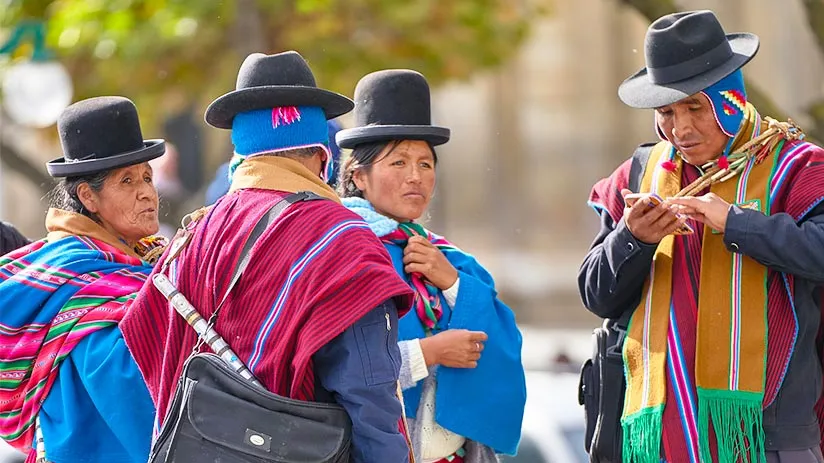
Dialects and Geographic Diversity
- Northern (Kichwa or Inga): Spoken in Ecuador and southern Colombia. These dialects are closer to each other than to the Peruvian varieties and display a simplified vowel system.
- Southern: Found in Cusco, Ayacucho, Bolivia, Argentina, and Chile. Southern Quechua is the version most travelers encounter on the Inca Trail and in the Sacred Valley.
There are at least nine major varieties and dozens of local dialects. Mutual intelligibility varies: speakers from Cusco may struggle to understand someone from northern Peru, just as a Spanish speaker from Madrid might find Chilean slang challenging. Our guides often speak multiple dialects because they come from different districts. Listening to them converse is like hearing rivers from diverse valleys converge.
Why So Many Dialects?
Geography plays a central role. The Andes are a chain of isolated valleys and high peaks. Communities developed unique speech patterns due to limited interaction and adaptation to specific environments. Additionally, Runa Simi served as a second language for many groups who retained their mother tongues, such as Aymara speakers. This multilingual environment encouraged local variation.
From a traveler’s perspective, the diversity of Runa Simi enriches your experience. When you visit communities in the Sacred Valley, you may hear the elongated vowels of Cusco Quechua. On the Lares trek, you’ll meet speakers of a distinct dialect with unique vocabulary. Each variation tells a story about the valley it comes from.
Structure and Sounds: A Linguistic Snapshot
Runa Simi is known for its elegance and complexity. It is an agglutinative language, meaning that words are formed by attaching suffixes to a root. A single word can convey what takes an entire sentence in English.
For example, wasi means “house.” Adding yki turns it into “your house,” pak adds “with,” and kuna makes it plural; thus wasi‑ykiku‑pakuna might convey “with your houses”. This stacking of suffixes allows speakers to express relationships, possession, time, and mood in a single breath.
Phonology
The language originally had three vowel sounds—/a/, /i/, and /u/—which later expanded to five under Spanish influence. Consonant clusters are rare; words tend to be syllable-timed and melodious. The stress usually falls on the penultimate syllable. Many syllables are onomatopoeic, mimicking sounds of nature or daily life—consider pukyu (“spring”) and kanka (“roasted meat”).
Grammar and Syntax
- Word order: Runa Simi is head-final; the verb comes at the end of the sentence, following the subject and object. For example, Ñuqa yankayta ruwani means “I do the work,” where yankayta is “work” and ruwani is “I do.” The verb forms change with person and tense markers.
- Case system: Nouns carry suffixes indicating grammatical roles such as subject (-mi), object (-ta), genitive (-pa), and locative (-pi). There are also markers for benefactive, instrumental, and comitative functions.
- Verbal morphology: Verbs employ suffixes for tense (past -rqa, future -sa), aspect, mood (indicative, imperative, subjunctive), and evidentiality—signaling whether the speaker witnessed an event or heard it from others. This evidential system adds nuance to statements; one can indicate if something is hearsay versus personal experience.
- Pronouns and number: Runa Simi distinguishes inclusive versus exclusive “we.” The inclusive form (ñuqanchik) includes the listener, while exclusive (ñuqayku) does not. Plurality is marked with -kuna, as in runa (person) vs. runakuna (people).
These features make Runa Simi both expressive and precise. Learning its grammar may seem daunting, but simple phrases are accessible and rewarding. Travelers often start with greetings and expressions of gratitude.
Borrowed Words
The language has absorbed many Spanish loanwords, particularly for items introduced after the conquest—lapis (pencil), kafé (coffee), skola (school). Conversely, English borrowed several Quechua words, including condor, puma, llama, and guinea pig. Even the word quinoa originates in Quechua. These borrowings show the global footprint of Runa Simi.
Revitalization and Digital Renaissance
For centuries, Runa Simi was pushed into the background of public life by colonial and national policies. Yet this language endures because communities have kept it alive at home and in rituals. In the last few decades, a renaissance has blossomed:
- Legal recognition: Peru (1975), Ecuador (2006), and Bolivia (2009) recognized Runa Simi as an official language, allowing its use in government documents and public education. Many provinces in Argentina and Chile also support Quechua programs.
- Bilingual education: Schools in Cusco, Puno, and the Sacred Valley now teach children in both Runa Simi and Spanish. Young people gain literacy in their mother tongue while acquiring national language skills. Some universities offer Quechua language courses and degrees.
- Media and literature: Radio stations broadcast news and stories in Quechua, podcasts share spoken-word poetry, and online platforms teach vocabulary through songs and videos. Writers publish novels, poetry, and non‑fiction in Runa Simi; festivals celebrate bilingual literature.
- Community programs: Cultural organizations host weekly meet-ups, language clubs, and intergenerational storytelling circles. They encourage elders to share tales of the apus (mountain spirits), while youth create new music blending Andean rhythms and hip-hop.
- Digital tools: Smartphone apps offer interactive lessons; social media influencers share vocabulary challenges; and universities host free online dictionaries and grammar guides. The internet has become a vital space for revitalization.
As we guide trekkers along the Inca Trail, we witness this revival firsthand. Porters teach you to say añay (thank you) or haku (let’s go). When you greet a woman weaving in her courtyard, she might respond with rimaykullayki (my respects). By using even a few phrases, you contribute to keeping this language vibrant.
Speaking Runa Simi: Useful Phrases for Travelers
Learning a handful of Quechua words not only enriches your journey but also shows respect for the communities you visit. Here are some phrases our guides love to teach. Practice them on the trail and watch how locals smile at your effort.
| Phrase (Quechua) | Pronunciation | Meaning |
| Rimaykullayki | ree‑my coo‑yuh YEE‑kee | Hello / my respects |
| Imaynalla? | ee‑MY‑nah‑yah | How are you? |
| Sulpayki or añay | sool‑PY‑kee | Thank you |
| Haku | HAH‑koo | Let’s go |
| Allin p’unchay | A‑yeen poon‑CHAI | Good morning |
| Tinkunakama | teen‑koo‑nah‑KAH‑mah | See you later |
| Wayki / ñaña | WAY‑kee / NYA‑nya | Brother/sister |
| Hampiq | HAM‑peek | Doctor/healer |
| Kawsay | COW‑sigh | Life / to live |
| Sumaq | SOO‑mahk | Beautiful/delicious |
Note: Pronunciation guides are approximate; ask your guide for help to perfect your accent.
When you use these phrases, you engage deeply with locals. A simple sulpayki warms hearts when porters deliver a meal, and allin p’unchay brightens mornings in highland villages. Remember that Runa Simi carries a worldview; language is part of the experience. We encourage you to learn, laugh at your mistakes, and celebrate each new word.
The Inca Trail Experience: Walking in the Footsteps of an Empire
Trekking the Inca Trail is a dream for many travelers. It’s not just about reaching Machu Picchu; it’s about experiencing the landscapes, rituals, and languages that have tied communities to these mountains for centuries. At Alpaca Expeditions, we weave the story of Runa Simi into every step. Here’s how our classic four-day trek unfolds, and why understanding the language enhances each moment.
Day 1 – Ollantaytambo to Wayllabamba
We start early in the Sacred Valley, boarding our private bus from Ollantaytambo to Km 82. After greeting our porters and guides with rimaykullayki, we cross the Urubamba River and begin the gradual ascent along the valley. The first day is warm and relatively gentle, passing small farms and terraces.
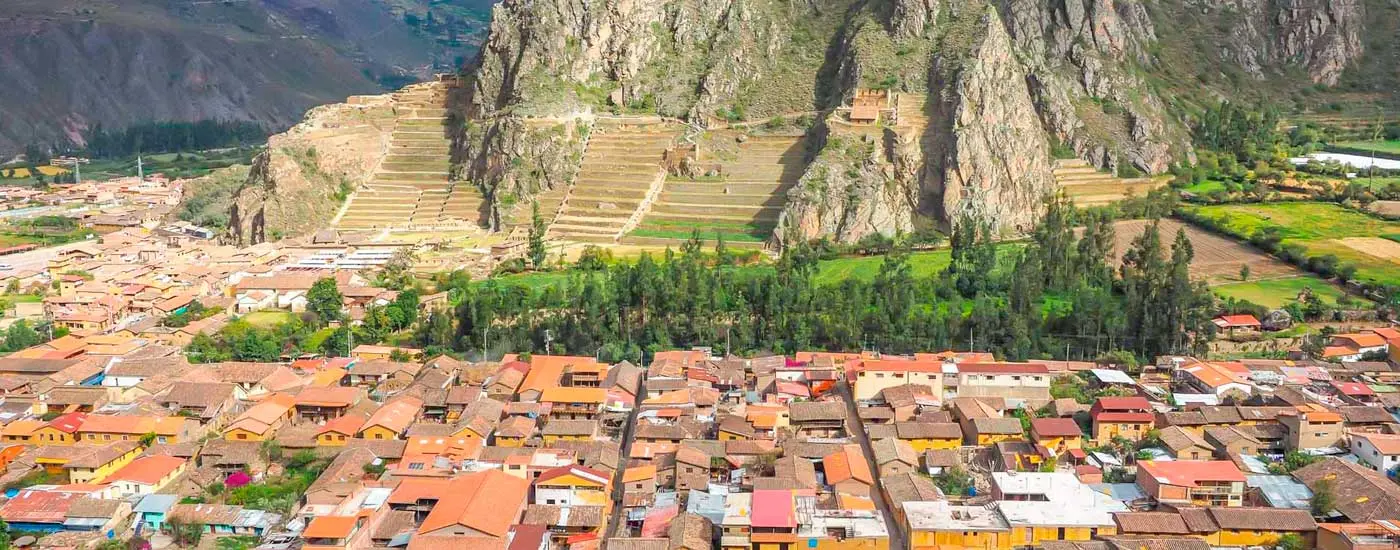
Ollantaytambo to Wayllabamba
Along the way, our guides introduce the history of the Inca Empire and teach you basic phrases, so you can thank farmers and children we meet. We break for lunch near the Incan ruins of Llaqtapata, where quipus once tracked crops and harvests. After walking about 11 km, we camp at Wayllabamba (3,000 m). Evenings are filled with stories and starry skies; our porters talk about their communities and the role Quechua plays in their lives.
Day 2 – Dead Woman’s Pass
This is the most challenging day—yet also the most rewarding. We wake before dawn, fortified by coca tea and a hearty breakfast. The trail climbs steeply through cloud forest and grasslands to Warmiwañusca, known as Dead Woman’s Pass, at 4,215 m (13,828 ft). It’s named for the silhouette of a reclining woman formed by the ridgeline.
At the pass, we pause for photos and recite an apu prayer in Runa Simi, asking the mountain spirits for safe passage. The air is thin and cold—temperatures can drop to 0 °C here—even during the dry season.
Layers are essential; our packing tips below explain how to prepare. After descending into the Pacaymayo Valley, we camp at 3,600 m. Over dinner, our guides discuss altitude acclimatization and share folk tales about the mountains.
Day 3 – Runkurakay to Wiñayhuayna
We begin with a short climb to Runkurakay, a circular Inca watchtower. Our guides interpret its design and the strategic importance of these posts along the royal road. We then ascend to the second pass (3,950 m), greeting fellow trekkers with haku as we pass. The trail winds through cloud forest to Sayacmarca, an ancient settlement perched on a cliff.
After lunch, we visit Phuyupatamarca (“City above the Clouds”) and descend the famed stone staircases to Wiñayhuayna (“Forever Young”), a lush site with cascading terraces. Here we camp for the final night, often joined by groups of hummingbirds. Our team leads a Quechua singing session, teaching traditional songs and modern poetry.
Day 4 – Sun Gate to Machu Picchu
Before dawn, we hike the final kilometers to Inti Punku (Sun Gate). As the sun rises over Machu Picchu, golden light spills onto stone walls and mist drifts from the valley below. This is the magical moment every trekker dreams of. We spend the morning touring Machu Picchu with our expert guide, exploring temples, plazas, and water channels.
You’ll hear how Runa Simi shaped daily life here, and how Spanish chroniclers recorded its use. After the guided tour, you’ll have free time to explore or hike Huayna Picchu if you have permits. We then descend to Aguas Calientes by bus and return to Cusco by train. Our journey ends where it began, but the lessons of Runa Simi stay with us forever.
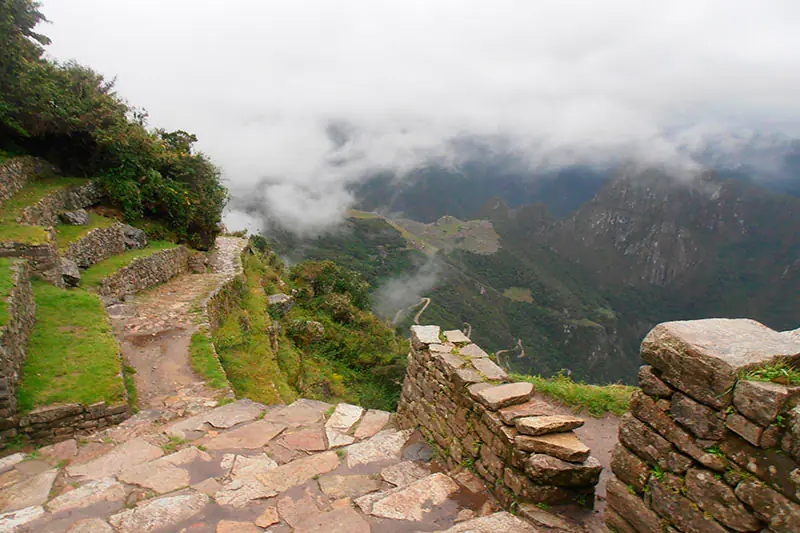
Sun Gate to Machu Picchu
Alternative Treks and Extensions
If permits for the classic trail are sold out or you prefer a more remote experience, we offer alternative routes like Salkantay, Lares, Choquequirao, and Inca Quarry. Each trail immerses you in Andean culture and offers opportunities to learn Runa Simi.
Salkantay, for instance, passes through high glacial terrain and connects to Santa Teresa before reaching Machu Picchu. Lares takes you through weaving communities that still use backstrap looms and speak their own Quechua dialects. Our guides provide language lessons on all routes, and porters from each valley share their unique heritage.
Insert image of trekkers crossing a suspension bridge on the Inca Trail (alt text: group of hikers crossing an Andean suspension bridge with mountains in the background).
Planning Your Trek: Permits, Seasons, and Practicalities
Permits and Regulations
To protect the Inca Trail, the Peruvian government caps permits at 500 per day, including guides and porters. About 200 permits are available for trekkers; the remaining 300 are reserved for staff. Permits are non‑refundable and non‑transferable and sell out months in advance, especially for peak season (April through October).
It is common for high-season permits to sell out by the previous October. Only licensed tour operators like Alpaca Expeditions can secure permits for clients. Fees contribute to trail maintenance, conservation, and local communities. Our team handles the permit process; we just need your passport details and preferred dates.
The trail is closed each February for maintenance and to allow the ecosystem to recover. The Salkantay and Lares routes remain open year-round, offering alternatives if your travel dates fall in February or if permits for the classic trail are sold out.
Best Time to Visit
The Andean climate features two main seasons:
- Dry season (April – October): Clear skies and minimal rain make this the most popular time. Daytime temperatures range from 15–22 °C (59–72 °F), though nights can be cold at high passes. Trails are busier, but the views of snow‑capped peaks and star-filled skies are unforgettable.
- Wet season (November – March): Expect rain showers, lush vegetation, and fewer trekkers. Temperatures are slightly warmer (up to 25 °C / 77 °F), but trails can be muddy. December and January offer a unique perspective, with mist-shrouded mountains and vibrant orchids. The Inca Trail is closed in February.
If you are flexible, shoulder months like late March and early November balance good weather with moderate crowds. Our team runs treks year-round (except February), tailoring itineraries to seasonal conditions.
Packing Essentials
Packing smart ensures comfort and safety. Our porters carry your duffel bag (max 7 kg) while you carry a daypack with essentials. Here’s a condensed list based on our comprehensive packing guide:
- Backpack: 25‑30 liter daypack with rain cover. Make sure it fits water, snacks, a warm layer, and camera. A larger duffel is provided for porter carry.
- Clothing layers: Quick-dry base layers, moisture-wicking shirts, warm fleece or down jacket, waterproof jacket and pants, thermal hat and gloves. Temperatures can swing from freezing mornings at Dead Woman’s Pass to sunny afternoons.
- Footwear: Waterproof hiking boots with ankle support. Break them in before the trek. Bring flip-flops or sandals for camp.
- Sleeping gear: Lightweight, four-season sleeping bag (we can rent one). A sleeping pad is included.
- Accessories: Headlamp, trekking poles, reusable water bottle or hydration bladder, sunglasses with UV protection, sunscreen, insect repellent, and personal medications. Pack a camera and extra batteries.
- Toiletries and hygiene: Biodegradable soap, toothbrush, toothpaste, wet wipes, hand sanitizer, toilet paper in a sealed bag. Leave no trace—carry out all waste.
We encourage guests to pack lightly and respect porter weight limits. Our team provides tents, meals, and emergency equipment (oxygen, first aid kits). With a well-prepared pack, you can focus on enjoying the journey.
Altitude and Health
Altitude sickness can affect anyone, regardless of fitness. Symptoms may include headache, nausea, dizziness, and shortness of breath. Here’s how we help you acclimatize:
- Arrive early: Spend at least two days in Cusco or the Sacred Valley before your trek to adjust to 3,400 m (11,152 ft).
- Stay hydrated: Drink water throughout the day. Coca tea and candies can help alleviate mild symptoms, a practice rooted in Andean tradition.
- Pace yourself: Our guides set a sustainable pace and encourage frequent rest stops. Don’t rush; you’re here to savor the views.
- Listen to your body: If you feel unwell, inform your guide. We carry oxygen tanks and medications and can arrange evacuation if needed.
Most travelers adjust well and find the challenge exhilarating. Remember, locals live at these elevations year-round. Your porters will be carrying heavy loads at high altitude; show appreciation with a sulpayki as they pass.
Our Commitment: Porters, Guides, and Community
At Alpaca Expeditions, our mission is twofold: deliver unforgettable journeys and empower local communities. We are proud of our “Green Machine”—the dedicated team of porters who carry equipment, cook meals, and make every trek possible. Here’s how we support them and why this matters for you.
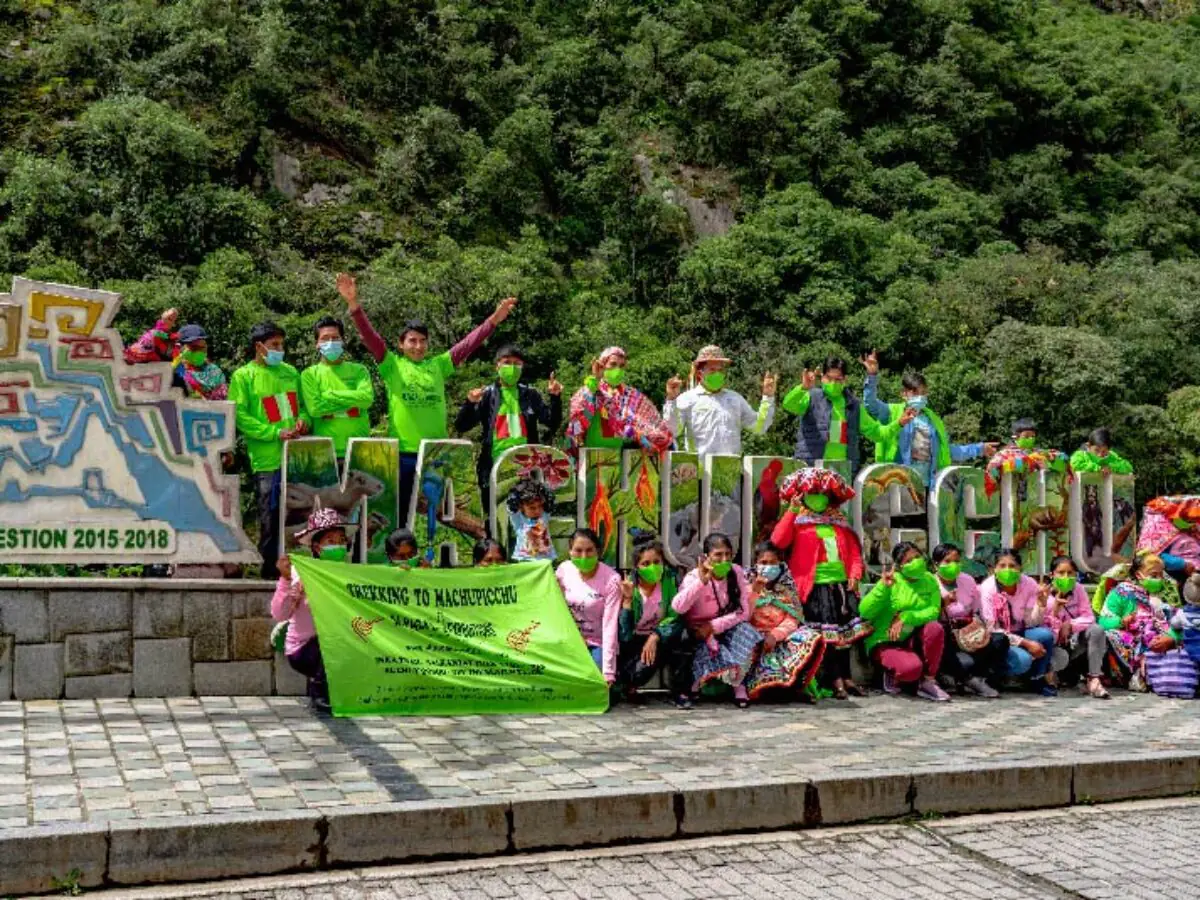
Porters, Guides, and Community
The Green Machine: Our Porters
Porters are the unsung heroes of the Inca Trail. Most are farmers from high-altitude villages who speak Quechua as their first language. Under Peruvian regulations introduced in 1990, each porter’s load is capped at 20 kg (44 lbs) to protect their health.
We go beyond this standard, limiting loads to 20 kg, including their personal belongings, and providing proper backpacks, footwear, and clothing. Our porters receive fair wages, health insurance, hot meals, and access to our porter house in Cusco, where they can rest and socialize between treks.
Most importantly, we foster an environment of respect. Many of our porters are also proud of their language and culture and are eager to teach guests Quechua phrases during breaks.
Hearing them converse in Runa Simi while navigating steep stone steps reminds us that this trail has always been theirs. By traveling with Alpaca Expeditions, you support these individuals and their families.
Expert Guides and Cultural Ambassadors
Our guides are the bridge between you and the Andes. They are multilingual—fluent in English and Spanish—and speak Quechua as their mother tongue. Each guide undergoes rigorous training in first aid, history, geology, and sustainable tourism. Many have degrees in tourism or anthropology and have hiked the Inca Trail dozens of times.
They’ll explain how to pronounce Quechua phrases, interpret quipu replicas, and share legends passed down through generations. Some of our female guides are pioneers in a traditionally male-dominated field, inspiring young girls in their communities to dream big.
We invest in continuous education for our guides, covering advanced medical courses and cultural workshops. In turn, they invest in our travelers, ensuring each guest feels safe, informed, and inspired.
Partnering with Communities
Ethical tourism means more than employing porters and guides. We work closely with communities along our routes, offering training, infrastructure improvements, and scholarship programs.
In our blog “Quechua People: Preserving Incan Culture in the Modern World,” we discuss how community-based tourism supports cultural preservation. We fund projects such as school supplies, health clinics, and sustainable farming workshops. By choosing Alpaca Expeditions, you contribute to these initiatives.
Beyond the Trail: Q’eswachaka and Living Heritage
Most travelers have heard of Machu Picchu, yet few know of Q’eswachaka, the last remaining Inca rope bridge. Spanning the Apurimac River, this 28-meter bridge hangs 30 m above the water and is rebuilt every year by communities using hand-braided grass ropes. The rebuilding is a four-day ritual that preserves ancient engineering techniques and social bonds.
Men twist and braid ichu grass into cables while women prepare chicha (corn beer) and food. On the final day, workers and visitors cross the new bridge and celebrate with music and dance. In 2013, UNESCO recognized the bridge and its rebuilding ceremony as Intangible Cultural Heritage.
Our Q’eswachaka extension adds this cultural experience to the standard trek. We drive to the remote Canas province, where the ritual occurs. Guides explain the significance of minka (communal labor) and ayni (reciprocity), values embedded in Runa Simi and Andean life. You have the opportunity to walk the swaying bridge and witness centuries-old engineering in action. It’s one thing to learn about the Incas; it’s another to see their traditions alive today.
Insert image of Q’eswachaka bridge being rebuilt by local community members (alt text: men braiding grass ropes and women supporting them during the annual renewal of the Q’eswachaka bridge).
Responsible Travel: Respecting Culture and Environment
Runa Simi encapsulates a worldview that honors nature and community. As guests in the Andes, we must respect local customs and minimize our footprint. Here are some guidelines:
- Cultural etiquette: Learn and use basic Quechua phrases. Ask before photographing people or sacred sites. Avoid giving candy or coins to children; instead, support community projects or purchase handicrafts.
- Leave no trace: Pack out all trash, use biodegradable soap, and stay on designated trails. Our porters bring eco-bags to carry waste.
- Respect wildlife: Do not feed animals or disturb habitats. Maintain a safe distance from llamas, alpacas, condors, and other wildlife. Many animals hold cultural significance and are protected by local law.
- Support local economies: Buy crafts directly from artisans, dine at local restaurants in Cusco and the Sacred Valley, and choose community-led tours. Your money sustains families and encourages cultural preservation.
By following these practices, you honor the spirit of ayni, the Andean principle of reciprocity. When we give respect, we receive extraordinary hospitality in return.

Responsible Travel
Costs and Value: Investing in Experience and Preservation
The cost of an Inca Trail trek with Alpaca Expeditions reflects not only the logistical complexity of guiding travelers through remote terrain but also our commitment to fair wages and conservation. While pricing varies by season and group size, here is a general breakdown of what your investment covers:
- Permits and fees: Includes Inca Trail permit, Machu Picchu entrance, train tickets, bus to the trailhead, and bus from Machu Picchu to Aguas Calientes.
- Professional staff: Guides, chefs, and porters receive competitive salaries, health insurance, and life insurance. Your fees also support training programs and certifications.
- Quality gear: We provide tents, sleeping mats, dining equipment, and communal gear that is regularly replaced to ensure comfort and safety.
- Meals and water: Fresh, locally sourced ingredients for three meals a day plus snacks. Vegetarian, vegan, and gluten-free options are available upon request.
- Environmental and community projects: A portion of your payment funds trail maintenance, reforestation projects, and community development initiatives.
We know there are cheaper operators, but low prices often come at the cost of porter welfare or environmental care. When you book with us, you contribute to a sustainable tourism model that uplifts local communities and preserves the trail for future generations.
Frequently Asked Questions (FAQs)
What is the difference between Runa Simi and Quechua?
Both terms refer to the same language. Runa Simi means “language of the people,” whereas Quechua comes from qeshwa (“temperate valley”), a colonial term adopted by the Spanish. Using Runa Simi emphasizes indigenous identity and honors the language’s original context.
How many people speak Runa Simi today?
Between eight and twelve million people across South America speak Runa Simi, making it the most widely spoken indigenous language in the Americas. There are more than 45 dialects worldwide.
Do I need to speak Quechua to hike the Inca Trail?
No, our guides speak English and Spanish, and you can communicate easily. However, learning a few phrases enhances your experience and shows respect to porters and villagers. Our team provides daily language lessons on the trek.
When should I book my Inca Trail trek?
High-season permits (April through October) often sell out six months in advance. We recommend booking as soon as you know your travel dates. Permits are limited to 500 people per day, including staff. If permits are sold out, consider alternative treks like Salkantay or Lares.
Is the Inca Trail dangerous?
The trek is challenging but safe with proper preparation. Our guides are trained in first aid and carry oxygen. Most accidents occur because travelers underestimate altitude or weather. Listen to your body, drink water, and follow our packing list. We have an excellent safety record and prioritize health over speed.
What should I pack for the trek?
Essential items include a 25–30 liter daypack, waterproof hiking boots, layered clothing, a four-season sleeping bag, a headlamp, trekking poles, and personal toiletries. Our porters carry tents and cooking gear. See our packing list section above for details.
Can children hike the Inca Trail?
Children over 10 years old with hiking experience are welcome. They should be physically fit and comfortable with long days of walking. We recommend families consider private treks or alternative routes with shorter distances. Our guides adapt the pace and schedule for younger hikers.
What is altitude sickness, and how can I prevent it?
Altitude sickness occurs when your body struggles to adjust to reduced oxygen at high elevations. Symptoms include headache, nausea, and dizziness. Prevent it by acclimatizing in Cusco for two days, drinking plenty of water, avoiding alcohol, and walking slowly. Our guides carry oxygen and medication and will monitor your condition closely.
Are there toilets on the Inca Trail?
Campsites have portable toilets provided by licensed operators. During the day, we set up clean, private toilet tents at lunch stops. We maintain strict sanitation to keep the trail pristine.
Join Us in Keeping the Language Alive
Runa Simi is more than a language—it is a living connection to Andean history, a vessel for myths and knowledge, and a tool of resilience. When you walk the Inca Trail with Alpaca Expeditions, you participate in a story that began long before Spanish ships appeared on the horizon.
You hear the echoes of Manco Cápac, the prayers to apus, and the laughter of porters sharing jokes. You witness the ingenuity of quipus and the vibrancy of modern Quechua revival. Most importantly, you support the communities that have preserved this heritage through centuries of change.
Our mission is to share this richness with travelers while ensuring that the people and landscapes of the Andes thrive. We hope this guide inspires you to learn a few words of Runa Simi, to respect the customs of the communities you visit, and to travel responsibly. We invite you to book your next adventure with Alpaca Expeditions and experience the Andes like never before.
Andean Cosmology and the Language of the Earth
Language embodies the worldview of its speakers. Runa Simi is deeply rooted in Andean cosmology, which sees the world as a harmonious interplay between humans, nature, and the divine. The concept of Pachamama—Mother Earth—pervades speech and everyday life. Quechua speakers thank Pachamama before meals, pour the first drop of chicha onto the ground as an offering, and use specific verbs to describe caring for crops and animals.
The language distinguishes between living and non-living objects, reflecting an animistic perspective. Even grammar reinforces community values: there are distinct suffixes to show respect, affection, or shared knowledge. For instance, the evidential suffix -mi signals personal experience, while -si indicates hearsay. Using the correct marker shows honesty and humility, reinforcing social trust.
The mountains themselves are considered apus—sacred spirits. Before ascending Dead Woman’s Pass, our guides teach trekkers to offer a coca leaf to the mountain, asking for protection and safe passage.
They might say, “Apu Warmiwañusca, sulpayki kawsaykita wakanapaq” (“Apu Dead Woman’s Pass, thank you for protecting our lives”). Such rituals highlight how Runa Simi embodies reciprocity.
Travelers who participate respectfully feel more connected to the landscape. Understanding these spiritual dimensions helps explain why communities fiercely defend their lands; their language, culture, and environment are inseparable.
Festivals and Rituals: Celebrating in Quechua
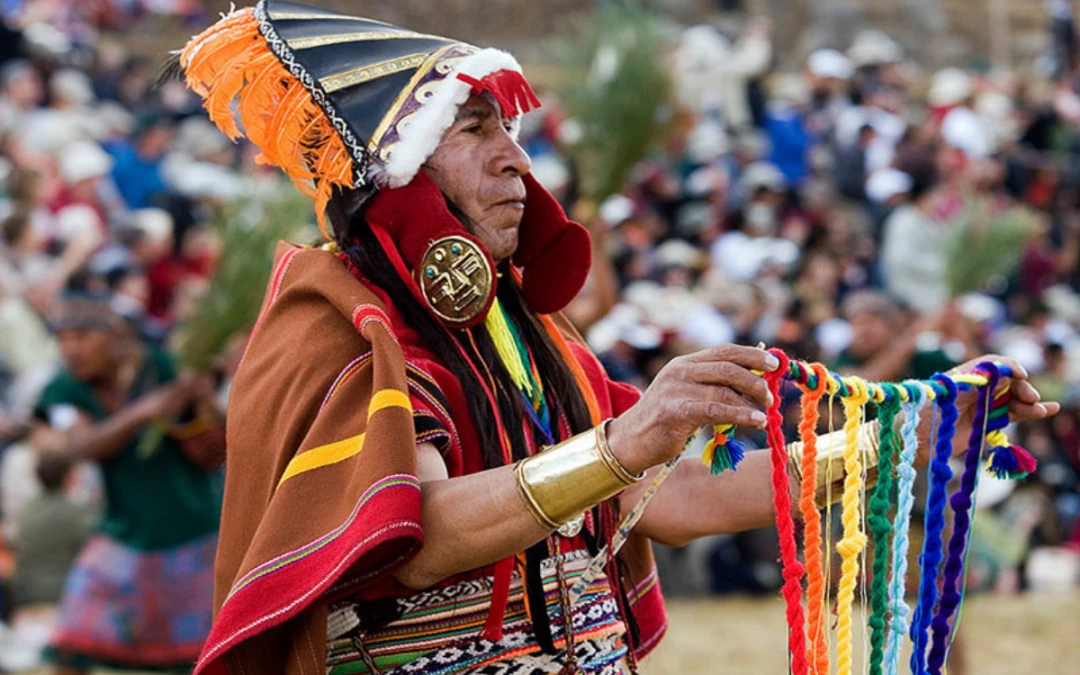
Throughout the Andean calendar, festivals mark agricultural cycles, religious events, and historical commemorations. At the heart of these celebrations is Runa Simi—prayers, songs, and oratory are delivered in the mother tongue. One of the most spectacular events is Inti Raymi, the Festival of the Sun, held in Cusco every June 24. Thousands gather at Sacsayhuamán to reenact Inca rituals honoring the sun god Inti.
The Sapa Inca, played by a local actor, addresses the crowd in Quechua, thanking Inti for the harvest and blessing the coming year. Dancers in vibrant costumes represent the four suyos (regions) of the Inca Empire, reminding spectators of ancient political organization.
Another important festival is Qoyllur Rit’i (Snow Star Festival), celebrated near Mount Ausangate. Pilgrims hike to a shrine at 4,800 m, carrying crosses and playing flutes through the night.
At dawn,
they witness the sun rising behind the glacier and shout prayers in Runa Simi. The festival blends Catholic and indigenous traditions; participants sing hymns in Spanish and Quechua, illustrating the syncretism that defines modern Andean culture. Travelers joining our Ausangate trek can witness this celebration.
Attending these events offers insight into how language, faith, and environment intertwine. Respectful observation—without intrusive photography or distraction—honors the spiritual focus of the participants.
Beyond religious festivals, communities host weaving fairs, potato harvest celebrations, and uywa fiestas (livestock blessings). During these events, elders recite oral histories, and youth respond with improvised poetry known as huayno.
Storytelling competitions are a highlight; participants weave humorous tales, moral lessons, and historical anecdotes into Runa Simi verse. Judges evaluate creativity, rhyme, and clever use of suffixes. These gatherings encourage linguistic creativity and ensure that oral traditions remain strong. If your trek coincides with a local festival, our guides will explain the meaning behind each ritual and teach you key phrases to greet participants.
Weaving and Textile Arts: Stories in Thread
Textiles are among the greatest artistic achievements of Andean civilizations. Long before the Incas, weavers developed complex techniques and iconography. In Quechua communities today, weaving is both a livelihood and a narrative art form.
Every chumpi (belt), lliqlla (shawl), and poncho tells a story: geometric patterns represent mountains, rivers, and animals; stripes indicate a person’s community or marital status; and color combinations convey mood or clan identity. Many motifs are accompanied by Quechua phrases or sung during weaving sessions.
In the highland village of Chinchero, known for its vibrant textiles, our treks often include a visit to a women’s weaving cooperative. Here, mothers and grandmothers dye wool with natural pigments derived from cochineal insects, indigo plants, and molle seeds. While their hands move deftly across the loom, they speak to each other in Runa Simi, instructing apprentices and sharing gossip.
Visitors can try their hand at weaving under guidance. You’ll learn that the pattern called “chakana” represents the Andean cross and the layers of the universe (underworld, earth, sky). The woven narrative might depict the myth of Manco Cápac emerging from Lake Titicaca or the annual rebuilding of Q’eswachaka.
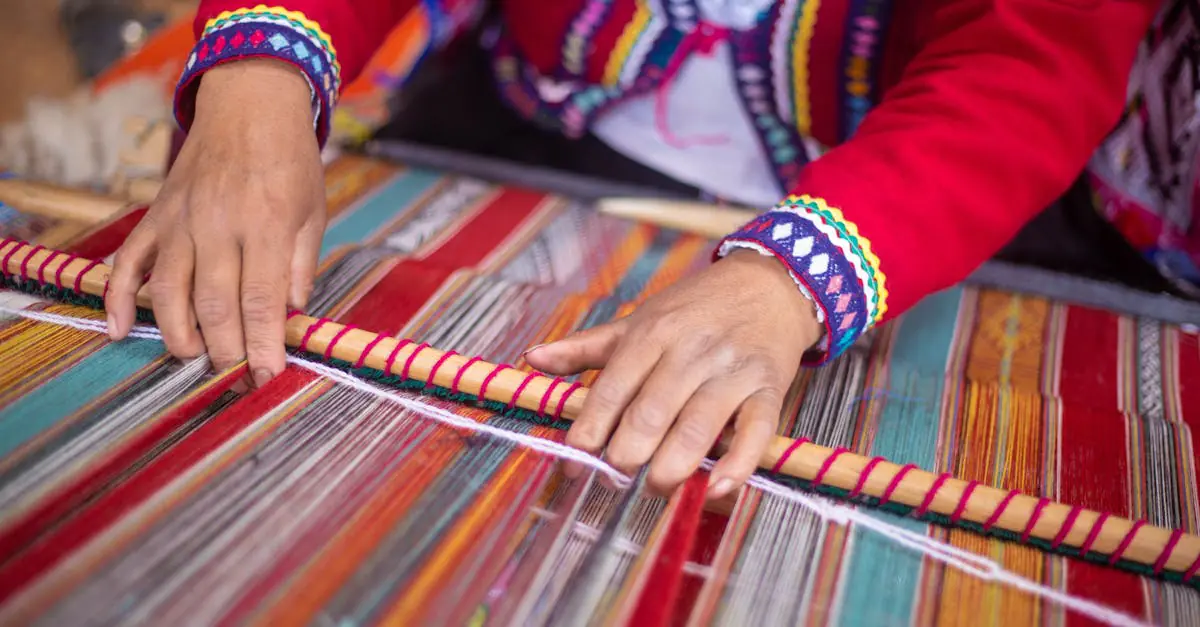
Weaving and Textile Arts
Purchasing textiles directly from cooperatives ensures fair wages and preserves cultural heritage. Avoid purchasing mass-produced fabrics that mimic designs without supporting artisans.
Our blog on preserving Quechua culture emphasizes how economic empowerment prevents the loss of language and craftsmanship. When you wrap a hand-woven scarf around your shoulders at Dead Woman’s Pass, you carry a piece of Quechua storytelling—words turned into thread.
A Day in the Life of a Porter
To truly appreciate Runa Simi, follow a porter through an average day on the Inca Trail. Juana, a mother of two from a community near Lares, is one of the first female porters in our Green Machine. She wakes at 4:00 a.m., bundles her children in blankets, and prepares breakfast. Her husband, also a porter, cares for the kids while she works.
At our office in Ollantaytambo, Juana joins her teammates and stores her personal items in the porter house—a facility we built to offer safe rest. She weighs her load, ensuring it does not exceed 20 kg, and meets her clients.
On the trail,
Juana walks briskly ahead, balancing heavy gear and occasionally singing in Quechua to keep her pace. She might sing a harawi, a slow, melancholic song, or a carnavalito during easier stretches. Her songs tell of love, landscapes, and everyday struggles. Mid-morning, she stops to fill water bottles and offers coca leaves to trekkers complaining of headaches.
She teaches them to say “ñuqa runasimita rimani” (“I speak Quechua”) and laughs as they practice. At lunch, Juana and the cooking team set up a dining tent, prepared soup, and served plates with a warm “tupananchiskama” (“until we meet again”). After the meal, she helps pack up and continues to the campsite.
In the evening, while trekkers rest, Juana arranges tents and ensures guests are warm. She eats dinner with other porters, discussing the day’s challenges and telling jokes in Runa Simi. They share stories of previous treks, talk about their children’s schoolwork, and plan improvements for their community. After cleaning up, she sleeps for a few hours before starting again.
Despite the physical demands, Juana loves her work. She earns a stable income, receives fair wages and health care, and is proud to show her children that women can thrive in any role. Her story embodies the spirit of our Green Machine and the role language plays in building solidarity.
Real Traveler Stories: Learning and Transformation
Nathan’s Journey
Nathan, a software engineer from Canada, booked an Inca Trail trek with Alpaca Expeditions to celebrate his 30th birthday. Initially attracted by the hiking challenge, he hadn’t given much thought to Runa Simi. On the first day, his guide, Roxana, taught him to say rimaykullayki when greeting porters.
Nathan practiced awkwardly, but the porters’ smiles motivated him. By the second day, he could ask Imaynalla? and respond allinllachu, laughing with Juana as they climbed Dead Woman’s Pass.
When he reached the summit, he shouted añay, Pachamama! Thanking the mountain for his safe passage. Learning these phrases turned Nathan from a tourist into a respectful guest. In his post-trip review, he wrote that the language lessons were the most unexpected and rewarding part of his trek.
Amrita’s Cultural Connection
Amrita, an Indian-American history teacher, joined a Salkantay trek. She had studied Andean civilizations but had never heard Runa Simi spoken. During the hike, her guide introduced the concept of evidentiality—how Quechua speakers indicate the source of information. Fascinated, Amrita realized how language influences critical thinking.
She asked if there were parallels in her own native language and promised to incorporate a lesson on Quechua grammar into her classroom. When she returned home, she created a project where students compared the ways different languages express knowledge and evidence. Amrita says the trek inspired her to show students how indigenous languages contribute to global linguistic diversity.
Leo and Maria’s Honeymoon
Leo and Maria from Brazil chose the Lares trek for their honeymoon because they wanted to meet local communities. On the second day, they visited a weaving cooperative in Huacahuasi. Maria admired a young girl weaving a scarf and asked about the pattern. The girl explained, in Quechua translated by their guide, that the motifs represented the story of Q’eswachaka’s renewal.
Touched by the connection between cloth and heritage, Maria purchased the scarf and now displays it in her home. The experience made them realize the importance of supporting artisans. They also learned to cook pachamanca (earth oven) and described it as the highlight of their honeymoon.
These stories illustrate how learning and engaging with Runa Simi enrich travel. Our guides love to see the transformation of guests who arrive focused on the hike but leave with a deeper appreciation for language and culture.
Language Learning Resources and How to Continue
If your trek ignites a passion for Runa Simi, you can continue learning through various resources:
- Textbooks and phrasebooks: The Runasimi Dictionary and Rimaykullayki: Quechua Phrasebook provide vocabulary and cultural notes. Universities in Cusco and Lima sell course materials designed for beginners.
- Online courses: Platforms like Coursera and Memrise host introductory Quechua courses created by native speakers. They teach pronunciation, basic grammar, and cultural context.
- Apps: Mobile apps such as “Kusikuy” and “Quechua App” offer interactive lessons and vocabulary games. They incorporate audio recordings by native speakers to train your ear.
- Podcasts and radio: Podcasts like Rimaykullayki Podcast present lessons, conversations, and cultural discussions in both Spanish and English. Radio programs such as Radio Tawantinsuyo broadcast news and music in Quechua, immersing you in real speech.
- Community classes: If you live in a city with a Latin American cultural center, there may be Quechua classes. Universities often host visiting professors from Peru or Bolivia. Ask local libraries or cultural associations for information.
- Social media: Follow Quechua influencers on TikTok, Instagram, and YouTube. Creators share vocabulary challenges, songs, and glimpses of daily life in the Andes.
Continuous engagement helps ensure that Runa Simi thrives. Even if you only remember a few greetings, share them with friends; you become part of the global network supporting linguistic diversity.
More Treks with Alpaca Expeditions: Salkantay, Lares, and Choquequirao
Salkantay Trek
The Salkantay Trek offers a dramatic alternative to the classic Inca Trail. Named after Nevado Salkantay (6,271 m), an imposing snow-capped mountain considered an apu, this route traverses high alpine landscapes and tropical forests. On day two, trekkers cross Salkantay Pass at 4,600 m before descending toward the cloud forest.
Campsites feature panoramic views of glaciers and waterfalls. Communities along the route speak their own Quechua dialect; our guides teach you to say ñankay allin kayku (“good path to you”). Because the Salkantay route does not require permits, it is more flexible; you can book closer to your travel date.
Lares Trek
For travelers interested in living culture, the Lares Trek is ideal. It winds through remote weaving villages where traditions remain strong. You’ll share meals with families, learn weaving techniques, and perhaps sleep in a community-run lodge.
The trek crosses two high passes (approximately 4,450 m), passes turquoise lakes, and offers glimpses of alpaca herds. The route ends in the Sacred Valley, and you take a train to Machu Picchu. Our Lares tours often coincide with local festivals, giving you opportunities to witness rituals and practice your Quechua phrases.
Choquequirao Trek
The Choquequirao Trek leads to one of the least visited and most spectacular Incan sites—Choquequirao, nicknamed the “sister city of Machu Picchu.” Set on a secluded ridge overlooking the Apurimac River, Choquequirao features terraces, plazas, and massive stone structures. Archaeologists believe it served as a political and religious center.
The trek involves steep descents and ascents as you drop from 3,100 m to 1,500 m and climb back up. Because of its difficulty and remote location, you’ll see few other hikers. Our guides share stories of the rebellious Incas who used this site as a refuge after the Spanish conquest. Learning Runa Simi on this trek deepens your connection to the site’s history.
Each route offers unique landscapes and cultural encounters. Our team ensures consistent service: knowledgeable guides, sustainable practices, and opportunities to engage with Runa Simi wherever you go.
Machu Picchu: A City of Stone and Story
Machu Picchu, one of the New Seven Wonders of the World, is the culmination of many travelers’ journeys. Yet even the most breathtaking photos cannot capture the energy you feel when standing among its stones.
This citadel was built in the mid-15th century under the reign of Pachacuti and served as a royal estate and religious center. Its name means “Old Peak” in Quechua, indicating its location beneath the sacred mountain Huayna Picchu.
Architecture and Layout
The site is divided into agricultural terraces and urban sectors. The terraces demonstrate advanced engineering: retaining walls, drainage channels, and water fountains. The Temple of the Sun, an elliptical tower, aligns with the June solstice sunrise. The Room of the Three Windows overlooks the Sacred Plaza and may represent the three levels of Andean cosmology—Hanan Pacha (upper world), Kay Pacha (this world), and Uku Pacha (inner world).
The Intihuatana, often called the Hitching Post of the Sun, is a carved stone believed to function as a sundial and astronomical device. Our guides explain how Incan architects integrated natural rock formations into constructions, a practice that honored Pachamama and minimized environmental impact.
Rediscovery and Preservation
While local farmers knew of Machu Picchu’s existence, it remained unknown to the wider world until 1911 when American historian Hiram Bingham brought it to international attention. Since then, archaeologists and conservationists have worked to preserve the site, which suffers from erosion and tourism pressure.
Visitor numbers are regulated, and there are designated walking circuits to minimize damage. As you explore, your guide will remind you to tread lightly and avoid touching delicate structures. Respecting Machu Picchu means preserving it for future generations of Quechua-speaking descendants and travelers alike.
Cultural Significance
Machu Picchu stands as a testament to Incan ingenuity and spiritual cosmology. The site encapsulates the empire’s ability to build in harmony with rugged terrain and to incorporate astronomical knowledge into architecture. Exploring it with an understanding of Runa Simi enriches your visit.
You’ll recognize place names (Inti Punku, Wiñayhuayna) and appreciate the linguistic artistry engraved in stone. Many of our guides interpret the site’s features through Quechua metaphors and myths, offering perspectives not found in standard guidebooks.
Embrace the Journey
We hope this in-depth guide inspires you to travel deeper. Runa Simi is not just a set of words; it is a living repository of knowledge, worldview, and resilience. When you join Alpaca Expeditions, you become part of a story that spans millennia—from the earliest agricultural communities to contemporary revivals on TikTok.
You support porters like Juana who sing ancient songs as they hike. Then you empower artisans who weave myths into textiles. You learn to address mountains as living beings. You leave a positive impact on communities that have kept the language alive despite centuries of pressure.
The Andes have so much to teach, and the language of the Incas is the key. We invite you to book your trek today, learn a few phrases, and carry the spirit of kawsay—life—into your travels. Let the rhythm of Quechua words guide your steps and connect you to the soul of this extraordinary region.
Cusco and the Sacred Valley: Names, Places, and Stories
The city of Cusco—from Qosqo, meaning “navel” in Runa Simi—was the political and spiritual heart of the Inca Empire. Its name reflects the belief that Cusco was the center of the universe, connecting the realms of the gods, humans, and ancestors.
Today, the cobblestone streets are lined with colonial architecture built atop Inca foundations. When you visit Qorikancha (“Golden Enclosure”), once the empire’s most sacred temple, listen as our guides describe how its walls were once covered in sheets of gold and dedicated to Inti.
Understanding the Quechua names of places helps you appreciate their roles: Sacsayhuamán (“Satisfied Falcon”) is the imposing fortress above the city; Tambo Machay (“Inn of the Cave”) is a water temple; Q’enqo (“Labyrinth”) is a site of ritual sacrifice. Each name is a clue to the site’s function and its connection to nature.
Sacred Valley:
Venturing into the Sacred Valley—known as Willka Mayu or “Sacred River”—you’ll encounter villages and archaeological sites steeped in history. Pisac, believed to be named after a type of partridge, features terraces carved into the mountainside and an impressive hilltop fortress. Ollantaytambo, named after the Inca general Ollantay, who, according to legend, defied the emperor for love, is the only remaining Inca town still inhabited.
Its narrow stone streets and canals reveal sophisticated urban planning. Moray, with its concentric circular terraces, is thought to have been an agricultural laboratory where Incas experimented with different microclimates.
The nearby salt pans of Maras have been harvested since pre-Inca times; each terraced pool yields salt crystals through solar evaporation. Visiting these sites with knowledge of their Quechua names adds depth to your experience; our guides encourage you to say the names aloud, savoring their rhythm.
The Sacred Valley is also home to vibrant markets. In Chinchero and Pisac, vendors sell fresh produce like oca (a tuber), tarwi (lupin beans), and ch’irimoya (custard apple). Practice asking for prices in Quechua—hayk’aqmi? (“how much?”)—or compliment vendors with sumaqmi (“it’s beautiful”).
By using local language, you foster meaningful interactions and show respect for traditional commerce. Many communities in the valley still follow ayni, the principle of reciprocal labor and exchange; language is the currency that sustains these relationships.
Whether you’re bargaining for a hand-woven table runner or learning the name of a medicinal plant, each interaction is an opportunity to connect.
Food and Culinary Traditions: Tasting the Andes
Cuisine is another gateway to understanding culture. Quechua food is rooted in the highlands’ harsh environment and abundant biodiversity. Staples like potatoes—over 4,000 varieties grow in Peru—are central to diets. Dishes such as papa a la huancaína (potatoes in creamy chili sauce) use local peppers and cheese.
Cuy chactado (crispy guinea pig) is a festive dish reserved for special occasions, reflecting the sacred status of guinea pigs. Travelers often enjoy lomo saltado, a stir-fry blending Chinese influences with Peruvian ingredients, or ají de gallina, shredded chicken in a walnut and pepper sauce.
Our treks feature hearty meals like quinoa soup, oca stew, and pachamanca, where meat and vegetables are baked underground with hot stones.
The names of foods reveal linguistic layers. Quinoa comes from kinwa, llama from lama, and pisco (the national spirit) may derive from pisqu, meaning “bird.” Chicha—a fermented corn drink—is offered during ceremonies and used to seal agreements. In weaving communities, women often ask, “Chicha haykaykita munayki?” (“Do you want some chicha?”).
Accepting the drink and toasting with salud or kawsay acknowledges hospitality. On the trek, our cooks prepare muña tea, a minty herbal infusion that aids digestion and soothes altitude headaches. Learning the Quechua names of ingredients enriches the flavors; you will never sip a simple tea again without thinking of muña fields swaying under the Andean sun.
Cooking classes in Cusco allow you to recreate Andean recipes at home. Instructors speak Quechua and Spanish, guiding you through the preparation of uchukuta (spicy peanut sauce), solterito (fava bean and cheese salad), and api morado (purple corn beverage).
These classes often begin with a visit to a local market where you practice vocabulary and meet farmers. Culinary tourism creates another avenue for language preservation and economic empowerment.
Literature and Music: Voices of the Andes
While Runa Simi was primarily an oral language before the Spanish conquest, the colonial era saw the birth of written Quechua literature. Missionaries published grammars and catechisms, including Domingo de Santo Tomás’s 1560 Grammatica o arte de la lengua general de los indios de los reynos del Perú.
The Doctrina Cristiana y catecismo of 1584 and later vocabularies provided templates for writing in Quechua. In 1579, the University of San Marcos in Lima even established a chair of Quechua, recognizing its importance. Beyond religious texts, Quechua authors produced dramas like “Ollantay”, a play about forbidden love and loyalty, and “Apu Ollantay,” which some scholars believe dates back to Inca oral tradition.
In modern times, authors and poets continue to create literature in Runa Simi. Writers like José María Arguedas translated Quechua songs and stories into Spanish, raising awareness of indigenous voices.
Gloria Cáceres Vargas:
Contemporary poets like Gloria Cáceres Vargas and Fredy Roncalla publish bilingual collections exploring identity, nature, and resistance. Children’s books in Quechua encourage literacy among young speakers, and translations of classics like “The Little Prince” make global literature accessible.
Music is equally important. Traditional genres include harawi, melancholic songs accompanied by panpipes or flutes; huayno, upbeat tunes with violin and charango (a small Andean lute); and yaraví, a lament combining Spanish and Quechua influences. Lyrics often address love, longing, humor, and politics.
Famous Quechua singers like Yma Sumac gained international acclaim in the mid-20th century for her incredible vocal range. Today, bands such as Grupo Alborada blend traditional melodies with modern instruments, creating Andean folk-rock.
Younger musicians fuse Quechua lyrics with hip-hop, electronic, and cumbia rhythms, reaching new audiences and promoting linguistic pride. When you dance to huayno at a village festival, you participate in a living art form that links past and present.
Our trekking itineraries occasionally include concerts or informal jam sessions at campsites. Guides and porters will teach you to sing simple refrains and explain the stories behind the songs. Bring an open heart and perhaps a portable instrument; music transcends language barriers.
Sustainability and the Future of Runa Simi
Runa Simi’s survival faces challenges beyond linguistic policy. Climate change threatens Andean ecosystems, altering rainfall patterns and shrinking glaciers. Melting ice affects water supplies and agriculture, prompting migration to urban areas where Spanish dominates.
As young people leave villages in search of employment, fewer children grow up speaking their ancestral language. Globalization introduces new technologies and entertainment that often prioritize English or Spanish, making Runa Simi seem less relevant.
However, there is hope. Indigenous leaders, activists, and educators champion initiatives to ensure the language’s future. Bilingual intercultural education promotes Quechua literacy alongside Spanish, empowering children to succeed in both worlds.
Government programs grant official status to indigenous languages and encourage their use in public institutions. Digital activism—from online dictionaries to social media campaigns—makes language learning accessible and cool. Hashtags like #AprendamosQuechua trend on Twitter during cultural festivals, and young influencers produce comedy sketches in Quechua, normalizing its use.
Tourism also plays a role. Responsible travel companies like Alpaca Expeditions ensure that guides and porters can share their language with visitors, validating its importance. We support community-run homestays and cooperatives where Quechua is the main language. Your participation shows that people across the globe value Runa Simi.
By choosing companies that respect culture and environment, you help create economic incentives for younger generations to continue speaking their ancestral tongue. The future of Runa Simi depends on both local commitment and global solidarity; as travelers, we can be allies in this cause.
Acknowledgments and Final Thoughts
We wish to thank the countless guides, porters, weavers, farmers, teachers, and activists who have shared their knowledge and stories with us over the years. Their generosity makes it possible for Alpaca Expeditions to offer authentic experiences.
We also acknowledge our travelers, whose curiosity and respect help preserve Runa Simi for future generations. May your own journey be filled with discovery and connection.